
14:10 JST, January 21, 2022
The Health, Labor and Welfare Ministry on Friday gave fast-track approval to the inoculation of children aged 5 to 11 with a coronavirus vaccine from U.S. pharmaceutical firm Pfizer Inc.
The ministry is set to make it a “temporary vaccination” at public expense after deliberation at a panel of experts to be held Wednesday. The government plans to start vaccinating about 7.15 million children as early as March, and is considering bringing forward that schedule, too.
The Pfizer vaccine is currently given to people aged 12 or older in Japan. The vaccine for children aged 5 to 11 is adjusted by reducing the amount of ingredients to one-third of that for those aged 12 or older, and giving two doses three weeks apart.
The vaccines will begin being imported in February, and the government is considering whether to speed up the delivery schedule to local governments.
Prime Minister Fumio Kishida said at a House of Representatives interpellation on Thursday, “We’ll start vaccinations for those who wish to have them as soon as completing the necessary procedures.”
According to Pfizer, a clinical trial conducted overseas on about 2,000 children aged 5 to 11 confirmed that the vaccine had a 90.7% efficacy rate in preventing the onset of the disease. However, the study was conducted last summer, when the delta variant of the coronavirus was dominant, and there is not enough data on the efficacy of the omicron variant. Even so, the Japan Pediatric Society said the vaccination was expected to prevent the disease from becoming severe.
According to the U.S. Centers for Disease Control and Prevention, about 8.7 million vaccinations had been administered to 5-to-11-year-olds in the United States as of mid-December last year, with 4,249 cases of suspected adverse reactions reported. Of them, 100 were serious, including high fever and vomiting.
In Europe and the United States, vaccinations for children aged 5 to 11 began around November last year. The United States and Israel recommend vaccination for all children, while Germany specifically recommends it for children with underlying health conditions who are at high risk of severe illness.
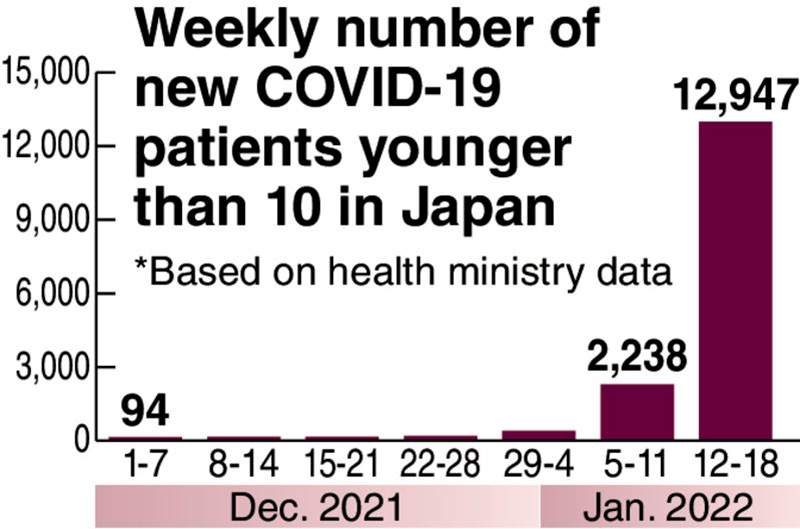
In Japan, an omicron outbreak has led to an increase in infections among children below vaccination age. The weekly number of infections among those under 10 was around 100 in November and December last year, but has risen sharply since the end of the year, to 12,947 in the week of Jan. 12-18.






Most Read
Popular articles in the past 24 hours
-

Ransomware Attacks Hitting Japan's Small, Midsize Firms
-
Japan's Budget on Track for Quick Passage, but Ruling Parties to ...
-

German Journalist Traces Footsteps of Great-Grandfather Who Was P...
-

10 Foreign Tourists Sustain Injuries After Fire at Capsule Hotel ...
-

World Baseball Classic: Venezuela Beats Japan in Nail-biting Back...
-

Rapid Services on JR Chuo Line Suspended; Accident at Kokubunji S...
-

Rapid Services Resume on JR Chuo Line; Suspension Caused by Accid...
-

World Baseball Classic: Red Sox’s Abreu Hits 3-run Homer, Giving ...
Popular articles in the past week
-

Japan Figure Skating Legend Yuzuru Hanyu Is Proud Disaster Surviv...
-
Govt to Utilize ODA for Ensuring Economic Security; Securing Ener...
-
15 Measles Patients Confirmed in Tokyo in Past 6 Days; 1 May Have...
-
Massive Sewer Pipe Found Jutting Out of Highway in Osaka
-
Japan Govt to Tighten Requirements to Receive Permanent Residency...
-
Power Outage Forces About 980 Passengers in Yokohama to Walk to T...
-
JR Tokai Breaks Ground on Yamanashi Maglev Station; Will Be Part ...
-

Parents in Japan to Get Instagram Notifications When Teens Repeat...
Popular articles in the past month
-

Producer Behind Pop Group XG Arrested for Cocaine Possession
-

Japan PM Takaichi’s Cabinet Resigns en Masse
-

Man Infected with Measles Reportedly Dined at Restaurant in Tokyo...
-
Japan Figure Skating Legend Yuzuru Hanyu Is Proud Disaster Surviv...
-

iPS Treatments Pass Key Milestone, but Broader Applications Far f...
-

Sanae Takaichi Elected Prime Minister of Japan; Keeps All Cabinet...
-

South Korea Tightens Rules on Foreigners Buying Homes in Seoul Me...
-

Nepal Bus Crash Kills 19 People, Injures 25 Including One Japanes...
Top Articles in Society
-
Producer Behind Pop Group XG Arrested for Cocaine Possession
-
Man Infected with Measles Reportedly Dined at Restaurant in Tokyo Station
-
15 Measles Patients Confirmed in Tokyo in Past 6 Days; 1 May Have Come into Contact with Many in Shibuya
-

Bus Carrying 40 Passengers Catches Fire on Chuo Expressway; All Evacuate Safely
-

Ibaraki Pref.’s 1st Foreign Bus Driver Hired in Tsukuba
JN ACCESS RANKING
-
Producer Behind Pop Group XG Arrested for Cocaine Possession
-
Japan PM Takaichi’s Cabinet Resigns en Masse
-
Man Infected with Measles Reportedly Dined at Restaurant in Tokyo Station
-
Japan Figure Skating Legend Yuzuru Hanyu Is Proud Disaster Survivor and Gold Medalist, Vows to Continue Support Efforts
-
iPS Treatments Pass Key Milestone, but Broader Applications Far from Guaranteed