
Oldest ‘Head-Butting’ Dinosaur Fossil Found in Mongolia; Team Includes Scientists From Okayama University of Science, Fukushima Museum
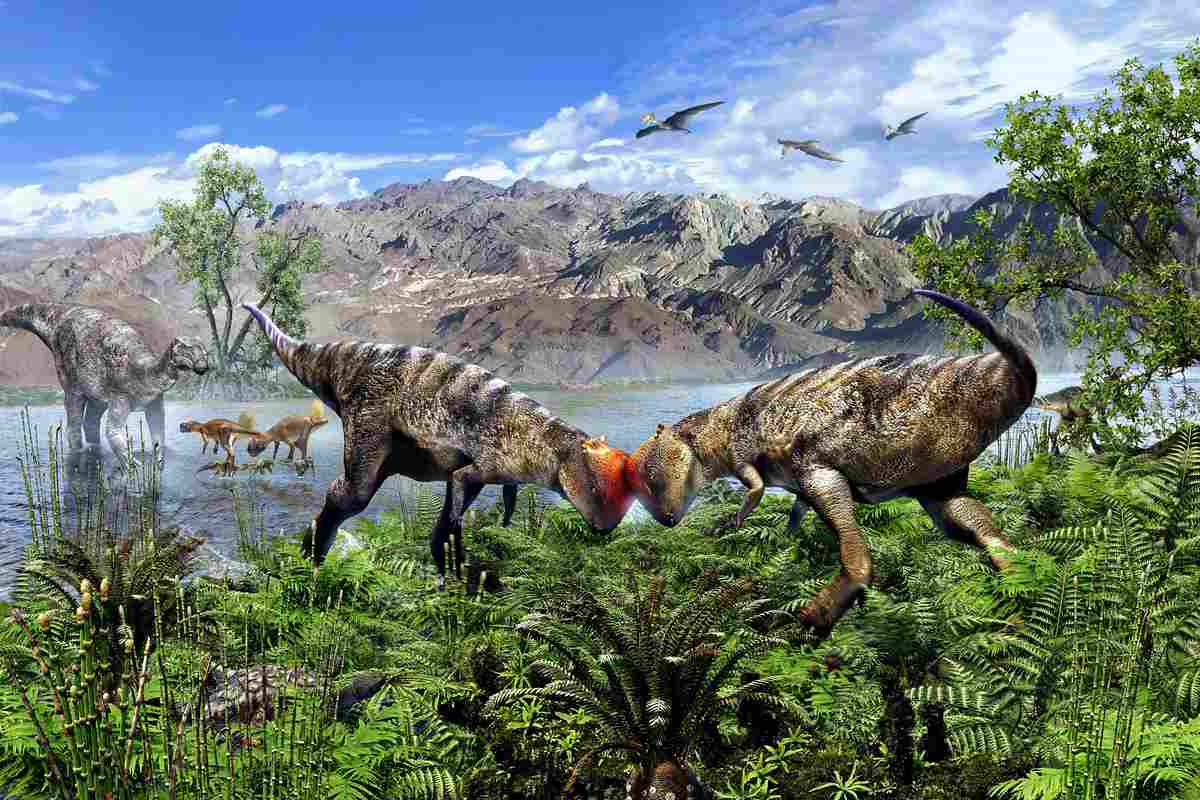
An artist’s rendering of Zavacephale rinpoche
10:47 JST, September 21, 2025
Fossil remains found in the Gobi Desert in Mongolia are those of a hitherto unknown species of the “head-butting” dinosaur featured in the film “Jurassic World,” and the oldest fossil of its type discovered so far, according to an announcement by a team of scientists.
A paper on the discovery was published in the science journal Nature on Thursday.
The scientists are from North Carolina State University, the Mongolian Academy of Sciences’ Institute of Paleontology and Geology, Okayama University of Science, Fukushima Museum and other institutes.
According to the research team, the fossil remains were discovered during an excavation in 2019 and were found to form an almost complete skeleton of a pachycephalosaurian dinosaur, which has a characteristically thick, dome-shaped skull. It is believed that dinosaurs of this type head-butted each other in fights over mates.
Before the excavation, the oldest known fossil of a pachycephalosaur was dated about 90 million years ago. The newly excavated fossil remains were older than that by 20 million years and found in a Lower Cretaceous stratum about 110 million years old.
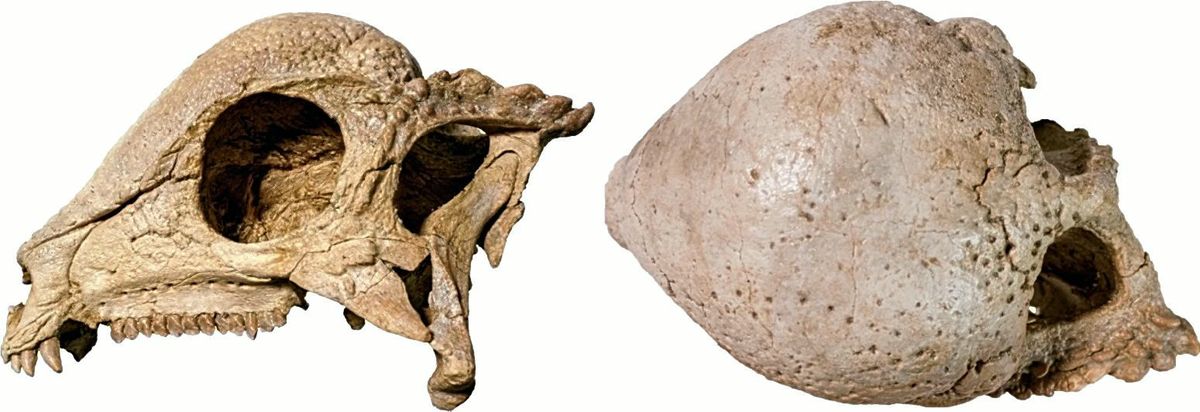
The skull of Zavacephale rinpoche
The scientists confirmed that the fossil remains were from a hitherto unknown species, judging from the shape of its occipital region and the tendon of its tail as well as the size of the teeth in its lower jaw. They named the dinosaur Zavacephale rinpoche, which means “head origin precious one.”







Most Read
Popular articles in the past 24 hours
-

Yokohama to Test Out Renewable-Powered Offshore Floating Data Cen...
-

Ishinomaki Man Plush Toy Offers Hope to Children in Times of Disa...
-

Nikkei Tops 59,000 for First Time
-

Microsoft Japan Raided by Antitrust Watchdog for Allegedly Blocki...
-
Japan Eyes Introducing Prescreening System for Foreign Travelers,...
-

Dodgers' Roki Sasaki Erratic in First Spring Training Outing, Giv...
-
Pokémon Celebrates 30 Years with Japanese Pro Baseball Collab
-
New U.S. Tariff Unlikely to Significantly Impact Japan, BOJ Gov. ...
Popular articles in the past week
-

Producer Behind Pop Group XG Arrested for Cocaine Possession
-

iPS Treatments Pass Key Milestone, but Broader Applications Far f...
-

Japan, U.S. Name 3 Inaugural Investment Projects; Reached Agreeme...
-

Tokyo Skytree's Elevator Stops, Trapping 20 People; All Rescued (...
-
Milano Cortina 2026: Japanese Gold Medalist Figure Skater Miura S...
-

Japan’s Major Real Estate Firms Expanding Overseas Businesses to ...
-

Nepal Bus Crash Kills 19 People, Injures 25 Including One Japanes...
-
Baby Monkey Punch Captures Hearts at Chiba Pref. Zoo, on Social M...
Popular articles in the past month
-
Producer Behind Pop Group XG Arrested for Cocaine Possession
-

Japan PM Takaichi’s Cabinet Resigns en Masse
-

Japan Institute to Use Domestic Commercial Optical Lattice Clock ...
-

Man Infected with Measles Reportedly Dined at Restaurant in Tokyo...
-

Israeli Ambassador to Japan Speaks about Japan’s Role in the Reco...
-

Videos Plagiarized, Reposted with False Subtitles Claiming ‘Ryuky...
-

Man Infected with Measles May Have Come in Contact with Many Peop...
-

Prudential Life Insurance Plans to Fully Compensate for Damages C...
Top Articles in Science & Nature
-
iPS Treatments Pass Key Milestone, but Broader Applications Far from Guaranteed
-

Record 700 Startups to Gather at SusHi Tech Tokyo in April; Event Will Center on Themes Like Artificial Intelligence and Robotics
-

iPS Cell Products for Parkinson’s, Heart Disease OK’d for Commercialization by Japan Health Ministry Panel
-

Japan to Ban Use of Power Banks on Airplanes
JN ACCESS RANKING
-
Producer Behind Pop Group XG Arrested for Cocaine Possession
-
Japan PM Takaichi’s Cabinet Resigns en Masse
-
Man Infected with Measles Reportedly Dined at Restaurant in Tokyo Station
-
Israeli Ambassador to Japan Speaks about Japan’s Role in the Reconstruction of Gaza
-
Videos Plagiarized, Reposted with False Subtitles Claiming ‘Ryukyu Belongs to China’; Anti-China False Information Also Posted in Japan