
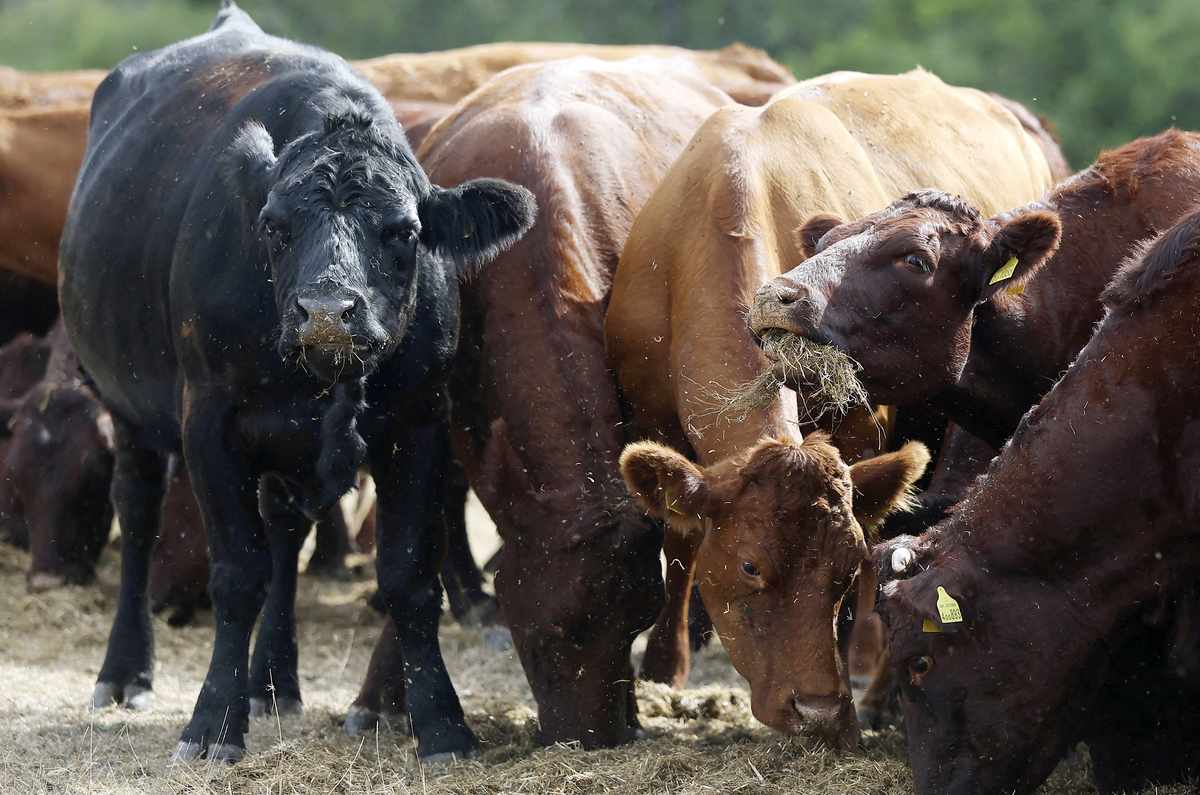
A herd of cattle eat hay distributed by livestock farmer David Barton in a parched grazing field, following months of higher temperatures and dry weather, in Middle Duntisbourne, England, on Aug. 26.
13:16 JST, September 13, 2025
MIDDLE DUNTISBOURNE, England (Reuters) — On David Barton’s beef farm in the picturesque Cotswolds in western England, months of heat and drought have left his 200 head of Salers, Herefords and Sussexes with nothing but parched fields to pick at.
“Look, it’s dust,” he said, kicking the ground. “This is what you would see in the [United] States or in Australia. You don’t see this in England, this is ridiculous.”
It’s the result of England’s driest spring in more than 100 years and the driest January-July period since 1929, according to data from the U.K.’s Met Office. It says summer 2025 will likely be the U.K.’s warmest since records began in 1884, moving 2018 off the top spot.
“This year is extraordinary, I have never seen anything like it,” Barton said.
Customers for beef from Manor Farm, which has been in Barton’s family for three generations, include upmarket grocer Waitrose and restaurant chain Hawksmoor.
Like many livestock farmers across England, he has had no choice but to dip into his winter feed supplies early this year, dramatically increasing his costs.
Having given up on grazing two months ago, Barton has been feeding his cows twice a day with a mix of silage, hay and cereals to ensure they get their necessary nutrients.
But his herd is still hungry and chases his tractor across the fields for more food after being fed.
Wider crisis
Barton’s predicament is typical of a wider crisis for British livestock farmers, with many concerned about the welfare of their animals and financial viability amid already-thin profit margins.
British beef production was worth over £4 billion ($5.4 billion) last year, according to data from the agriculture ministry.
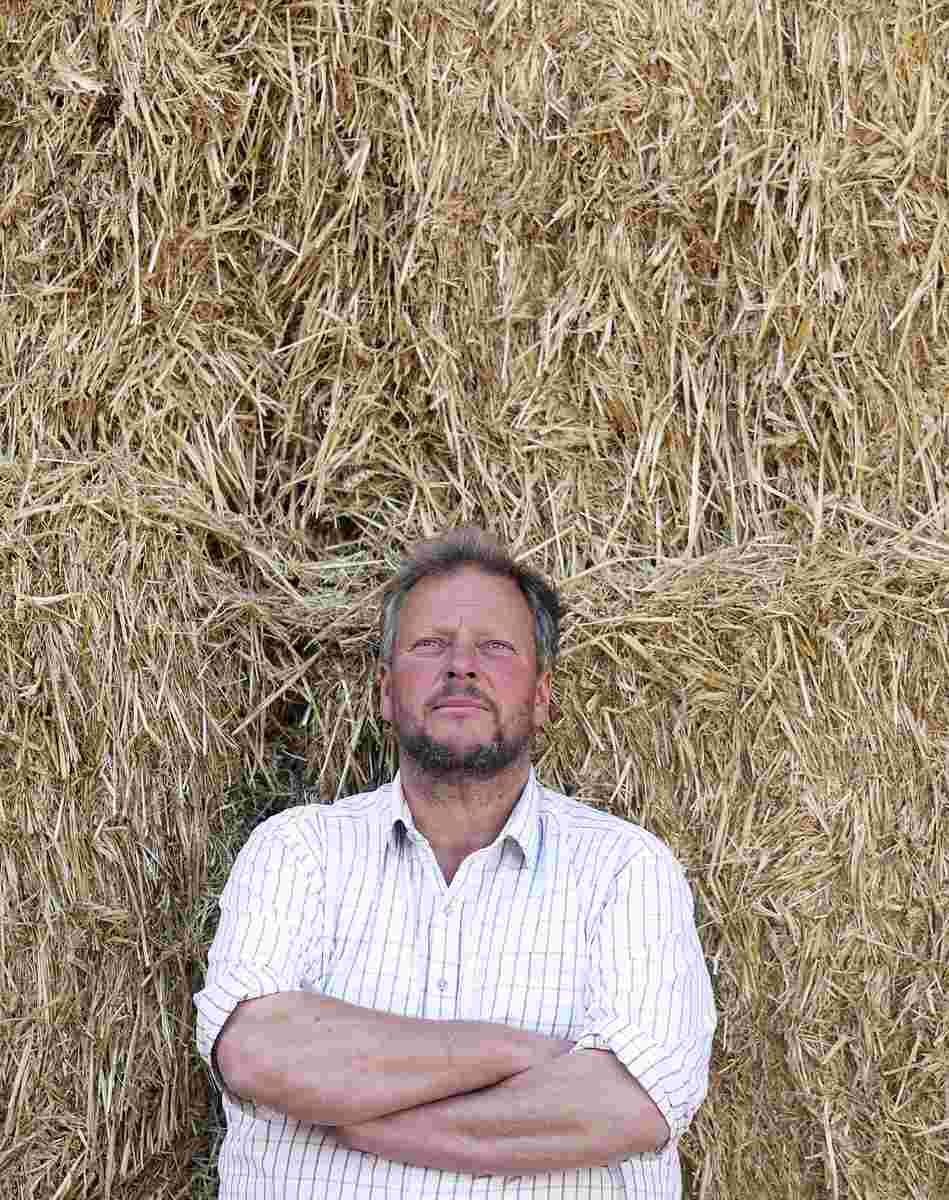
David Barton poses beside bales of winter hay.
Barton is spending about £1,000 a week more on feed than he normally does at this time of year.
With additional production costs not generally linked to his selling price, he faces an expensive winter.
“Unfortunately, I will have to take that hit,” he said.
The crisis also raises questions about Britain’s food security, and, with producer costs rising, adds further pressure to food prices, which have surged this year.
Official data last month showed U.K. food prices were 4.9% higher than a year earlier, with beef costs a key component.
While for some arable farmers such as strawberry and raspberry growers, the sunny spring meant bumper yields, crops like brassicas — including broccoli, cabbage and cauliflower — are struggling, with warnings of tight supply.
Barton, who is chair of the National Farmers Union’s national Livestock Board, said the U.K. government could have done more to help the industry, which is also reeling from proposed changes to inheritance tax.
The government could have temporarily relaxed some environmental schemes so land could have been released for grazing earlier this year, he said.
Barton was worried some financially stretched farmers might be forced to reduce the size of their herds.
“I’m really concerned that farmers will take a decision to reduce their breeding cow numbers and that’s just the last thing we need to do,” he said.



Most Read
Popular articles in the past 24 hours
-

3,000 Accounts Posting, Spreading Content Critical of Japan on X;...
-

Milano Cortina 2026: Sakamoto Serves as Flag Bearer; Japan Earns ...
-

My Spendthrift Mother Constantly Asks Me for Money
-
A Packed Bus Plunges off a Nepal Highway, Killing 19 and Injuring...
-

Milano Cortina 2026: There Were Cheers across the Country, after ...
-

Luna Sea Drummer Shinya Dies at 56; Powerful Drummer Behind ‘Desi...
-

Milano Cortina 2026: Riku-Ryu Duo Stick Together During Closing C...
-

Emperor Receives Well-Wishes from Public on His 66th Birthday
Popular articles in the past week
-

Japan PM Takaichi’s Cabinet Resigns en Masse
-

Man Infected with Measles Reportedly Dined at Restaurant in Tokyo...
-

Sanae Takaichi Elected Prime Minister of Japan; Keeps All Cabinet...
-

Japan's Govt to Submit Road Map for Growth Strategy in March, PM ...
-

Bus Carrying 40 Passengers Catches Fire on Chuo Expressway; All E...
-

U.S. Firm to Build Training Hub in Fukushima N-plant for Debris R...
-

Japan, U.S. Name 3 Inaugural Investment Projects; Reached Agreeme...
-

Riku-Ryu Pair Wins Gold Medal: Their Strong Bond Leads to Major C...
Popular articles in the past month
-
Japan PM Takaichi’s Cabinet Resigns en Masse
-

Japan Institute to Use Domestic Commercial Optical Lattice Clock ...
-

Israeli Ambassador to Japan Speaks about Japan’s Role in the Reco...
-
Man Infected with Measles Reportedly Dined at Restaurant in Tokyo...
-

Videos Plagiarized, Reposted with False Subtitles Claiming ‘Ryuky...
-

Man Infected with Measles May Have Come in Contact with Many Peop...
-

Prudential Life Insurance Plans to Fully Compensate for Damages C...
-

Woman with Measles Visited Hospital in Tokyo Multiple Times Befor...
Top Articles in Science & Nature
-
Japan Institute to Use Domestic Commercial Optical Lattice Clock to Set Japan Standard Time
-

iPS Treatments Pass Key Milestone, but Broader Applications Far from Guaranteed
-

Record 700 Startups to Gather at SusHi Tech Tokyo in April; Event Will Center on Themes Like Artificial Intelligence and Robotics
-
iPS Cell Products for Parkinson’s, Heart Disease OK’d for Commercialization by Japan Health Ministry Panel
-

Japan to Ban Use of Power Banks on Airplanes
JN ACCESS RANKING
-
Japan PM Takaichi’s Cabinet Resigns en Masse
-
Japan Institute to Use Domestic Commercial Optical Lattice Clock to Set Japan Standard Time
-
Israeli Ambassador to Japan Speaks about Japan’s Role in the Reconstruction of Gaza
-
Man Infected with Measles Reportedly Dined at Restaurant in Tokyo Station
-
Videos Plagiarized, Reposted with False Subtitles Claiming ‘Ryukyu Belongs to China’; Anti-China False Information Also Posted in Japan