
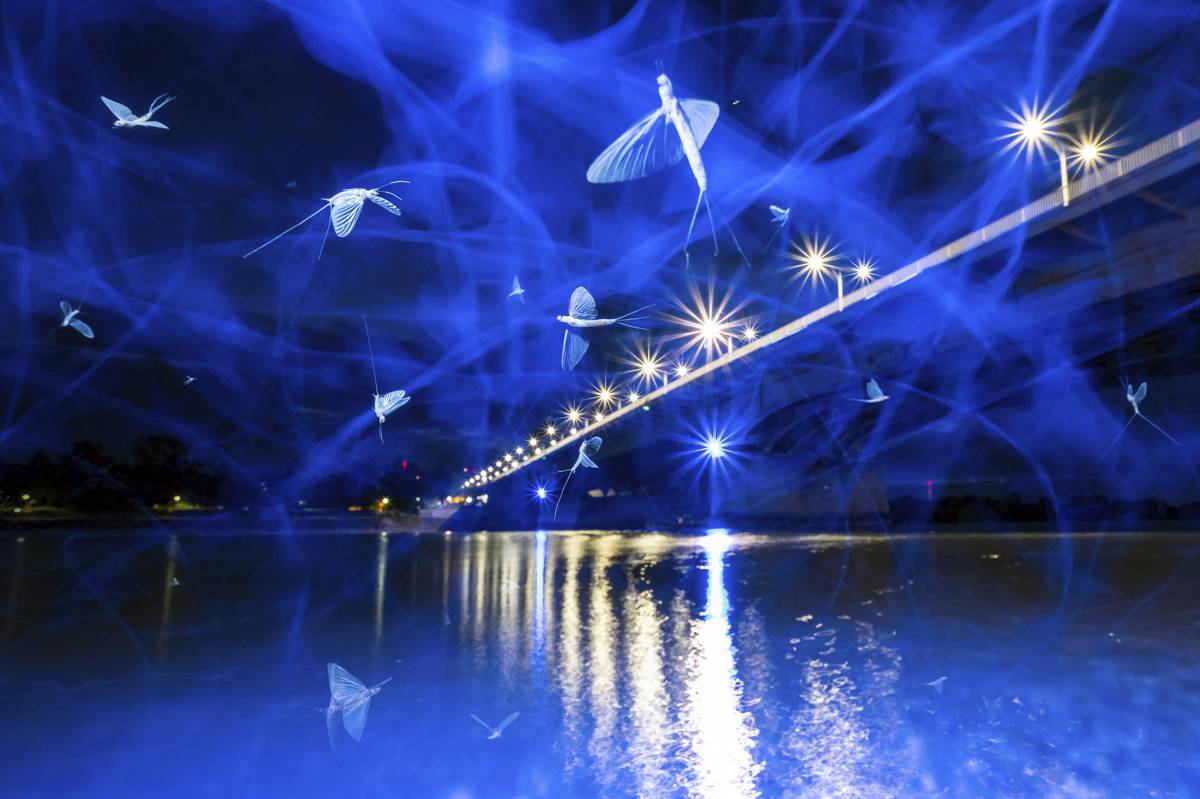
Mayflies swarm over the Danube River. Photos were taken in Budapest on July 25 and 26.
17:22 JST, August 8, 2025
BUDAPEST (Reuters) — Mayflies on the Danube River in Budapest are swarming earlier and in greater numbers than usual this year due to low water levels and an unusually hot summer, filling the air along the riverbanks as they are drawn to the city lights.
Hundreds of thousands, sometimes millions, of mayflies engage in a frantic rush to mate and reproduce before they perish within just a few hours. Mayflies live for less than a day after they hatch, and their abundance is closely connected to the health of the Danube.

Pedestrians watch the swarming mayflies near the Danube River.
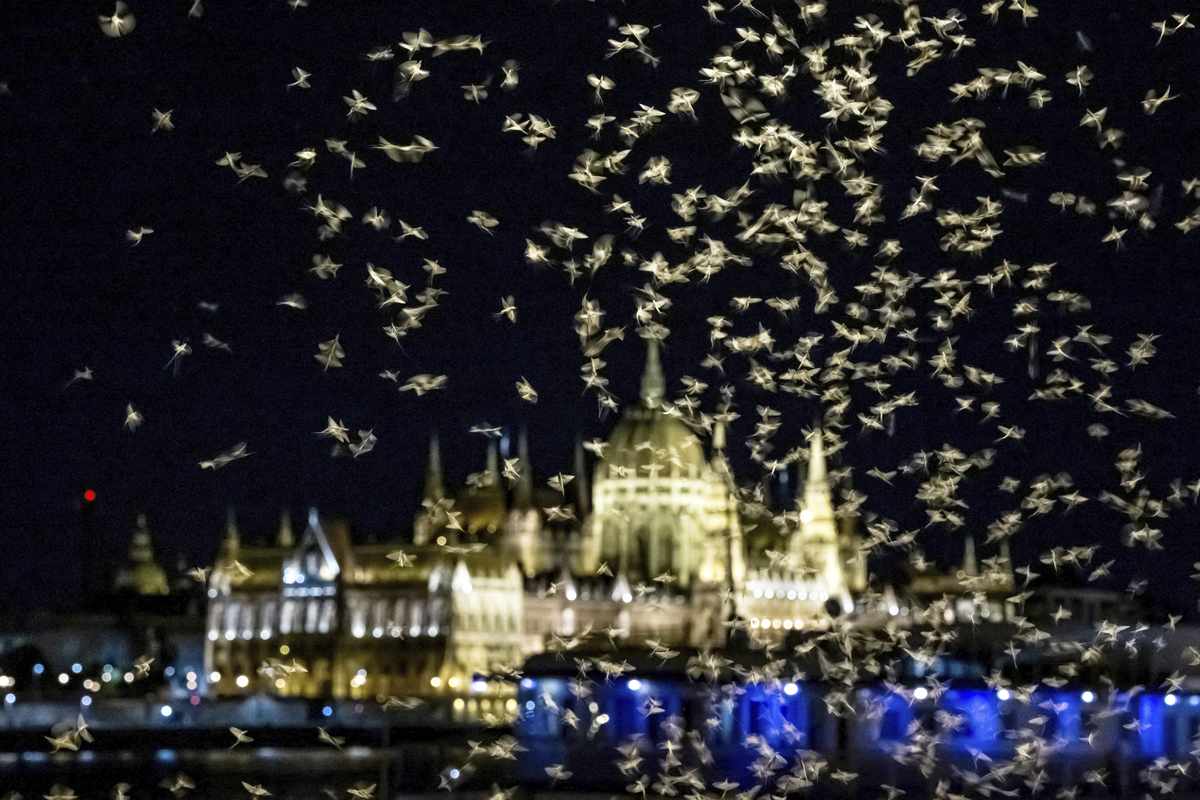
Mayflies swarm around street lamps with the Hungarian Parliament building in the background near the Danube River.
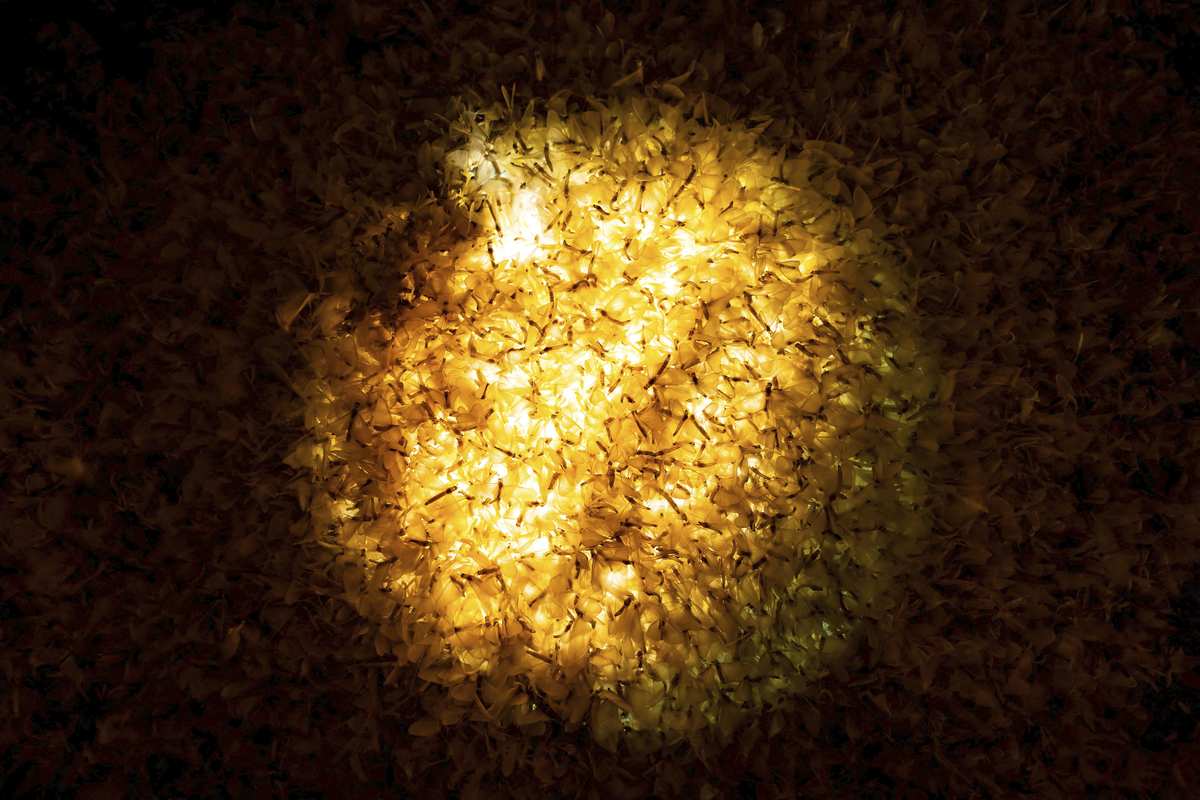
Mayflies lie on a sidewalk-embedded street lamp near the Danube River.
Danube mayflies usually start swarming in August, but this year it began in mid-July, and is expected to last for weeks. Researchers say their early appearance in huge swarms could be linked to higher temperatures.
“We have observed that massive mayfly swarms occur in years when the water levels are particularly low,” said Gyorgy Kriska, associate professor at Eotvos Lorand University in Budapest.
Last month, unusually low water levels disrupted shipping along the Danube, Europe’s second longest river.
Low water means more sunlight reaches the riverbed, helping algae grow, which provides food for the mayfly larvae, Kriska said.
Danube mayflies did not swarm for about four decades as the river was too polluted. They returned in 2012 when the Danube became cleaner due to the construction of wastewater treating plants, he added. The mayfly is a protected species, with the notional value of a single specimen being 10,000 forints ($30).
As mayflies swarm upriver after mating, they can be confused by city lights or the shadows of bridges, causing them to crash on the riverbank instead of laying their eggs in the water.
To help them as much as possible, Hungarian researchers invented and installed special blue lights on two bridges.
“Our lights simply keep them here … they continue to fly in front of the lamp … and crash into the water,” Kriska said.
“This way, we can ensure they stay above the water, and the next generation survives.”





Most Read
Popular articles in the past 24 hours
-

3,000 Accounts Posting, Spreading Content Critical of Japan on X;...
-

Milano Cortina 2026: Sakamoto Serves as Flag Bearer; Japan Earns ...
-

My Spendthrift Mother Constantly Asks Me for Money
-

A Packed Bus Plunges off a Nepal Highway, Killing 19 and Injuring...
-

Milano Cortina 2026: There Were Cheers across the Country, after ...
-

Luna Sea Drummer Shinya Dies at 56; Powerful Drummer Behind ‘Desi...
-

Milano Cortina 2026: Riku-Ryu Duo Stick Together During Closing C...
-

Emperor Receives Well-Wishes from Public on His 66th Birthday
Popular articles in the past week
-

Japan PM Takaichi’s Cabinet Resigns en Masse
-

Man Infected with Measles Reportedly Dined at Restaurant in Tokyo...
-

Sanae Takaichi Elected Prime Minister of Japan; Keeps All Cabinet...
-

Japan's Govt to Submit Road Map for Growth Strategy in March, PM ...
-

Bus Carrying 40 Passengers Catches Fire on Chuo Expressway; All E...
-

U.S. Firm to Build Training Hub in Fukushima N-plant for Debris R...
-

Japan, U.S. Name 3 Inaugural Investment Projects; Reached Agreeme...
-

Riku-Ryu Pair Wins Gold Medal: Their Strong Bond Leads to Major C...
Popular articles in the past month
-
Japan PM Takaichi’s Cabinet Resigns en Masse
-

Japan Institute to Use Domestic Commercial Optical Lattice Clock ...
-

Israeli Ambassador to Japan Speaks about Japan’s Role in the Reco...
-
Man Infected with Measles Reportedly Dined at Restaurant in Tokyo...
-

Videos Plagiarized, Reposted with False Subtitles Claiming ‘Ryuky...
-

Man Infected with Measles May Have Come in Contact with Many Peop...
-

Prudential Life Insurance Plans to Fully Compensate for Damages C...
-

Woman with Measles Visited Hospital in Tokyo Multiple Times Befor...
Top Articles in Science & Nature
-
Japan Institute to Use Domestic Commercial Optical Lattice Clock to Set Japan Standard Time
-

iPS Treatments Pass Key Milestone, but Broader Applications Far from Guaranteed
-
Record 700 Startups to Gather at SusHi Tech Tokyo in April; Event Will Center on Themes Like Artificial Intelligence and Robotics
-
iPS Cell Products for Parkinson’s, Heart Disease OK’d for Commercialization by Japan Health Ministry Panel
-

Japan to Ban Use of Power Banks on Airplanes
JN ACCESS RANKING
-
Japan PM Takaichi’s Cabinet Resigns en Masse
-
Japan Institute to Use Domestic Commercial Optical Lattice Clock to Set Japan Standard Time
-
Israeli Ambassador to Japan Speaks about Japan’s Role in the Reconstruction of Gaza
-
Man Infected with Measles Reportedly Dined at Restaurant in Tokyo Station
-
Videos Plagiarized, Reposted with False Subtitles Claiming ‘Ryukyu Belongs to China’; Anti-China False Information Also Posted in Japan