
Japan’s DPFP Draws Closer to LDP as Trust Grows, but Party Members Still Skeptical of Joining Coalition
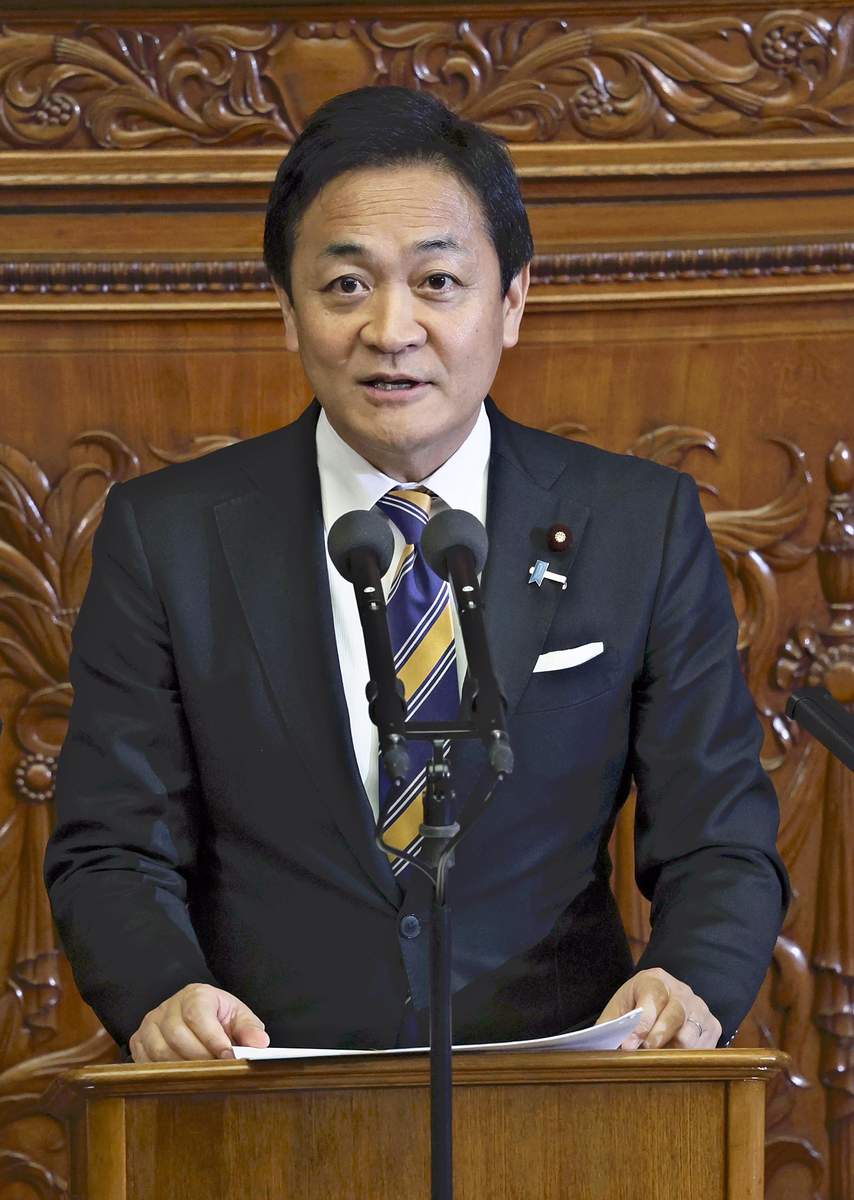
Democratic Party for the People leader Yuichiro Tamaki
14:23 JST, January 5, 2026
The Democratic Party for the People is drawing closer to the ruling Liberal Democratic Party, encouraged by its flagship policies being adopted one after another for the fiscal 2026 budget. Some in the ruling bloc are calling for the DPFP to join the coalition.
However, many in the DPFP are still circumspect about joining, citing issues such as coordinating candidates for elections. The party’s leader, Yuichiro Tamaki, is assessing the situation carefully.
Tamaki told reporters on Sunday in Ise, Mie Prefecture, about the party’s relationship with Prime Minister Sanae Takaichi’s administration. “Compared to before, a relationship of trust has been fostered. Cooperation will expand in proportion to the level of trust.”
The DPFP and the LDP agreed in last autumn’s extraordinary Diet session to end provisional surcharges on the gasoline tax and raise the “annual income barrier,” or the threshold at which income tax is levied, to ¥1.78 million. Both changes have long been championed by the DPFP. After the agreement, Tamaki pledged cooperation in passing the fiscal 2026 budget.
Given that the DPFP has long said it will only cooperate with the ruling bloc on a policy-to-policy basis, a senior LDP member said this was “a steppingstone toward their joining the coalition.”
The LDP and its coalition partner, the Japan Innovation Party, still lack a majority in the House of Councillors, and they need to quickly stabilize the administration. Even some in the JIP are supportive of collaborating with the DPFP.
However, the JIP is itself struggling to get its policies passed despite joining the ruling bloc, which has prompted one mid-ranking DPFP member to wonder if there is any benefit to joining the coalition. The Japanese Trade Union Confederation (Rengo), which backs the DPFP, is also against the party joining the bloc.
For the DPFP, banding together with the ruling parties could have its drawbacks given the electoral system for the House of Representatives.
Looking to expand its base, the DPFP plans to field 40 candidates in single-seat constituencies in the next lower house election and wants to keep pushing this number higher. Joining the ruling bloc may force it to withdraw some of its candidates.
Tamaki is advocating for multi-seat constituencies, which he believes would make it easier for parties to cooperate.
He previously advocated for the creation of a liaison council among political parties to support the government from outside the Cabinet, envisioning his party, the JIP and Komeito supporting the LDP on specific policies.
More than a few DPFP members also expect the party will be able to cooperate with Komeito as fellow centrists. Tamaki told those around him that he would determine what position is best for his party.
Meanwhile, Yoshihiko Noda, leader of the Constitutional Democratic Party of Japan, which is also supported by Rengo, criticized the DPFP, calling it “entirely part of the ruling bloc.”
As for Komeito, its executives are worried the DPFP will join the ruling bloc.



Most Read
Popular articles in the past 24 hours
-

Japanese Shipping Giants Halt Strait of Hormuz Transit as Iran Co...
-

U.S. Launches Attacks on Iran: Avoid Escalation of Conflict by An...
-

Improvement of Japanese Language Schools Lags Rise in Foreigners
-
Rental Lab Space in Tokyo Area More Than Doubles Since 2010, Offe...
-

Sawtooth Roof Factory Stands as Monument to Ashikaga Textile Hist...
-
Parents of Japanese Teen Shot in U.S. Strive for Gun Control
-
Disinformation Spreads About Team Mirai, Ballot Readers; Online P...
-
Bank of Japan Deputy Governor Says Rate Hikes Likely to Continue
Popular articles in the past week
-

Nepal Bus Crash Kills 19 People, Injures 25 Including One Japanes...
-
Milano Cortina 2026: Japanese Gold Medalist Figure Skater Miura S...
-
Tokyo Spends Big on Children, Wins Over Parents
-

McDonald's Japan Raises Prices; Big Mac to Cost ¥500, Double Chee...
-
‘Dry Bonsai’ Gives New Life to Withered Trees, Allows Free Artist...
-
Japan’s Miura, Kihara Announce Withdrawal from Figure Skating Wor...
-

Exhibition Featuring Yoshiharu Tsuge’s Manga World Underway in Ch...
-

Yokohama to Test Out Renewable-Powered Offshore Floating Data Cen...
Popular articles in the past month
-

Producer Behind Pop Group XG Arrested for Cocaine Possession
-

Japan PM Takaichi’s Cabinet Resigns en Masse
-

Man Infected with Measles Reportedly Dined at Restaurant in Tokyo...
-

Israeli Ambassador to Japan Speaks about Japan’s Role in the Reco...
-

Videos Plagiarized, Reposted with False Subtitles Claiming ‘Ryuky...
-

Man Infected with Measles May Have Come in Contact with Many Peop...
-

Prudential Life Insurance Plans to Fully Compensate for Damages C...
-

Woman with Measles Visited Hospital in Tokyo Multiple Times Befor...
Top Articles in Politics
-
Japan PM Takaichi’s Cabinet Resigns en Masse
-

Sanae Takaichi Elected Prime Minister of Japan; Keeps All Cabinet Appointees from Previous Term
-

Japan’s Govt to Submit Road Map for Growth Strategy in March, PM Takaichi to Announce in Upcoming Policy Speech
-

LDP Wins Historic Landslide Victory
-

LDP Wins Landslide Victory, Secures Single-party Majority; Ruling Coalition with JIP Poised to Secure Over 300 seats (UPDATE 1)
JN ACCESS RANKING
-
Producer Behind Pop Group XG Arrested for Cocaine Possession
-
Japan PM Takaichi’s Cabinet Resigns en Masse
-
Man Infected with Measles Reportedly Dined at Restaurant in Tokyo Station
-
Israeli Ambassador to Japan Speaks about Japan’s Role in the Reconstruction of Gaza
-
Videos Plagiarized, Reposted with False Subtitles Claiming ‘Ryukyu Belongs to China’; Anti-China False Information Also Posted in Japan