
Japanese R&D Tax Credits to Support Artificial Intelligence, Robotics, Semiconductors, Other Strategic Tech
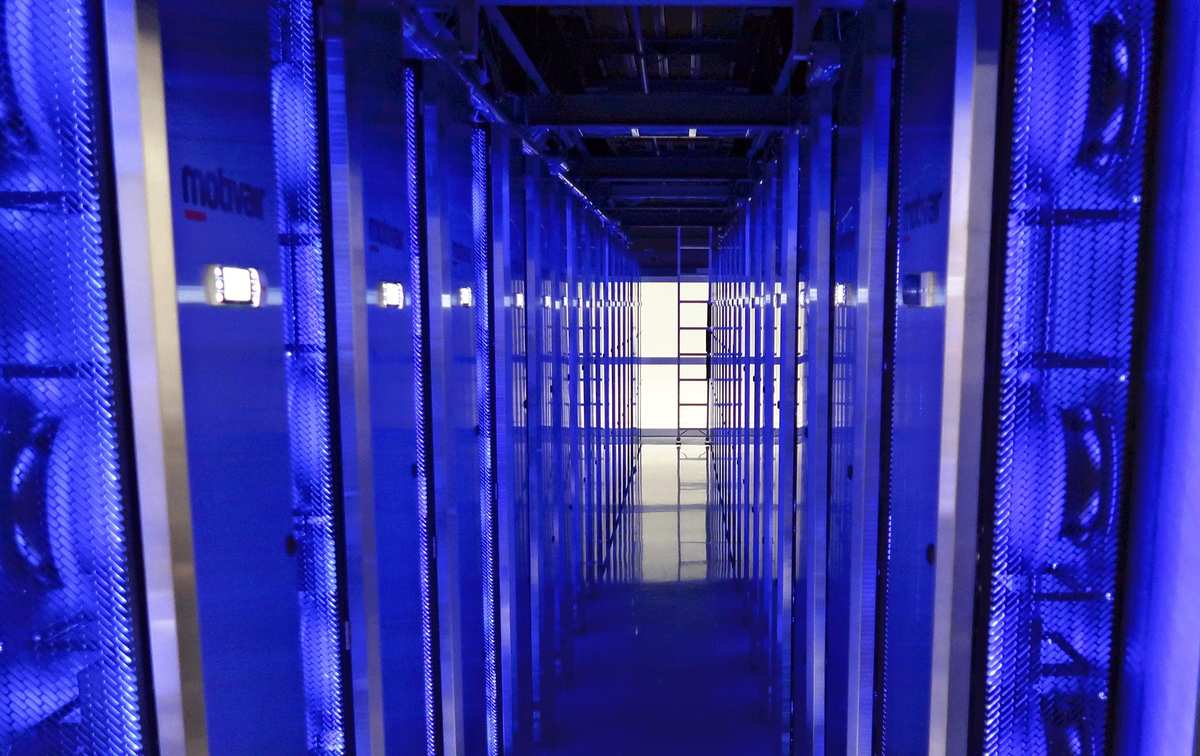
The ABCI 3.0 supercomputer at the National Institute of Advanced Industrial Science and Technology
17:07 JST, December 11, 2025
The government and the ruling coalition have entered the final stage of talks on expanding and introducing corporate tax breaks to support companies’ research and development and capital investment. For R&D spending on key technologies such as artificial intelligence, up to 40% or more of the investment amount would be deducted from corporate tax liabilities.
A new capital investment promotion tax system, allowing companies in all industries to deduct 7% of their capital outlays, will also be created. The measures will be written into the tax reform outline to be finalized by the end of the year.
For R&D investment, the enhanced tax incentives will apply to six fields the government designates as “national strategic technologies,” including “AI and advanced robotics” and “semiconductors and communications,” raising the ceiling on tax credits to as much as 40% of the investment amount — although for pre-approved joint research with universities and research institutions, the rate will be increased to as much as 50%.
For areas outside these six fields, the government will review the scheme by partially scaling back existing deduction rates and making other adjustments. Tax breaks will also be narrowed for R&D outsourced overseas, except in cases such as pharmaceutical companies conducting clinical trials abroad. The aim is to maintain and strengthen R&D bases within Japan.
The new capital investment promotion tax scheme will cover capital spending of at least ¥3.5 billion for large corporations and ¥500 million or more for small and midsize firms. Companies will be able to choose either a 7% tax credit or immediate expensing, under which the full amount of the investment can be booked as a cost in the first fiscal year. Investment plans formulated by the end of March 2029 will be eligible, and the tax relief is expected to total around ¥400 billion a year.
The government initially considered a more generous measure that would have raised the deduction rate to 15%, but shelved the idea because it would have overly expanded the scale of the tax cuts.
Global competition for leadership in key technologies such as semiconductors, quantum technology and nuclear fusion is intensifying, and the United States and Europe are also accelerating moves to strengthen tax incentives for capital investment.
In the United States, a permanent law allowing full and immediate expensing of capital investment costs was enacted in July this year. Germany has also passed a tax-cut package worth €46 billion (about ¥8.3 trillion), including future cuts to corporate taxes. Policymakers in Tokyo had feared that without comparable tax incentives, Japanese companies would shift more of their investment overseas.


Most Read
Popular articles in the past 24 hours
-

Japanese Shipping Giants Halt Strait of Hormuz Transit as Iran Co...
-

U.S. Launches Attacks on Iran: Avoid Escalation of Conflict by An...
-

Sawtooth Roof Factory Stands as Monument to Ashikaga Textile Hist...
-
Parents of Japanese Teen Shot in U.S. Strive for Gun Control
-
Disinformation Spreads About Team Mirai, Ballot Readers; Online P...
-
Asahi Breweries to Stage Comeback with New Product in April; Comp...
-
Bank of Japan Deputy Governor Says Rate Hikes Likely to Continue
-
Japanese Government Bonds Rally, Yields Tumble as Iran Strikes Sp...
Popular articles in the past week
-

Nepal Bus Crash Kills 19 People, Injures 25 Including One Japanes...
-
Milano Cortina 2026: Japanese Gold Medalist Figure Skater Miura S...
-
Tokyo Spends Big on Children, Wins Over Parents
-

McDonald's Japan Raises Prices; Big Mac to Cost ¥500, Double Chee...
-
Japan’s Miura, Kihara Announce Withdrawal from Figure Skating Wor...
-

Exhibition Featuring Yoshiharu Tsuge’s Manga World Underway in Ch...
-
Yokohama to Test Out Renewable-Powered Offshore Floating Data Cen...
-

BOJ Keeping Eye on Economy and Takaichi's ‘Proactive Fiscal Polic...
Popular articles in the past month
-

Producer Behind Pop Group XG Arrested for Cocaine Possession
-

Japan PM Takaichi’s Cabinet Resigns en Masse
-

Man Infected with Measles Reportedly Dined at Restaurant in Tokyo...
-

Israeli Ambassador to Japan Speaks about Japan’s Role in the Reco...
-

Videos Plagiarized, Reposted with False Subtitles Claiming ‘Ryuky...
-

Man Infected with Measles May Have Come in Contact with Many Peop...
-

Prudential Life Insurance Plans to Fully Compensate for Damages C...
-

Woman with Measles Visited Hospital in Tokyo Multiple Times Befor...
Top Articles in Politics
-
Japan PM Takaichi’s Cabinet Resigns en Masse
-

Sanae Takaichi Elected Prime Minister of Japan; Keeps All Cabinet Appointees from Previous Term
-

Japan’s Govt to Submit Road Map for Growth Strategy in March, PM Takaichi to Announce in Upcoming Policy Speech
-

LDP Wins Historic Landslide Victory
-

LDP Wins Landslide Victory, Secures Single-party Majority; Ruling Coalition with JIP Poised to Secure Over 300 seats (UPDATE 1)
JN ACCESS RANKING
-
Producer Behind Pop Group XG Arrested for Cocaine Possession
-
Japan PM Takaichi’s Cabinet Resigns en Masse
-
Man Infected with Measles Reportedly Dined at Restaurant in Tokyo Station
-
Israeli Ambassador to Japan Speaks about Japan’s Role in the Reconstruction of Gaza
-
Videos Plagiarized, Reposted with False Subtitles Claiming ‘Ryukyu Belongs to China’; Anti-China False Information Also Posted in Japan