
Japan, U.S. Share Understanding That Tariff Discussions Progressing Toward Agreement; Sides Will Coordinate for Leaders to Meet During G7 Summit
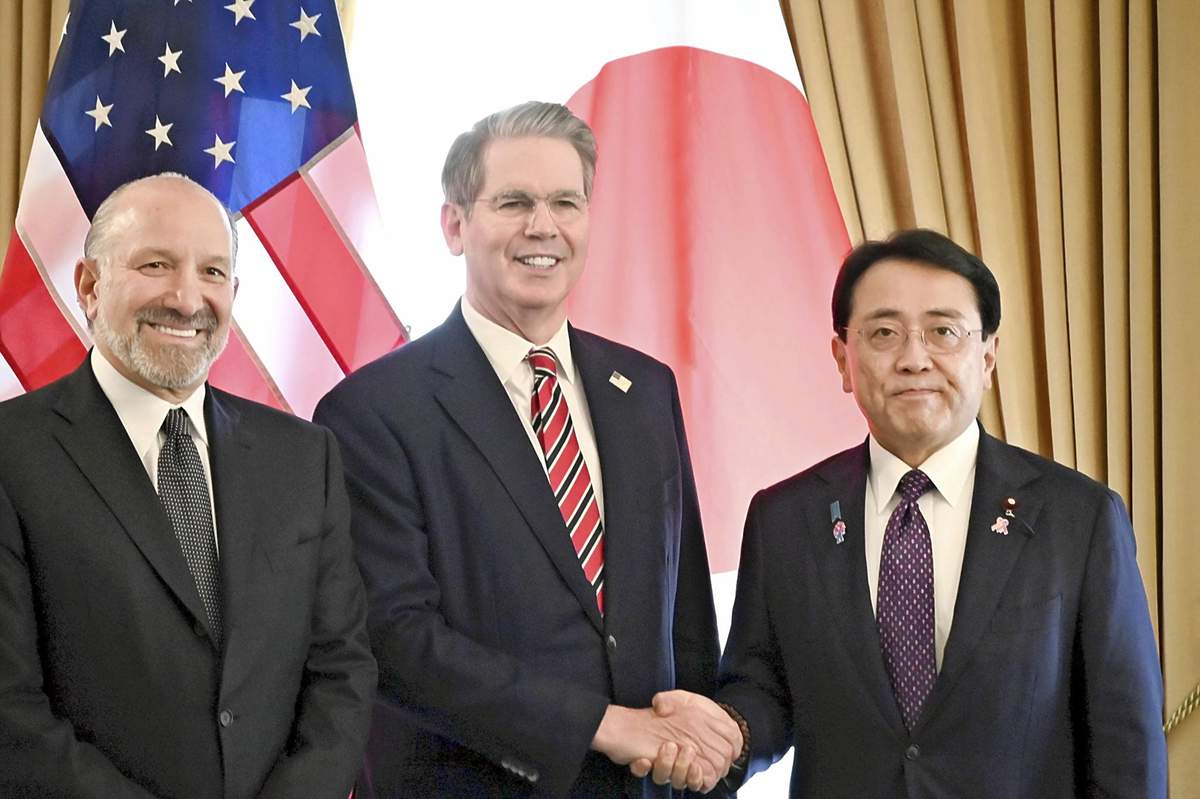
From the right, Ryosei Akazawa, Japan’s economic revitalization minister, U.S. Secretary of the Treasury Scott Bessent and U.S. Secretary of Commerce Howard Lutnick are seen in Washington on Friday.
16:48 JST, May 31, 2025
WASHINGTON — Japan and the United States shared a common understanding that their discussions are progressing toward an agreement during the fourth round of Japan-U.S. ministerial tariff negotiations in Washington on Friday. The two countries will accelerate the discussions, aiming for the two leaders to reach an agreement at the Group of Seven summit in Canada in mid-June.
Ryosei Akazawa, Japan’s economic revitalization minister and chief tariff negotiator, talked with U.S. Secretary of the Treasury Scott Bessent and Secretary of Commerce Howard Lutnick for two hours and 10 minutes.
In the negotiations, the Japanese side demanded that the United States abolish the series of tariff measures it has put on goods, including additional tariffs on automobiles, steel and aluminum products. Meanwhile, the U.S. side asked for Japan to take measures such as expanding investment in the United States and cooperating on economic security.
“Mutual understanding is deepening,” Akazawa told reporters after the discussion. “Japan and the United States were able to fully recognize each other’s positions and confirm that the discussion is progressing toward an agreement. We will accelerate our coordination.”
Japan and the United States are coordinating to hold talks between Prime Minister Shigeru Ishiba and U.S. President Donald Trump to coincide with the G7 summit.
Aiming for the two leaders to reach an agreement, the two governments also agreed to hold a ministerial-level meeting ahead of the G7 summit.
Akazawa said the abolition of these tariffs is a precondition for an agreement. “The Japanese automobile industry has been placed in a position where it may be losing ¥1 billion or ¥2 billion per day,” he said. “I don’t think it will work to leave any part of the tariffs in place.”
During the most recent negotiations, participants are thought to have discussed cooperation to strengthen supply chains for rare earths and semiconductors, as well as expanding Japanese imports of American agricultural products and reviewing non-tariff barriers on importing automobiles.


Related Tags



Most Read
Popular articles in the past 24 hours
-

Japan Train Company to Increase Fares, Including in Tokyo Metropo...
-
Hawaii Museum on Tsunami Including Japan's 2011 Disaster at Risk ...
-
Japan Govt to Tighten Requirements to Receive Permanent Residency...
-

Tail of ANA Plane Struck Runway During Landing in Houston; No Inj...
-

Samurai Japan Holds First Practice in Miami; Team Will Play again...
-

Iran Targets Busiest International Airport as Top UN Body Demands...
-

Medical Care at Home and Disasters: Ensure Systems to Provide Con...
-

Japan to Face Venezuela in World Baseball Classic Quarterfinals
Popular articles in the past week
-

Japan Figure Skating Legend Yuzuru Hanyu Is Proud Disaster Surviv...
-

Nippon Life Insurance's U.S. Arm Sues OpenAI Over Legal Assistanc...
-

Ibaraki Pref.'s 1st Foreign Bus Driver Hired in Tsukuba
-
Govt to Utilize ODA for Ensuring Economic Security; Securing Ener...
-
Massive Sewer Pipe Found Jutting Out of Highway in Osaka
-
Amid Strait of Hormuz Blockade, Shipping Companies Scramble to Ge...
-

Beckoning Cats Get Makeover to Fit Modern Lifestyles with Sleek D...
-
Japan Govt Survey Finds Just 10% of Workers Want Working Hours to...
Popular articles in the past month
-

Producer Behind Pop Group XG Arrested for Cocaine Possession
-

Japan PM Takaichi’s Cabinet Resigns en Masse
-

Man Infected with Measles Reportedly Dined at Restaurant in Tokyo...
-

Videos Plagiarized, Reposted with False Subtitles Claiming ‘Ryuky...
-

iPS Treatments Pass Key Milestone, but Broader Applications Far f...
-

Sanae Takaichi Elected Prime Minister of Japan; Keeps All Cabinet...
-
Japan Figure Skating Legend Yuzuru Hanyu Is Proud Disaster Surviv...
-

Nepal Bus Crash Kills 19 People, Injures 25 Including One Japanes...
Top Articles in Politics
-
Japan PM Takaichi’s Cabinet Resigns en Masse
-
Sanae Takaichi Elected Prime Minister of Japan; Keeps All Cabinet Appointees from Previous Term
-

Japan’s Govt to Submit Road Map for Growth Strategy in March, PM Takaichi to Announce in Upcoming Policy Speech
-
LDP Begins Training New Lawmakers to Avoid Scandal, Gaffes; Historic Victory in Latest Election Heightens Focus on Party
-

Japan PM Sanae Takaichi Welcomes Peach Ambassadors Koga Momo Musume to Official Residence
JN ACCESS RANKING
-
Producer Behind Pop Group XG Arrested for Cocaine Possession
-
Japan PM Takaichi’s Cabinet Resigns en Masse
-
Man Infected with Measles Reportedly Dined at Restaurant in Tokyo Station
-
Videos Plagiarized, Reposted with False Subtitles Claiming ‘Ryukyu Belongs to China’; Anti-China False Information Also Posted in Japan
-
iPS Treatments Pass Key Milestone, but Broader Applications Far from Guaranteed