
Japan Asks to be Exempted from U.S. Aluminum, Steel Tariffs; Ishiba Says He Did Not Discuss the Matter with Trump during Summit Meeting
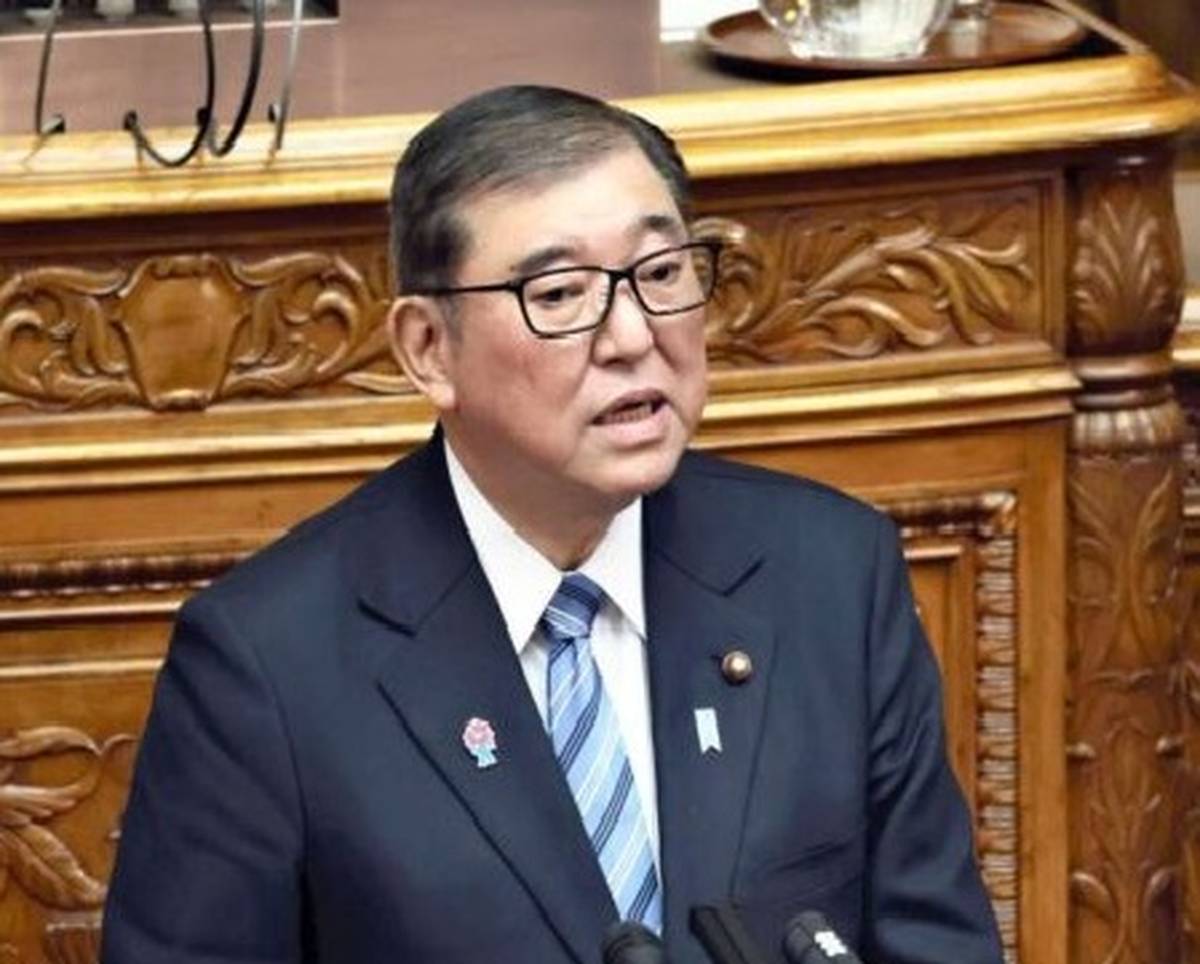
Prime Minister Shigeru Ishiba speaks at the House of Councillors’ plenary session in Tokyo on Wednesday.
21:00 JST, February 12, 2025
The Japanese government on Wednesday asked the United States, which has announced that it will impose 25% tariffs on steel and aluminum products, to exempt Japan from those duties.
U.S. President Donald Trump recently signed executive orders raising the tariff rate on steel and aluminum imports to 25%.
Japan intends to closely monitor the Trump administration’s actions, while assessing the potential impact of the tariffs on the domestic market.
“We will take necessary measures, such as urging the United States to exempt Japan from the tariffs, while carefully examining the details of these [U.S.] rules and their impact on our country,” Prime Minister Shigeru Ishiba said at the House of Councillors’ plenary session Wednesday.
As to whether tariffs on Japan were on the agenda at his summit meeting with Trump in Washington on Saturday (Friday local time), he explained that they did not discuss this issue, as it had not been officially announced at the time.
According to Chief Cabinet Secretary Yoshimasa Hayashi, Tokyo made a request to Washington for an exemption from the tariffs through the Japanese Embassy in the United States on Wednesday (Tuesday local time).
Economy, Trade and Industry Minister Yoji Muto expressed concern about this issue at a press conference Wednesday, saying, “Broad-based trade restrictions could have a major impact on the global economy and the entire multilateral trade regime based on World Trade Organization rules.”
He noted that, if Japan is made subject to these tariffs, any damages incurred by Japanese companies whose contracts with American firms are broken as a result will be covered by Nippon Export and Investment Insurance (NEXI).
Trump originally imposed tariffs on imported steel and aluminum products under section 232 of the Trade Expansion Act of 1962 during his first administration. The new tariffs are due to take effect on March 12.
Exceptions that until now have been applied to products from Japan and certain other countries and regions, such as duty-free access, will be eliminated.


Related Tags


Most Read
Popular articles in the past 24 hours
-

3,000 Accounts Posting, Spreading Content Critical of Japan on X;...
-

My Spendthrift Mother Constantly Asks Me for Money
-
Japanese Students Use Traditional Pickle to Create Novel Wagashi ...
-
‘Dry Bonsai’ Gives New Life to Withered Trees, Allows Free Artist...
-

A Packed Bus Plunges off a Nepal Highway, Killing 19 and Injuring...
-
Dozens of Jewelry, Other Items Stolen After Glass Door, Showcases...
-

1.2 Mil. Rapeseed Flowers Attract Cute Birds, People in Aichi Pre...
-

Kofu Records 25.3 C; Ome in Western Tokyo Sees 25.1 C
Popular articles in the past week
-

Japan PM Takaichi’s Cabinet Resigns en Masse
-

Man Infected with Measles Reportedly Dined at Restaurant in Tokyo...
-

Sanae Takaichi Elected Prime Minister of Japan; Keeps All Cabinet...
-

Japan's Govt to Submit Road Map for Growth Strategy in March, PM ...
-

Bus Carrying 40 Passengers Catches Fire on Chuo Expressway; All E...
-
U.S. Firm to Build Training Hub in Fukushima N-plant for Debris R...
-

Japan, U.S. Name 3 Inaugural Investment Projects; Reached Agreeme...
-

Riku-Ryu Pair Wins Gold Medal: Their Strong Bond Leads to Major C...
Popular articles in the past month
-
Japan PM Takaichi’s Cabinet Resigns en Masse
-

Japan Institute to Use Domestic Commercial Optical Lattice Clock ...
-

Israeli Ambassador to Japan Speaks about Japan’s Role in the Reco...
-
Man Infected with Measles Reportedly Dined at Restaurant in Tokyo...
-

Videos Plagiarized, Reposted with False Subtitles Claiming ‘Ryuky...
-

Man Infected with Measles May Have Come in Contact with Many Peop...
-

Prudential Life Insurance Plans to Fully Compensate for Damages C...
-

Woman with Measles Visited Hospital in Tokyo Multiple Times Befor...
Top Articles in Politics
-
Japan PM Takaichi’s Cabinet Resigns en Masse
-
Sanae Takaichi Elected Prime Minister of Japan; Keeps All Cabinet Appointees from Previous Term
-
Japan’s Govt to Submit Road Map for Growth Strategy in March, PM Takaichi to Announce in Upcoming Policy Speech
-

LDP Wins Historic Landslide Victory
-

LDP Wins Landslide Victory, Secures Single-party Majority; Ruling Coalition with JIP Poised to Secure Over 300 seats (UPDATE 1)
JN ACCESS RANKING
-
Japan PM Takaichi’s Cabinet Resigns en Masse
-
Japan Institute to Use Domestic Commercial Optical Lattice Clock to Set Japan Standard Time
-
Israeli Ambassador to Japan Speaks about Japan’s Role in the Reconstruction of Gaza
-
Man Infected with Measles Reportedly Dined at Restaurant in Tokyo Station
-
Videos Plagiarized, Reposted with False Subtitles Claiming ‘Ryukyu Belongs to China’; Anti-China False Information Also Posted in Japan