
Government Plans to Raise Eco-Friendly Car Subsidies from April; Japanese Manufacturers Using ‘Green Steel’ Able to Receive Up to ¥50,000

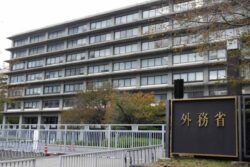
The Economy, Trade and Industry Ministry in Chiyoda Ward, Tokyo
21:00 JST, January 29, 2025
The Economy, Trade and Industry Ministry plans to raise subsidies for purchasers of electric vehicles and other eco-friendly cars by up to ¥50,000 from April.
The subsidies will be applicable to automakers that use so-called green steel in their cars. Green steel refers to steel produced while minimizing carbon dioxide emissions.
To reduce CO2 emissions in operation as well as production processes, the ministry will encourage steel suppliers to invest more in decarbonization measures.
The ministry officially announced the policy on Monday.
The increase will apply to automakers that submit procurement plans along with predicted percentages of green steel use until fiscal 2030.
The ministry expects that almost all Japanese automakers will submit plans. The ministry will evaluate the plans by the end of March and decide on the amount of the subsidies during fiscal 2025; actual procurement records will be reviewed in and after fiscal 2026.
Currently, the government’s subsidies for eco-friendly cars are up to ¥850,000 for EVs, ¥550,000 for mini EVs and plug-in hybrid vehicles (PHVs), and ¥2.55 million for fuel cell vehicles.
Up to ¥50,000 will be added to each under the new scheme.
Thirty percent or more of Japan’s CO2 emissions come from the industrial sector, with steel makers accounting for the most at about 40%.
Twenty percent or more of domestically produced steel is used in car manufacturing. If steel makers increase green steel production, it can contribute to reducing CO2 emissions.
However, green steel requires high costs for development and capital investment, making automakers cautious about green steel raising production costs. Steel makers are also reluctant to proactively invest in making green steel production a reality.
The ministry believes if automakers implement more green steel, it will allow for steel manufacturers to make investments.
CO2 emissions from automobile manufacturing are being increasingly monitored all over the world.
From 2026, the EU will require automakers voluntarily report their CO2 emission levels.




Most Read
Popular articles in the past 24 hours
-

3,000 Accounts Posting, Spreading Content Critical of Japan on X;...
-

My Spendthrift Mother Constantly Asks Me for Money
-

Japanese Students Use Traditional Pickle to Create Novel Wagashi ...
-

‘Dry Bonsai’ Gives New Life to Withered Trees, Allows Free Artist...
-

A Packed Bus Plunges off a Nepal Highway, Killing 19 and Injuring...
-

Dozens of Jewelry, Other Items Stolen After Glass Door, Showcases...
-

1.2 Mil. Rapeseed Flowers Attract Cute Birds, People in Aichi Pre...
-

Kofu Records 25.3 C; Ome in Western Tokyo Sees 25.1 C
Popular articles in the past week
-

Producer Behind Pop Group XG Arrested for Cocaine Possession
-

Japan PM Takaichi’s Cabinet Resigns en Masse
-

Man Infected with Measles Reportedly Dined at Restaurant in Tokyo...
-

Sanae Takaichi Elected Prime Minister of Japan; Keeps All Cabinet...
-
Japan's Govt to Submit Road Map for Growth Strategy in March, PM ...
-

Bus Carrying 40 Passengers Catches Fire on Chuo Expressway; All E...
-
U.S. Firm to Build Training Hub in Fukushima N-plant for Debris R...
-
Japan, U.S. Name 3 Inaugural Investment Projects; Reached Agreeme...
Popular articles in the past month
-
Producer Behind Pop Group XG Arrested for Cocaine Possession
-
Japan PM Takaichi’s Cabinet Resigns en Masse
-

Japan Institute to Use Domestic Commercial Optical Lattice Clock ...
-

Israeli Ambassador to Japan Speaks about Japan’s Role in the Reco...
-
Man Infected with Measles Reportedly Dined at Restaurant in Tokyo...
-

Videos Plagiarized, Reposted with False Subtitles Claiming ‘Ryuky...
-

Man Infected with Measles May Have Come in Contact with Many Peop...
-

Prudential Life Insurance Plans to Fully Compensate for Damages C...
Top Articles in Politics
-
Japan PM Takaichi’s Cabinet Resigns en Masse
-
Sanae Takaichi Elected Prime Minister of Japan; Keeps All Cabinet Appointees from Previous Term
-
Japan’s Govt to Submit Road Map for Growth Strategy in March, PM Takaichi to Announce in Upcoming Policy Speech
-

LDP Wins Historic Landslide Victory
-

LDP Wins Landslide Victory, Secures Single-party Majority; Ruling Coalition with JIP Poised to Secure Over 300 seats (UPDATE 1)
JN ACCESS RANKING
-
Producer Behind Pop Group XG Arrested for Cocaine Possession
-
Japan PM Takaichi’s Cabinet Resigns en Masse
-
Japan Institute to Use Domestic Commercial Optical Lattice Clock to Set Japan Standard Time
-
Israeli Ambassador to Japan Speaks about Japan’s Role in the Reconstruction of Gaza
-
Man Infected with Measles Reportedly Dined at Restaurant in Tokyo Station