
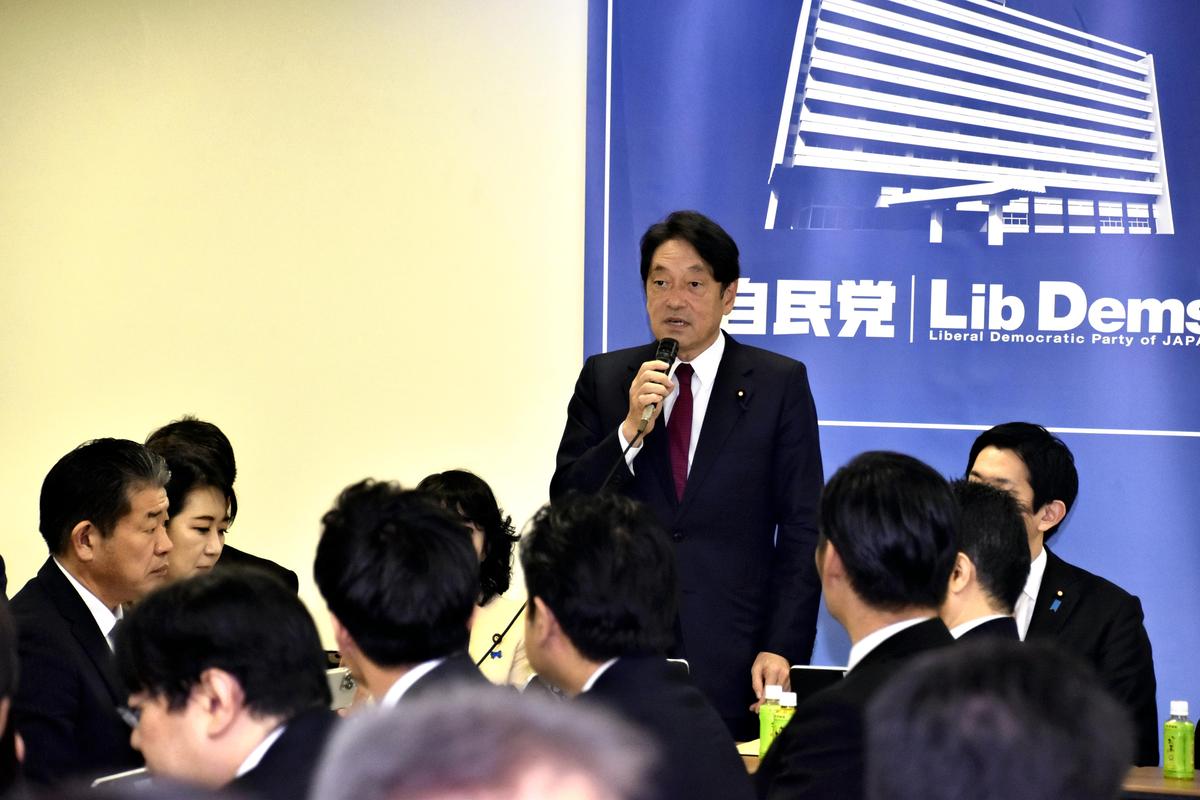
Itsunori Onodera, chairperson of the Liberal Democratic Party’s Research Commission on the Tax System, speaks at the commission’s meeting in Chiyoda Ward, Tokyo, on Nov. 20.
15:23 JST, December 6, 2025
The government and ruling parties have begun debating on raising the income tax rate by 1 percentage point starting in January 2027 to use in strengthening the nation’s defense capabilities.
They plan to lower the special income tax for reconstruction of disaster-hit areas following the 2011 Great East Japan Earthquake also by 1 percentage point.
By doing so, individual taxpayers’ total burden in a single fiscal year will be unchanged.
The government and ruling parties aim to include the measure in their fiscal 2026 taxation reform outline.
Itsunori Onodera, chairperson of the Liberal Democratic Party’s Research Commission on the Tax System, told reporters after the commission’s meeting on Friday, “There were no objections [about details such as the timing of when to start]. Showing a firm stance about the national security can lead to improvements in deterrence.”
In the government’s fiscal 2023 taxation reform outline, it stipulated that the rates of corporate tax, tobacco tax and income tax will be raised so that the government secures more than ¥1 trillion a year of additional tax revenue in fiscal 2027 to strengthen defense capabilities.
Though it was decided to raise the corporate and tobacco taxes starting in April 2026, the decision about when to start raising income tax had been postponed.
The special income tax for reconstruction is a time-limited measure that continues until the end of 2037, but the government is considering extending it.
As the tax raise for defense purposes is a permanent measure, the tax burden on people will rise in the long-term.



Most Read
Popular articles in the past 24 hours
-

Japanese Shipping Giants Halt Strait of Hormuz Transit as Iran Co...
-

U.S. Launches Attacks on Iran: Avoid Escalation of Conflict by An...
-

Sawtooth Roof Factory Stands as Monument to Ashikaga Textile Hist...
-
Parents of Japanese Teen Shot in U.S. Strive for Gun Control
-
Disinformation Spreads About Team Mirai, Ballot Readers; Online P...
-
Asahi Breweries to Stage Comeback with New Product in April; Comp...
-
Bank of Japan Deputy Governor Says Rate Hikes Likely to Continue
-
Japanese Government Bonds Rally, Yields Tumble as Iran Strikes Sp...
Popular articles in the past week
-

Nepal Bus Crash Kills 19 People, Injures 25 Including One Japanes...
-
Milano Cortina 2026: Japanese Gold Medalist Figure Skater Miura S...
-
Tokyo Spends Big on Children, Wins Over Parents
-

McDonald's Japan Raises Prices; Big Mac to Cost ¥500, Double Chee...
-
Japan’s Miura, Kihara Announce Withdrawal from Figure Skating Wor...
-

Exhibition Featuring Yoshiharu Tsuge’s Manga World Underway in Ch...
-

Yokohama to Test Out Renewable-Powered Offshore Floating Data Cen...
-
BOJ Keeping Eye on Economy and Takaichi's ‘Proactive Fiscal Polic...
Popular articles in the past month
-

Producer Behind Pop Group XG Arrested for Cocaine Possession
-

Japan PM Takaichi’s Cabinet Resigns en Masse
-

Man Infected with Measles Reportedly Dined at Restaurant in Tokyo...
-

Israeli Ambassador to Japan Speaks about Japan’s Role in the Reco...
-

Videos Plagiarized, Reposted with False Subtitles Claiming ‘Ryuky...
-

Man Infected with Measles May Have Come in Contact with Many Peop...
-

Prudential Life Insurance Plans to Fully Compensate for Damages C...
-
Woman with Measles Visited Hospital in Tokyo Multiple Times Befor...
Top Articles in Politics
-
Japan PM Takaichi’s Cabinet Resigns en Masse
-

Sanae Takaichi Elected Prime Minister of Japan; Keeps All Cabinet Appointees from Previous Term
-
Japan’s Govt to Submit Road Map for Growth Strategy in March, PM Takaichi to Announce in Upcoming Policy Speech
-

LDP Wins Historic Landslide Victory
-

LDP Wins Landslide Victory, Secures Single-party Majority; Ruling Coalition with JIP Poised to Secure Over 300 seats (UPDATE 1)
JN ACCESS RANKING
-
Producer Behind Pop Group XG Arrested for Cocaine Possession
-
Japan PM Takaichi’s Cabinet Resigns en Masse
-
Man Infected with Measles Reportedly Dined at Restaurant in Tokyo Station
-
Israeli Ambassador to Japan Speaks about Japan’s Role in the Reconstruction of Gaza
-
Videos Plagiarized, Reposted with False Subtitles Claiming ‘Ryukyu Belongs to China’; Anti-China False Information Also Posted in Japan