
Japan, U.S. Plan Joint HQ for U.S. Forces in Japan to Boost Cooperation Between U.S. Military, Self-Defense Forces
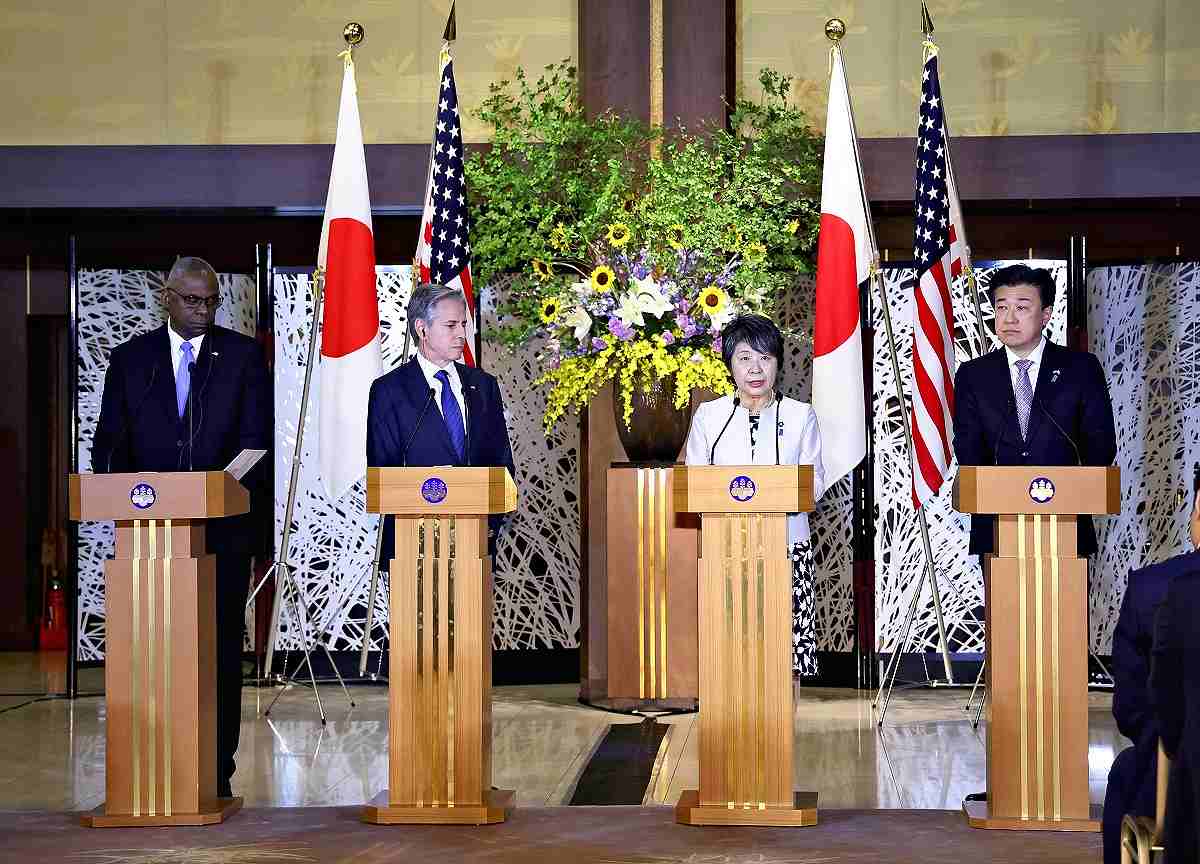
From left: U.S. Defense Secretary Lloyd Austin, U.S. Secretary of State Antony Blinken, Foreign Minister Yoko Kamikawa and Defense Minister Minoru Kihara hold a joint press conference in Tokyo on Sunday.
7:00 JST, July 29, 2024
Japan and the United States agreed to set up a joint force headquarters of the U.S. Army, Navy, Air Force and Marine Corps stationed in Japan, during two-plus-two defense talks attended by the defense and foreign ministers of the two governments in Tokyo on Sunday.
The main theme of the talks, also known as the Security Consultative Committee, was reviewing the framework of command and control of the Self-Defense Forces and the U.S. armed forces stationed in Japan, to strengthen cooperation between the two sides. The joint force headquarters will have a certain level of authority to coordinate operations and exercises, which is expected to deepen cooperation between the SDF and U.S. armed forces in Japan.
The Japanese and U.S. governments also held a bilateral dialogue on extended deterrence, which includes the use of nuclear deterrence, in Tokyo on Sunday. It was the first ministerial-level meeting of the bilateral discussions on extended deterrence, and the two countries confirmed the unwavering U.S. policy to defend Japan militarily, including through its nuclear capabilities.
In a joint announcement, the two governments confirmed that both countries will continue to explore how best to reinforce extended deterrence.
The Japanese and the U.S. governments have regularly discussed extended deterrence at working-level meetings since 2010. According to Japanese government sources, Japan and the United States plan to issue a joint statement on extended deterrence based on the results of past dialogue. It will likely include the views of both governments so the deterrence will be fully effective.
Specifically, the statement will likely include the United States’ commitment to contribute to deterrence in areas around Japan through such means as its nuclear power. It is expected to outline the capabilities that the United States will provide from peacetime to contingency, including what circumstances facing Japan would spur the United States to retaliate against third-party countries.





Most Read
Popular articles in the past 24 hours
-

Japan Train Company to Increase Fares, Including in Tokyo Metropo...
-
Japan Govt to Tighten Requirements to Receive Permanent Residency...
-

Tail of ANA Plane Struck Runway During Landing in Houston; No Inj...
-

Samurai Japan Holds First Practice in Miami; Team Will Play again...
-

Medical Care at Home and Disasters: Ensure Systems to Provide Con...
-

Iran Targets Busiest International Airport as Top UN Body Demands...
-

Japan to Face Venezuela in World Baseball Classic Quarterfinals
-

North Korean Leader Kim and His Daughter Try out New Pistols at S...
Popular articles in the past week
-

Japan Figure Skating Legend Yuzuru Hanyu Is Proud Disaster Surviv...
-

Nippon Life Insurance's U.S. Arm Sues OpenAI Over Legal Assistanc...
-

Ibaraki Pref.'s 1st Foreign Bus Driver Hired in Tsukuba
-

Govt to Utilize ODA for Ensuring Economic Security; Securing Ener...
-
Massive Sewer Pipe Found Jutting Out of Highway in Osaka
-

Beckoning Cats Get Makeover to Fit Modern Lifestyles with Sleek D...
-
Japan Govt Survey Finds Just 10% of Workers Want Working Hours to...
-
Japan's 2nd Round of U.S. Investments May Be Worth Over $100 Bill...
Popular articles in the past month
-

Producer Behind Pop Group XG Arrested for Cocaine Possession
-

Japan PM Takaichi’s Cabinet Resigns en Masse
-

Man Infected with Measles Reportedly Dined at Restaurant in Tokyo...
-

Videos Plagiarized, Reposted with False Subtitles Claiming ‘Ryuky...
-

iPS Treatments Pass Key Milestone, but Broader Applications Far f...
-
Japan Figure Skating Legend Yuzuru Hanyu Is Proud Disaster Surviv...
-

Sanae Takaichi Elected Prime Minister of Japan; Keeps All Cabinet...
-

Nepal Bus Crash Kills 19 People, Injures 25 Including One Japanes...
Top Articles in Politics
-
Japan PM Takaichi’s Cabinet Resigns en Masse
-
Sanae Takaichi Elected Prime Minister of Japan; Keeps All Cabinet Appointees from Previous Term
-

Japan’s Govt to Submit Road Map for Growth Strategy in March, PM Takaichi to Announce in Upcoming Policy Speech
-
LDP Begins Training New Lawmakers to Avoid Scandal, Gaffes; Historic Victory in Latest Election Heightens Focus on Party
-

Japan PM Sanae Takaichi Welcomes Peach Ambassadors Koga Momo Musume to Official Residence
JN ACCESS RANKING
-
Producer Behind Pop Group XG Arrested for Cocaine Possession
-
Japan PM Takaichi’s Cabinet Resigns en Masse
-
Man Infected with Measles Reportedly Dined at Restaurant in Tokyo Station
-
Videos Plagiarized, Reposted with False Subtitles Claiming ‘Ryukyu Belongs to China’; Anti-China False Information Also Posted in Japan
-
iPS Treatments Pass Key Milestone, but Broader Applications Far from Guaranteed