
Japan Expands Roadside Stations to Serve as Disaster Response Hubs, Boosting National Resilience
15:45 JST, August 17, 2025
Interest is growing in the disaster response functions of Michi-no-Eki roadside stations, which have been developed by municipalities along Japan’s major highways.
These facilities offer large parking areas where firefighting and Self-Defense Force vehicles can gather during emergencies, making them potential bases for rescue, recovery and aid operations. To date, the Land, Infrastructure, Transport and Tourism Ministry has designated 79 locations nationwide as disaster prevention roadside stations, which proved their worth during the Noto Peninsula Earthquake in January 2024.
Roadside stations are facilities established by cities, towns and public organizations to promote regional development, provide rest and lodging, and disseminate information. Japan introduced a national registration system in 1993, and as of January this year, there are 1,230 stations across the country. To be registered, a facility must offer 24-hour restrooms and parking, as well as tourism and road information. A government subsidy program helps cover construction costs.
Serving as disaster response hub
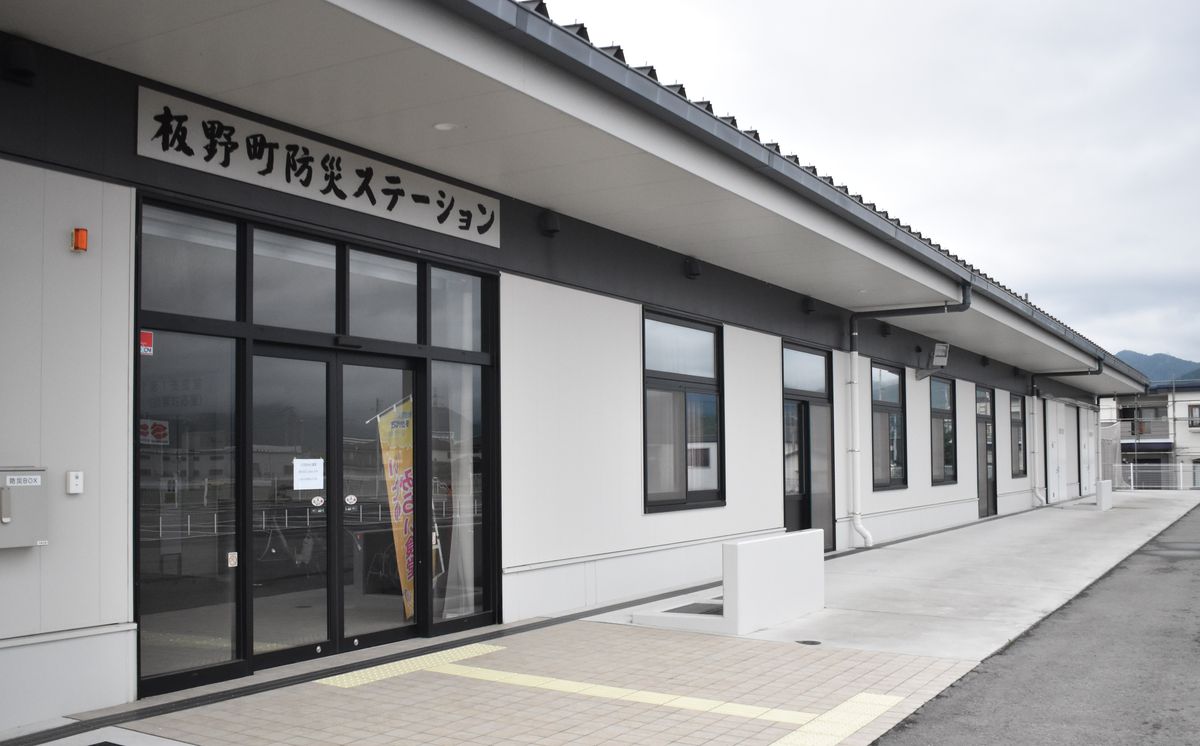
Itano disaster prevention station
One example of a disaster prevention roadside station is Itano, located in Itano, Tokushima Prefecture. It opened in April 2021 with a dual role as a disaster base. Reachable in three minutes by car from the Itano Interchange of the Takamatsu Expressway and the Aizumi Interchange of the Tokushima Expressway, Itano is also 12 kilometers inland from the Kii Channel and outside the projected tsunami inundation zone for an earthquake along the Nankai Trough.
It is equipped with facilities for disaster prevention, such as a heliport and a parking lot with a capacity for 326 cars including large sized vehicles. In the event of a Nankai Trough earthquake, it will serve as a hub for response and other disaster-related units.
A multi-purpose facility that functions as the town’s disaster response headquarters and as an evacuation center is capable of accommodating about 90 evacuees. Its storage warehouse holds 18,000 emergency meals and other supplies. Folding beds can be set up in conference spaces in the event of an evacuation. The changing rooms are equipped with washing machines and the facility is also equipped with a kitchen and a shower room.
Roadside stations first gained recognition for their disaster capabilities after the 2004 Niigata Prefecture Chuetsu Earthquake. Amid widespread power outages in Tokamachi, Niigata Prefecture, the Cross-ten roadside station kept its lights on with its own generator and served as an evacuation shelter, water-supply point and distribution hub for relief goods. During the 2011 Great East Japan Earthquake, the Tono Kazeno Oka roadside station in Tono, Iwate Prefecture, served as a base for Self-Defense Forces and firefighters.
Building on these successes, the ministry created the disaster prevention roadside station designation in 2021, which requires quake-resistant buildings, emergency power supplies and at least 2,500 square meters of parking. The ministry increased grants for stockpiles and power generation equipment as well as support for disaster drills.
Of the 39 stations selected in 2021, Noto Satoyama Airport in Wajima, Ishikawa Prefecture, and Arai roadside station in Myoko, Niigata Prefecture, served as hubs for road clearing and relief supply logistics during the Noto Peninsula Earthquake. In May, the ministry added 40 more stations — now spreading across 43 prefectures excluding Tokyo, Kanagawa, Osaka and Okinawa — to broaden coverage nationwide.
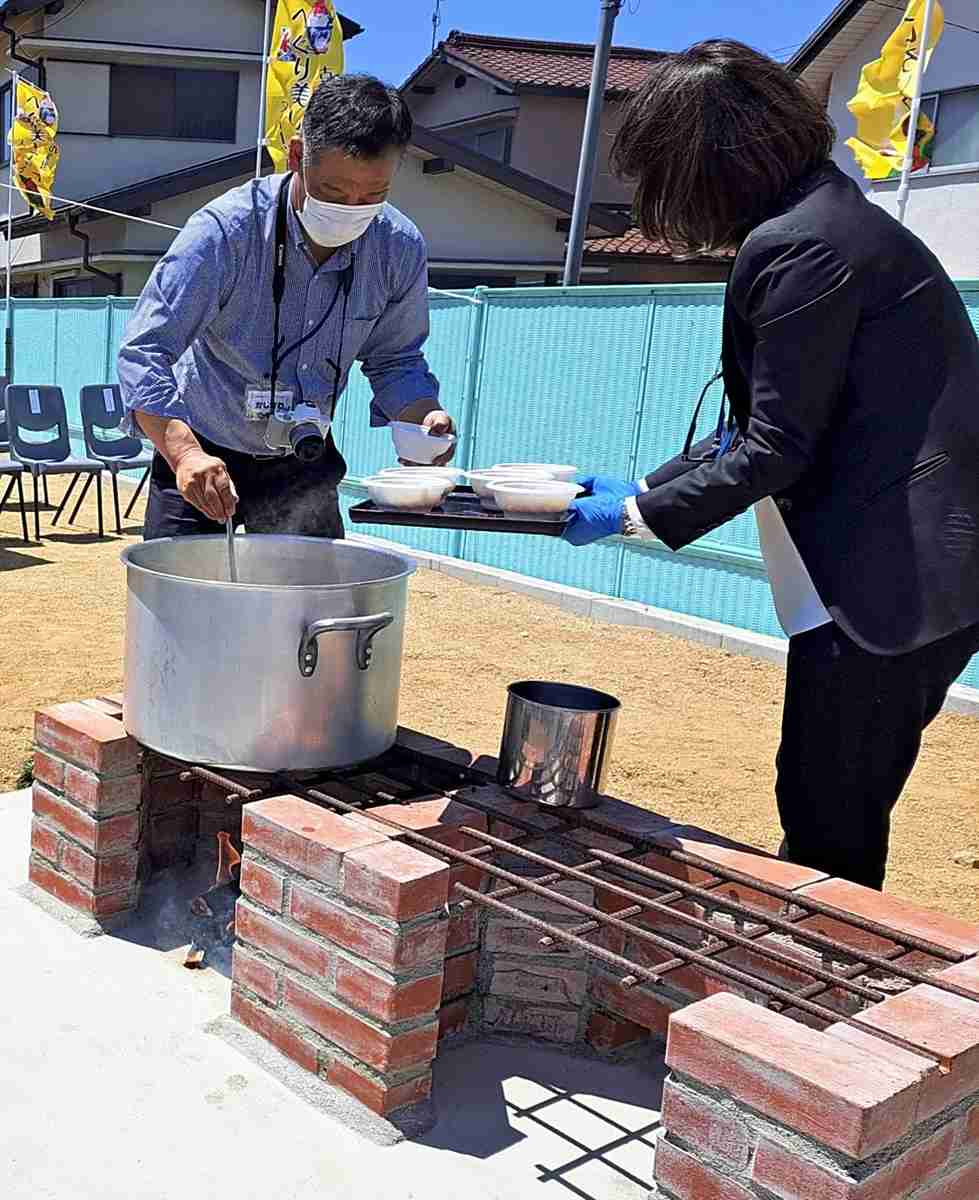
People cook on a kamado cooking bench.
According to the ministry, about 800 roadside stations, roughly two-thirds of the total, are now incorporated into municipal disaster-prevention plans as first-stage evacuation points or supply depots.
Even non-designated stations play key roles: the Yamatoji Heguri roadside station in Heguri, Nara Prefecture, though not a disaster prevention roadside station, functions as a local shelter and features a kamado cooking bench whose seats can be removed to reveal built-in stoves.
Some disaster prevention roadside stations, however, focus solely on logistics and are not intended as shelters. It is therefore important for residents to confirm in advance whether a particular station will be available to them in an emergency.


Related Tags


Most Read
Popular articles in the past 24 hours
-

Milano Cortina 2026: Kaori Sakamoto Wins Silver, Ami Nakai Takes ...
-

Anonymous Individual Donates Gold Bars Worth ¥566 Mil. to Osaka M...
-
Approval of Takaichi Cabinet Stands at 73%; Yomiuri Survey Finds ...
-

New Japanese Animated Film ‘A New Dawn’ Applauded at Berlin Inter...
-

Ex-ROK President Yoon Gets Life Sentence: Declaration of Martial ...
-

Baby Monkey Punch Captures Hearts at Chiba Pref. Zoo, on Social M...
-
Early-Blooming Cherry Blossoms Adorn Former Samurai Residences in...
-

CARTOON OF THE DAY (February 20)
Popular articles in the past week
-

Japan PM Takaichi’s Cabinet Resigns en Masse
-

Man Infected with Measles Reportedly Dined at Restaurant in Tokyo...
-

Videos Plagiarized, Reposted with False Subtitles Claiming ‘Ryuky...
-

Sanae Takaichi Elected 105th Prime Minister of Japan; Keeps All C...
-

Japan's Govt to Submit Road Map for Growth Strategy in March, PM ...
-

Milano Cortina 2026: Figure Skaters Riku Miura, Ryuichi Kihara Pa...
-

Bus Carrying 40 Passengers Catches Fire on Chuo Expressway; All E...
-

Tokyo’s New Record-Breaking Fountain Named ‘Tokyo Aqua Symphony’
Popular articles in the past month
-
Japan PM Takaichi’s Cabinet Resigns en Masse
-

Japan Institute to Use Domestic Commercial Optical Lattice Clock ...
-

Israeli Ambassador to Japan Speaks about Japan’s Role in the Reco...
-
Man Infected with Measles Reportedly Dined at Restaurant in Tokyo...
-

Man Infected with Measles May Have Come in Contact with Many Peop...
-
Videos Plagiarized, Reposted with False Subtitles Claiming ‘Ryuky...
-

Prudential Life Insurance Plans to Fully Compensate for Damages C...
-

Woman with Measles Visited Hospital in Tokyo Multiple Times Befor...
Top Articles in JN Specialities
-
Tokyo University of the Arts Now Offering Free Guided Tour of New Storage Building, Completed in 2024
-
Exhibition Shows Keene’s Interactions with Showa-Era Writers in Tokyo, Features Newspaper Columns, Related Materials
-

The Japan News / Weekly Edition (1/30-2/5)
-

Step Back in Time at Historical Estate Renovated into a Commercial Complex in Tokyo
-
Prevent Accidents When Removing Snow from Roofs; Always Use Proper Gear and Follow Safety Precautions
JN ACCESS RANKING
-
Japan PM Takaichi’s Cabinet Resigns en Masse
-
Japan Institute to Use Domestic Commercial Optical Lattice Clock to Set Japan Standard Time
-
Israeli Ambassador to Japan Speaks about Japan’s Role in the Reconstruction of Gaza
-
Man Infected with Measles Reportedly Dined at Restaurant in Tokyo Station
-
Man Infected with Measles May Have Come in Contact with Many People in Tokyo, Went to Store, Restaurant Around When Symptoms Emerged