
Learning about Keene’s Wish for Peace from His Time in Hawaii; ‘No Such Thing As a Meaningful War’
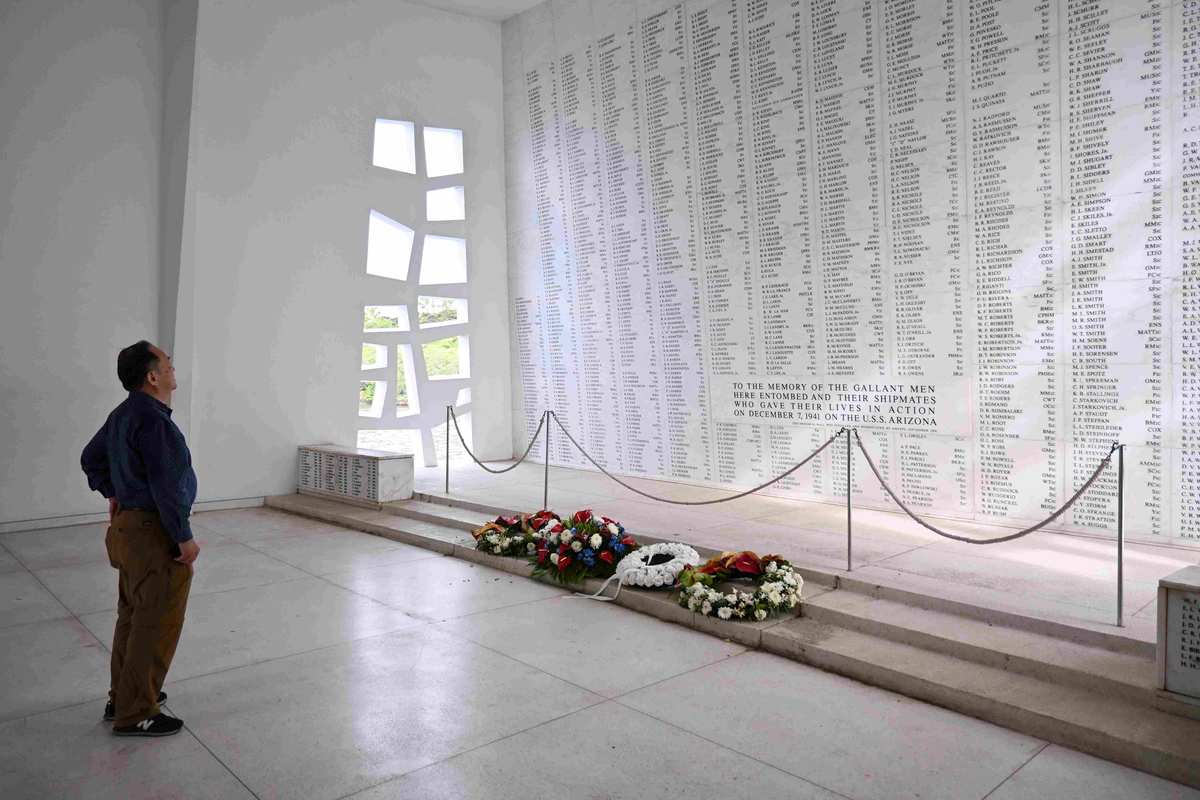
Seiki Keene looks at a wall engraved with the names of crew members who died on the battleship Arizona at the USS Arizona Memorial on Oahu, Hawaii, on June 4.
7:01 JST, August 11, 2025
Renowned scholar of Japanese literature Donald Keene had deep ties to Hawaii. His adopted son, Seiki Keene, walked around Oahu Island in June this year “to trace the footsteps of my father, who hated war and devoted his life to the study of Japanese literature.”
After the war, Keene kept studying Japanese literature while traveling between Japan and the United States. In 2006, he met Seiki, a shamisen player for puppet theater. Seiki accompanied Keene to museums and concerts almost every month, and the two became close friends. Keene was single, and he trusted Seiki so much that he asked him to become his adopted son.
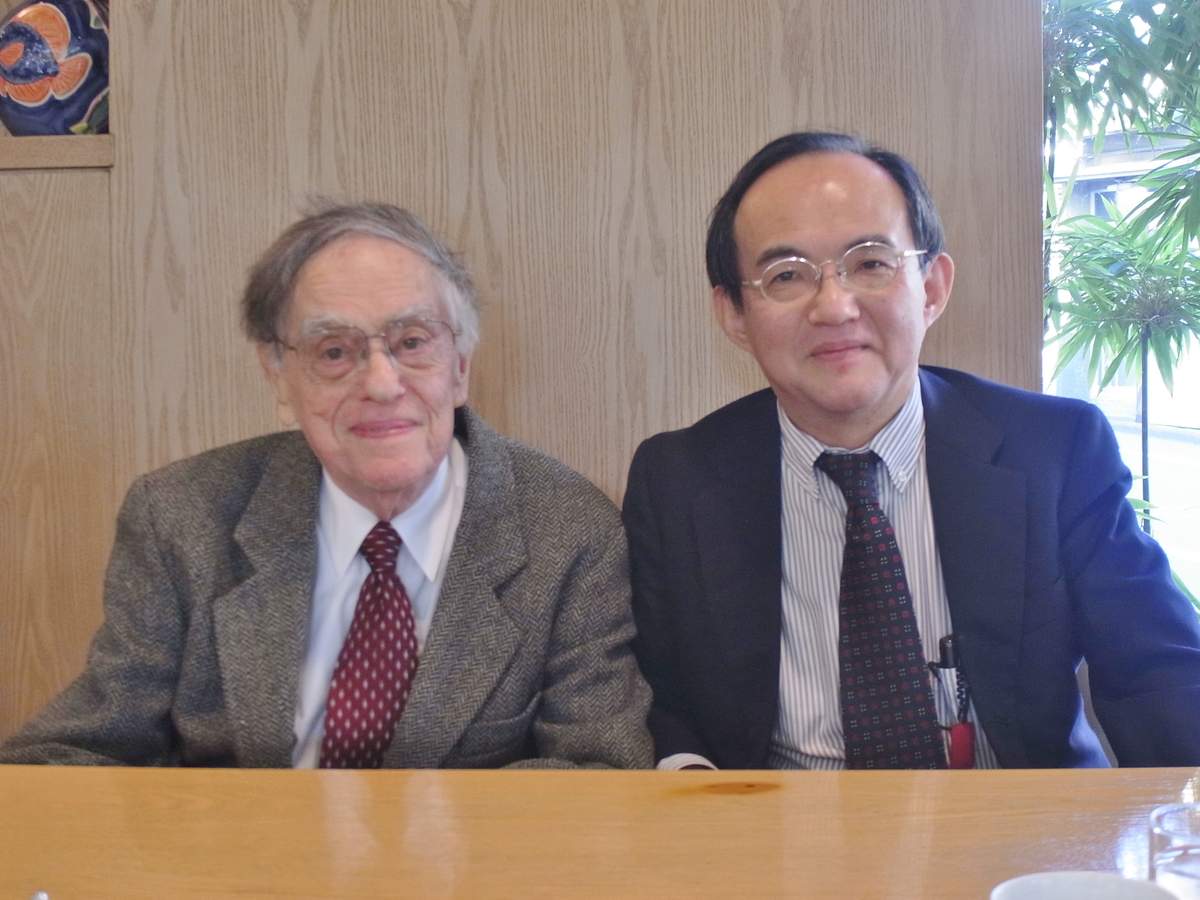
Donald Keene, left, and Seiki Keene are photographed after completing adoption procedures at the Kita Ward office in Tokyo on March 27, 2012.
Keene, who decided to live permanently in Japan, acquired Japanese nationality in March 2012. Shortly thereafter, Keene, then 89, formally adopted Seiki, then 61, as his son. The two lived together for about seven years until Keene’s death in February 2019.
Pearl Harbor
-
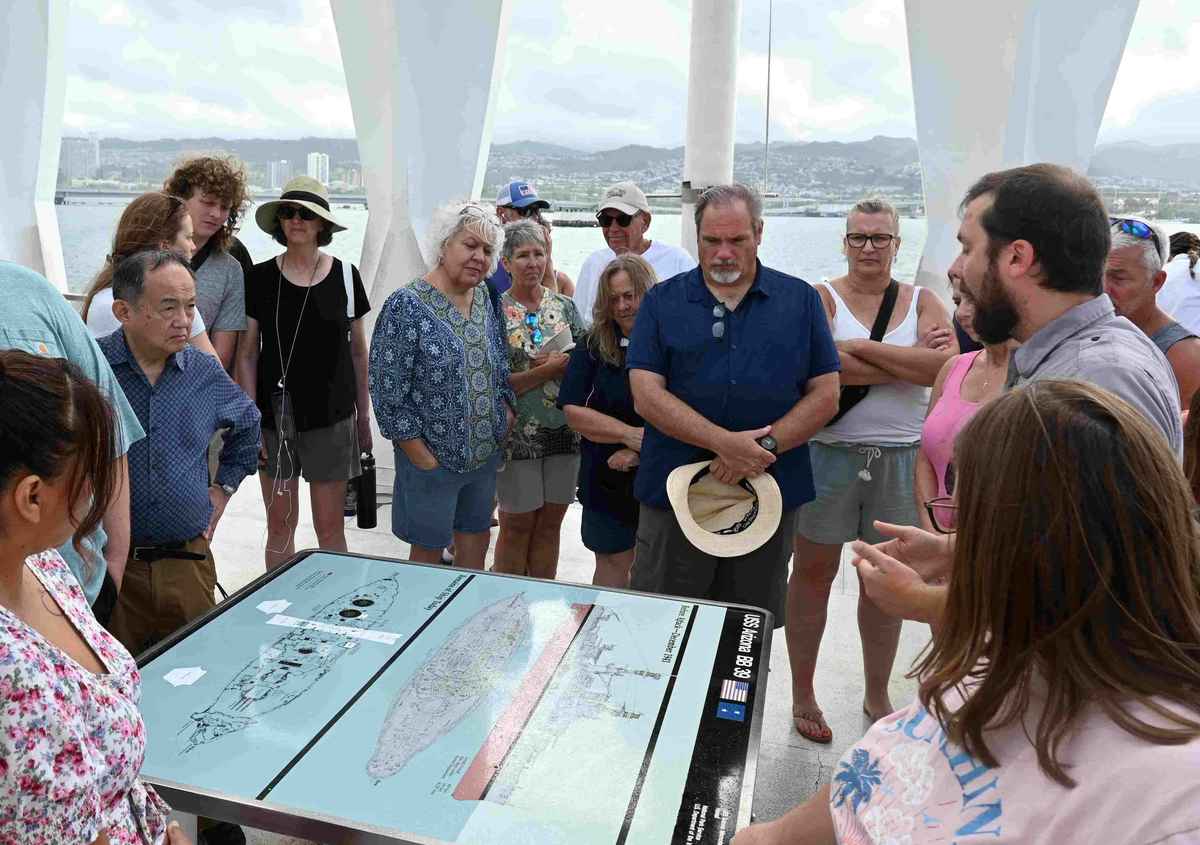
Seiki Keene, left, listens to the staff’s explanation in front of the USS Arizona Memorial information board.
-
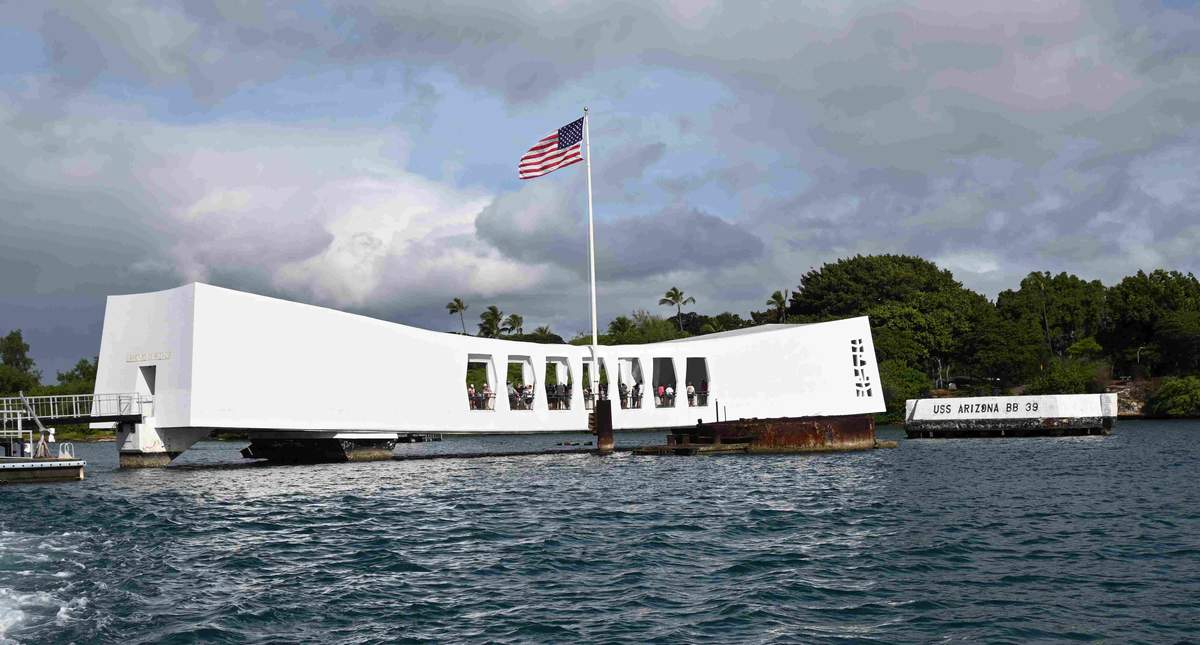
The USS Arizona Memorial
-
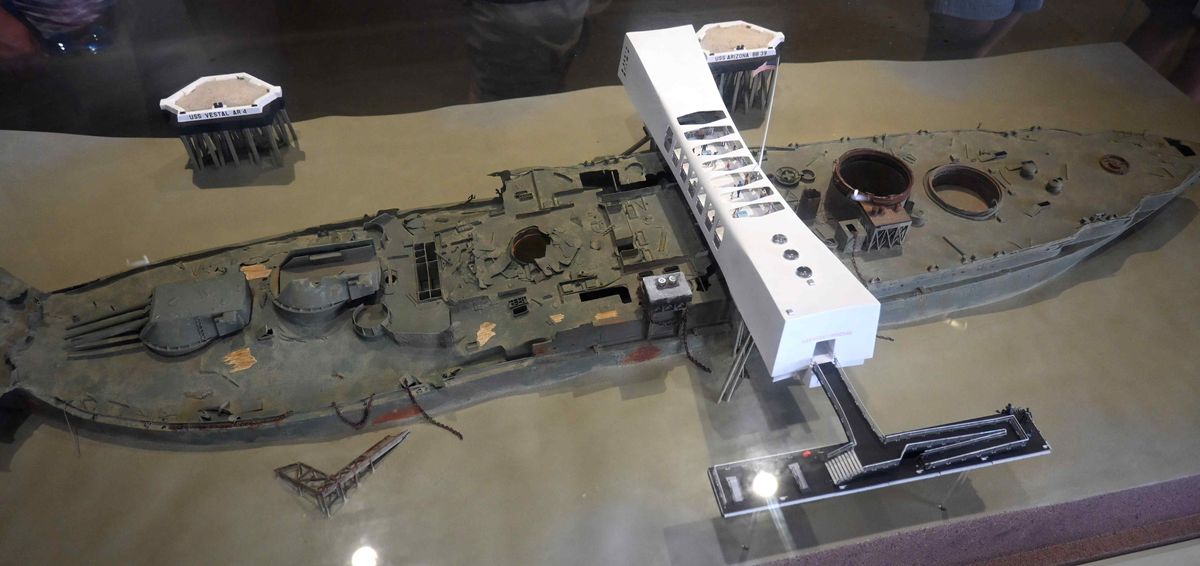
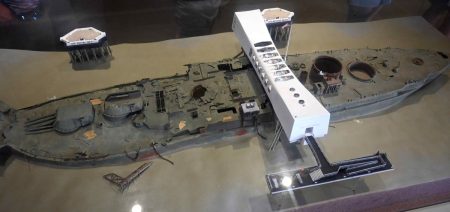
An exhibition explaining that the USS Arizona Memorial is located directly above the sunken battleship Arizona at Pearl Harbor National Memorial
-
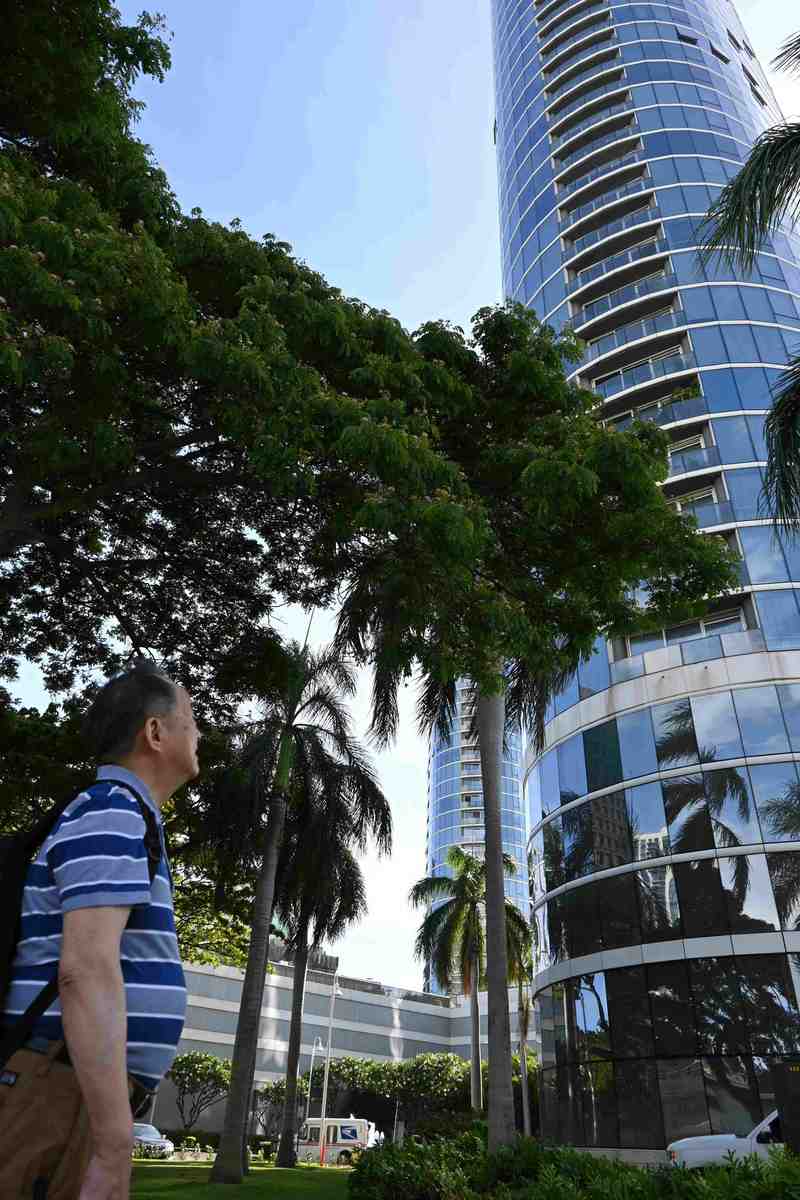
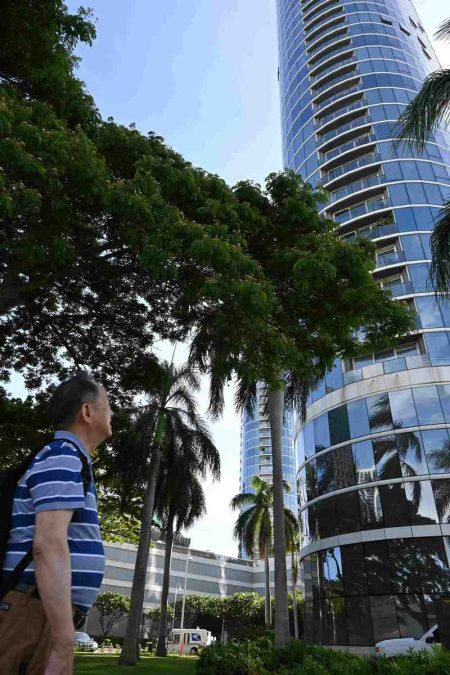
Two high-rise buildings stand on the site believed to be where the former translation bureau, where Donald Keene worked during the war, was located, in Honolulu on June 2.
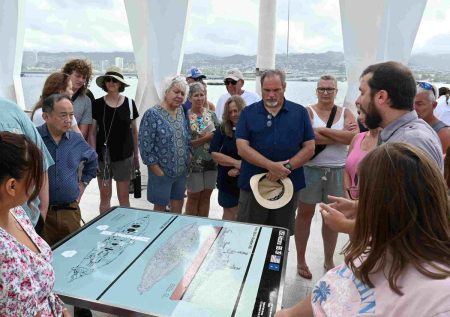
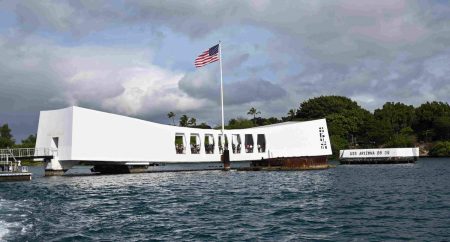
“Americans visiting Hawaii come here first, before going to the beach,” a Japanese tour guide said at the Pearl Harbor National Memorial. “In the United States, which is a multiracial country, this is a symbolic place that confirms the unity of the people.”
However, when Seiki asked Keene to visit Pearl Harbor with him 10 years ago, he declined.
Visitors must watch a short film about 15 minutes long summarizing the Japanese attack on Pearl Harbor before heading to the USS Arizona Memorial. The film depicts the situation in Japan at the time, the Pearl Harbor attack operation and the damage it caused, emphasizing that it was a war of justice for the United States. American visitors watched the screen in silence.
The USS Arizona Memorial is located directly above the battleship Arizona, which was sunk during the attack, and commemorates the more than 1,000 people lost on the ship. Seiki stared at the names of the dead inscribed on the wall and repeated Keene’s words: “There is no such thing as a meaningful war.”
Postwar exchanges
-
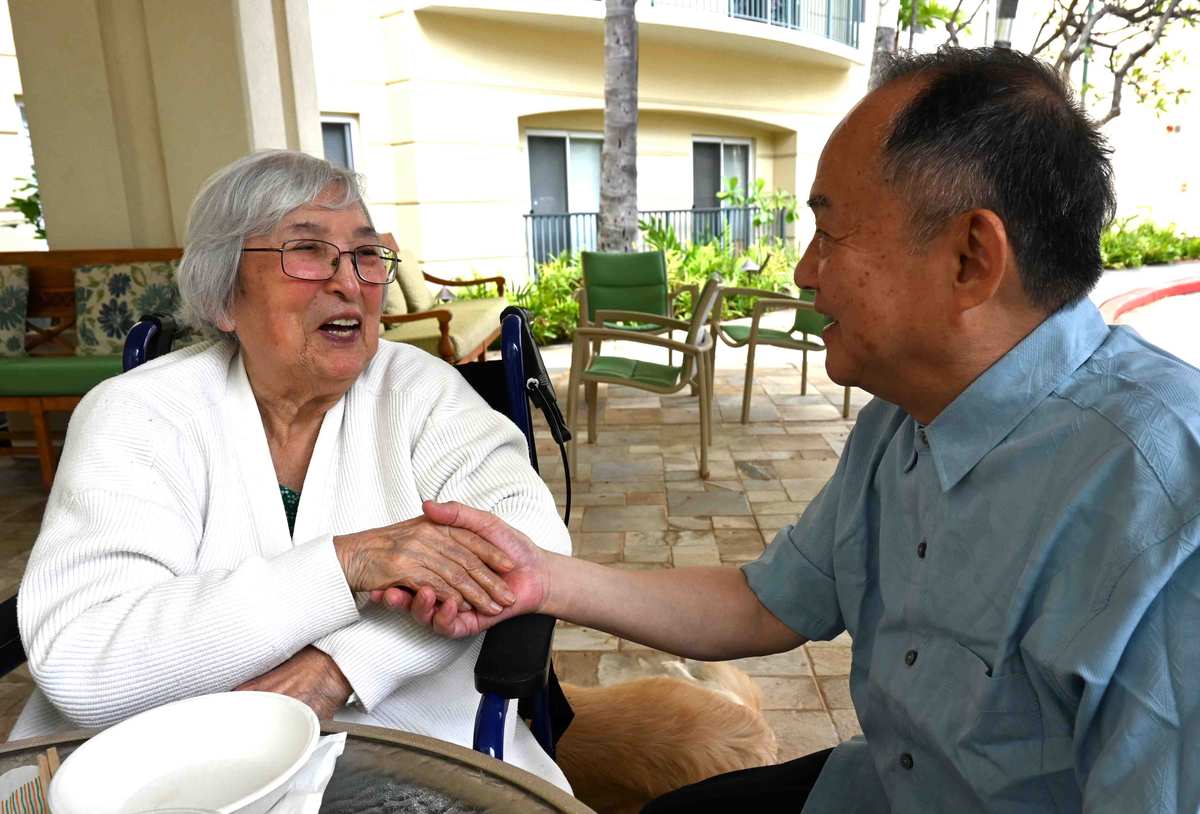
Seiki Keene reunites with Marjie Yokoyama, the widow of Henry Yokoyama, a former Japanese American language soldier in the U.S. Army who was a close friend of Donald Keene, in Honolulu on June 5.
-
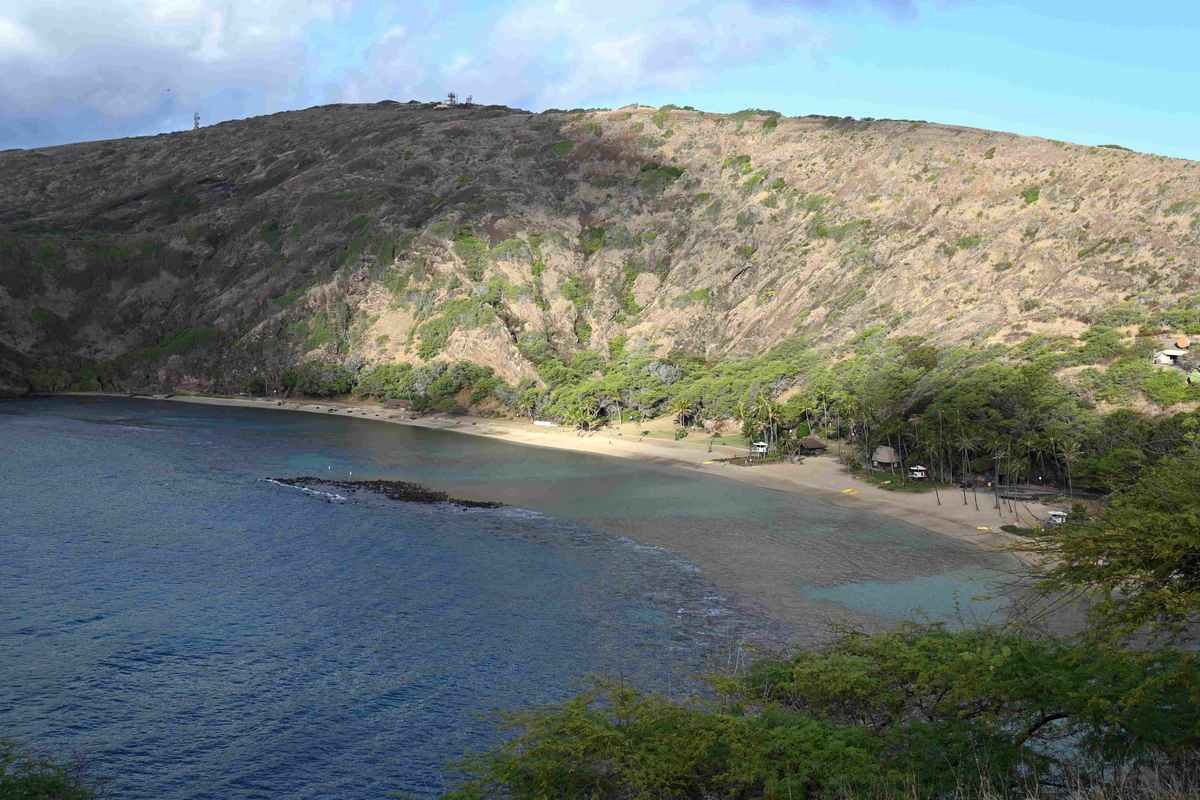
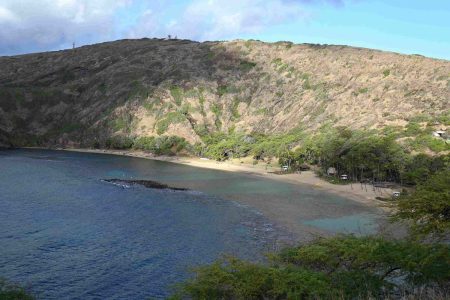
Hanauma Bay, where Donald Keene enjoyed snorkeling with the Yokoyama family, in Hawaii, on June 7
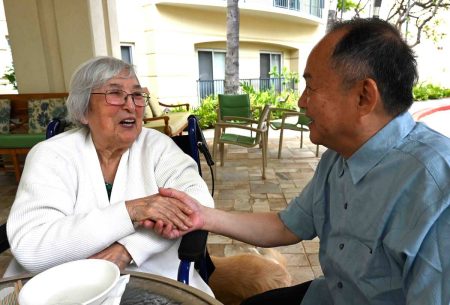
“Henry and Donald were good friends, and they used to drink together at our house and finish a bottle of Chivas Regal in one night,” said Marjie Yokoyama.
At a nursing home in Honolulu, Yokoyama, 97, shook hands with Seiki for the first time in 10 years and shared memories of Keene. Yokoyama is the widow of Henry Yokoyama, a second-generation Japanese American who served as a language soldier with the U.S. Army.
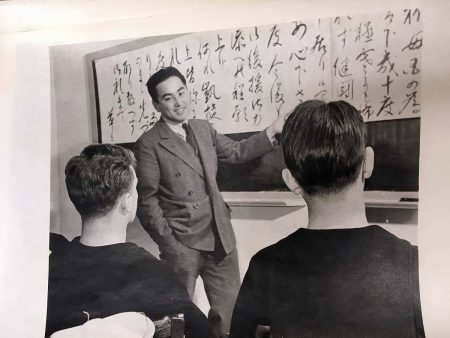
Keene and Henry worked together in Hawaii during the war, translating Japanese military documents. It was Marjie who suggested scattering Keene’s ashes in the sea off Hawaii.
After the war, Keene began teaching at Columbia University and traveled back and forth between Japan and the United States. Planes had to refuel in Hawaii, so he often stayed at the home of Yokoyama, who had become a doctor. Keene was fondly called “Uncle Donald” by Yokoyama’s children, and they went snorkeling together in the beautiful Hanauma Bay.
Lifelong wish for peace
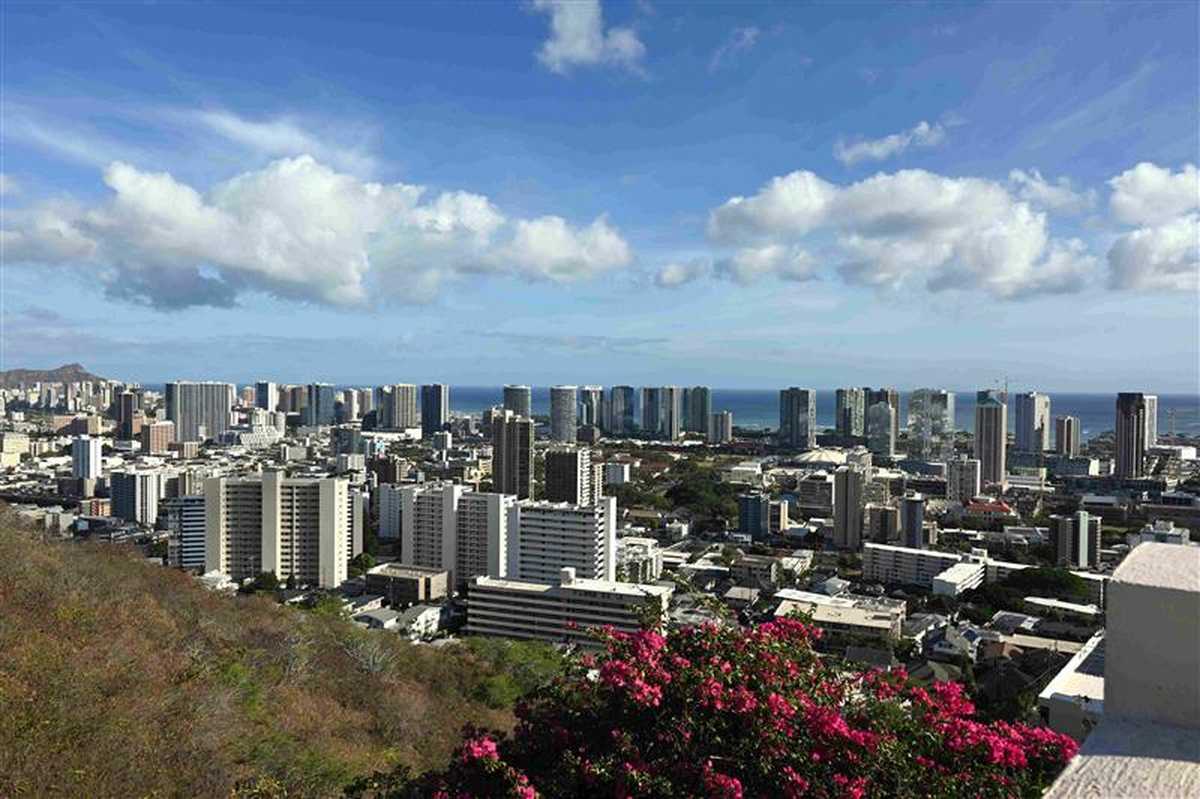
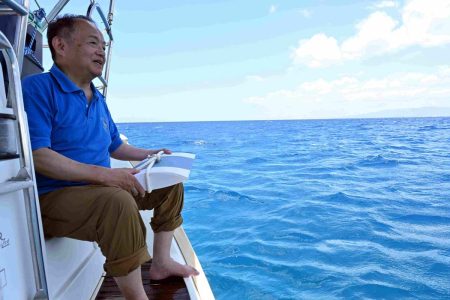
The National Memorial Cemetery of the Pacific is located in a volcanic crater known as the Punchbowl, and Henry Yokoyama is buried there. From the cemetery’s observation deck, Honolulu and the Pacific Ocean can be seen, and Seiki scattered Keene’s ashes in that ocean.
Keene told Seiki: “War was unfortunate. But in a way, it deepened interest and understanding of Japan. If we get to know each other better, war can be avoided.”
“I feel like I understand why my father avoided visiting the Pearl Harbor facility,” Seiki said. “Perhaps he wanted to focus on the new era of peace between Japan and the United States that was built after the war, rather than the dark days of the war he detested.”



Most Read
Popular articles in the past 24 hours
-

My Spendthrift Mother Constantly Asks Me for Money
-
Japanese Students Use Traditional Pickle to Create Novel Wagashi ...
-
‘Dry Bonsai’ Gives New Life to Withered Trees, Allows Free Artist...
-

McDonald's Japan Raises Prices; Big Mac to Cost ¥500, Double Chee...
-

Nepal Bus Crash Kills 19 People, Injures 25 Including One Japanes...
-

Astellas Collaborates with Vir to Develop Its Experimental Prosta...
-

Japan’s Nikkei Stock Average Rises as AI-Related Stocks Shine; Co...
-
Early-Blooming Kawazu Cherry Blossoms Create Sea of Pink at Park ...
Popular articles in the past week
-

Producer Behind Pop Group XG Arrested for Cocaine Possession
-

Japan PM Takaichi’s Cabinet Resigns en Masse
-

Sanae Takaichi Elected Prime Minister of Japan; Keeps All Cabinet...
-

Japan's Govt to Submit Road Map for Growth Strategy in March, PM ...
-

Bus Carrying 40 Passengers Catches Fire on Chuo Expressway; All E...
-

U.S. Firm to Build Training Hub in Fukushima N-plant for Debris R...
-

Japan, U.S. Name 3 Inaugural Investment Projects; Reached Agreeme...
-

Riku-Ryu Pair Wins Gold Medal: Their Strong Bond Leads to Major C...
Popular articles in the past month
-
Producer Behind Pop Group XG Arrested for Cocaine Possession
-
Japan PM Takaichi’s Cabinet Resigns en Masse
-

Japan Institute to Use Domestic Commercial Optical Lattice Clock ...
-

Man Infected with Measles Reportedly Dined at Restaurant in Tokyo...
-

Israeli Ambassador to Japan Speaks about Japan’s Role in the Reco...
-

Videos Plagiarized, Reposted with False Subtitles Claiming ‘Ryuky...
-

Man Infected with Measles May Have Come in Contact with Many Peop...
-

Prudential Life Insurance Plans to Fully Compensate for Damages C...
Top Articles in JN Specialities
-
Exhibition Shows Keene’s Interactions with Showa-Era Writers in Tokyo, Features Newspaper Columns, Related Materials
-
The Japan News / Weekly Edition (2/20-2/26)
-

Step Back in Time at Historical Estate Renovated into a Commercial Complex in Tokyo
-

The Japan News / Weekly Edition (1/30-2/5)
-
Senior Japanese Citizens Return to University to Gain Knowledge, Find New Career, Make Friends
JN ACCESS RANKING
-
Producer Behind Pop Group XG Arrested for Cocaine Possession
-
Japan PM Takaichi’s Cabinet Resigns en Masse
-
Japan Institute to Use Domestic Commercial Optical Lattice Clock to Set Japan Standard Time
-
Man Infected with Measles Reportedly Dined at Restaurant in Tokyo Station
-
Israeli Ambassador to Japan Speaks about Japan’s Role in the Reconstruction of Gaza