
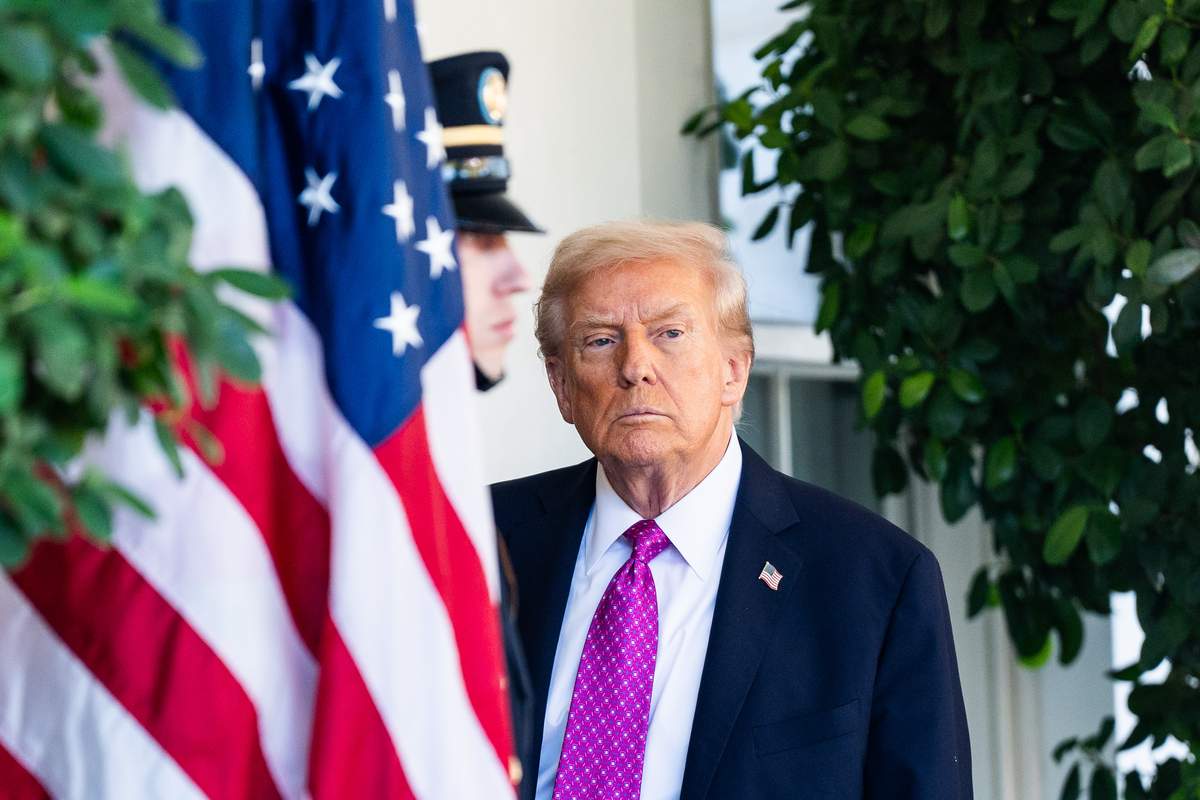
Trump is taking a lot of legal and political risks by escalating in Venezuela.
13:39 JST, January 6, 2026
Much of what President Donald Trump is doing in Venezuela is politically risky and legally controversial. What happens next may determine if Americans view his actions as a successful intervention against a dangerous leader, or the start of a potentially unpopular nation-building exercise.
“I’m convinced there will be another strike,” said Mark Cancian, a military expert with the Center for Strategic and International Studies. “From there, how does this running Venezuela really work, and is the U.S. military going to still remain locked and loaded?”
Here are four major questions that legal and military experts are watching to understand what happens next.
1. Do U.S. troops go back into Venezuela?
Whether this was a one-off attack or the start of a sustained takeover of a foreign nation will largely depend on whether U.S. troops get involved again.
Trump isn’t ruling it out. The U.S. has already built up a massive operation in the waters off Venezuela, and it’s unclear how else it might “run” the country, as Trump has vowed to do. “We’re not afraid of boots on the ground,” he said, threatening military action if the remaining Venezuelan government doesn’t do what he directs.
A more sustained military presence in Venezuela would seem like a line that many Americans would rather not cross.
A Washington Post poll released Tuesday finds Americans are almost evenly split on the operation to remove Venezuela’s president. But there’s skepticism about what comes next, with 45 percent opposing the prospect of U.S. control in Venezuela, 24 percent in support and a significant 30 percent saying they are unsure.
Secretary of State Marco Rubio has downplayed the military’s role in Venezuela so far. “This was a very precise operation that involved a couple of hours of action,” Rubio said Sunday on NBC’s “Meet the Press.”
2. Does Congress try to stop Trump from more military action in Venezuela?
Some critics argue that Trump’s actions walk up to the line of illegality and urge Congress to act. The Constitution says only Congress can formally declare war – though it hasn’t done so since World War II. Congress can also tell a president not to engage in military action.
But Republicans control Congress, and in November the Senate voted down legislation that would have blocked Trump from attacking Venezuela.
The Senate is expected to vote again this week on a similar resolution. But senior Republican leaders in Congress haven’t pushed back on Trump’s reasons for escalating in Venezuela, which range from allegations that its leaders have been stealing U.S. oil to wanting to get an alleged drug trafficker out of office. The Trump administration has also been able to win over some of its Republican critics in the days after the attack.
Some Democrats say the Trump administration misled Congress about its plans to eventually attack Venezuela and seize its president. Some lawmakers on the left are talking about impeaching Trump on the issue, but that would almost certainly fail.
3. Does Trump invade other countries?
Greenland, Cuba, Colombia. Trump has suggested in recent days that all are potential targets of American aggression. “We do need Greenland, absolutely,” Trump told the Atlantic in reference to the Danish territory. He also predicted Cuba’s government would be the next to fall and threatened Colombia’s president.
He’s previously talked about annexing the Panama Canal, Gaza and making Canada the 51st state.
It’s not clear why Trump is so focused on expansion. The foreign policy experts I spoke to have theorized that the notion of imperialism appeals to Trump.
“It just seems to be back to the 18th and 19th centuries,” Fiona Hill, an expert at the Brookings Institution who was Trump’s top Russia adviser in his first term, told my colleagues at The Post. “If you’ve bought into the idea of competition among the great powers and that Russia is another great power that’s inevitably going to dominate in its region, just as China is in its region, then this is the logical conclusion from this.”
Some of Trump’s allies argue that taking over Venezuela is consistent with his “America First” policy because it keeps the U.S. safe from dangerous drugs. If Trump does seize power or land from more countries, he would arguably be remaking “America First” to include expanding the United States rather than focusing on improving the territory already controlled by the country.
4. Does Venezuela become a major political issue or fade into the background?
An Economist/YouGov poll taken just before Christmas found that just 22 percent of Americans supported using the U.S. military to overthrow Venezuela’s leader, which is exactly what he did several weeks later. A Quinnipiac University poll taken around the same time found that 63 percent opposed military action inside Venezuela.
There’s evidence that Trump can bring his base around to what he’s already done in Venezuela. But what comes next may determine broader American opinion about what he’s done given the skepticism in The Post poll about the U.S. taking control of Venezuela’s government.
Democrats argue that Venezuela takes Trump even further off message from the top issue on Americans’ minds, which is the cost of living. But some Republican strategists argue that what happens in a far away country won’t dominate voters’ opinions – unless it turns into actual conflict with U.S. troops.
“What I can say based upon polling is that one of Trump’s strengths in public opinion polls is that he’s viewed as strong, and not indecisive or weak,” Republican pollster Whit Ayres told my colleagues at The Post, “and in that sense this plays to his strength.”




Most Read
Popular articles in the past 24 hours
-

3,000 Accounts Posting, Spreading Content Critical of Japan on X;...
-

Milano Cortina 2026: Sakamoto Serves as Flag Bearer; Japan Earns ...
-

Milano Cortina 2026: There Were Cheers across the Country, after ...
-

A Packed Bus Plunges off a Nepal Highway, Killing 19 and Injuring...
-

Luna Sea Drummer Shinya Dies at 56; Powerful Drummer Behind ‘Desi...
-

Milano Cortina 2026: ‘Magical’ Italian Games Close wi...
-

Milano Cortina 2026: Riku-Ryu Duo Stick Together During Closing C...
-
Emperor Receives Well-Wishes from Public on His 66th Birthday
Popular articles in the past week
-

Japan PM Takaichi’s Cabinet Resigns en Masse
-

Man Infected with Measles Reportedly Dined at Restaurant in Tokyo...
-

Sanae Takaichi Elected Prime Minister of Japan; Keeps All Cabinet...
-

Japan's Govt to Submit Road Map for Growth Strategy in March, PM ...
-

Bus Carrying 40 Passengers Catches Fire on Chuo Expressway; All E...
-
U.S. Firm to Build Training Hub in Fukushima N-plant for Debris R...
-

Japan, U.S. Name 3 Inaugural Investment Projects; Reached Agreeme...
-

Riku-Ryu Pair Wins Gold Medal: Their Strong Bond Leads to Major C...
Popular articles in the past month
-
Japan PM Takaichi’s Cabinet Resigns en Masse
-

Japan Institute to Use Domestic Commercial Optical Lattice Clock ...
-

Israeli Ambassador to Japan Speaks about Japan’s Role in the Reco...
-
Man Infected with Measles Reportedly Dined at Restaurant in Tokyo...
-

Videos Plagiarized, Reposted with False Subtitles Claiming ‘Ryuky...
-

Man Infected with Measles May Have Come in Contact with Many Peop...
-

Prudential Life Insurance Plans to Fully Compensate for Damages C...
-

Woman with Measles Visited Hospital in Tokyo Multiple Times Befor...
Top Articles in News Services
-
Survey Shows False Election Info Perceived as True
-

Prudential Life Expected to Face Inspection over Fraud
-
Hong Kong Ex-Publisher Jimmy Lai’s Sentence Raises International Outcry as China Defends It
-

Japan’s Nikkei Stock Average Touches 58,000 as Yen, Jgbs Rally on Election Fallout (UPDATE 1)
-
Japan’s Nikkei Stock Average Falls as US-Iran Tensions Unsettle Investors (UPDATE 1)
JN ACCESS RANKING
-
Japan PM Takaichi’s Cabinet Resigns en Masse
-
Japan Institute to Use Domestic Commercial Optical Lattice Clock to Set Japan Standard Time
-
Israeli Ambassador to Japan Speaks about Japan’s Role in the Reconstruction of Gaza
-
Man Infected with Measles Reportedly Dined at Restaurant in Tokyo Station
-
Videos Plagiarized, Reposted with False Subtitles Claiming ‘Ryukyu Belongs to China’; Anti-China False Information Also Posted in Japan