
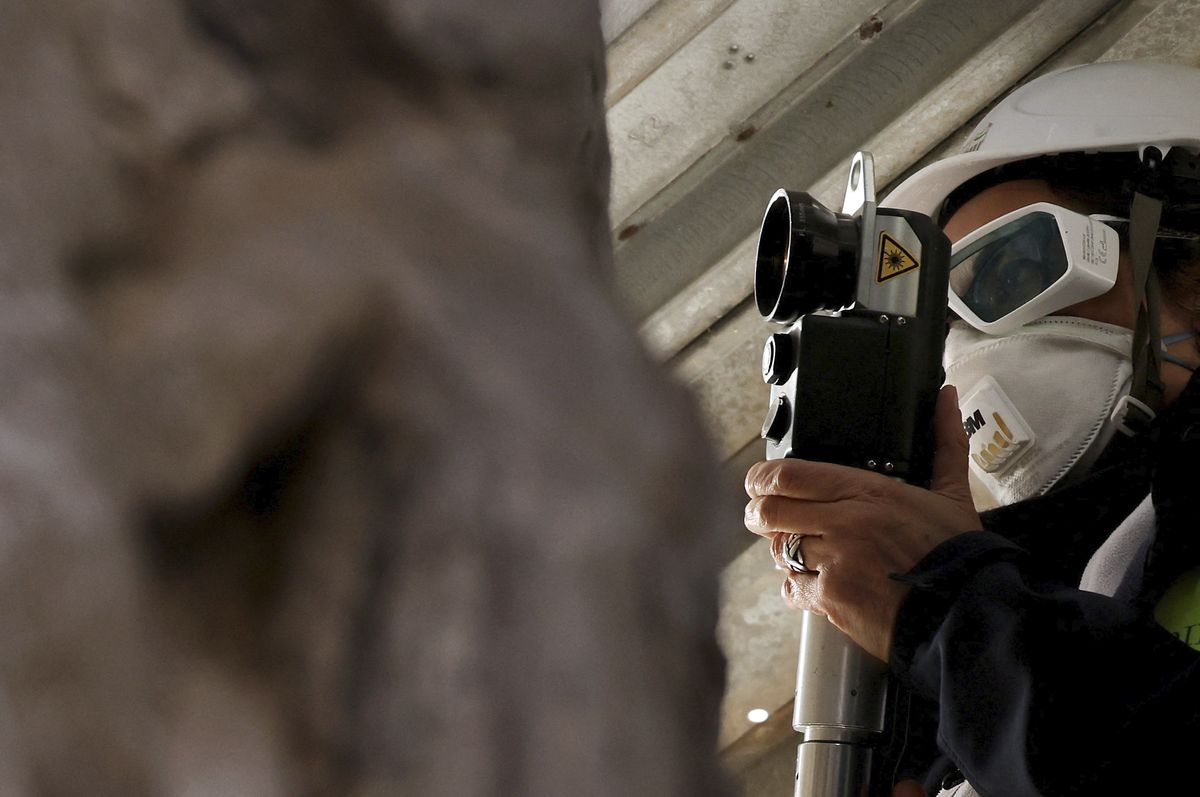
A worker uses a laser to clean a part of the Marcus Aurelius Column during restoration work. These photos were taken in Rome on Dec. 18.
22:59 JST, January 15, 2026
ROME (Reuters) — Just as cosmetic surgeons wield lasers to smooth away wrinkles, archaeologists in Rome are firing beams of light at history itself, peeling away decades of grime from one of the city’s most storied monuments.
Restorers are making the most extensive use yet of laser cleaning in Italy to remove layers of dirt from the Column of Marcus Aurelius, a 1,840-year-old masterpiece that celebrates the emperor’s victories over barbarian tribes along the Danube.
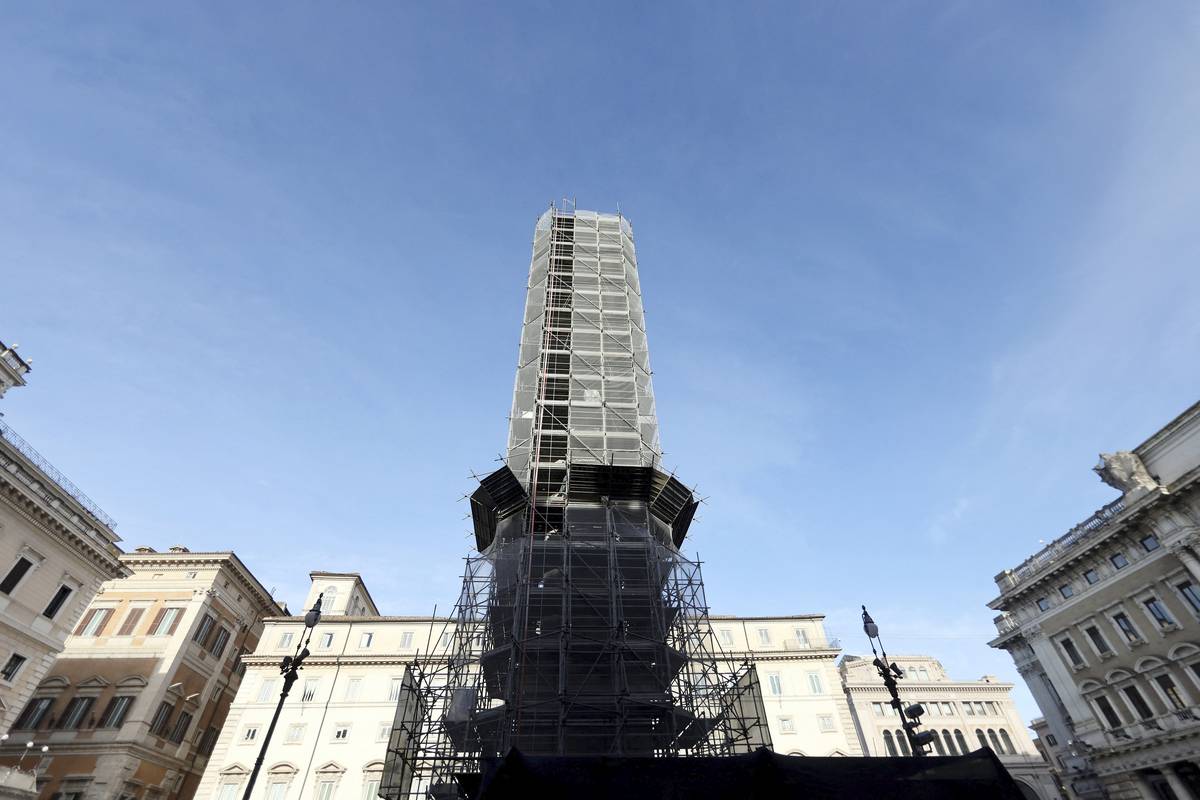
Scaffolding covers the Column of Marcus Aurelius in front of Chigi Palace.
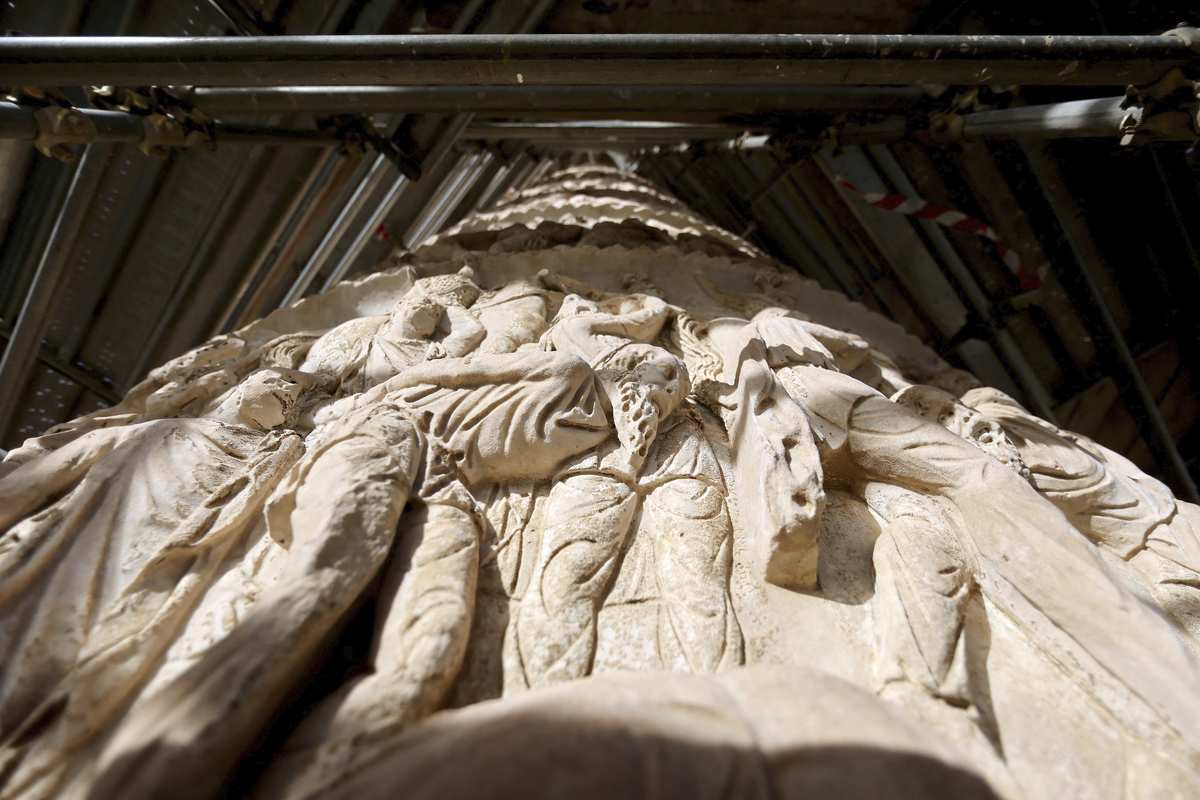
A portion of the Column of Marcus Aurelius during restoration work
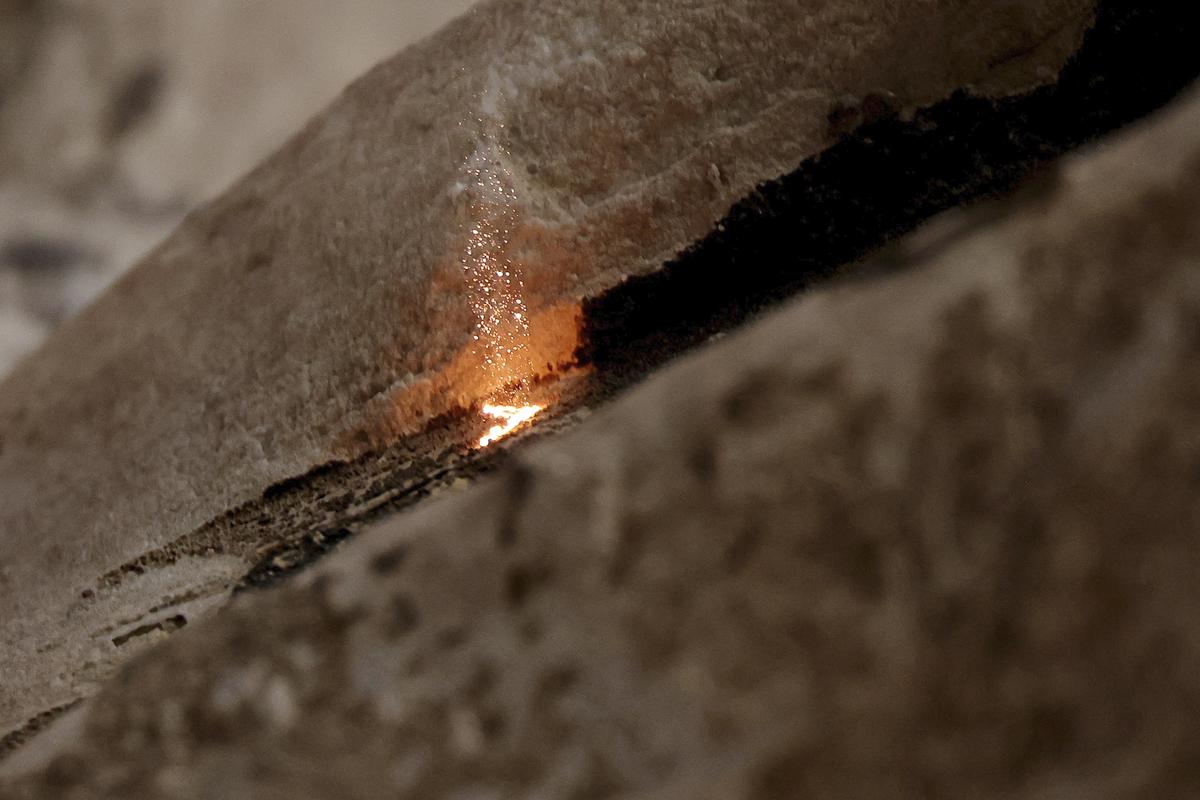
A laser is used to clean a part of the Column of Marcus Aurelius.
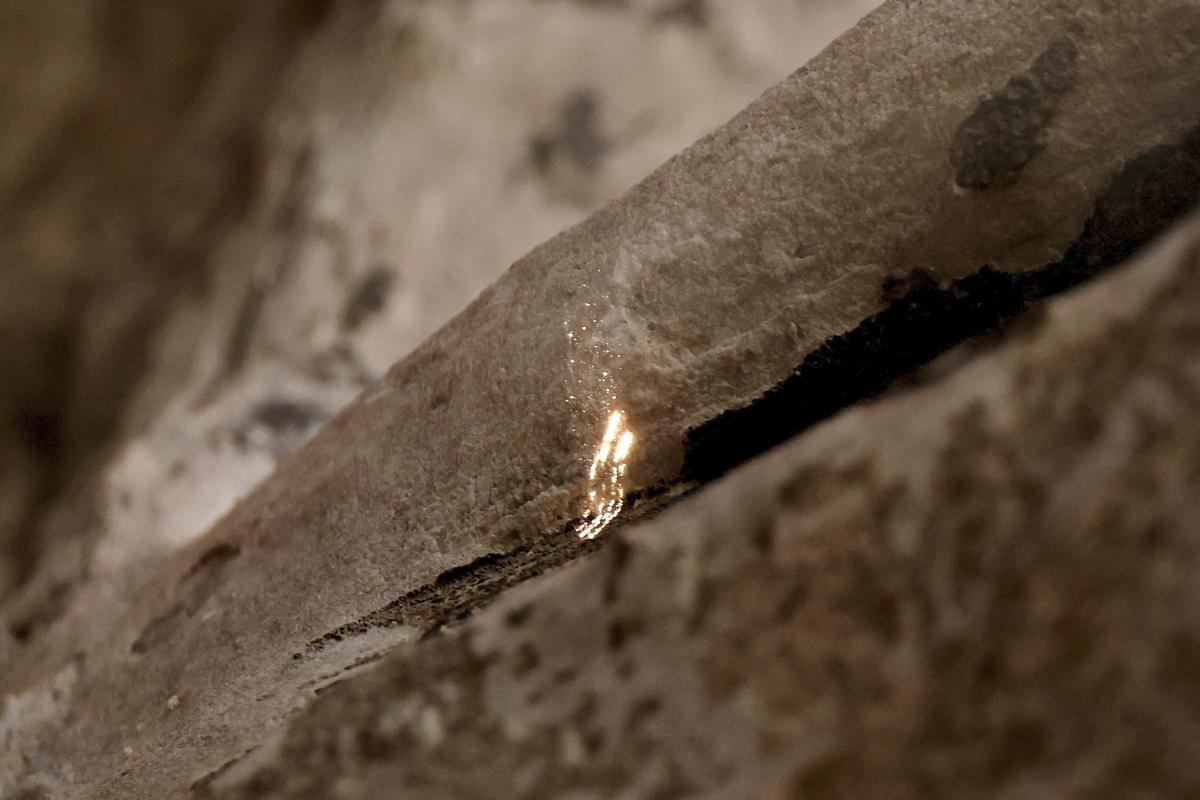
A laser is used to clean a part of the Column of Marcus Aurelius.
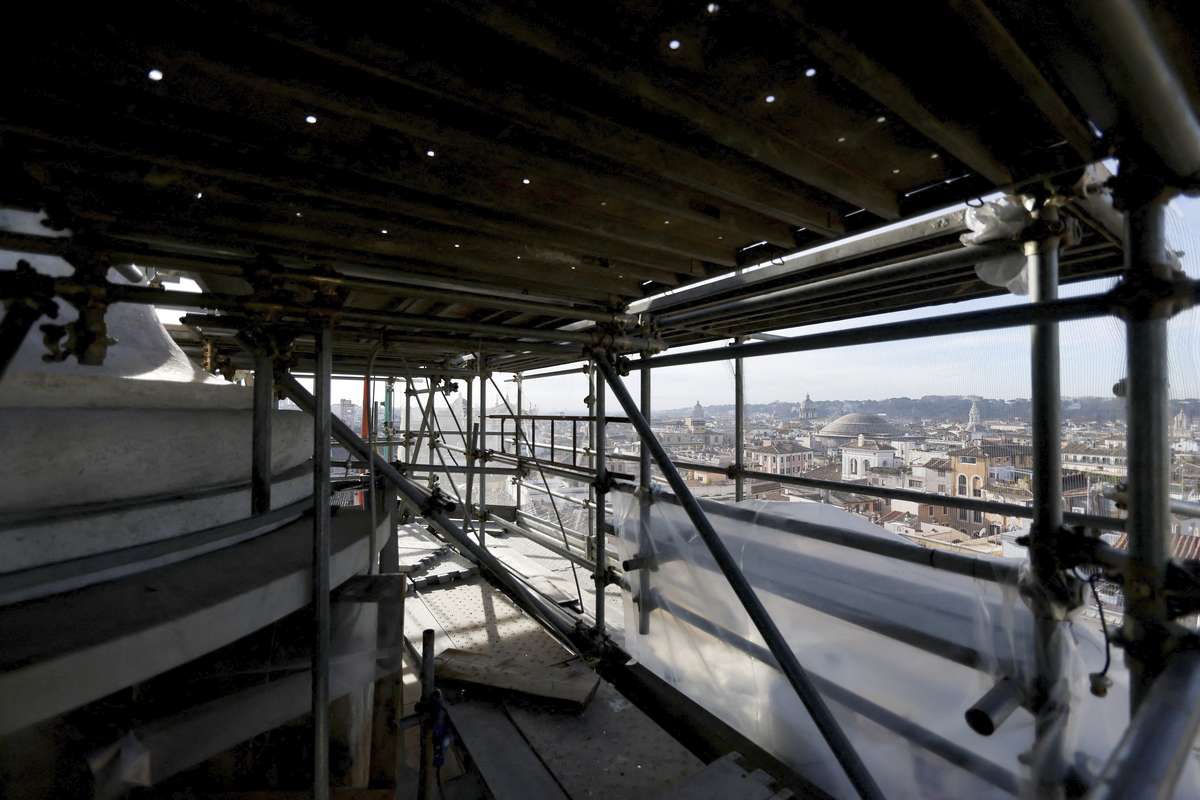
A panoramic view of Rome is seen from the scaffolding of the Column of Marcus Aurelius.
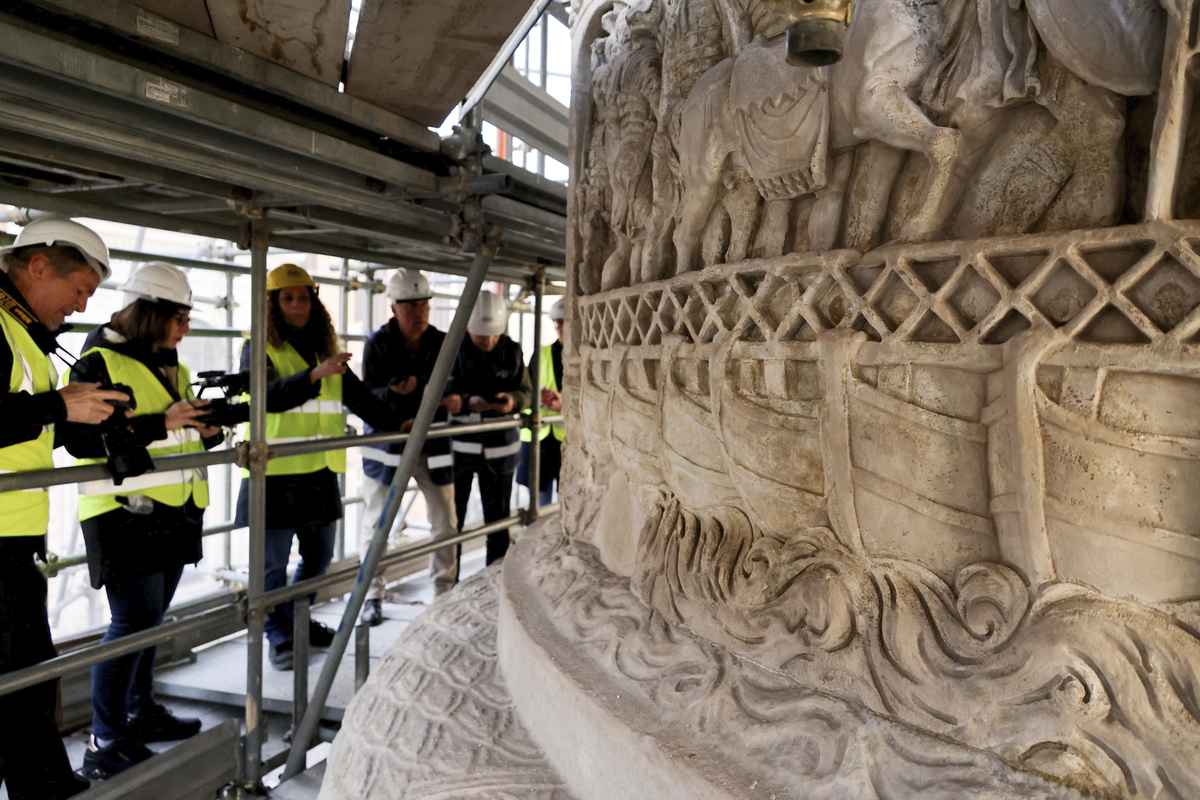
A portion of the Column of Marcus Aurelius as Marta Baumgartner, restoration project director and scientific director, center, speaks while standing on the scaffolding next to the column
The hand-held lasers concentrate flickering beams of light onto the stone, with the heat they generate lifting away black deposits of pollution to reveal the white Carrara marble beneath.
“It is the same principle of a doctor removing unwanted hair or skin,” said Marta Baumgartner, the project’s lead architect.
“The laser is producing excellent results in the restoration and we have chosen to use it on the entire external frieze of the column.”
Carved around A.D. 180, the spiral frieze loops 23 times around the shaft, rising to a height of almost 40 meters and depicting more than 2,000 figures, including gods, soldiers and beasts. Aurelius himself appears in several places.
The reliefs illustrate the violence of warfare — the vivid scenes providing scholars with invaluable information about this era of Roman history. Throats are cut, heads sliced off and a woman dragged into slavery by her hair.
The column remains in its original place, but most other remnants of ancient Rome have long gone from that part of the city. It now stares down on Italian Prime Minister Giorgia Meloni’s official residence, with parliament nearby.
Restoration work started in March at a cost of €2 million ($2.3 million) — the money drawn from cheap loans and grants handed to Italy by the European Union to help it recover from the COVID-19 pandemic.
“We received this substantial funding, so it was an opportunity that absolutely could not be missed,” said Baumgartner.
Pope Sixtus V carried out the first restoration in the late 16th century, swapping out the original statue of Aurelius on the top with one of St. Paul, who remains there to this day.
The last clean-up was carried out in the 1980s, but time and the elements take a continuous toll, with conservators finding areas where the marble was starting to detach, requiring swift stabilization.
“Hopefully there will be no surprises in future. It will now be constantly monitored and we can intervene when needed,” said Baumgartner.







Most Read
Popular articles in the past 24 hours
-
Kesennuma, Miyagi Pref., Locals Raise Carp Streamers as Symbol of...
-

Iran Situation: Significance of Rule of Law Must Be Conveyed
-

Toyota Advancing Plant-Based Biofuel Development in Fukushima Tow...
-

Trump Says Iran Had a New Site for Developing Nuclear Weapons
-

2 People Reportedly Found on Mt. Fuji; Hiking Trail Currently Clo...
-

CARTOON OF THE DAY (March 10)
-
Rapeseed Flowers Reach Peak Viewing Period at Tokyo's Showa Kinen...
-

Japan's TEPCO to Raise Electricity Rates for Corporations in Apri...
Popular articles in the past week
-

Ibaraki Pref.'s 1st Foreign Bus Driver Hired in Tsukuba
-

Amid Strait of Hormuz Blockade, Shipping Companies Scramble to Ge...
-
Govt to Utilize ODA for Ensuring Economic Security; Securing Ener...
-
Japan Govt Survey Finds Just 10% of Workers Want Working Hours to...
-

Japan's 2nd Round of U.S. Investments May Be Worth Over $100 Bill...
-

Imperial Family Watches World Baseball Classic Game Against Austr...
-

Nippon Life Insurance's U.S. Arm Sues OpenAI Over Legal Assistanc...
-
Donald Keene’s Drinking Buddy and Translator Yukio Kakuchi Pays T...
Popular articles in the past month
-

Producer Behind Pop Group XG Arrested for Cocaine Possession
-

Japan PM Takaichi’s Cabinet Resigns en Masse
-

Man Infected with Measles Reportedly Dined at Restaurant in Tokyo...
-

Videos Plagiarized, Reposted with False Subtitles Claiming ‘Ryuky...
-

iPS Treatments Pass Key Milestone, but Broader Applications Far f...
-

Sanae Takaichi Elected Prime Minister of Japan; Keeps All Cabinet...
-

Nepal Bus Crash Kills 19 People, Injures 25 Including One Japanes...
-

South Korea Tightens Rules on Foreigners Buying Homes in Seoul Me...
Top Articles in News Services
-
Survey Shows False Election Info Perceived as True
-

Japan’s Nikkei Stock Average Falls as US-Iran Tensions Unsettle Investors (UPDATE 1)
-
Japan’s Nikkei Stock Average Touches 58,000 as Yen, Jgbs Rally on Election Fallout (UPDATE 1)
-
Japan’s Nikkei Stock Average Rises on Tech Rally and Takaichi’s Spending Hopes (UPDATE 1)
-
Japan to Ban Use of Power Banks on Airplanes
JN ACCESS RANKING
-
Producer Behind Pop Group XG Arrested for Cocaine Possession
-
Japan PM Takaichi’s Cabinet Resigns en Masse
-
Man Infected with Measles Reportedly Dined at Restaurant in Tokyo Station
-
Videos Plagiarized, Reposted with False Subtitles Claiming ‘Ryukyu Belongs to China’; Anti-China False Information Also Posted in Japan
-
iPS Treatments Pass Key Milestone, but Broader Applications Far from Guaranteed