
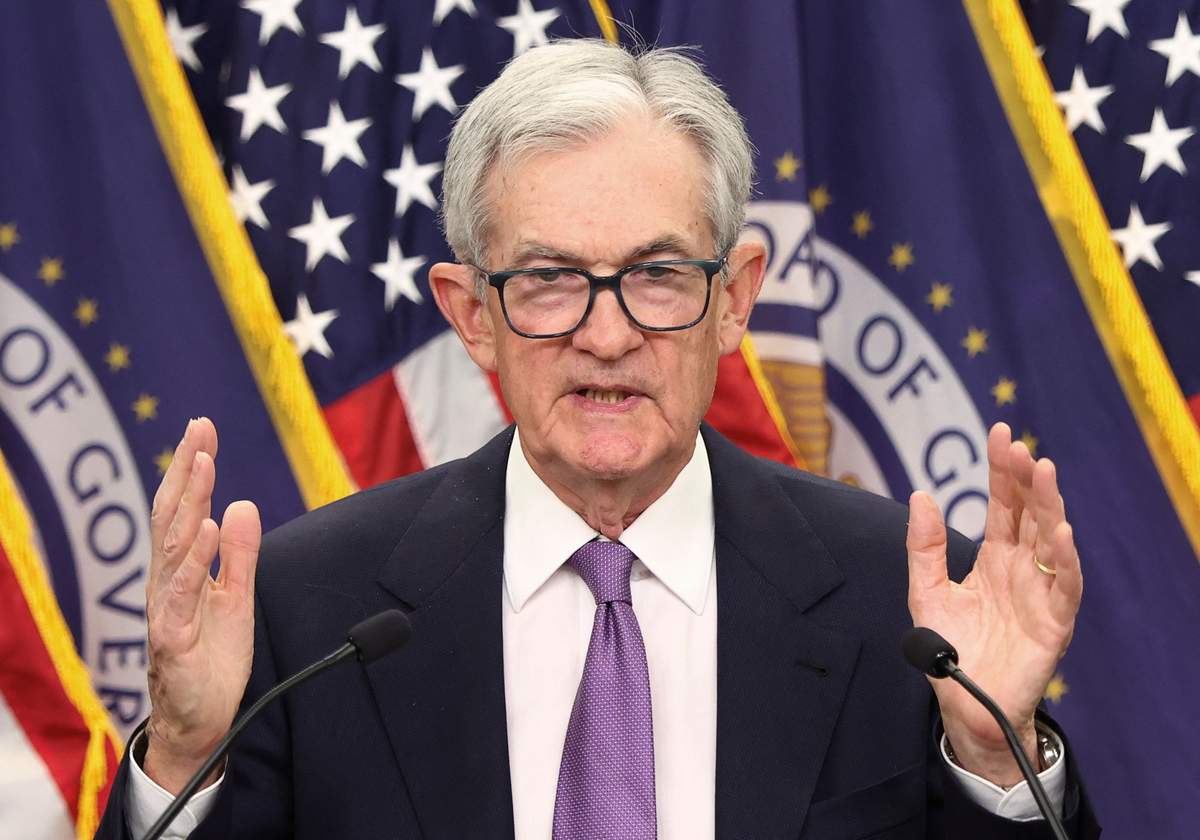
U.S. Federal Reserve Chair Jerome Powell holds a press conference after the Fed cut interest rates by quarter of a percentage point, in Washington, D.C., U.S., October 29, 2025.
11:51 JST, January 13, 2026
Jan 12 (Reuters) – The Trump administration’s decision to open a criminal investigation into Fed Chair Jerome Powell drew condemnation from former Fed chiefs and a chorus of criticism from key members of Trump’s Republican Party on Monday, following an unusually sharp public rebuke from Powell calling the move a “pretext” to win presidential influence over interest rates.
The investigation, revealed late on Sunday when Powell said the Fed had received subpoenas from the U.S. Justice Department, was approved and started by Jeanine Pirro, the U.S. Attorney in Washington and an ally of President Donald Trump, according to two sources with knowledge of the investigation.
Neither Attorney General Pam Bondi nor Deputy Attorney General Todd Blanche was briefed about the decision to subpoena the Fed last week, one of the sources added.
Pirro, in a statement Monday evening, said the Justice Department took legal action because the Federal Reserve had ignored requests to discuss cost overruns in a project to renovate two historical buildings at its headquarters.
“This office makes decisions based on the merits, nothing more and nothing less,” Pirro added on X.
The threat of indictment, ostensibly focused on comments Powell made to Congress about the building renovation project, sent rates on longer-term U.S. Treasury bonds up, as investors parsed what a less independent Fed could mean for inflation and monetary policy.
If amplified, such a market reaction could constrain Trump’s efforts to reshape the Fed, considered the most influential central bank in the world and a cornerstone of the world financial system. A rise in long-term borrowing costs could also backfire against Trump’s efforts to address broad concerns about “affordability.”
The independence of central banks, at least in setting rates in order to control inflation, is considered a central tenet of robust economic policy, insulating monetary policymakers from short-term political considerations and allowing them to focus on longer-term efforts to keep prices relatively stable.
On Monday, former Fed chairs Janet Yellen, Ben Bernanke and Alan Greenspan joined with former government economic policy leaders from both political parties in raising the alarm.
“This is how monetary policy is made in emerging markets with weak institutions, with highly negative consequences for inflation and the functioning of their economies more broadly,” they wrote. Global central bankers including the chiefs of the French and Canadian central banks publicly offered solidarity.
U.S. Republican Senator Thom Tillis, a member of the Senate Banking Committee that vets presidential nominees for the Fed, called the move a “huge mistake” on Sunday and said he would oppose any Trump nominees to the Fed, including whoever is named to succeed Powell as central bank chief, “until this legal matter is fully resolved.”
He was joined on Monday in condemning the development by fellow Banking Committee member Kevin Cramer and Senator Lisa Murkowski, who wrote on X that “the stakes are too high to look the other way: if the Federal Reserve loses its independence, the stability of our markets and the broader economy will suffer.”
Senator Cynthia Lummis, one of Powell’s more strident critics usually, on Monday said the Justice Department’s use of a criminal statute looked like a “heavy lift” and that she did not see any criminal intent.
“We need this like we need a hole in the head,” quipped Senator John Kennedy, also on the banking committee.
Treasury Secretary Scott Bessent told Trump on Sunday that the investigation “made a mess” and could be bad for financial markets, Axios reported on Monday, citing two sources.
The rise in longer-term rates notwithstanding, market reaction was relatively muted. Gold hit a record high and the dollar fell. Major U.S. stock indexes notched record closing highs after gains from artificial intelligence stocks and Walmart.
“The market looks to be taking substantial reassurance from the fact that Powell’s decision to call out the attack on Fed independence has triggered a backlash in the Senate that will be reinforced by public support from former Fed chairs and Treasury Secretaries,” wrote Evercore ISI’s Krishna Guha.
Powell – who was nominated by Trump to lead the Fed in late 2017 and confirmed by the Senate to the position in early 2018 – will complete his term as Fed chief in May, but he is not obligated to leave its Washington-based Board of Governors until 2028. A number of analysts saw the latest move by the administration as adding to the chances that he will defiantly remain at the central bank.
The criminal indictment threat emerged about two weeks before Trump’s effort to fire another Fed official, Governor Lisa Cook, will be argued before the Supreme Court.
Until now Powell had avoided public disagreement with the Trump administration, Republican lawmakers had been largely silent and investors had been warily watching as the sparring match between the White House and the Fed played out during Trump’s second term.
Powell’s pointed response and signs of congressional pushback appear to open a new and more highly charged chapter in that row, even as House Speaker Mike Johnson told reporters he’d let the process “play out.”
‘THREATS AND ONGOING PRESSURE’
The subpoenas from the U.S. Justice Department last week pertained to remarks Powell made to Congress last summer over cost overruns for a $2.5 billion building renovation project at the Fed’s headquarters complex in Washington, and threatened a criminal indictment.
“I have deep respect for the rule of law and for accountability in our democracy. No one – certainly not the chair of the Federal Reserve – is above the law,” Powell said.
“But this unprecedented action should be seen in the broader context of the administration’s threats and ongoing pressure” for lower interest rates and more broadly for greater say over the Fed, he said.
“This new threat is not about my testimony last June or about the renovation of the Federal Reserve buildings. It is not about Congress’ oversight role … Those are pretexts. The threat of criminal charges is a consequence of the Federal Reserve setting interest rates based on our best assessment of what will serve the public, rather than following the preferences of the President.”
Trump told NBC News Sunday that he had no knowledge of the Justice Department’s actions. “I don’t know anything about it, but he’s certainly not very good at the Fed, and he’s not very good at building buildings,” Trump said.
A Justice Department spokesperson declined to comment on the case but added: “The Attorney General has instructed her U.S. Attorneys to prioritize investigating any abuse of taxpayer dollars.”








Most Read
Popular articles in the past 24 hours
-

Man Infected with Measles Reportedly Dined at Restaurant in Tokyo...
-
Milano Cortina 2026: Riku Miura, Ryuichi Kihara Clinch Japan̵...
-

AI Agents Should Consult Humans, Say New Rules from Japanese Govt
-
U.S. Firm to Build Training Hub in Fukushima N-plant for Debris R...
-

Toyota Highlander Reverse Imported from the U.S. to Japan Will Be...
-

TEPCO's Niigata Pref. Nuclear Power Plant Begins Transmitting Pow...
-

The Great East Japan Earthquake - Preserving Memories in 3D Image...
-

Milano Cortina 2026: Japan Gains Bronze in Speed Skating Women's ...
Popular articles in the past week
-

Videos Plagiarized, Reposted with False Subtitles Claiming ‘Ryuky...
-
Tokyo’s New Record-Breaking Fountain Named ‘Tokyo Aqua Symphony’
-

Milano Cortina 2026: Figure Skaters Riku Miura, Ryuichi Kihara Pa...
-

Milano Cortina 2026: Kokomo Murase Comes Out on Top After Overcom...
-
CRA Leadership Election Will Center on Party Rebuilding; Lower Ho...
-
Man Infected with Measles Reportedly Dined at Restaurant in Tokyo...
-
Crime in Japan Ticks Up for 4th Straight Year
-
Japanese Constitutional Revision Debate Expected to be Revived Af...
Popular articles in the past month
-

Japan Institute to Use Domestic Commercial Optical Lattice Clock ...
-

Israeli Ambassador to Japan Speaks about Japan’s Role in the Reco...
-

Man Infected with Measles May Have Come in Contact with Many Peop...
-
China Eyes Rare Earth Foothold in Malaysia to Maintain Dominance,...
-

Prudential Life Insurance Plans to Fully Compensate for Damages C...
-

Woman with Measles Visited Hospital in Tokyo Multiple Times Befor...
-
Australian Woman Dies After Mishap on Ski Lift in Nagano Prefectu...
-
Foreign Snowboarder in Serious Condition After Hanging in Midair ...
Top Articles in News Services
-
Prudential Life Expected to Face Inspection over Fraud
-
Hong Kong Ex-Publisher Jimmy Lai’s Sentence Raises International Outcry as China Defends It
-

Japan’s Nikkei Stock Average Touches 58,000 as Yen, Jgbs Rally on Election Fallout (UPDATE 1)
-
Trump Names Former Federal Reserve Governor Warsh as the Next Fed Chair, Replacing Powell
-

Suzuki Overtakes Nissan as Japan’s Third‑Largest Automaker in 2025
JN ACCESS RANKING
-
Japan Institute to Use Domestic Commercial Optical Lattice Clock to Set Japan Standard Time
-
Israeli Ambassador to Japan Speaks about Japan’s Role in the Reconstruction of Gaza
-
Man Infected with Measles May Have Come in Contact with Many People in Tokyo, Went to Store, Restaurant Around When Symptoms Emerged
-
Prudential Life Insurance Plans to Fully Compensate for Damages Caused by Fraudulent Actions Without Waiting for Third-Party Committee Review
-
Woman with Measles Visited Hospital in Tokyo Multiple Times Before Being Diagnosed with Disease