
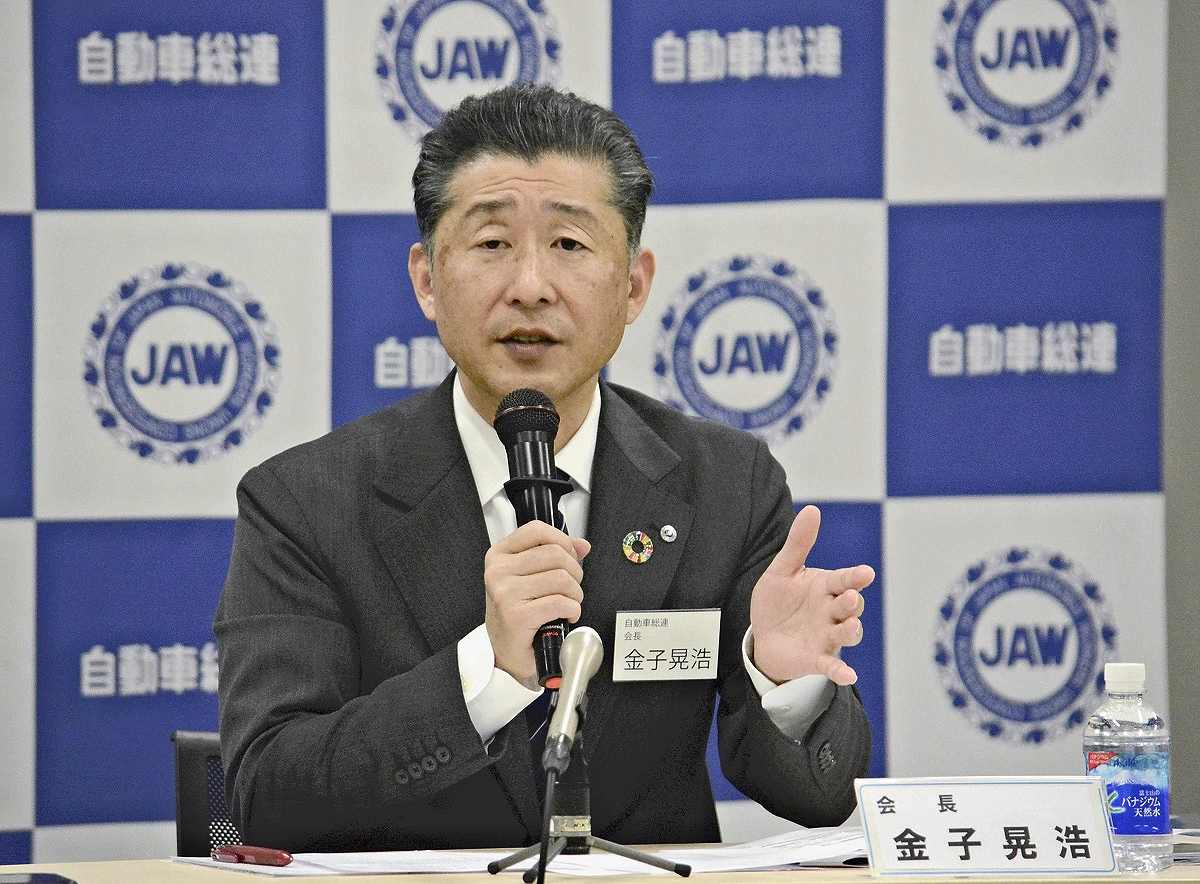
Akihiro Kaneko, president of the Confederation of Japan Automobile Workers’ Unions, speaks about this year’s spring wage negotiations in Kumamoto in January 2023.
11:48 JST, March 10, 2025
TOKYO, March 10 (Reuters) – Japan’s real wages fell in January after two months of slight gains, data showed on Monday, days before the annual rounds of pay negotiations held each spring culminate at the country’s major firms.
Despite regular pay rising the most in more than 30 years and overtime pay increasing, lifting nominal wages, inflation at a two-year high dragged down real wages – the indicator policymakers see as key to achieving consumption-driven economic growth.
The Bank of Japan is widely expected to keep interest rates unchanged at its next policy review on March 18-19, as officials repeatedly cite the need to gauge the sustainability of wage growth after the central bank’s January rate hike.
Inflation-adjusted real wages, which determine consumers’ purchasing power, dropped 1.8% in January from a year earlier, labor ministry data showed. The decline followed a revised 0.3% rise in December and 0.5% gain in November.
The consumer inflation rate the ministry uses to calculate real wages, which includes fresh food items but not rent costs, rose to 4.7% year-on-year – the highest reading since January 2023.
Regular pay, or base salary, rose 3.1% in January following December’s revised 2.6% increase and marking the biggest jump since 1992, the data showed.
Overtime pay, a barometer of corporate activity strength, also jumped 3.1%, after a revised 0.8% gain in December.
Special payments, mainly made up of volatile one-off bonuses, were down 3.7%. Total cash earnings, or nominal pay, rose 2.8% to 295,505 yen ($2,004) on average, slowing from December’s revised 4.4% rise, due largely to the drop in special payments.
Japan’s largest labor group last week said its member unions were demanding an average 6.09% pay hike, their boldest claim in more than 30 years.
In Japan, annual wage talks between management and labor unions conclude around mid-March among major firms, setting a standard for the salary negotiations of non-unionized workers and smaller enterprises.
The effect of these annual spring talks typically begins to show up in wage statistics for April or later, according to a labor ministry official.







Most Read
Popular articles in the past 24 hours
-
Many Candidates in Japan’s Lower House Election Focusing on Econo...
-
Milano Cortina 2026: Milano Cortina Olympic Athlete Villages Offe...
-
U.N. Plans to Set Safety Regulation Standards on Automated Drivin...
-
Sapporo Snow Festival Opens with 210 Snow and Ice Sculptures at 3...
-

Japan, Thailand Bolster Cooperation to Combat Human Trafficking; ...
-

TEPCO’s Restructuring Plan: Develop Business Partnership Plans fo...
-
74% of Japan's LDP Candidates Favor Tax Cut, But Caution Remains
-

New World of ‘The Tale of Genji’ Born from Back-Translation; Sist...
Popular articles in the past week
-
Australian Woman Dies After Mishap on Ski Lift in Nagano Prefectu...
-
Foreign Snowboarder in Serious Condition After Hanging in Midair ...
-

Man Infected with Measles May Have Come in Contact with Many Peop...
-
Chinese Embassy in Japan Reiterates Call for Chinese People to Re...
-
Narita Airport, Startup in Japan Demonstrate Machine to Compress ...
-

Toyota Motor Group Firm to Sell Clean Energy Greenhouses for Stra...
-
Beer Yeast Helps Save Labor, Water Use in Growing Rice; Govt Hope...
-
Japan Tourism Agency Calls for Strengthening Measures Against Ove...
Popular articles in the past month
-

Univ. in Japan, Tokyo-Based Startup to Develop Satellite for Disa...
-
JAL, ANA Cancel Flights During 3-day Holiday Weekend due to Blizz...
-

Japan Institute to Use Domestic Commercial Optical Lattice Clock ...
-
China Confirmed to Be Operating Drilling Vessel Near Japan-China ...
-

China Eyes Rare Earth Foothold in Malaysia to Maintain Dominance,...
-
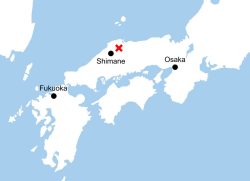
M6.2 Earthquake Hits Japan's Tottori, Shimane Prefectures; No Tsu...
-

Japan, Qatar Ministers Agree on Need for Stable Energy Supplies; ...
-
Australian Woman Dies After Mishap on Ski Lift in Nagano Prefectu...
Top Articles in News Services
-

Prudential Life Expected to Face Inspection over Fraud
-
Arctic Sees Unprecedented Heat as Climate Impacts Cascade
-

South Korea Prosecutor Seeks Death Penalty for Ex-President Yoon over Martial Law (Update)
-

Trump Names Former Federal Reserve Governor Warsh as the Next Fed Chair, Replacing Powell
-

Suzuki Overtakes Nissan as Japan’s Third‑Largest Automaker in 2025
JN ACCESS RANKING
-
Univ. in Japan, Tokyo-Based Startup to Develop Satellite for Disaster Prevention Measures, Bears
-
JAL, ANA Cancel Flights During 3-day Holiday Weekend due to Blizzard
-
Japan Institute to Use Domestic Commercial Optical Lattice Clock to Set Japan Standard Time
-
China Confirmed to Be Operating Drilling Vessel Near Japan-China Median Line
-
China Eyes Rare Earth Foothold in Malaysia to Maintain Dominance, Counter Japan, U.S.