

The flags of Canada and the United States fly outside a hotel in downtown Ottawa on Saturday.
8:11 JST, February 2, 2025
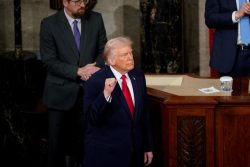
U.S. President Donald Trump on Saturday ordered 25% tariffs on Canadian and Mexican imports and 10% on goods from China starting on Tuesday to address a national emergency over fentanyl and illegal aliens entering the U.S., White House officials said.
Energy products from Canada will have only a 10% duty, but Mexican energy imports will be charged the full 25%, the officials told reporters.
Trump has declared the national emergency under the International Emergency Economic Powers Act to back the tariffs, which allows sweeping powers to address crises.
The White House officials said there would be no exclusions from the tariffs. Moreover, in the case of Canada specifically, they said the “de minimis” U.S. tariff exemption for small shipments under $800 would be canceled.
The moves follow through on a repeated threat Trump has made since shortly after winning last year’s presidential election, and they likely will trigger retaliation and risk igniting a trade war that could cause broad economic disruption for all countries involved.
It was unclear if Trump, who golfed at his Mar-a-Lago estate in Florida on Saturday before signing the order, would speak to the media about the duties.
Trump set the Feb. 1 deadline to press for strong action to halt the flow of the opiate fentanyl and precursor chemicals into the U.S. from China via Mexico and Canada, as well as to stop illegal immigrants crossing U.S. borders.
Less than two weeks into his second term, Trump is upending the norms of how the United States is governed and interacts with its neighbors and wider world.
On Friday, he pledged to proceed with the levies despite acknowledging they could cause disruption and hardship for American households.
A model gauging the economic impact of Trump’s tariff plan from EY Chief Economist Greg Daco suggests it would reduce U.S. growth by 1.5 percentage points this year, throw Canada and Mexico into recession and usher in “stagflation” at home.
“We have stressed that steep tariff increases against U.S. trading partners could create a stagflationary shock – a negative economic hit combined with an inflationary impulse – while also triggering financial market volatility,” Daco wrote on Saturday.
That volatility was evident on Friday, when the Mexican peso and Canadian dollar both slumped after Trump vowed to fulfill his threats. U.S. stock prices also fell and Treasury bond yields rose.


Related Tags




Most Read
Popular articles in the past 24 hours
-
Japan Seeks to Counter China's Expanding Influence in Pacific by ...
-

Exhibition Featuring Yoshiharu Tsuge’s Manga World Underway in Ch...
-
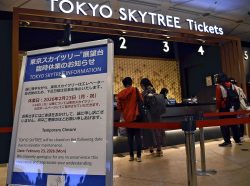
Tokyo Skytree Observation Deck Remains Closed for Inspection afte...
-
Impact on Japanese Economy Unclear with Trump’s New Tariffs, Shif...
-
Japanese Watermelon Shipments Starts in Leading Production Distri...
-

Hanzomon Line Service Suspended between Kudanshita, Oshiage Stati...
-

Japan's Services Inflation Steady, Signals Wage-Driven Price Pres...
-
Nikkei Rises Over 700 Points to Hit New Intraday High
Popular articles in the past week
-

Producer Behind Pop Group XG Arrested for Cocaine Possession
-
Japan, U.S. Name 3 Inaugural Investment Projects; Reached Agreeme...
-

iPS Treatments Pass Key Milestone, but Broader Applications Far f...
-
Tokyo Skytree's Elevator Stops, Trapping 20 People; All Rescued (...
-

Director Naomi Kawase's New Film Explores Heart Transplants in Ja...
-

Japan’s Major Real Estate Firms Expanding Overseas Businesses to ...
-

Milano Cortina 2026: Japan’s Mari Fukada Wins Gold in Women’s Sno...
-

Milano Cortina 2026: Japanese Figure Skater Kaori Sakamoto’...
Popular articles in the past month
-
Producer Behind Pop Group XG Arrested for Cocaine Possession
-

Japan PM Takaichi’s Cabinet Resigns en Masse
-

Japan Institute to Use Domestic Commercial Optical Lattice Clock ...
-

Man Infected with Measles Reportedly Dined at Restaurant in Tokyo...
-

Israeli Ambassador to Japan Speaks about Japan’s Role in the Reco...
-

Videos Plagiarized, Reposted with False Subtitles Claiming ‘Ryuky...
-

Man Infected with Measles May Have Come in Contact with Many Peop...
-

Prudential Life Insurance Plans to Fully Compensate for Damages C...
Top Articles in News Services
-
Survey Shows False Election Info Perceived as True
-
Hong Kong Ex-Publisher Jimmy Lai’s Sentence Raises International Outcry as China Defends It
-

Japan’s Nikkei Stock Average Touches 58,000 as Yen, Jgbs Rally on Election Fallout (UPDATE 1)
-
Japan’s Nikkei Stock Average Falls as US-Iran Tensions Unsettle Investors (UPDATE 1)
-
Trump Names Former Federal Reserve Governor Warsh as the Next Fed Chair, Replacing Powell
JN ACCESS RANKING
-
Producer Behind Pop Group XG Arrested for Cocaine Possession
-
Japan PM Takaichi’s Cabinet Resigns en Masse
-
Man Infected with Measles Reportedly Dined at Restaurant in Tokyo Station
-
Israeli Ambassador to Japan Speaks about Japan’s Role in the Reconstruction of Gaza
-
Videos Plagiarized, Reposted with False Subtitles Claiming ‘Ryukyu Belongs to China’; Anti-China False Information Also Posted in Japan