
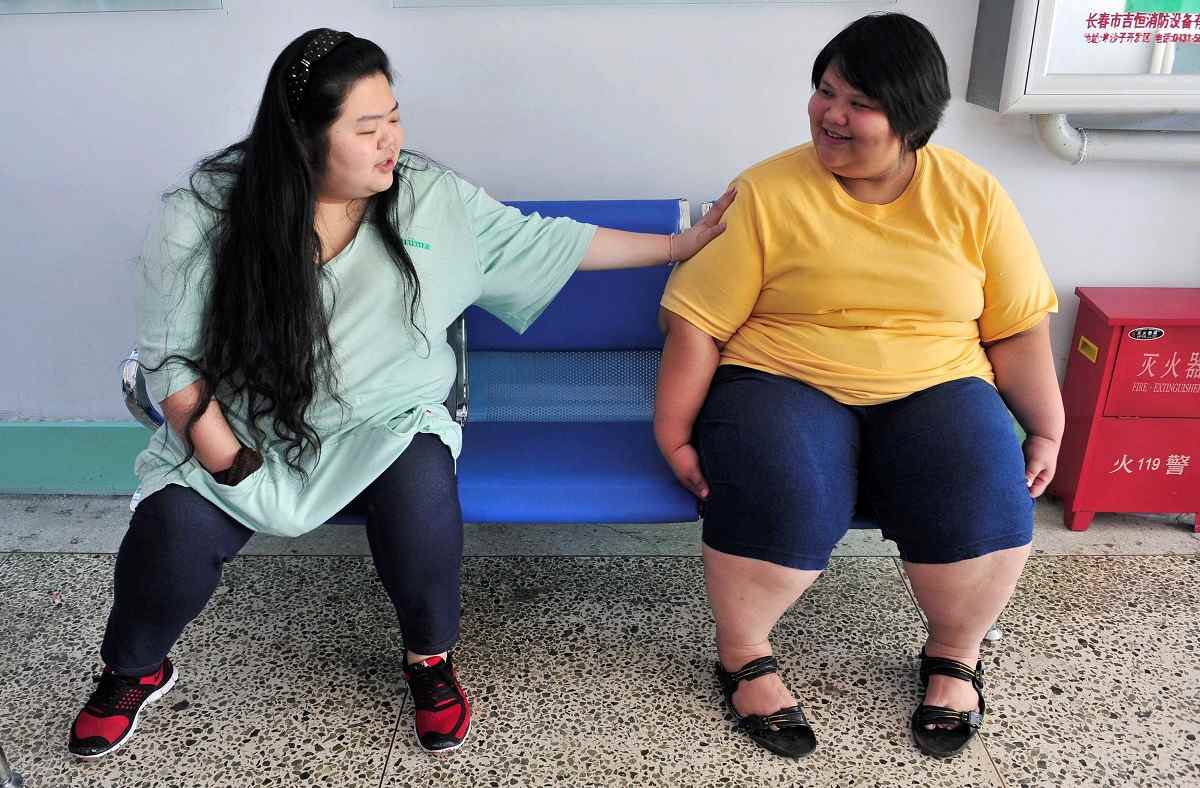
Patients chat with each other at a weight loss centre in Changchun, Jilin province in northeastern China June 20, 2010.
17:30 JST, October 22, 2024
HONG KONG (Reuters) – China’s National Health Commission (NHC) published its first set of guidelines to standardise the diagnosis and treatment of obesity, with more than half of China’s adults already overweight and obese, and the rate expected to keep rising.
The guidelines, made public on Oct 17, come as China experiences an upward morbidity trend of its overweight and obese population. The rate of overweight or obese people could reach 65.3% by 2030, the NHC said.
“Obesity has become a major public health issue in China, ranking as the sixth leading risk factor for death and disability in the country,” the guidelines said.
China is facing a twin challenge that feeds its weight problem: In a modernising economy underpinned by technological innovation, more jobs have become static or desk-bound, while a prolonged slowdown in growth is forcing people to adopt cheaper, unhealthy diets.
Job stress, long work hours and poor diets are growing high- risk factors in the cities, while in rural areas, agriculture work is becoming less physically demanding and inadequate healthcare is leading to poor screening and treatment of weight problems, doctors and academics say.
The guidelines provide guidance and regulations including in clinical nutrition, surgical treatment, behavioural and psychological intervention, and exercise intervention for obesity, Zhang Zhongtao, director of the guideline drafting committee and deputy head of Beijing Friendship Hospital told the official Xinhua news agency.
China’s NHC and 15 other government departments in July launched public awareness efforts to fight obesity. The campaign, set to last for three years, is built around eight slogans: “lifelong commitment, active monitoring, a balanced diet, physical activity, good sleep, reasonable targets and family action.”
Health guidelines were distributed to primary and secondary schools in July urging regular screening, daily exercise, hiring nutritionists and implementing healthy eating habits – including lowering salt, oil and sugar.
Obesity in China is an “unintended consequence of improving living standards in the country”, Xinhua said, after China struggled for centuries to feed its population and under-nourishment was a genuine concern for many families before the reform and opening-up in the late 1970s.









Most Read
Popular articles in the past 24 hours
-

Milano Cortina 2026: Japanese Gold Medalist Figure Skater Miura S...
-

Yokohama to Test Out Renewable-Powered Offshore Floating Data Cen...
-

Ishinomaki Man Plush Toy Offers Hope to Children in Times of Disa...
-
Japan Authorities Begin On-site Inspection of Japanese Microsoft ...
-

Nikkei Tops 59,000 for First Time
-

Microsoft Japan Raided by Antitrust Watchdog for Allegedly Blocki...
-
Japan Eyes Introducing Prescreening System for Foreign Travelers,...
-

Dodgers' Roki Sasaki Erratic in First Spring Training Outing, Giv...
Popular articles in the past week
-

Producer Behind Pop Group XG Arrested for Cocaine Possession
-

iPS Treatments Pass Key Milestone, but Broader Applications Far f...
-

Japan, U.S. Name 3 Inaugural Investment Projects; Reached Agreeme...
-

Tokyo Skytree's Elevator Stops, Trapping 20 People; All Rescued (...
-

Japan’s Major Real Estate Firms Expanding Overseas Businesses to ...
-
Milano Cortina 2026: Japanese Gold Medalist Figure Skater Miura S...
-

Baby Monkey Punch Captures Hearts at Chiba Pref. Zoo, on Social M...
-

Nepal Bus Crash Kills 19 People, Injures 25 Including One Japanes...
Popular articles in the past month
-
Producer Behind Pop Group XG Arrested for Cocaine Possession
-

Japan PM Takaichi’s Cabinet Resigns en Masse
-

Japan Institute to Use Domestic Commercial Optical Lattice Clock ...
-

Man Infected with Measles Reportedly Dined at Restaurant in Tokyo...
-

Israeli Ambassador to Japan Speaks about Japan’s Role in the Reco...
-

Videos Plagiarized, Reposted with False Subtitles Claiming ‘Ryuky...
-

Man Infected with Measles May Have Come in Contact with Many Peop...
-

Prudential Life Insurance Plans to Fully Compensate for Damages C...
Top Articles in News Services
-

Survey Shows False Election Info Perceived as True
-
Hong Kong Ex-Publisher Jimmy Lai’s Sentence Raises International Outcry as China Defends It
-
Japan’s Nikkei Stock Average Touches 58,000 as Yen, Jgbs Rally on Election Fallout (UPDATE 1)
-
Japan’s Nikkei Stock Average Falls as US-Iran Tensions Unsettle Investors (UPDATE 1)
-

Trump Names Former Federal Reserve Governor Warsh as the Next Fed Chair, Replacing Powell
JN ACCESS RANKING
-
Producer Behind Pop Group XG Arrested for Cocaine Possession
-
Japan PM Takaichi’s Cabinet Resigns en Masse
-
Man Infected with Measles Reportedly Dined at Restaurant in Tokyo Station
-
Israeli Ambassador to Japan Speaks about Japan’s Role in the Reconstruction of Gaza
-
Videos Plagiarized, Reposted with False Subtitles Claiming ‘Ryukyu Belongs to China’; Anti-China False Information Also Posted in Japan