
Scientists Once Thought Only Humans Could Bob to Music. Ronan the Sea Lion Helped Prove Them Wrong
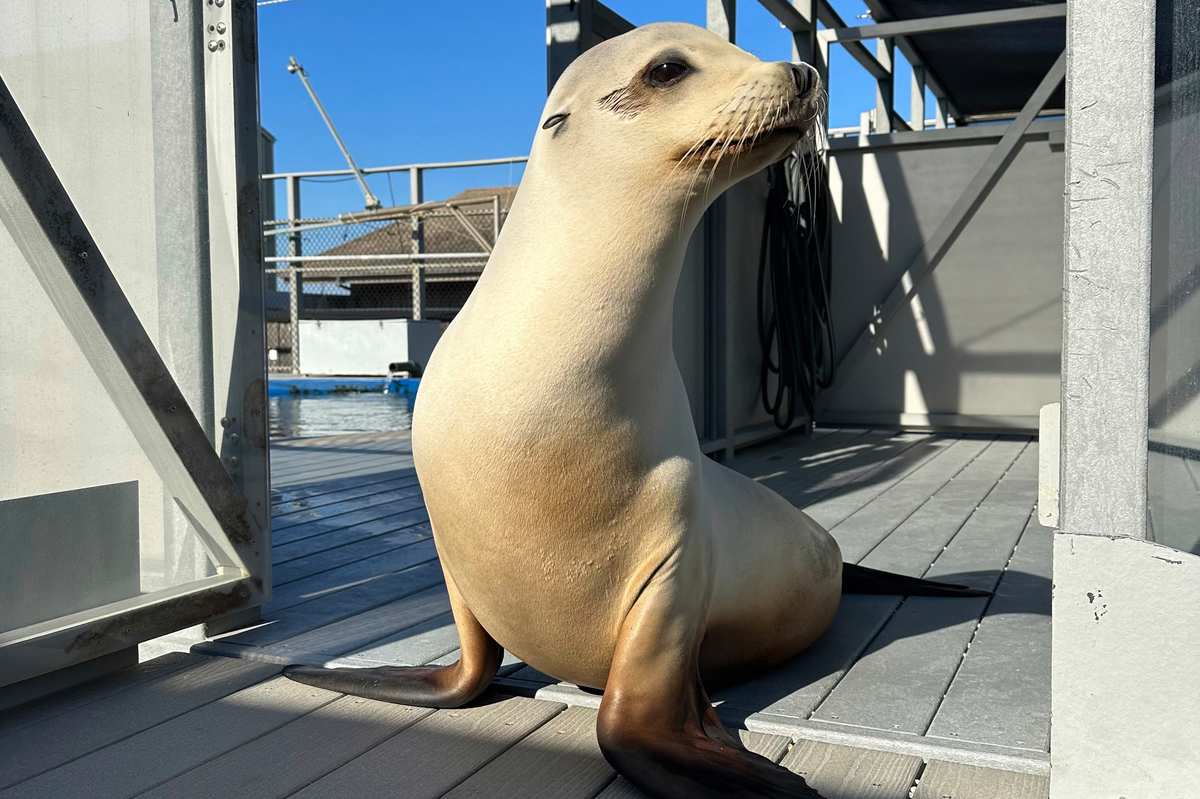
This photo provided by researchers shows California sea lion Ronan in Santa Cruz, Calif., in 2023, under an NMFS 23554 permit.
11:32 JST, May 2, 2025
Ronan the sea lion can still keep a beat after all these years.
She can groove to rock and electronica. But the 15-year-old California sea lion’s talent shines most in bobbing to disco hits like “Boogie Wonderland.”
“She just nails that one,” swaying her head in time to the tempo changes, said Peter Cook, a behavioral neuroscientist at New College of Florida who has spent a decade studying Ronan’s rhythmic abilities.
Not many animals show a clear ability to identify and move to a beat aside from humans, parrots and some primates. But then there’s Ronan, a bright-eyed sea lion that has scientists rethinking the meaning of music.
A former rescue sea lion, she burst to fame around a decade ago after scientists reported her musical skills. From age 3, she has been a resident at the University of California, Santa Cruz’s Long Marine Laboratory, where researchers including Cook have tested and honed her ability to recognize rhythms.
Ronan joined a select group of animal movers and shakers — which also includes Snowball the famed dancing cockatoo — that together upended the long-held idea that the ability to respond to music and recognize a beat was distinctly human.
What is particularly notable about Ronan is that she can learn to dance to a beat without learning to sing or talk musically.
“Scientists once believed that only animals who were vocal learners — like humans and parrots — could learn to find a beat,” said Hugo Merchant, a researcher at Mexico’s Institute of Neurobiology, who was not involved in the Ronan research.
But in the years since since Ronan came into the spotlight, questions emerged about whether she still had it. Was her past dancing a fluke? Was Ronan better than people at keeping a beat?
To answer the challenge, Cook and colleagues devised a new study, published Thursday in the journal Scientific Reports.
The result: Ronan still has it. She’s back and she’s better than ever.
This time the researchers focused not on studio music but on percussion beats in a laboratory. They filmed Ronan bobbing her head as the drummer played three different tempos — 112, 120, and 128 beats per minute. Two of those beats Ronan had never been exposed to, allowing scientists to test her flexibility in recognizing new rhythms.
And the researchers asked 10 college students to do the same, waving their forearm to changing beats.
Ronan was the top diva.
“No human was better than Ronan at all the different ways we test quality of beat-keeping,” said Cook, adding that “she’s much better than when she was a kid,” indicating lifetime learning.
The new study confirms Ronan’s place as one of the “top ambassadors” of animal musicality, said University of Amsterdam music cognition researcher Henkjan Honing, who was not involved in the study.
Researchers plan to train and test other sea lions. Cook suspects other sea lions can also bob to a beat — but that Ronan will still stand out as a star performer.








Most Read
Popular articles in the past 24 hours
-

Japanese Watermelon Shipments Starts in Leading Production Distri...
-

Takeshima Day: Persistently Demanding Resolution from South Korea...
-

Tokyo Skytree Observation Deck Remains Closed for Inspection afte...
-

Impact on Japanese Economy Unclear with Trump’s New Tariffs, Shif...
-

CARTOON OF THE DAY (February 25)
-

Hanzomon Line Service Suspended between Kudanshita, Oshiage Stati...
-
Hanzomon Line Service Resumes
-

Japan GSDF, Indian Army Begin Joint Antiterror Drills
Popular articles in the past week
-

Producer Behind Pop Group XG Arrested for Cocaine Possession
-

iPS Treatments Pass Key Milestone, but Broader Applications Far f...
-

Japan, U.S. Name 3 Inaugural Investment Projects; Reached Agreeme...
-

Tokyo Skytree's Elevator Stops, Trapping 20 People; All Rescued (...
-

Japan’s Major Real Estate Firms Expanding Overseas Businesses to ...
-
Baby Monkey Punch Captures Hearts at Chiba Pref. Zoo, on Social M...
-

Milano Cortina 2026: Japanese Figure Skater Kaori Sakamoto’...
-
Reciprocal Tariffs Ruled Illegal: Judiciary Would Not Tolerate Pr...
Popular articles in the past month
-
Producer Behind Pop Group XG Arrested for Cocaine Possession
-

Japan PM Takaichi’s Cabinet Resigns en Masse
-

Japan Institute to Use Domestic Commercial Optical Lattice Clock ...
-

Man Infected with Measles Reportedly Dined at Restaurant in Tokyo...
-

Israeli Ambassador to Japan Speaks about Japan’s Role in the Reco...
-

Videos Plagiarized, Reposted with False Subtitles Claiming ‘Ryuky...
-

Man Infected with Measles May Have Come in Contact with Many Peop...
-

Prudential Life Insurance Plans to Fully Compensate for Damages C...
Top Articles in News Services
-

Survey Shows False Election Info Perceived as True
-

Hong Kong Ex-Publisher Jimmy Lai’s Sentence Raises International Outcry as China Defends It
-

Japan’s Nikkei Stock Average Touches 58,000 as Yen, Jgbs Rally on Election Fallout (UPDATE 1)
-
Japan’s Nikkei Stock Average Falls as US-Iran Tensions Unsettle Investors (UPDATE 1)
-

Trump Names Former Federal Reserve Governor Warsh as the Next Fed Chair, Replacing Powell
JN ACCESS RANKING
-
Producer Behind Pop Group XG Arrested for Cocaine Possession
-
Japan PM Takaichi’s Cabinet Resigns en Masse
-
Man Infected with Measles Reportedly Dined at Restaurant in Tokyo Station
-
Israeli Ambassador to Japan Speaks about Japan’s Role in the Reconstruction of Gaza
-
Videos Plagiarized, Reposted with False Subtitles Claiming ‘Ryukyu Belongs to China’; Anti-China False Information Also Posted in Japan