
Kagawa: Seto Inland Sea’s Illusion Track: Train Ride Across Open Water
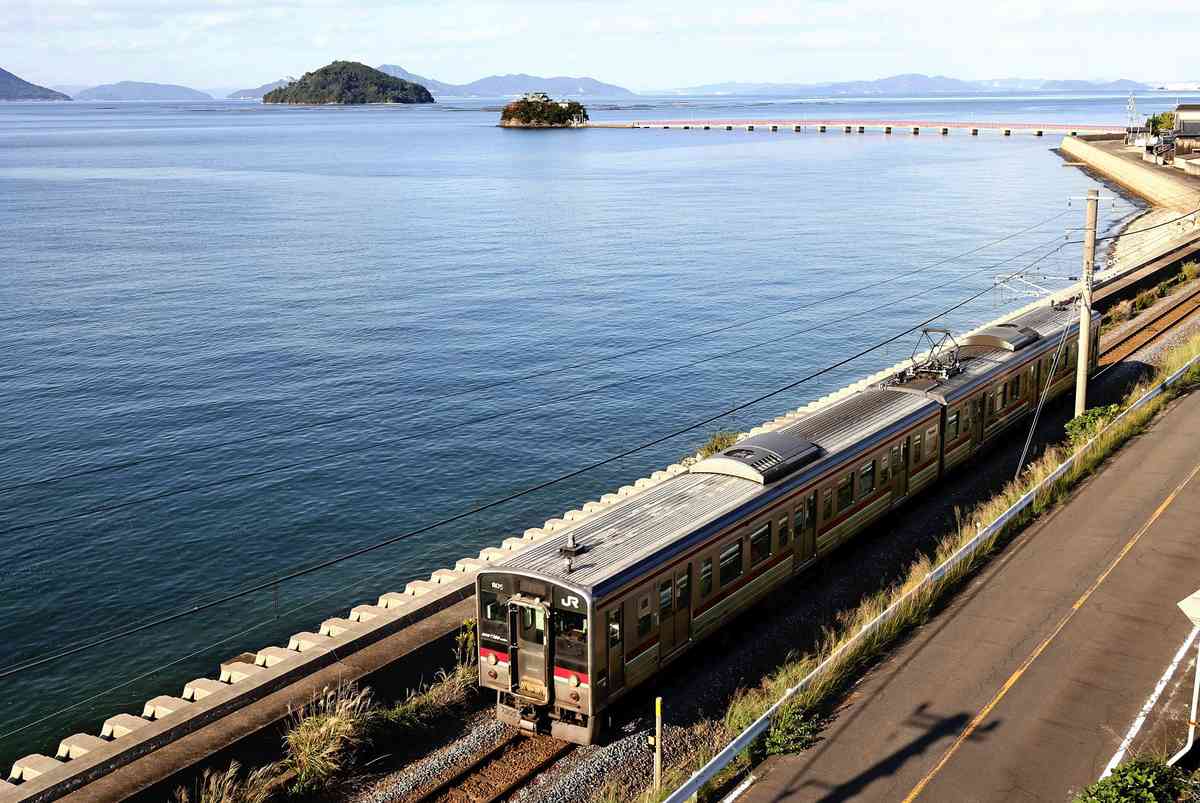
A Yosan Line train runs along the coast in Mitoyo, Kagawa Prefecture.
11:05 JST, November 29, 2025&
MITOYO, Kagawa — In striking illusion, a local train seems to run across the open sea less than a minute after departing from a certain station.
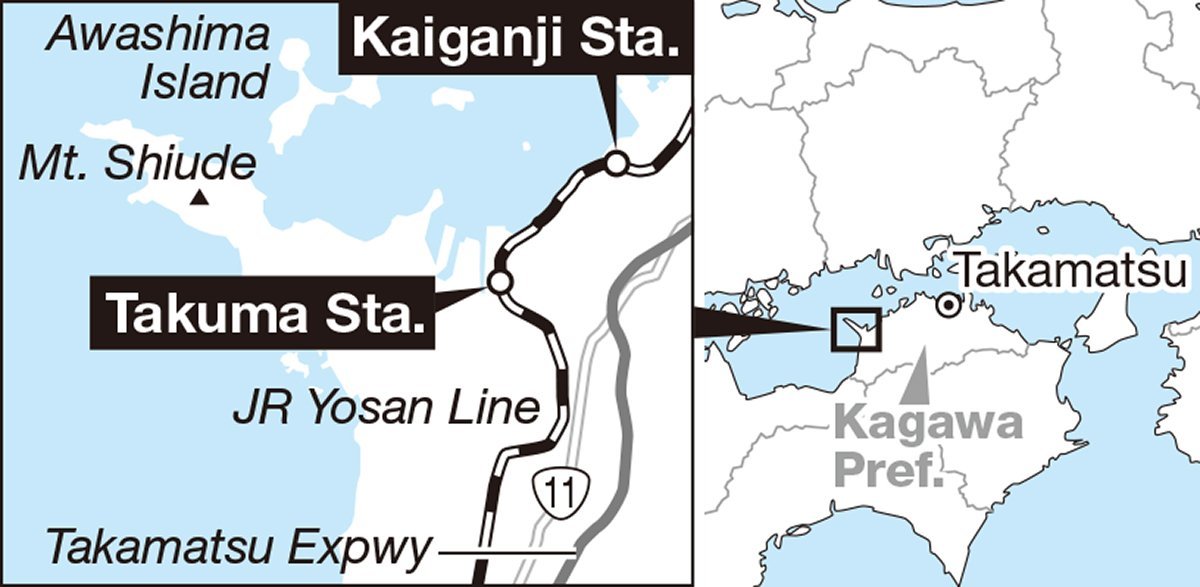
The train on the JR Yosan Line accelerates westward through the countryside after leaving Kaiganji Station in Tadotsu, Kagawa Prefecture, filling the entire window with the blue open sea and islands of the Seto Inland Sea.
The 5.5-kilometer section of the line through Takuma Station in Mitoyo in the prefecture opened in December 1913, offering an exceptional view free from seaside obstructions.
“I’m used to it, so I don’t think it’s so special,” said an 18-year-old high school student who uses the line daily on his commute.
In 2020, the scene skyrocketed in popularity when a video showing the view from the train window was posted on X, earning over 200,000 likes.
Typhoon No. 18, which made landfall in Shikoku in September 2017, brought a storm surge and waves that damaged an about 800-meter-long seawall between the two stations, causing it to shift in some places and collapse in others.
The damage amounted to approximately ¥3.2 billion, the most expensive in the history of Shikoku Railway Co.

A section of seawall damaged by storm surges and waves caused by a typhoon in 2017
Naoki Mima, 50, then assistant chief of JR Shikoku’s Takamatsu track maintenance section, was racking his brain over how to proceed with the restoration.
Removal of the collapsed seawall was hampered by the local geography, as the tracks are between the sea and a nearby mountain, allowing no space for heavy machinery.
As an emergency measure, the seawall was crushed and removed, primarily by manual labor. A temporary fence of steel and wooden boards was then put up on the shore.
Four days later, the trains were up and running again.
The full restoration work proved to be a challenging construction project, requiring an unusual approach that involved operations conducted from the sea.

The scenery between Kaiganji and Takuma stations on the JR Yosan Line in Tadotsu, Kagawa Prefecture
Kazunori Yamasaki, 43, then chief of the construction division and Mima’s successor on the site, recalled how the team stacked stones in the sea to build scaffolding, brought in materials by boat at high tide and laid concrete at low tide.
Restricted by limited working hours, the project was not completed until January 2023.
Mima, who took a position in Takamatsu, away from his family in Ehime Prefecture, is still a frequent passenger of the line.
“The seawall has been restored, and now the trains can run for another 100 years,” Mima said. “I feel relieved and satisfied.”
He also mentioned the sense of terror he feels now when face-to-face with the power of nature.
50 yrs of flower dedication
It takes about 5 minutes for the train to reach Takuma Station from Kaiganji Station.
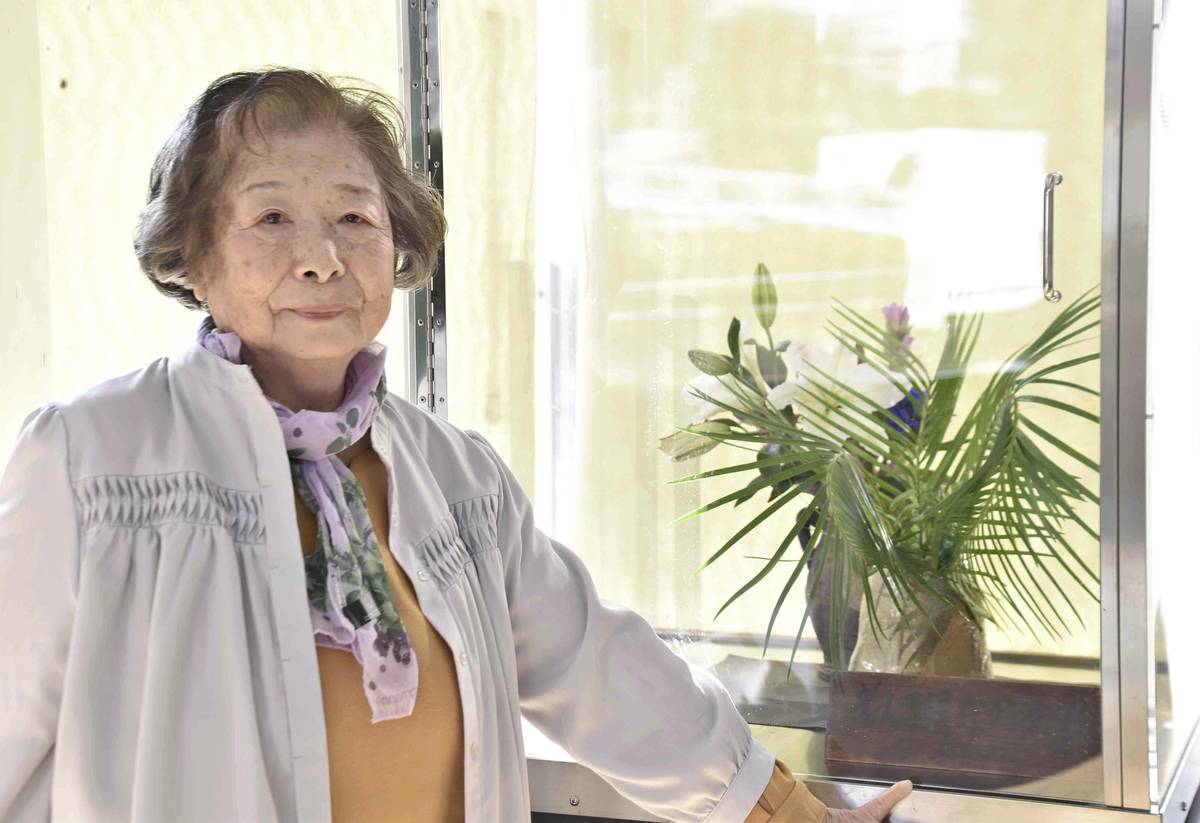
Nobuko Ando stands next to a flower arrangement at Takuma Station in Mitoyo, Kagawa Prefecture.
Once passengers pass the ticket gate, they are greeted by a flower arrangement standing next to the station building entrance. Nobuko Ando, 80, has been maintaining the display for almost half a century.
In 1979, Ando lost her eldest daughter, Yoko, then 5, who died after being struck by a car while walking to kindergarten.
Ando spent her days crying uncontrollably. One day, she remembered that Yoko, who loved flower arranging, had told her, “Mommy, when I grow up, teach me how to arrange flowers.”
She and her husband, Shigeru, asked the station staff if they could arrange flowers to decorate the station, where people come and go, and advocate for traffic safety. They started the practice four and a half months after the accident.
The railway has transitioned from Japanese National Railways (JNR) to JR, and the number of passengers has decreased.
The location of the flower display has also moved within the station building several times.
Although Shigeru died in 2021, Ando has continued to change the flowers once a week without fail.
She said she feels encouraged when people waiting for a train or returning to their hometown see the flowers and say, “They’re beautiful.”
“I’ve experienced both sorrow and joy, but the flowers at the station are my emotional pillar,” Ando said. “I want to keep going for as long as possible.”
The heartfelt blossoms continue their silent vigil for the day’s travelers.







Most Read
Popular articles in the past 24 hours
-

Japan Train Company to Increase Fares, Including in Tokyo Metropo...
-

Japan Govt to Tighten Requirements to Receive Permanent Residency...
-

Tail of ANA Plane Struck Runway During Landing in Houston; No Inj...
-

Samurai Japan Holds First Practice in Miami; Team Will Play again...
-

Medical Care at Home and Disasters: Ensure Systems to Provide Con...
-

Iran Targets Busiest International Airport as Top UN Body Demands...
-

Japan to Face Venezuela in World Baseball Classic Quarterfinals
-

North Korean Leader Kim and His Daughter Try out New Pistols at S...
Popular articles in the past week
-

Japan Figure Skating Legend Yuzuru Hanyu Is Proud Disaster Surviv...
-

Nippon Life Insurance's U.S. Arm Sues OpenAI Over Legal Assistanc...
-

Ibaraki Pref.'s 1st Foreign Bus Driver Hired in Tsukuba
-

Govt to Utilize ODA for Ensuring Economic Security; Securing Ener...
-
Massive Sewer Pipe Found Jutting Out of Highway in Osaka
-

Beckoning Cats Get Makeover to Fit Modern Lifestyles with Sleek D...
-
Japan Govt Survey Finds Just 10% of Workers Want Working Hours to...
-

Japan's 2nd Round of U.S. Investments May Be Worth Over $100 Bill...
Popular articles in the past month
-

Producer Behind Pop Group XG Arrested for Cocaine Possession
-

Japan PM Takaichi’s Cabinet Resigns en Masse
-

Man Infected with Measles Reportedly Dined at Restaurant in Tokyo...
-

Videos Plagiarized, Reposted with False Subtitles Claiming ‘Ryuky...
-

iPS Treatments Pass Key Milestone, but Broader Applications Far f...
-
Japan Figure Skating Legend Yuzuru Hanyu Is Proud Disaster Surviv...
-

Sanae Takaichi Elected Prime Minister of Japan; Keeps All Cabinet...
-

Nepal Bus Crash Kills 19 People, Injures 25 Including One Japanes...
Top Articles in Features
-

Tokyo’s New Record-Breaking Fountain Named ‘Tokyo Aqua Symphony’
-

High-Hydration Bread on the Rise, Seeing Increase in Specialty Shops, Recipe Searches
-

Japanese Students Use Traditional Pickle to Create Novel Wagashi Confectionery
-
Heirs to Kyoto Talent: Craftsman Works to Keep Tradition of ‘Kinran’ Brocade Alive Through Initiatives, New Creations
-

My Spendthrift Mother Constantly Asks Me for Money
JN ACCESS RANKING
-
Producer Behind Pop Group XG Arrested for Cocaine Possession
-
Japan PM Takaichi’s Cabinet Resigns en Masse
-
Man Infected with Measles Reportedly Dined at Restaurant in Tokyo Station
-
Videos Plagiarized, Reposted with False Subtitles Claiming ‘Ryukyu Belongs to China’; Anti-China False Information Also Posted in Japan
-
iPS Treatments Pass Key Milestone, but Broader Applications Far from Guaranteed