
Showa-Era Theater in Japan’s Kawasaki Keeps Going, Venue Provides Chance to See Performers Up Close
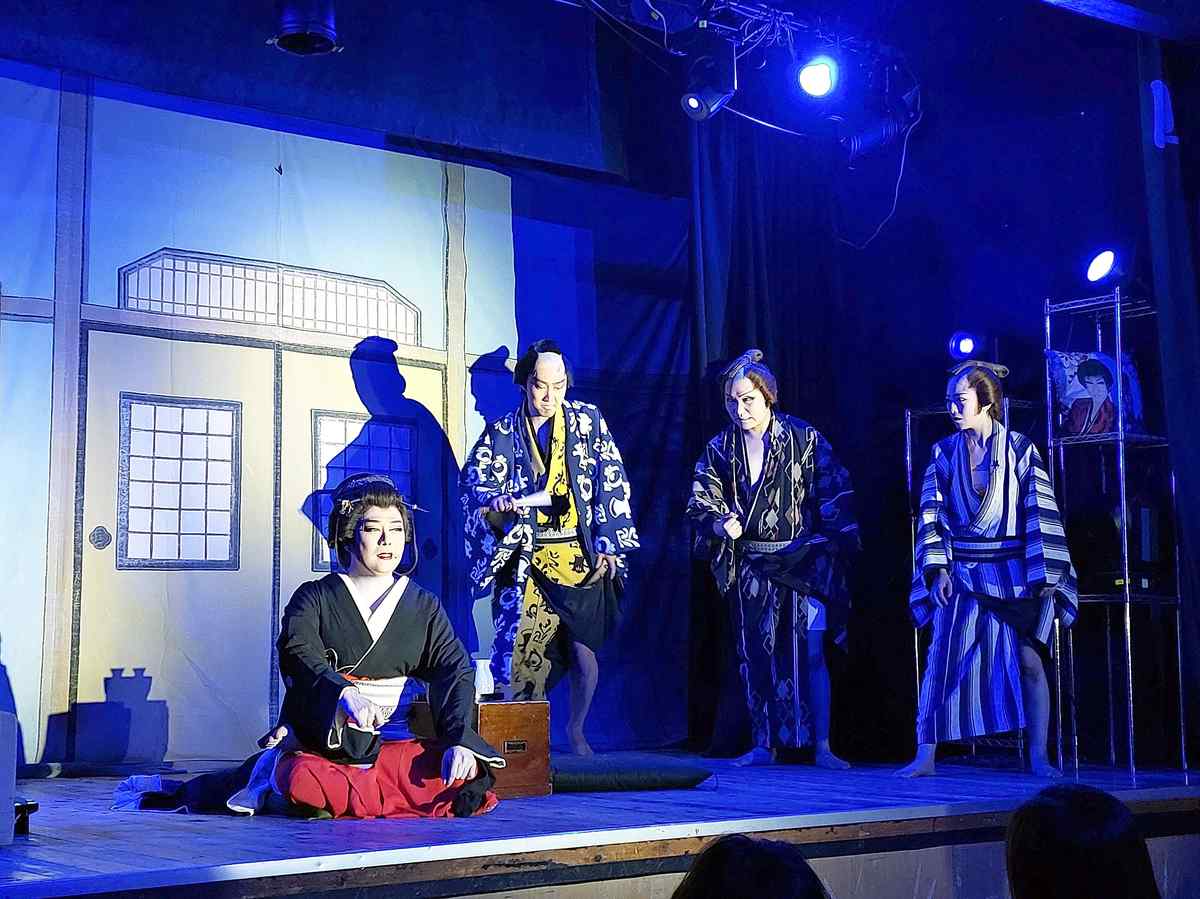
A historical drama with plenty of highlights
11:37 JST, August 19, 2025
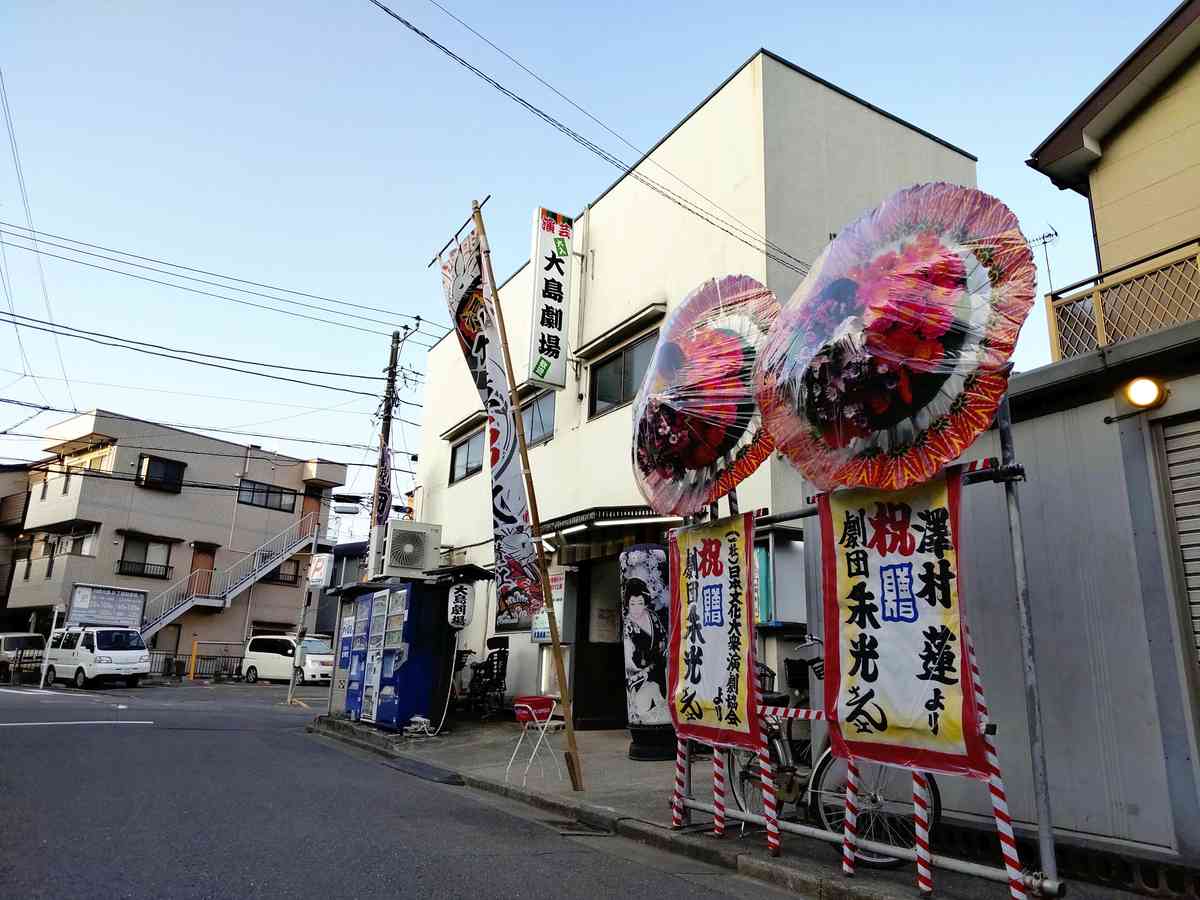
The theater entrance is adorned with flower wreaths and banners.
KAWASAKI — Traveling down the main road from Kawasaki Station toward the industrial waterfront area, I turned onto a side street leading to a residential area. Colorful wreaths and banners bearing the names of theater companies and actors caught my eye.
Taishu engeki, literary “theater for the masses,” flourished in the Showa era (1926-1989). Kawasaki, once a prospering working-class city, was home to many of these kinds of theaters. However, only the Oshima Gekijo theater remains.
The theater opened in 1950, and the current manager and proprietress is the third generation to run the venue, taking over from her mother, who also inherited the theater from her mother, its founder.
“It’s not a profitable business and difficult to rebuild. We have regular customers, so we don’t know when to lower the curtain [on the theater],” she said jokingly.
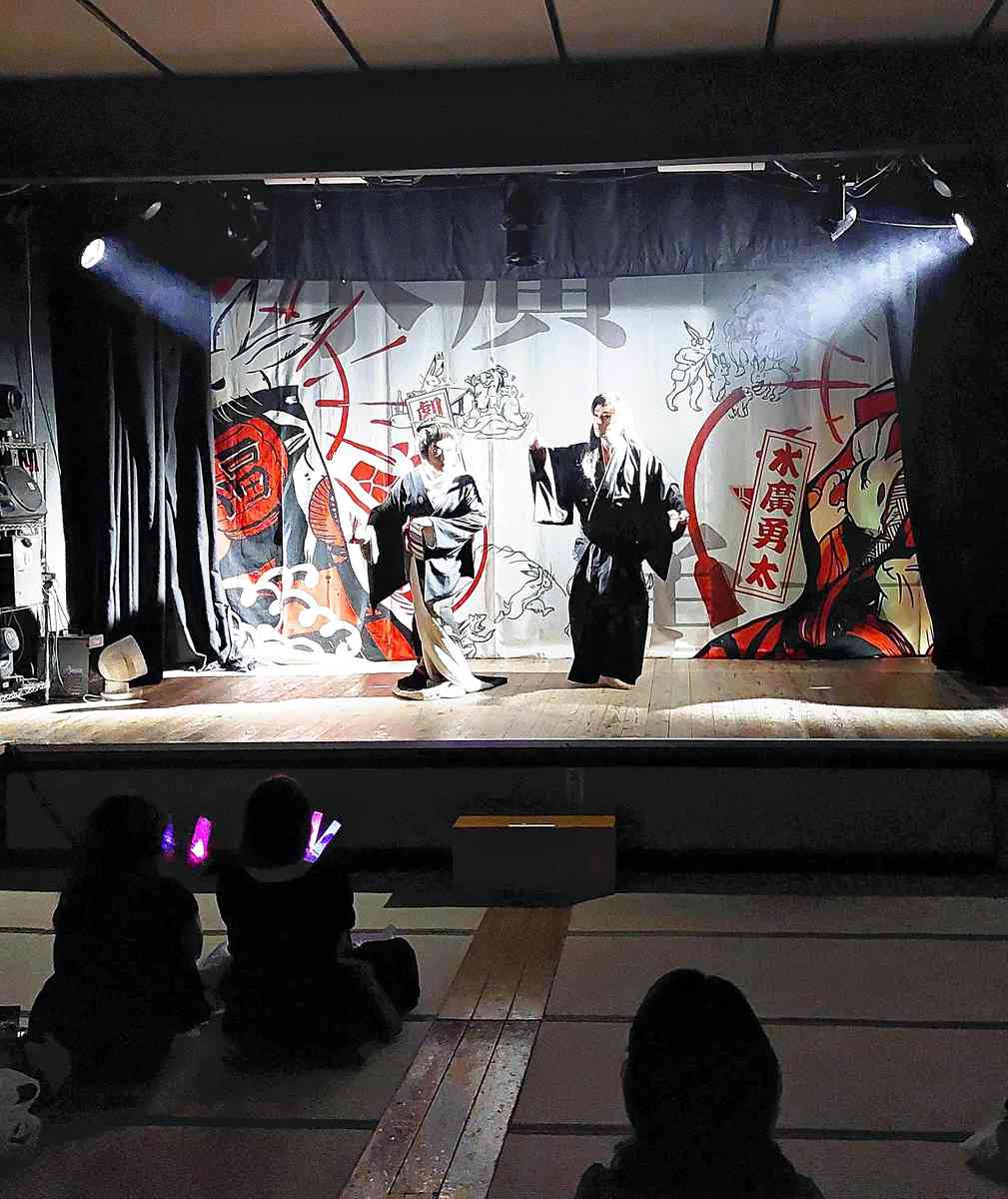
The seats at Oshima Gekijo theater are tatami-mat flooring.
The current white box-shaped structure was built around 1970. Visitors buy tickets at the door, take off their shoes and enter the 40-tatami-mat auditorium. Banners featuring actors’ names and faces liven up the hanamachi runway to the stage. The stage is compact, and the seating area has a gentle slope to ensure good visibility even from the back rows.
The theater was designed by local architect Joichi Iwata. His son Minoru said that he believes the slope was added at the request of the theater company at the time. He added that the decision not to give the building the traditional karahafu gabled roof typical of a theater was maybe because they wanted to create something modern.
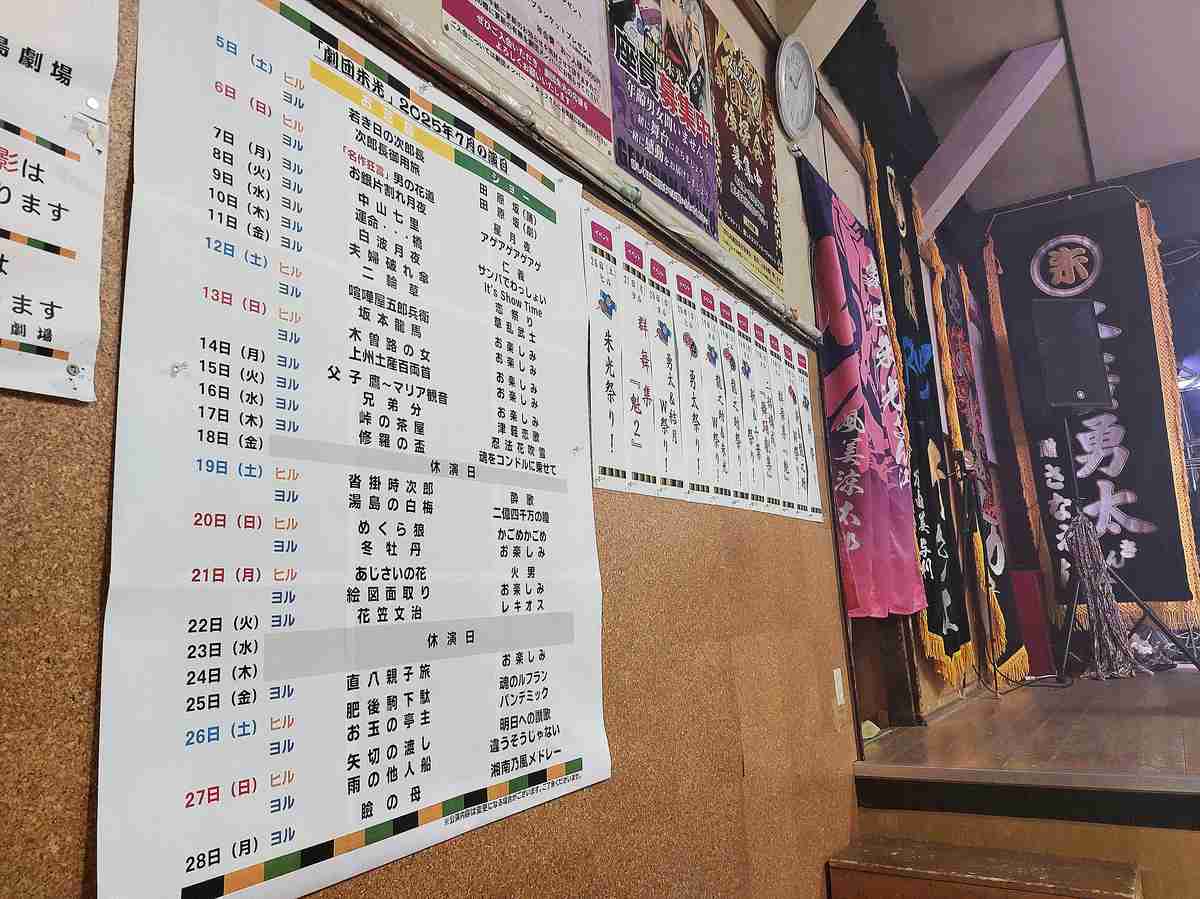
Daily performance schedules posted near the audience seats
The theater hosts a different troupe each month, with performances typically consisting of two parts: a historical play and a song and dance show. The repertoire changes daily.
It is customary for spectators to present artificial flower necklaces to their favorite actors during the show. In recent years, fans have also begun cheering while holding penlights.
“Compared to other theaters, the distance between the audience and the actors is very close,” said Yuta Mizuhiro, who leads theater company Gekidan Shuko. “I come here once a year and enjoy the sense of unity.”
It is customary for the actors to gather at the exit to see the audience off after shows. The heat felt on stage gradually transforms into a warm, family-like atmosphere.
Oshima Gekijo theater
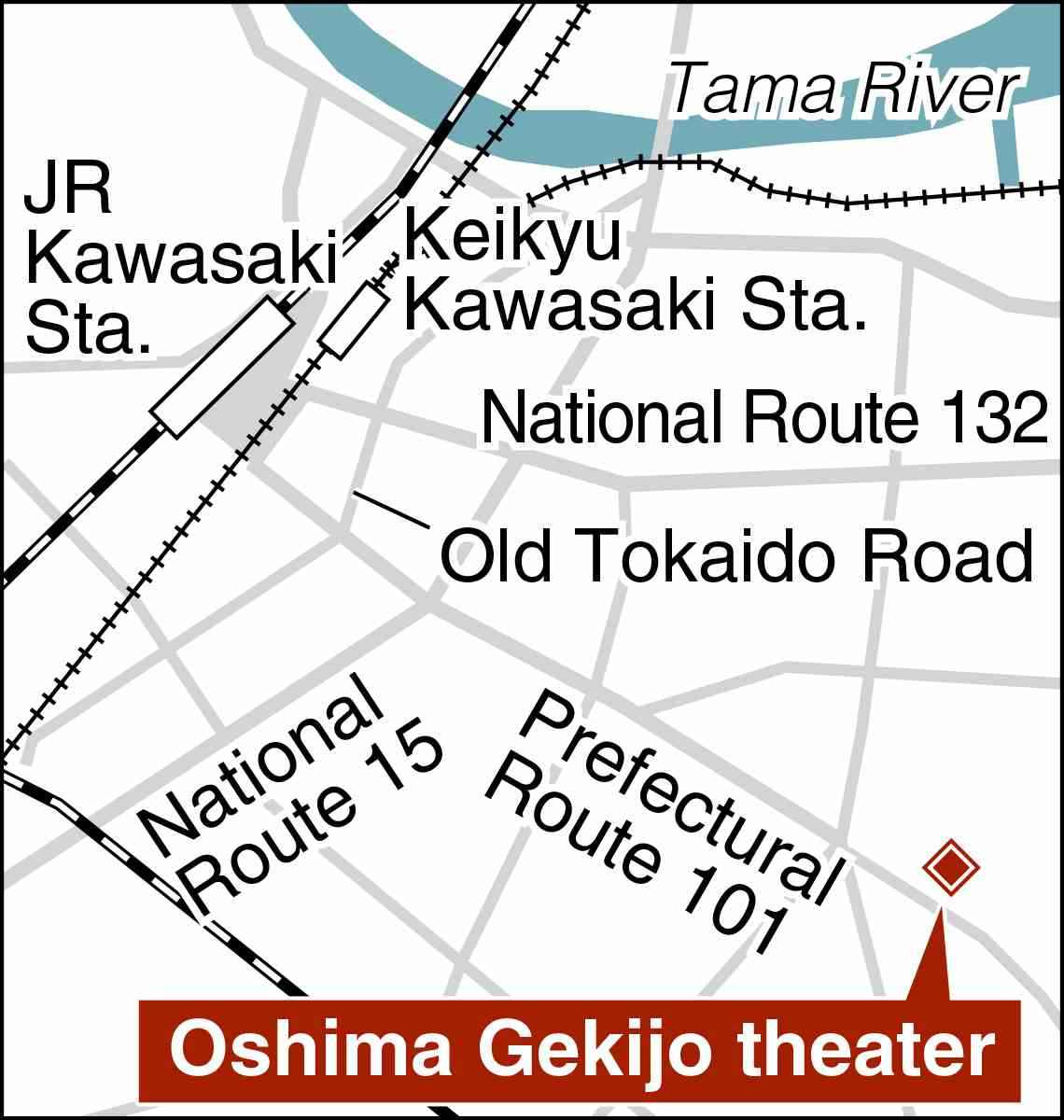
Address: 2-16-1 Oshima, Kawasaki Ward, Kawasaki
Access: Take the Kawasaki Tsurumi Rinko Bus from JR Kawasaki Station and get off at Oiwake Stop then walk for 3 minutes.
Memo: Shows start at 6 p.m. on weekdays; at 1 p.m. and at 6 p.m. on weekends and holidays.
Admission: ¥2,000 for adults, ¥1,000 for children aged 4 to elementary school.


Related Tags


Most Read
Popular articles in the past 24 hours
-

Japan Train Company to Increase Fares, Including in Tokyo Metropo...
-
Japan Govt to Tighten Requirements to Receive Permanent Residency...
-

Tail of ANA Plane Struck Runway During Landing in Houston; No Inj...
-
Samurai Japan Holds First Practice in Miami; Team Will Play again...
-

Medical Care at Home and Disasters: Ensure Systems to Provide Con...
-

Iran Targets Busiest International Airport as Top UN Body Demands...
-

Japan to Face Venezuela in World Baseball Classic Quarterfinals
-

North Korean Leader Kim and His Daughter Try out New Pistols at S...
Popular articles in the past week
-
Japan Figure Skating Legend Yuzuru Hanyu Is Proud Disaster Surviv...
-

Nippon Life Insurance's U.S. Arm Sues OpenAI Over Legal Assistanc...
-

Ibaraki Pref.'s 1st Foreign Bus Driver Hired in Tsukuba
-
Govt to Utilize ODA for Ensuring Economic Security; Securing Ener...
-
Massive Sewer Pipe Found Jutting Out of Highway in Osaka
-
Beckoning Cats Get Makeover to Fit Modern Lifestyles with Sleek D...
-
Japan Govt Survey Finds Just 10% of Workers Want Working Hours to...
-
Japan's 2nd Round of U.S. Investments May Be Worth Over $100 Bill...
Popular articles in the past month
-

Producer Behind Pop Group XG Arrested for Cocaine Possession
-

Japan PM Takaichi’s Cabinet Resigns en Masse
-

Man Infected with Measles Reportedly Dined at Restaurant in Tokyo...
-

Videos Plagiarized, Reposted with False Subtitles Claiming ‘Ryuky...
-

iPS Treatments Pass Key Milestone, but Broader Applications Far f...
-
Japan Figure Skating Legend Yuzuru Hanyu Is Proud Disaster Surviv...
-

Sanae Takaichi Elected Prime Minister of Japan; Keeps All Cabinet...
-

Nepal Bus Crash Kills 19 People, Injures 25 Including One Japanes...
Top Articles in Features
-
Tokyo’s New Record-Breaking Fountain Named ‘Tokyo Aqua Symphony’
-

High-Hydration Bread on the Rise, Seeing Increase in Specialty Shops, Recipe Searches
-
Japanese Students Use Traditional Pickle to Create Novel Wagashi Confectionery
-
Heirs to Kyoto Talent: Craftsman Works to Keep Tradition of ‘Kinran’ Brocade Alive Through Initiatives, New Creations
-

My Spendthrift Mother Constantly Asks Me for Money
JN ACCESS RANKING
-
Producer Behind Pop Group XG Arrested for Cocaine Possession
-
Japan PM Takaichi’s Cabinet Resigns en Masse
-
Man Infected with Measles Reportedly Dined at Restaurant in Tokyo Station
-
Videos Plagiarized, Reposted with False Subtitles Claiming ‘Ryukyu Belongs to China’; Anti-China False Information Also Posted in Japan
-
iPS Treatments Pass Key Milestone, but Broader Applications Far from Guaranteed