
Tokyo: Bent Pages, Torn Covers: Novelist Takeshi Kaiko Was Also a Very Physical Reader
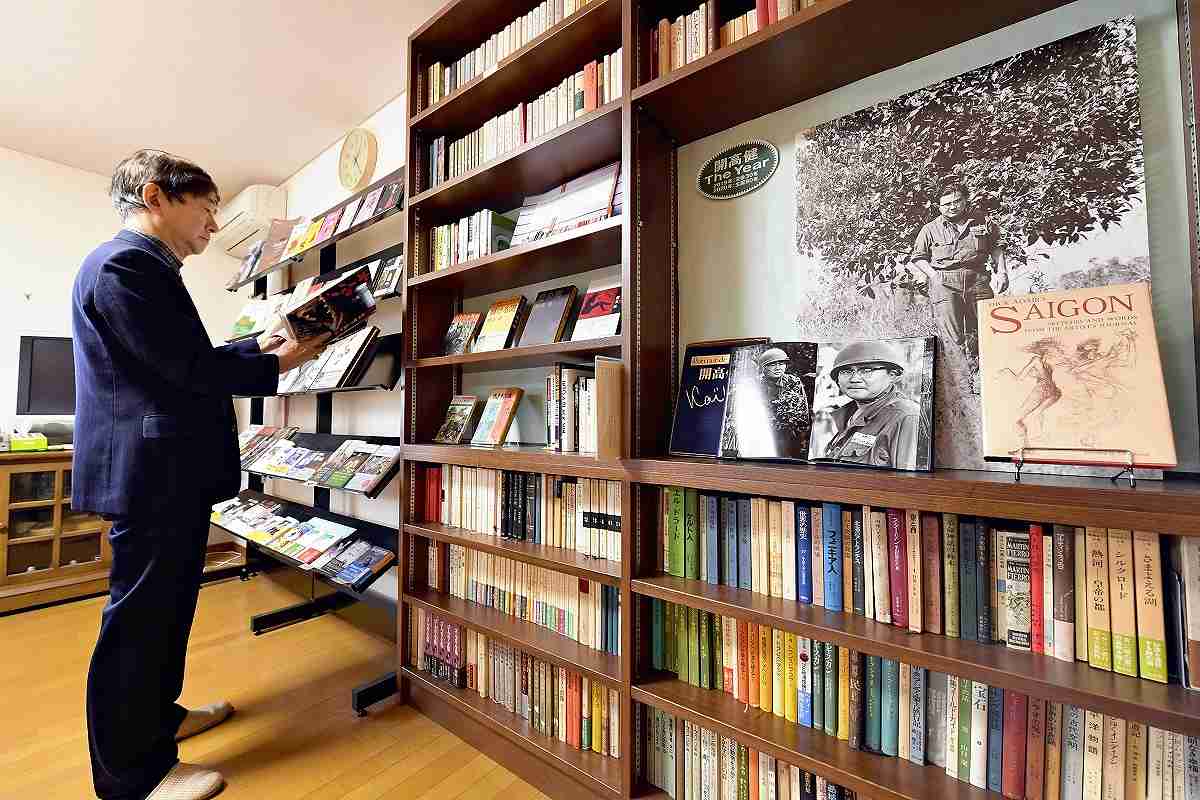
Novelist Takeshi Kaiko’s personal library displayed on bookshelves
11:51 JST, March 15, 2023
Takeshi Kaiko (1930-89), a novelist known for such works as “Natsu no Yami” (“Darkness in Summer”) and “Opa!” lived in Igusa, Suginami Ward, Tokyo, for 16 years from 1958. The Kaiko Takeshi Memorial Library, which opened in 2017 on the site of his home, has about 600 books in its collection on view. Visitors can read the books that Kaiko himself looked through, and it is tempting to imagine how he must have felt when he read them.
In 1958, Kaiko won the Akutagawa Prize for “Hadaka no Osama” (“The Naked King”) and quit his job at Western-style liquor company Kotobukiya, now Suntory Holdings Ltd. He had to move out of company housing and hurriedly found a house in Igusa nearby.
In 1974, Kaiko moved his workplace to Chigasaki, Kanagawa Prefecture, now the Kaiko Takeshi Memorial House, and his Igusa house eventually became vacant. The current building was rebuilt in 2002 by his wife’s sister, who became his heir.
The first floor of the building in Igusa is the office of the Kaiko Takeshi Memorial Society, which operates the library. The second floor, which is open to the public, is accessed via an outside staircase. A bookshelf on the right-hand side of a room holds the complete works of Jean-Paul Sartre, who greatly influenced Kaiko; books related to the Vietnam War, which he covered; and “Mongoru Teikokushi” (“History of the Mongol Empire”), a series published by Toyo Bunko that he seems to have used as reference when searching for the tomb of Genghis Khan, an obsession in the last days of his life.
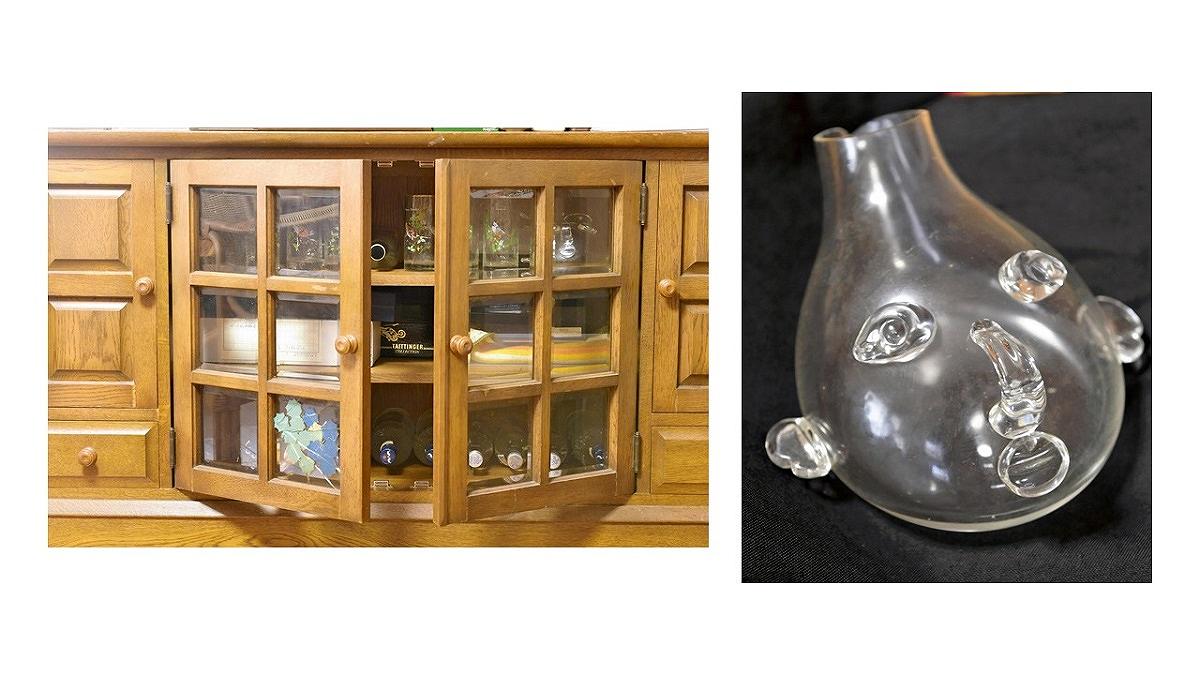
A chest in Kaiko’s study, left, A decanter beloved by Kaiko
Haruo Kikuchi, 73, a former editor at Shueisha Inc. and a director of the memorial society, said: “Kaiko was not a bibliophile who cherished books as objects. Before reading a book, he would tear off the cover and throw away the entire wraparound band and sometimes folded several pages together instead of writing notes on them.”
The Kaiko family had a collection of nearly 10,000 books, but his unique “reading habits” left clues to distinguish Kaiko’s own collection from those of his family members or those that had been given to him.
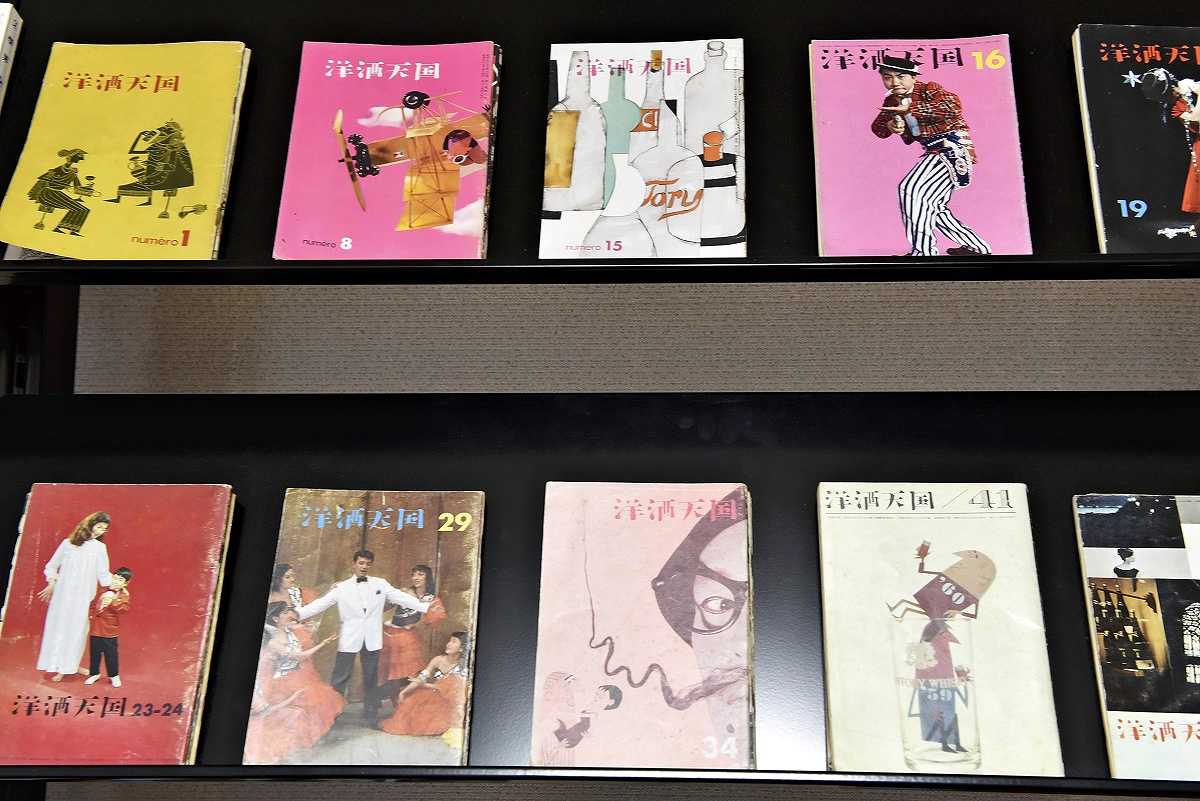
Issues of the magazine “Yoshu Tengoku” (Western liquor heaven) edited by Kaiko when he worked for Kotobukiya
A smaller room to the left, where the books Kaiko wrote are stored, was once his study. He had a desk in the corner facing the window. Standing there, I felt as if I could hear the novelist’ breathing.
Kaiko Takeshi Memorial Library
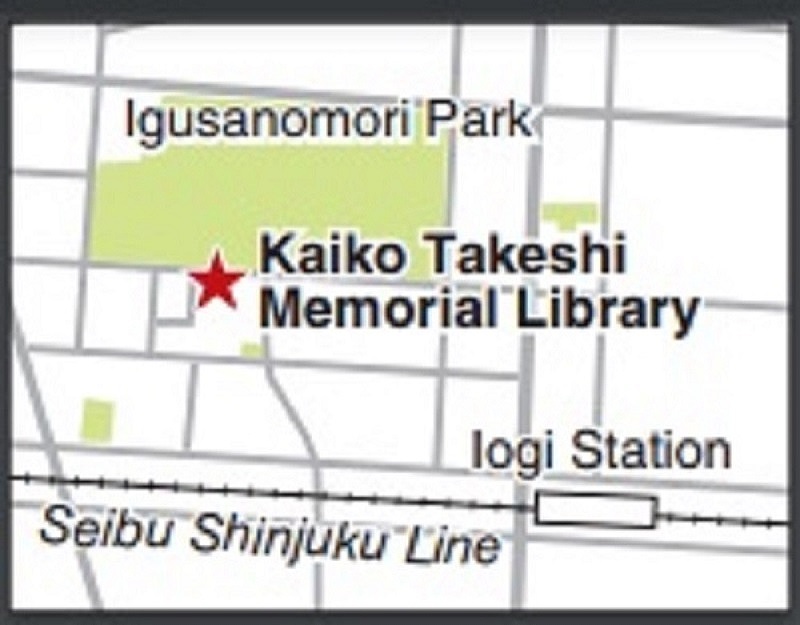
Family photographs and letters to acquaintances are also on display.
Address: 4-8-14 Igusa, Suginami Ward, Tokyo
Open: From 1 p.m. to 4 p.m. on Wednesdays, Thursdays, and the first and third Sundays of each month.
Admission: Free. Advance reservations are required through the Kaiko Takeshi Memorial Society’s website.


Related Tags



Most Read
Popular articles in the past 24 hours
-
Masako Ikeda, Voice of Maetel in ‘Galaxy Express 999,' Dies at 87
-

Japan's TEPCO Releases Footage from Fukushima N-Plant Reactor
-

Japan Considering Taking Part in U.S. ‘Golden Dome’ Defense Syste...
-

Japan's Sanyo Shinkansen Suspended Again; Between Okayama, Aioi S...
-

Oil Reserve Releases: G7 Members Unite against Growing Threat
-

Milano Cortina 2026: Japan’s Momoka Muraoka Takes Silver in...
-
46 Evacuated from UAE, Oman on Japanese Govt-chartered Flight
-

Paw Patrol: Larry Marks 15 Years at 10 Downing Street
Popular articles in the past week
-
Japan Figure Skating Legend Yuzuru Hanyu Is Proud Disaster Surviv...
-

Nippon Life Insurance's U.S. Arm Sues OpenAI Over Legal Assistanc...
-
Govt to Utilize ODA for Ensuring Economic Security; Securing Ener...
-
15 Measles Patients Confirmed in Tokyo in Past 6 Days; 1 May Have...
-
Massive Sewer Pipe Found Jutting Out of Highway in Osaka
-
Japan Govt to Tighten Requirements to Receive Permanent Residency...
-
Beckoning Cats Get Makeover to Fit Modern Lifestyles with Sleek D...
-
Japan's 2nd Round of U.S. Investments May Be Worth Over $100 Bill...
Popular articles in the past month
-

Producer Behind Pop Group XG Arrested for Cocaine Possession
-

Japan PM Takaichi’s Cabinet Resigns en Masse
-

Man Infected with Measles Reportedly Dined at Restaurant in Tokyo...
-

Videos Plagiarized, Reposted with False Subtitles Claiming ‘Ryuky...
-
Japan Figure Skating Legend Yuzuru Hanyu Is Proud Disaster Surviv...
-

iPS Treatments Pass Key Milestone, but Broader Applications Far f...
-

Sanae Takaichi Elected Prime Minister of Japan; Keeps All Cabinet...
-

Nepal Bus Crash Kills 19 People, Injures 25 Including One Japanes...
Top Articles in Features
-
Tokyo’s New Record-Breaking Fountain Named ‘Tokyo Aqua Symphony’
-
High-Hydration Bread on the Rise, Seeing Increase in Specialty Shops, Recipe Searches
-
Japanese Students Use Traditional Pickle to Create Novel Wagashi Confectionery
-

My Spendthrift Mother Constantly Asks Me for Money
-
Heirs to Kyoto Talent: Craftsman Works to Keep Tradition of ‘Kinran’ Brocade Alive Through Initiatives, New Creations
JN ACCESS RANKING
-
Producer Behind Pop Group XG Arrested for Cocaine Possession
-
Japan PM Takaichi’s Cabinet Resigns en Masse
-
Man Infected with Measles Reportedly Dined at Restaurant in Tokyo Station
-
Videos Plagiarized, Reposted with False Subtitles Claiming ‘Ryukyu Belongs to China’; Anti-China False Information Also Posted in Japan
-
Japan Figure Skating Legend Yuzuru Hanyu Is Proud Disaster Survivor and Gold Medalist, Vows to Continue Support Efforts