
World Order in Crisis: Counter Major Powers through Multilateral Cooperation / ‘Might Makes Right’ Will Become Source of Trouble
16:00 JST, January 3, 2026
The White House in the U.S. capital of Washington has been a pitiful sight since last autumn.
The historic East Wing was completely reduced to rubble to make way for a luxury ballroom under the direction of U.S. President Donald Trump. Calls to halt the construction work were ignored.
Keep U.S. close
The United States is destroying the values and rules that it once prioritized and is forcibly suppressing dissenting opinions. The changes to the White House seem to mirror changes to the world order, which is now on the brink of collapse.
In the first year of his second term, Trump accelerated his “America First” approach. In the National Security Strategy announced late last year, he declared an end to the era in which the United States supported the global order, explicitly stating the country will only engage with other nations when its own interests are threatened.
Trump has said that other countries should put themselves first. However, such an assertion will only benefit authoritarian military powers such as Russia and China, and he should recognize that this will harm the long-term interests of the world and the United States itself.
Particularly concerning is Trump’s apparent push for a Russia-leaning peace proposal over its nearly four years of aggression against Ukraine.
Russia remains unchanged in its stance demanding the cession of Crimea, which it annexed in 2014, and the entirety of four eastern and southern oblasts of Ukraine. Any peace proposal paving the way for this goal would amount to rewarding Russia, which launched the aggression.
Isn’t Trump acting hastily in the pursuit of credit? Should the Republican Party struggle in November’s midterm elections and lose its majorities in both houses of the Congress, the Trump administration’s influence would inevitably wane.
Once the belief that “might makes right” is accepted, the fundamental international principle of respecting national sovereignty will collapse, creating an irreparable source of trouble.
Russian President Vladimir Putin is not hiding his ambitions for territorial expansion, including occupation of the entirety of Ukraine. This could encourage the emergence of other powerful nations outside Europe seeking to seize other countries’ territories.
Japan and European nations must coordinate to prevent major powers from striking deals that would lead to infringements of sovereignty. At the same time, they must continue urging Trump to play a constructive role without abandoning his role as mediator.
Deal between ‘G2’ dangerous
The ceasefire agreement reached last October between Israel and the Islamist group Hamas after two years of fighting in the Palestinian territory of Gaza was largely due to pressure from Trump. However, Israel has continued its attacks even after the ceasefire took effect, and the humanitarian crisis remains severe.
Vigilance is also essential regarding the movements of the two major powers of the United States and China in connection with the Indo-Pacific region.
In contrast to the deepening Japan-China confrontation following Prime Minister Sanae Takaichi’s remark at the Diet regarding a survival-threatening situation in connection with a potential Taiwan contingency, U.S.-China relations are entering a phase of easing tensions. A temporary truce in the U.S.-China trade war was agreed at an October summit, with Trump and Chinese President Xi Jinping planning reciprocal visits to each other’s country within this year.
Trump now calls the U.S.-China relationship the “G2.” The idea of the United States and China carving out spheres of influence is dangerous. On the other hand, the Indo-Pacific region was described in the National Security Strategy as one of the “economic and geopolitical battlegrounds,” demonstrating U.S. intent to defend Taiwan alongside its allies.
Trump will likely continue his haphazard diplomacy. Meanwhile, the White House chief of staff has revealed to the media that there have been criticism and dissenting opinions within the White House regarding his high tariff and other policies.
Maintain nuclear nonproliferation regime
While the United States cannot be expected to return to its previous state, it is crucial to convince it that stability in the Indo-Pacific region serves the interests of the United States. Japan, as its ally, needs to deepen its cooperation with the United States through such efforts as strengthening its own defense capabilities.
Wars are continuing, and the nuclear threat, which should have receded after the end of the Cold War, is rising again, creating fresh tension in the world. The New Strategic Arms Reduction Treaty (New START), which sets limits on the number of nuclear warheads deployed by the United States and Russia, will expire in February.
If the two major nuclear powers of the United States and Russia fail to agree on an extension of the treaty and it lapses, an arms race could well resume. China, not being bound by the treaty, is increasing its nuclear warheads, and North Korea is advancing its nuclear development.
For Japan’s security to be safeguarded, it has no choice but to rely on the U.S. “nuclear umbrella.” At the same time, it is Japan’s responsibility, as the only nation to have suffered atomic bombings, to advocate for the realization of a world without nuclear weapons. Japan should aim to maintain the nuclear nonproliferation regime while strengthening deterrence.
The Nuclear Non-Proliferation Treaty (NPT) Review Conference, involving 191 countries and regions, will be held in the United States in April. Four years ago, then Prime Minister Fumio Kishida attended, becoming Japan’s first prime minister to do so. Takaichi should also attend this conference and deliver a strong message.
(From The Yomiuri Shimbun, Jan. 3, 2026)



Most Read
Popular articles in the past 24 hours
-

Japan Figure Skating Legend Yuzuru Hanyu Is Proud Disaster Surviv...
-

Hawaii Museum on Tsunami Including Japan's 2011 Disaster at Risk ...
-

Japan Train Company to Increase Fares, Including in Tokyo Metropo...
-

Japan’s Mitsui O.S.K. Lines Container Ship Anchored in Persian Gu...
-

Struggling Onosato Pulls out of Spring Tourney
-

Japan’s Mitsui O.S.K. Lines Container Ship Anchored in Persian Gu...
-

Tail of ANA Plane Struck Runway During Landing in Houston; No Inj...
-

Iran Targets Busiest International Airport as Top UN Body Demands...
Popular articles in the past week
-
Japan Figure Skating Legend Yuzuru Hanyu Is Proud Disaster Surviv...
-

Nippon Life Insurance's U.S. Arm Sues OpenAI Over Legal Assistanc...
-

Ibaraki Pref.'s 1st Foreign Bus Driver Hired in Tsukuba
-
Govt to Utilize ODA for Ensuring Economic Security; Securing Ener...
-
Massive Sewer Pipe Found Jutting Out of Highway in Osaka
-
Amid Strait of Hormuz Blockade, Shipping Companies Scramble to Ge...
-

Beckoning Cats Get Makeover to Fit Modern Lifestyles with Sleek D...
-
Japan Govt Survey Finds Just 10% of Workers Want Working Hours to...
Popular articles in the past month
-

Producer Behind Pop Group XG Arrested for Cocaine Possession
-

Japan PM Takaichi’s Cabinet Resigns en Masse
-

Man Infected with Measles Reportedly Dined at Restaurant in Tokyo...
-

Videos Plagiarized, Reposted with False Subtitles Claiming ‘Ryuky...
-

iPS Treatments Pass Key Milestone, but Broader Applications Far f...
-

Sanae Takaichi Elected Prime Minister of Japan; Keeps All Cabinet...
-

Nepal Bus Crash Kills 19 People, Injures 25 Including One Japanes...
-

South Korea Tightens Rules on Foreigners Buying Homes in Seoul Me...
Top Articles in Editorial & Columns
-

Riku-Ryu Pair Wins Gold Medal: Their Strong Bond Leads to Major Comeback Victory
-

Reciprocal Tariffs Ruled Illegal: Judiciary Would Not Tolerate President’s High-Handed Approach
-
Japan’s Plan for Investment in U.S.: Aim for Mutual Development by Ensuring Profitability
-
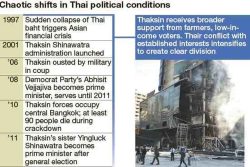
Chronic Issues Erode Thailand’s Economy as Political Confusion Persists, Threatening Terminal Decline in Its Economy
-
Iran Situation: Japan Must Exert Diplomatic Efforts without Merely Standing by
JN ACCESS RANKING
-
Producer Behind Pop Group XG Arrested for Cocaine Possession
-
Japan PM Takaichi’s Cabinet Resigns en Masse
-
Man Infected with Measles Reportedly Dined at Restaurant in Tokyo Station
-
Videos Plagiarized, Reposted with False Subtitles Claiming ‘Ryukyu Belongs to China’; Anti-China False Information Also Posted in Japan
-
iPS Treatments Pass Key Milestone, but Broader Applications Far from Guaranteed