
Treasured Statues from Kohfukuji Set Serene Mood in Tokyo National Museum, Invite Visitors to See Unique Collection
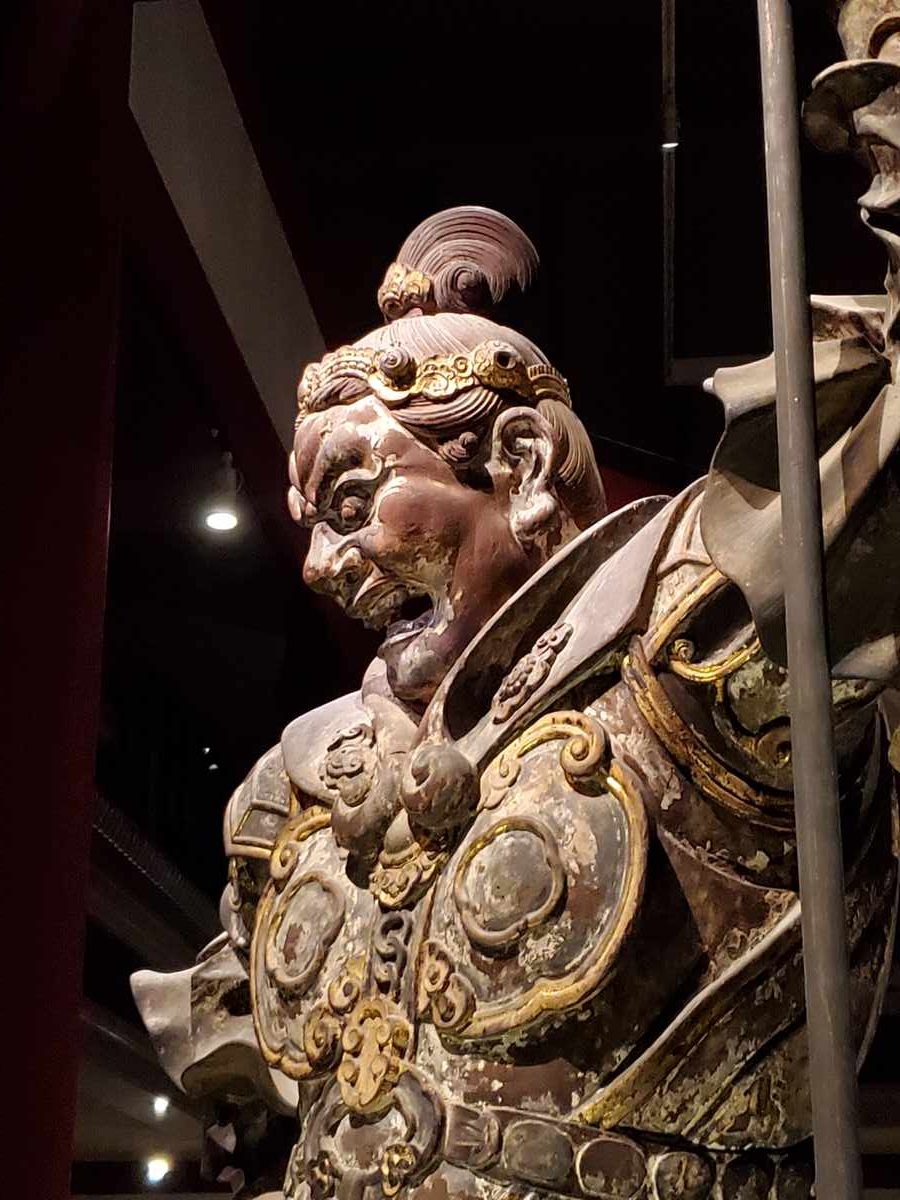
Standing Komokuten (Virupaksa) of the Shitenno (Four Deva Kings)
16:10 JST, October 26, 2025
Stand under the watchful gaze of the future Buddha Miroku, two bodhisattvas and the Four Deva Kings at the Tokyo National Museum in Taito Ward, Tokyo.
The seven items on display at “Expressing Prayer, Capturing Form: Buddhist Sculptures by Unkei from the Northern Round Hall of Kohfukuji Temple” are expertly carved wooden statues from the collection of Kohfukuji temple in Nara. All are theorized to be the work of the master sculptor Unkei (?-1223).
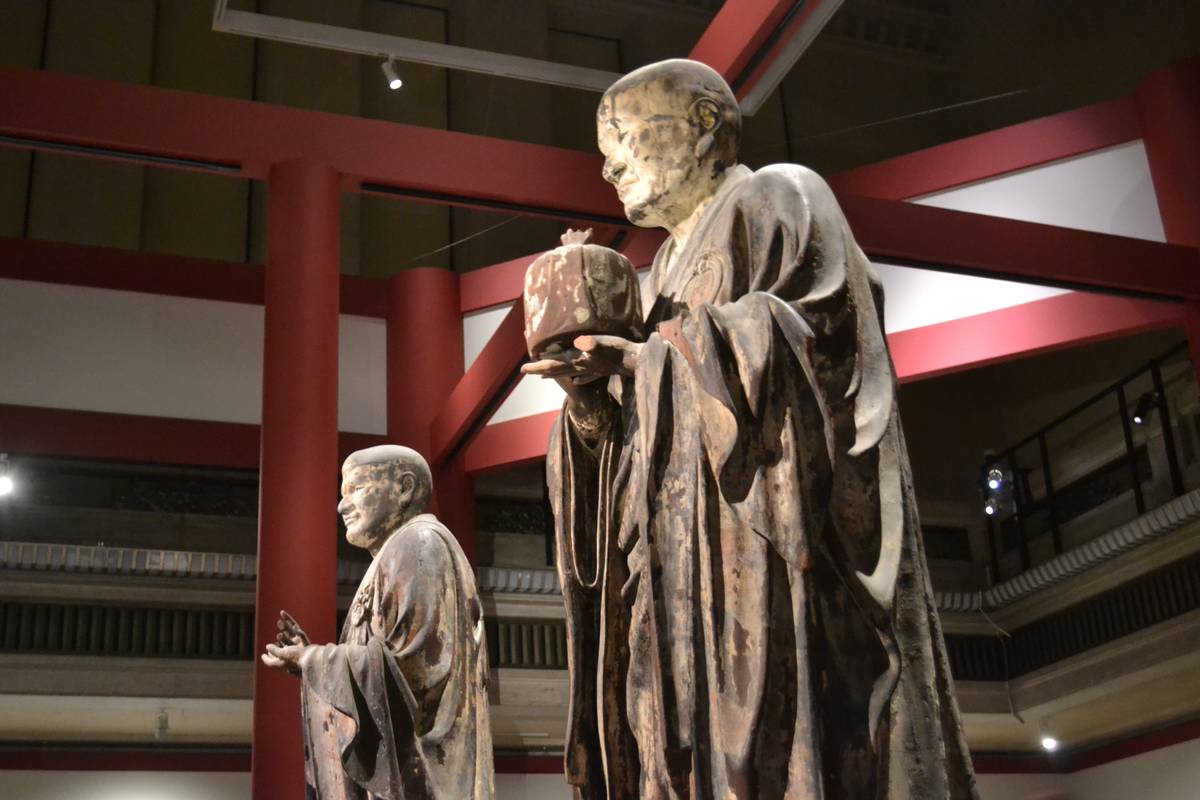
Standing Mujaku Bosatsu (Asanga Bodhisattva), right, and Standing Seshin Bosatsu (Vasubandhu Bodhisattva)
Speaking before the opening of the exhibition, Daisuke Kojima, senior curator with the museum, said: “As an object of worship, this statue of Miroku is seldom taken out of the temple, so there aren’t many chances to see it up close. Please take your time and get a good look at it.”
The statues inspire close inspection with their intricate details, such as the robes on the Standing Mujaku Bosatsu (Asanga Bodhisattva) and Standing Seshin Bosatsu (Vasubandhu Bodhisattva), as well as the sleeves of the Four Deva Kings, giving a sense of fluidity in their design.
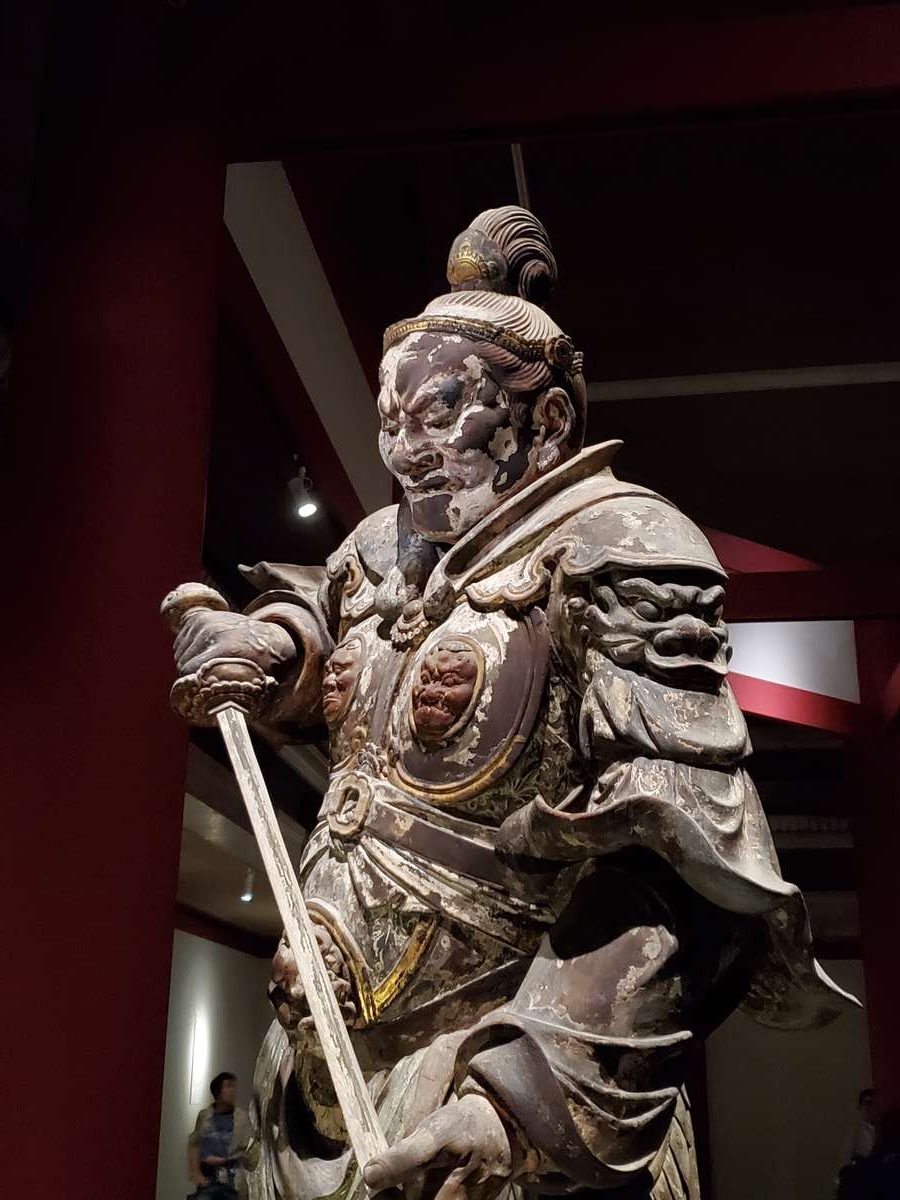
Standing Zochoten (Virudhaka) of the Shitenno (Four Deva Kings)
They almost seem to sway as visitors walk by.
Both bodhisattvas have rock crystal eyes that leave a lasting impression, especially Seshin, with his melancholic expression.
The posing is also excellent, with the hand of the Standing Zochoten (Virudhaka) of the Shitenno (Four Deva Kings) statue lightly resting the blade of his sword against the side of his finger.
The Standing Tamonten (Vaisravana) of the Shitenno (Four Deva Kings) statue, mouth agape, lifts up a small pagoda, seemingly regarding it as an invaluable treasure.
The central figure is the Seated Miroku Nyorai (Maitreya Buddha). The fingers are delicately carved and his expression is remote, lost in meditation. The dais he sits upon almost looks like a real cloth is draped over it.
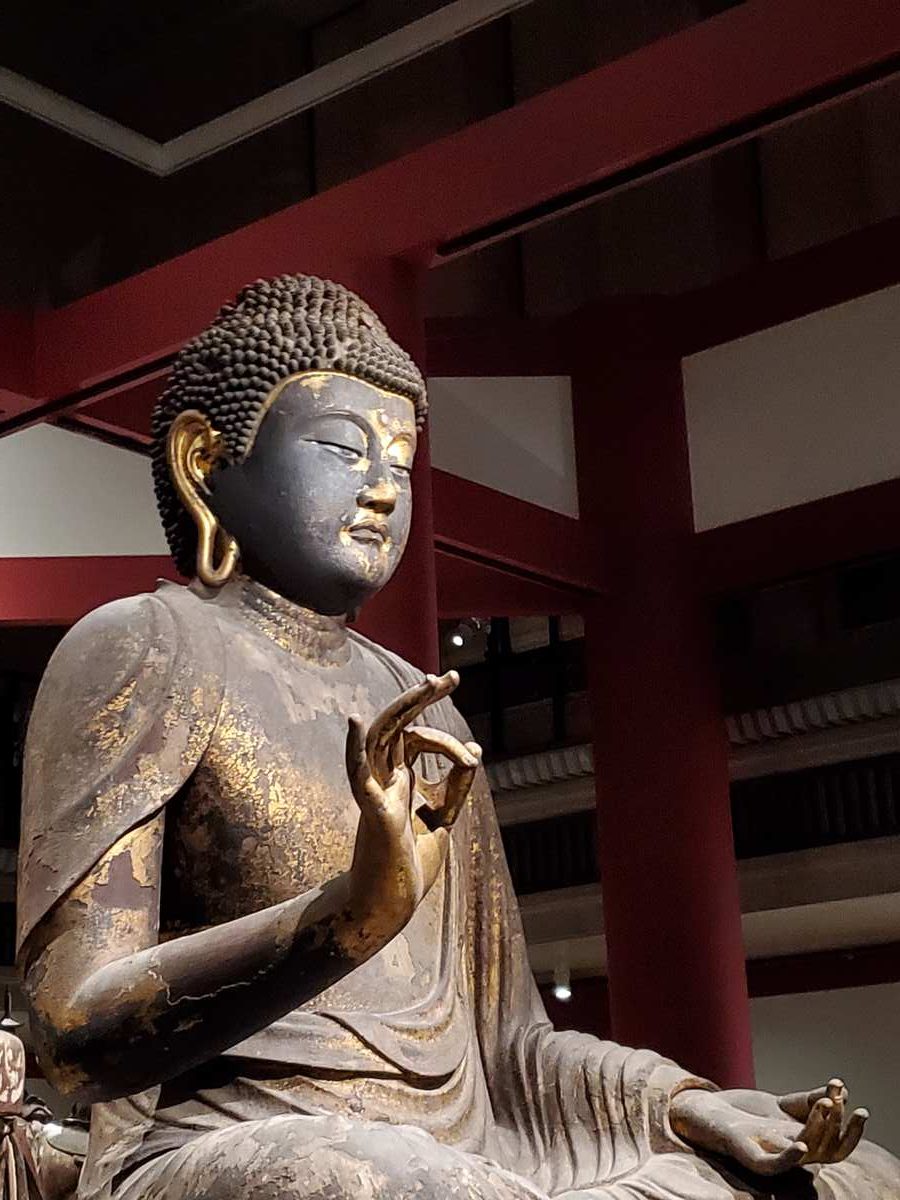
Seated Miroku Nyorai (Maitreya Buddha)
Items hidden inside the Miroku statue were found during the recently completed restoration of the piece, including a small shrine in its head and a “full-moon heart” crystal bead on a lotus pedestal in the chest.
The room, dimly lit and designed to recreate the look of the Northern Round Hall of Kohfukuji after it was rebuilt in the Kamakura period (late 12th century-1333), thoroughly sets the mood for viewing the serene Buddha and fierce Deva Kings.
Kojima emphasized what a rare opportunity this special exhibition is, as “there aren’t any other times the statues of Miroku, Mujaku, Seshin and the Four Deva Kings can be seen as a set like this.”
The exhibition, sponsored by The Yomiuri Shimbun, runs through Nov. 30.


Related Tags


Most Read
Popular articles in the past 24 hours
-
Japanese Students Use Traditional Pickle to Create Novel Wagashi ...
-
‘Dry Bonsai’ Gives New Life to Withered Trees, Allows Free Artist...
-

McDonald's Japan Raises Prices; Big Mac to Cost ¥500, Double Chee...
-

Nepal Bus Crash Kills 19 People, Injures 25 Including One Japanes...
-

Astellas Collaborates with Vir to Develop Its Experimental Prosta...
-

Japan’s Nikkei Stock Average Rises as AI-Related Stocks Shine; Co...
-

Early-Blooming Kawazu Cherry Blossoms Create Sea of Pink at Park ...
-

Dodgers' Shohei Ohtani (Probably) Won't Pitch for Japan in WBC
Popular articles in the past week
-

Producer Behind Pop Group XG Arrested for Cocaine Possession
-

Japan PM Takaichi’s Cabinet Resigns en Masse
-

Sanae Takaichi Elected Prime Minister of Japan; Keeps All Cabinet...
-

Japan's Govt to Submit Road Map for Growth Strategy in March, PM ...
-

Bus Carrying 40 Passengers Catches Fire on Chuo Expressway; All E...
-

U.S. Firm to Build Training Hub in Fukushima N-plant for Debris R...
-
Japan, U.S. Name 3 Inaugural Investment Projects; Reached Agreeme...
-

Riku-Ryu Pair Wins Gold Medal: Their Strong Bond Leads to Major C...
Popular articles in the past month
-
Producer Behind Pop Group XG Arrested for Cocaine Possession
-
Japan PM Takaichi’s Cabinet Resigns en Masse
-

Japan Institute to Use Domestic Commercial Optical Lattice Clock ...
-

Man Infected with Measles Reportedly Dined at Restaurant in Tokyo...
-

Israeli Ambassador to Japan Speaks about Japan’s Role in the Reco...
-

Videos Plagiarized, Reposted with False Subtitles Claiming ‘Ryuky...
-

Man Infected with Measles May Have Come in Contact with Many Peop...
-

Prudential Life Insurance Plans to Fully Compensate for Damages C...
Top Articles in Culture
-
BTS to Hold Comeback Concert in Seoul on March 21; Popular Boy Band Releases New Album to Signal Return
-

Director Naomi Kawase’s New Film Explores Heart Transplants in Japan, Production Involved Real Patients, Families
-

‘Jujutsu Kaisen’ Voice Actor Junya Enoki Discusses Rapid Action Scenes in Season 3, Airing Now
-

Tokyo Exhibition Offers Inside Look at Impressionism; 70 of 100 Works on ‘Interiors’ by Monet, Others on Loan from Paris
-
Traditional Japanese Silk Hakama Tradition Preserved by Sole Weaver in Sendai
JN ACCESS RANKING
-
Producer Behind Pop Group XG Arrested for Cocaine Possession
-
Japan PM Takaichi’s Cabinet Resigns en Masse
-
Japan Institute to Use Domestic Commercial Optical Lattice Clock to Set Japan Standard Time
-
Man Infected with Measles Reportedly Dined at Restaurant in Tokyo Station
-
Israeli Ambassador to Japan Speaks about Japan’s Role in the Reconstruction of Gaza