
Green Tea Exports Hit Record High in 2025 Amid Growing Demand, Likely to Be Driving Force Behind Govt Export Target

A tea farm is seen in Kirishima, Kagoshima Prefecture, on Jan. 6.
7:00 JST, February 4, 2026
Exports of green tea, including matcha, reached a record high of more than 10,000 tons last year, according to trade statistics released by the Finance Ministry.
Green tea is expected to serve as a driving force in the government’s push to achieve its target of ¥5 trillion annually in agricultural, forestry and fishery products and food exports by 2030. However, there are concerns that strong global demand could drive up domestic prices.
According to the statistics released Thursday, exports of green tea, including matcha, stood at 12,612 tons last year, an increase of about 3,800 tons from the previous year, and have tripled over the past decade. An industry group said the last time exports exceeded 10,000 tons was about 70 years ago.
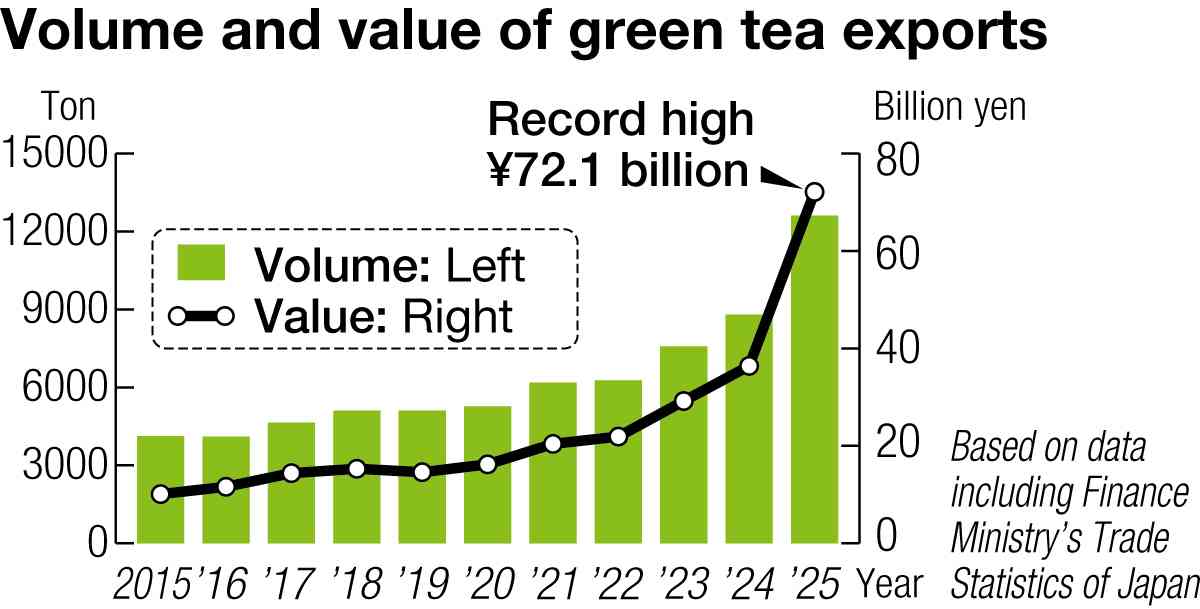
Last year, the export value surged to about ¥72.1 billion, nearly doubling the previous record of ¥36.4 billion set in 2024. By country and region, the United States accounted for the largest share at ¥29.3 billion, and demand is growing in Europe and Southeast Asia as well.
Growing health consciousness and a boom in Japanese food, particularly in the United States and Europe, are fueling the popularity of matcha. While drinks such as matcha lattes have gained wide recognition, matcha has also become a popular ingredient in sweets such as parfaits and crepes.
Horiguchien, a tea farm in Shibushi, Kagoshima Prefecture, has scaled up its tea production to meet growing overseas demand.
“Prices are soaring, reflecting strong demand,” said the president of the farm. However, the president also raised concerns the trend could lead to a decline in product sales in the medium- and long-term.
Growing global demand has pushed up the prices of bottled green tea beverages. Ito En, Ltd. and Coca-Cola Bottlers Japan Inc. said they will raise the prices of 600- to 650-milliliter bottled drinks by about 10% in March. While both companies raised prices for their bottled drinks in October, they decided on another price hike due to rising ingredient costs.






Most Read
Popular articles in the past 24 hours
-

‘Dry Bonsai’ Gives New Life to Withered Trees, Allows Free Artist...
-

McDonald's Japan Raises Prices; Big Mac to Cost ¥500, Double Chee...
-

Nepal Bus Crash Kills 19 People, Injures 25 Including One Japanes...
-

Japan’s Nikkei Stock Average Rises as AI-Related Stocks Shine; Co...
-

Aggression against Ukraine: Malignant Precedent Must Not Be Set t...
-

Joruri Bunraku Narrative Performed in Honor of Donald Keene by La...
-

Astellas Collaborates with Vir to Develop Its Experimental Prosta...
-

Early-Blooming Kawazu Cherry Blossoms Create Sea of Pink at Park ...
Popular articles in the past week
-

Producer Behind Pop Group XG Arrested for Cocaine Possession
-

Japan PM Takaichi’s Cabinet Resigns en Masse
-

Sanae Takaichi Elected Prime Minister of Japan; Keeps All Cabinet...
-

Japan's Govt to Submit Road Map for Growth Strategy in March, PM ...
-

Bus Carrying 40 Passengers Catches Fire on Chuo Expressway; All E...
-

Japan, U.S. Name 3 Inaugural Investment Projects; Reached Agreeme...
-

Riku-Ryu Pair Wins Gold Medal: Their Strong Bond Leads to Major C...
-

Tokyo Skytree's Elevator Stops, Trapping 20 People; All Rescued (...
Popular articles in the past month
-
Producer Behind Pop Group XG Arrested for Cocaine Possession
-
Japan PM Takaichi’s Cabinet Resigns en Masse
-

Japan Institute to Use Domestic Commercial Optical Lattice Clock ...
-

Man Infected with Measles Reportedly Dined at Restaurant in Tokyo...
-

Israeli Ambassador to Japan Speaks about Japan’s Role in the Reco...
-

Videos Plagiarized, Reposted with False Subtitles Claiming ‘Ryuky...
-

Man Infected with Measles May Have Come in Contact with Many Peop...
-

Prudential Life Insurance Plans to Fully Compensate for Damages C...
Top Articles in Business
-
Prudential Life Insurance Plans to Fully Compensate for Damages Caused by Fraudulent Actions Without Waiting for Third-Party Committee Review
-
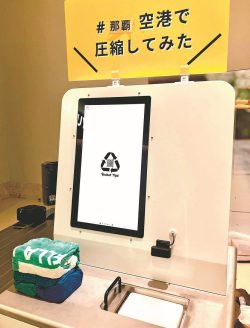
Narita Airport, Startup in Japan Demonstrate Machine to Compress Clothes for Tourists to Prevent People from Abandoning Suitcases
-
Japan, U.S. Name 3 Inaugural Investment Projects; Reached Agreement After Considerable Difficulty
-

Toyota Motor Group Firm to Sell Clean Energy Greenhouses for Strawberries
-

SoftBank Launches AI Service for Call Centers That Converts Harsh Customer Voices into Softer Voices
JN ACCESS RANKING
-
Producer Behind Pop Group XG Arrested for Cocaine Possession
-
Japan PM Takaichi’s Cabinet Resigns en Masse
-
Japan Institute to Use Domestic Commercial Optical Lattice Clock to Set Japan Standard Time
-
Man Infected with Measles Reportedly Dined at Restaurant in Tokyo Station
-
Israeli Ambassador to Japan Speaks about Japan’s Role in the Reconstruction of Gaza