

The Prime Minister’s Office in Tokyo
14:45 JST, November 25, 2025
The government is planning to introduce a tax credit allowing businesses to deduct 8% of the value of their capital investments from their corporate tax liability as part of efforts to encourage more domestic corporate investment.
The government’s capital investment promotion tax system will be included in tax reforms for fiscal 2026.
The government will offer preferential treatment to companies whose exports to the United States have declined due to the impact of U.S. high tariff policies, by expanding the deduction amount to 15% of investments for them.
The tax reduction plan will be a five-year time-limited measure and is expected to provide ¥500 billion in tax relief annually.
The tax credit will apply to capital investment plans with expected return on investment of more than 15%. It is intended to cover purchases such as manufacturing machinery, software and factory buildings.
Preliminary government hearings suggest that about 80% of the total investment will be directed toward the 17 strategic sectors designated by the administration of Prime Minister Sanae Takaichi, including fields such as artificial intelligence, semiconductors, shipbuilding and quantum technology.
Instead of claiming the tax credit, companies will be allowed to depreciate the entire cost of their capital investments in the first fiscal year. This is intended to facilitate consideration of subsequent investments for businesses, particularly those in the growth stage that are facing immediate cash flow challenges.
The measure is set to be introduced as a type of special taxation measure that offers tax incentives for purposes such as industrial promotion and environmental preservation.
In 2014, the government, under the administration of then Prime Minister Shinzo Abe, implemented a three-year time-limited measure which provided a 5% tax credit on capital investment. As a result, annual domestic investment increased from ¥80 trillion to ¥87 trillion during that period.
The government’s current attempt to expand and reintroduce the capital investment tax break is driven by the intensifying international competition, as the United States and some European countries have adopted similar mechanisms to attract and secure investment within their own borders.
A permanent law was enacted in the United States in July that allows for the immediate depreciation of the full cost of capital expenditures.
That same month, Germany enacted a bill reducing taxes by 46 billion euros (about ¥8.3 trillion) and introducing provisions for future corporate tax reductions.
Risk is emerging that unless Japan introduces preferential measures to promote capital spending domestically, corporate investment could move overseas.






Most Read
Popular articles in the past 24 hours
-

BOJ Keeping Eye on Economy and Takaichi's ‘Proactive Fiscal Polic...
-
Tokyo Measles Patient Traveled to Fukuoka Aboard JAL Planes; Susp...
-

Party Representatives’ Questions in Diet: Takaichi Says Consumpti...
-

Govt to Set Working-Level Meeting Group for Refundable Tax Credit...
-

Milano Cortina 2026: News in Pictures / Feats of Japanese Athlete...
-

Pokémon Celebrates 30 Years with Japanese Pro Baseball Collab
-

Death Penalty Sought for Murder of U.S. Man, Family in Saitama Pr...
-
Nikkei Crosses 59,000 for First Time on Software Rally; Gains Shr...
Popular articles in the past week
-

Producer Behind Pop Group XG Arrested for Cocaine Possession
-

iPS Treatments Pass Key Milestone, but Broader Applications Far f...
-

Tokyo Skytree's Elevator Stops, Trapping 20 People; All Rescued (...
-

Milano Cortina 2026: Japanese Gold Medalist Figure Skater Miura S...
-

Nepal Bus Crash Kills 19 People, Injures 25 Including One Japanes...
-

Japan’s Major Real Estate Firms Expanding Overseas Businesses to ...
-

Baby Monkey Punch Captures Hearts at Chiba Pref. Zoo, on Social M...
-

Milano Cortina 2026: Japanese Figure Skater Kaori Sakamoto’...
Popular articles in the past month
-
Producer Behind Pop Group XG Arrested for Cocaine Possession
-

Japan PM Takaichi’s Cabinet Resigns en Masse
-

Japan Institute to Use Domestic Commercial Optical Lattice Clock ...
-

Man Infected with Measles Reportedly Dined at Restaurant in Tokyo...
-

Israeli Ambassador to Japan Speaks about Japan’s Role in the Reco...
-

Videos Plagiarized, Reposted with False Subtitles Claiming ‘Ryuky...
-

Man Infected with Measles May Have Come in Contact with Many Peop...
-

Prudential Life Insurance Plans to Fully Compensate for Damages C...
Top Articles in Business
-
Prudential Life Insurance Plans to Fully Compensate for Damages Caused by Fraudulent Actions Without Waiting for Third-Party Committee Review
-
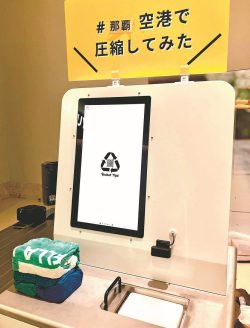
Narita Airport, Startup in Japan Demonstrate Machine to Compress Clothes for Tourists to Prevent People from Abandoning Suitcases
-

Japan, U.S. Name 3 Inaugural Investment Projects; Reached Agreement After Considerable Difficulty
-

Toyota Motor Group Firm to Sell Clean Energy Greenhouses for Strawberries
-
Japan’s Major Real Estate Firms Expanding Overseas Businesses to Secure Future Growth, Focusing on Europe, U.S., Asia
JN ACCESS RANKING
-
Producer Behind Pop Group XG Arrested for Cocaine Possession
-
Japan PM Takaichi’s Cabinet Resigns en Masse
-
Man Infected with Measles Reportedly Dined at Restaurant in Tokyo Station
-
Israeli Ambassador to Japan Speaks about Japan’s Role in the Reconstruction of Gaza
-
Videos Plagiarized, Reposted with False Subtitles Claiming ‘Ryukyu Belongs to China’; Anti-China False Information Also Posted in Japan