
Japanese Consumers Turn to Rice Alternatives Amid Price Surge; Glutinous Barley, Long-Grain Rice Becoming Popular
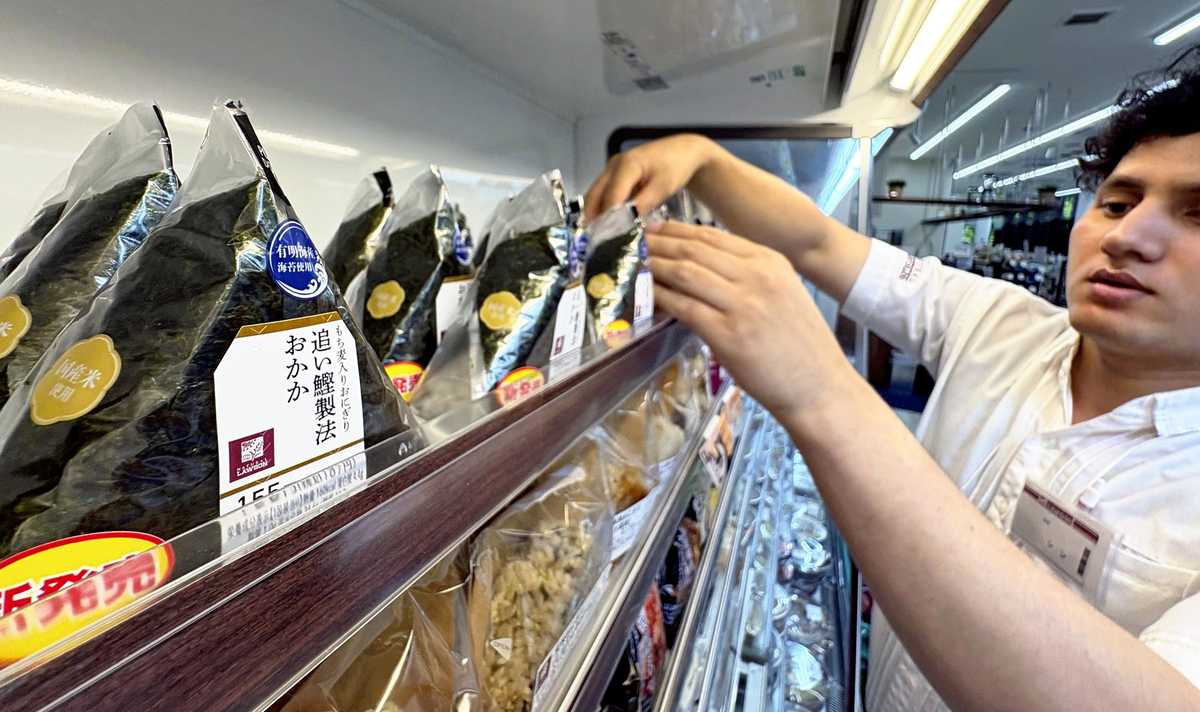
Onigiri rice balls containing glutinous barley are displayed at a Natural Lawson store in Shinagawa Ward, Tokyo, on April 22.
11:47 JST, May 7, 2025
Soaring rice prices and increased consumer frugality are driving changes in dining habits, including adding glutinous barley to rice and switching from rice to alternatives like bread and pasta.
There have also been moves to introduce foreign-grown rice, though it was unpopular at the time of the 1993 rice shortage.
Lawson Inc. introduced three new varieties onigiri rice balls using glutinous barley — okaka bonito flakes, salmon and tuna mayonnaise — at about 130 Natural Lawson stores in the Tokyo metropolitan area on April 22.
They maintained the price of the new rice balls, ranging from ¥167 to ¥203, by using glutinous barley to replace some of the white rice. Glutinous barley is also used along with rice in their bento box.
Glutinous barley takes up more space than rice. While two cups of rice are 300 grams, adding 100 grams of glutinous barley during cooking makes 3 cups.
With its high dietary fiber content, glutinous barley had already seen an increase in consumers eating it since it is mixed with rice, but soaring rice prices have drawn even greater attention to it.
Hakubaku Co., a manufacturer and seller of glutinous barley, reported their monthly year-on-year sales have increased for 11 consecutive months through March. They also increased production by beginning to operate their plant on Saturdays from April 12.
Sales volume changing
According to Mitsubishi Research Institute Inc.’s preliminary calculations, the price of a 150-gram serving of Koshihikari rice nearly doubled from ¥30 in April 2023 to ¥57 in February of this year. In contrast, a slice of bread from a 4-slice loaf rose by just ¥6 to ¥48.
Faced with expensive rice, many people are switching to alternatives. “I’ve switched to eating only bread for breakfast, and I have pasta for dinner once or twice a week,” said a 60-year-old taxi driver from Chiba Prefecture.
Supermarkets are also showing a clear trend toward rice alternatives. According to a February survey by research company True Data Inc., annual sales volume in grocery supermarkets rose by 24% for frozen pizza and gratin and 20% for macaroni compared to the previous year. Meanwhile, rice sales declined by 10%.
“Staple food products that serve as alternatives to rice are seeing increased demand,” according to the company’s analysis.
People are also re-evaluating foreign-grown rice.
In early March, major supermarket chain operator OK Corp. began selling five-kilogram bags of Calrose rice from California for ¥3,335 at its 10 outlets. Calrose rice less expensive than domestic varieties and has seen strong sales, leading the company to increase its availability to its 54 stores starting April 19.


Related Tags








Most Read
Popular articles in the past 24 hours
-

JR Tokai Breaks Ground on Yamanashi Maglev Station; Will Be Part ...
-

‘King Kazu’ Discusses His Connection to Fukushima
-

Japan’s Gunma Official Suspended For Unauthorized Absence From Wo...
-

Milano Cortina 2026: Japan’s Alpine Skier Muraoka Extends P...
-
Rising Kabuki Star Works to Ensure Deaf Audience's Enjoyment of P...
-

Lady Bess: Iroha Okuda, Mayuko Kominami Discuss Performing Elizab...
-

Trump Discourages Iranian Soccer Team from Attending the World Cu...
-

Raise Interest Rate, Stop Yen’s Fall to Stabilize Prices
Popular articles in the past week
-

Japan Figure Skating Legend Yuzuru Hanyu Is Proud Disaster Surviv...
-

Nippon Life Insurance's U.S. Arm Sues OpenAI Over Legal Assistanc...
-
Govt to Utilize ODA for Ensuring Economic Security; Securing Ener...
-

Massive Sewer Pipe Found Jutting Out of Highway in Osaka
-

15 Measles Patients Confirmed in Tokyo in Past 6 Days; 1 May Have...
-

Beckoning Cats Get Makeover to Fit Modern Lifestyles with Sleek D...
-

Japan Govt to Tighten Requirements to Receive Permanent Residency...
-
Japan Govt Survey Finds Just 10% of Workers Want Working Hours to...
Popular articles in the past month
-

Producer Behind Pop Group XG Arrested for Cocaine Possession
-

Japan PM Takaichi’s Cabinet Resigns en Masse
-

Man Infected with Measles Reportedly Dined at Restaurant in Tokyo...
-

Videos Plagiarized, Reposted with False Subtitles Claiming ‘Ryuky...
-
Japan Figure Skating Legend Yuzuru Hanyu Is Proud Disaster Surviv...
-

iPS Treatments Pass Key Milestone, but Broader Applications Far f...
-

Sanae Takaichi Elected Prime Minister of Japan; Keeps All Cabinet...
-

Nepal Bus Crash Kills 19 People, Injures 25 Including One Japanes...
Top Articles in Business
-
Nippon Life Insurance’s U.S. Arm Sues OpenAI Over Legal Assistance Provided by ChatGPT
-

Japan, U.S. Name 3 Inaugural Investment Projects; Reached Agreement After Considerable Difficulty
-

Japan’s Major Real Estate Firms Expanding Overseas Businesses to Secure Future Growth, Focusing on Europe, U.S., Asia
-

Transport Companies See Opportunity in Narita Expansion; Airlines, Railways Prepare to Meet Expected Growth in Demand
-

Amid Strait of Hormuz Blockade, Shipping Companies Scramble to Get Japan-Linked Vessels out of Persian Gulf
JN ACCESS RANKING
-
Producer Behind Pop Group XG Arrested for Cocaine Possession
-
Japan PM Takaichi’s Cabinet Resigns en Masse
-
Man Infected with Measles Reportedly Dined at Restaurant in Tokyo Station
-
Videos Plagiarized, Reposted with False Subtitles Claiming ‘Ryukyu Belongs to China’; Anti-China False Information Also Posted in Japan
-
Japan Figure Skating Legend Yuzuru Hanyu Is Proud Disaster Survivor and Gold Medalist, Vows to Continue Support Efforts