
Nuclear Plant Construction Among Candidates in 2nd Round of Japanese Investment Projects in U.S.
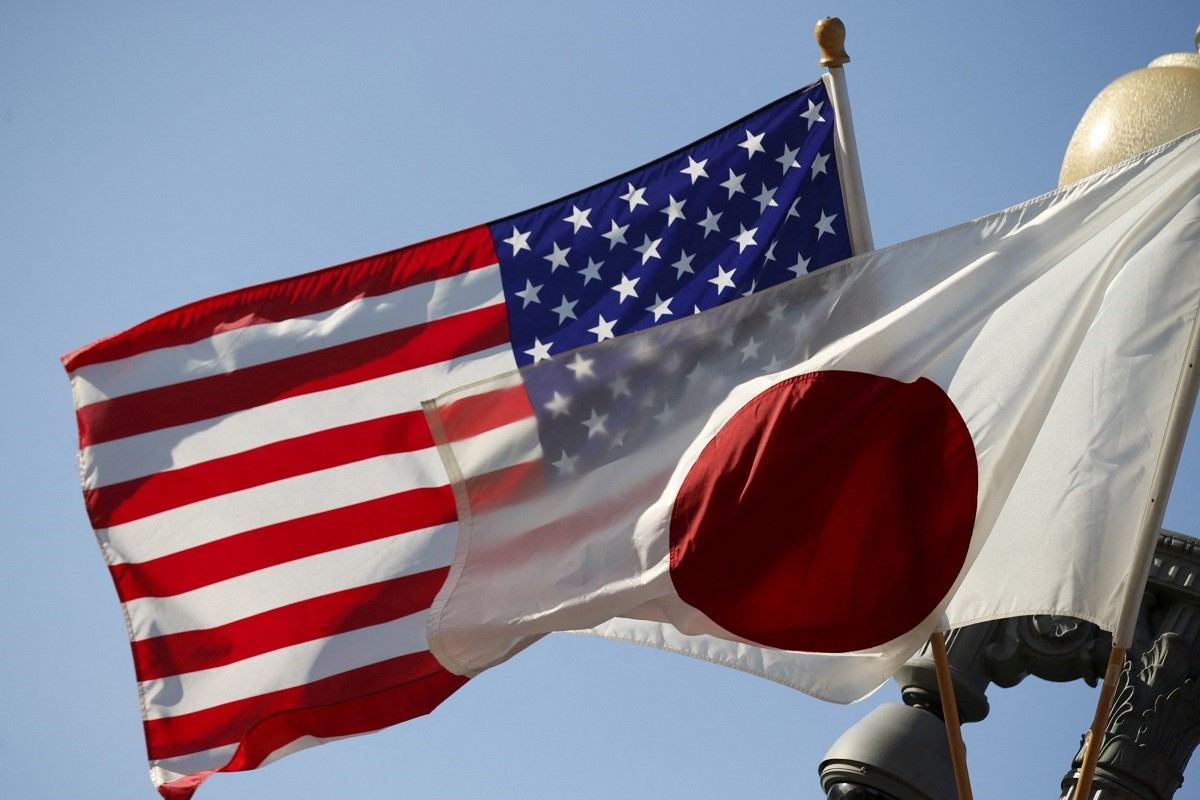
The U.S. and Japan flags fly together outside the White House in Washington in April 2015.
12:49 JST, March 1, 2026
Nuclear power plant construction is one of the leading candidates for the second round of projects under a plan for $550 billion (about ¥85 trillion) in investments in the United States that Tokyo pledged to make during Japan-U.S. tariff negotiations, it has been learned.
Amid uncertainty surrounding the premise of the Japan-U.S. agreement due to the U.S. Supreme Court’s ruling on Feb. 20 that the “reciprocal tariffs” are illegal, the two governments are coordinating on an announcement timed to coincide with this month’s Japan-U.S. summit.
In the United States, electricity demand is rising due to data centers for artificial intelligence and other facilities. The first round of projects, which were announced last month, included the construction of a gas-fired power plant in Ohio with a project scale of about $33.3 billion.
The governments have been considering multiple projects during the current selection process, according to sources. These include nuclear power plant construction, for which Japanese companies would be expected to supply equipment, and other energy-related projects.
Japan and the United States agreed in July last year that Japan would make substantial investments in the United States in exchange for Washington lowering “reciprocal tariffs” and tariffs on automobiles.
Despite the U.S. Supreme Court ruling, the Japanese government intends to proceed with the investments, with Economy, Trade and Industry Minister Ryosei Akazawa saying that Japan’s investments “will benefit both Japan and the United States.”
To implement the investments, Japan and the United States will establish special purpose vehicles (SPVs) — separate legal entities created for specific investments — for each project. In principle, the Japanese side will provide funds through loans and investments via the Japan Bank for International Cooperation (JBIC), a government-affiliated financial institution, and private financial institutions such as megabanks, backed by loan guarantees from the Nippon Export and Investment Insurance (NEXI).
The U.S. side will provide support through the federal government in the form of “in-kind contributions,” non-monetary provisions such as land and electricity, purchase contracts for products, and regulatory assistance like construction permits.
The SPVs will channel funds into the projects and distribute profits generated from them. Profits will be split 50-50 between Japan and the United States until the loans provided by the Japanese side are fully repaid, after which the ratio will be 10% for Japan and 90% for the United States.
The investment projects are finally determined by U.S. President Donald Trump after “consultative committee” composed of senior officials from both governments advises an “investment committee” comprised solely of Americans.
It appears that the U.S. side often brings projects to the table. For Japan, careful consideration within the consultative committee to assess profitability and operational efficiency is crucial.


Related Tags
Most Read
Popular articles in the past 24 hours
-
Improvement of Japanese Language Schools Lags Rise in Foreigners
-
Japan's Test-Takers in Sapporo Offered Special Accommodation Arra...
-
Rental Lab Space in Tokyo Area More Than Doubles Since 2010, Offe...
-
Japanese Shipping Giants Halt Strait of Hormuz Transit as Iran Co...
-

U.S. Launches Attacks on Iran: Avoid Escalation of Conflict by An...
-
Parents of Japanese Teen Shot in U.S. Strive for Gun Control
-
Disinformation Spreads About Team Mirai, Ballot Readers; Online P...
-
Sawtooth Roof Factory Stands as Monument to Ashikaga Textile Hist...
Popular articles in the past week
-

Nepal Bus Crash Kills 19 People, Injures 25 Including One Japanes...
-
Milano Cortina 2026: Japanese Gold Medalist Figure Skater Miura S...
-
Tokyo Spends Big on Children, Wins Over Parents
-
McDonald's Japan Raises Prices; Big Mac to Cost ¥500, Double Chee...
-
‘Dry Bonsai’ Gives New Life to Withered Trees, Allows Free Artist...
-
Japan’s Miura, Kihara Announce Withdrawal from Figure Skating Wor...
-
Exhibition Featuring Yoshiharu Tsuge’s Manga World Underway in Ch...
-
Yokohama to Test Out Renewable-Powered Offshore Floating Data Cen...
Popular articles in the past month
-

Producer Behind Pop Group XG Arrested for Cocaine Possession
-

Japan PM Takaichi’s Cabinet Resigns en Masse
-

Man Infected with Measles Reportedly Dined at Restaurant in Tokyo...
-

Israeli Ambassador to Japan Speaks about Japan’s Role in the Reco...
-

Videos Plagiarized, Reposted with False Subtitles Claiming ‘Ryuky...
-

Man Infected with Measles May Have Come in Contact with Many Peop...
-

Prudential Life Insurance Plans to Fully Compensate for Damages C...
-

Woman with Measles Visited Hospital in Tokyo Multiple Times Befor...
Top Articles in Politics
-
Japan PM Takaichi’s Cabinet Resigns en Masse
-

Sanae Takaichi Elected Prime Minister of Japan; Keeps All Cabinet Appointees from Previous Term
-

Japan’s Govt to Submit Road Map for Growth Strategy in March, PM Takaichi to Announce in Upcoming Policy Speech
-

LDP Wins Historic Landslide Victory
-

LDP Wins Landslide Victory, Secures Single-party Majority; Ruling Coalition with JIP Poised to Secure Over 300 seats (UPDATE 1)
JN ACCESS RANKING
-
Producer Behind Pop Group XG Arrested for Cocaine Possession
-
Japan PM Takaichi’s Cabinet Resigns en Masse
-
Man Infected with Measles Reportedly Dined at Restaurant in Tokyo Station
-
Israeli Ambassador to Japan Speaks about Japan’s Role in the Reconstruction of Gaza
-
Videos Plagiarized, Reposted with False Subtitles Claiming ‘Ryukyu Belongs to China’; Anti-China False Information Also Posted in Japan