
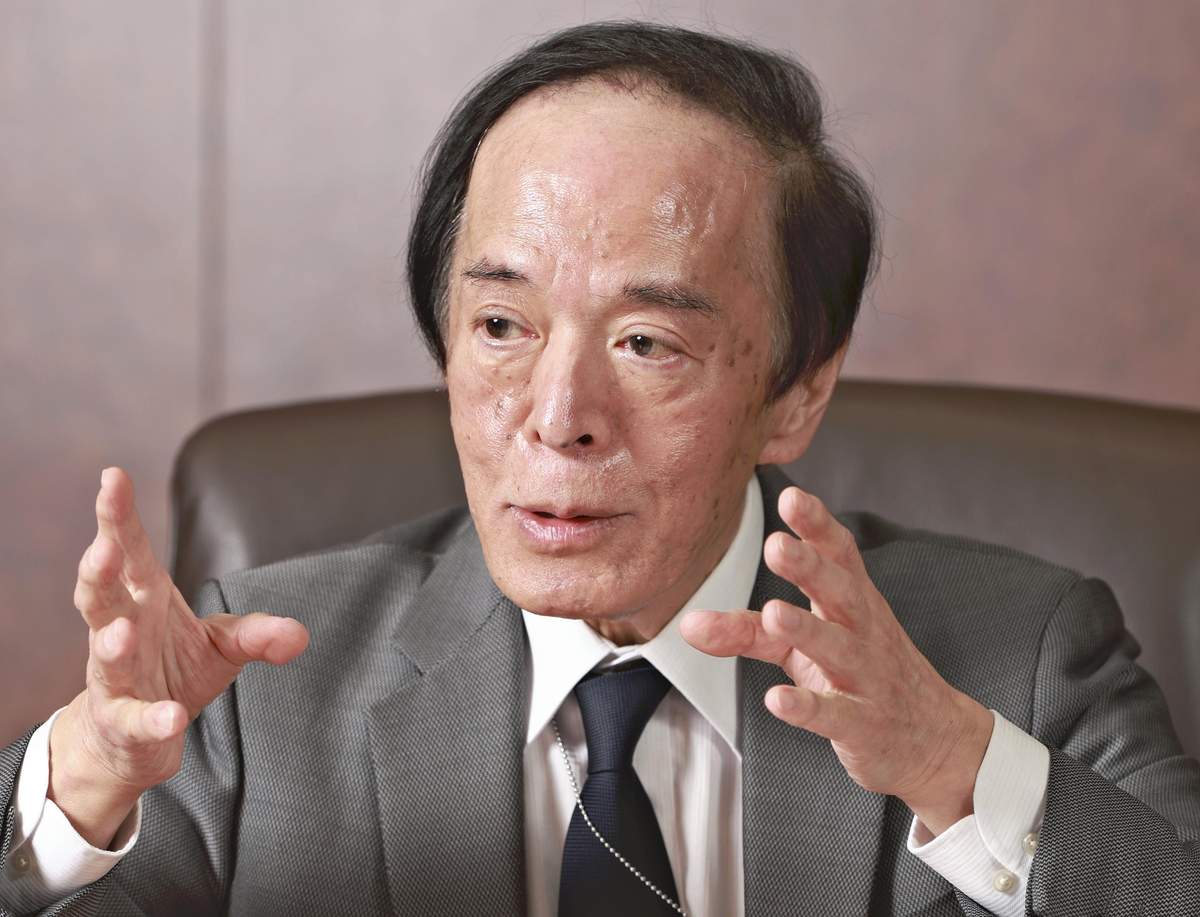
Bank of Japan Gov. Kazuo Ueda speaks in an interview with The Yomiuri Shimbun at the BOJ head office in Tokyo on Tuesday.
14:02 JST, February 26, 2026
Bank of Japan Gov. Kazuo Ueda has indicated that the new additional tariff on foreign goods announced by U.S. President Donald Trump will not have a significant impact on Japan.
Ueda made the statement in an interview with The Yomiuri Shimbun at the BOJ head office on Tuesday.
Regarding the bank’s additional interest rate hikes, he touched on the monetary policy meetings scheduled to take place in March and April and said, “We would like to make decisions after carefully examining information we will be able to obtain up until then.”
The new U.S. tariff took effect on Tuesday. Based on Section 122 of the Trade Act, Trump is imposing an additional 10% tariff on all imports from countries and regions, including Japan. He also indicated he may raise the rate to 15%.
As for the reason Ueda thinks the new U.S. tariff will not have a significant impact on Japan, he pointed to the fact that Japan had been subject to the 15% reciprocal tariffs.
However, the U.S. administration is apparently considering new tariff measures. Speaking about the increasing uncertainty, the governor said, “Because various moves may be undertaken in the future, we’ll be keeping an eye on the situation.”
Ueda also discussed additional interest rate hikes. “Our basic stance is to adjust the degree of monetary easing if there is an increasing possibility of our economic and price outlooks materializing,” he said. For future policy decisions, the governor indicated that the bank will examine the impacts of interest rate hikes implemented in December and earlier on financial institutions, businesses and households.
Ueda pointed out that the Tankan quarterly economic survey on corporate business confidence, to be released by the bank on April 1, would be “important information.” But he also said, “It doesn’t necessarily mean that we must wait for the Tankan to obtain information,” adding that the bank will proceed with monitoring the situation through hearings and other means.
Regarding the BOJ’s “price stability target of 2%,” Ueda said he expects to see the 2% target largely achieved from the second half of fiscal 2026 to fiscal 2027.
“If [moves for wage hikes in] the spring labor-management negotiations are stronger than expected and [businesses] expedite moves to pass on [cost increases] to prices, the goal could be achieved earlier,” he said.


Related Tags




Most Read
Popular articles in the past 24 hours
-
Milano Cortina 2026: Japanese Gold Medalist Figure Skater Miura S...
-

Yokohama to Test Out Renewable-Powered Offshore Floating Data Cen...
-
Japan’s Takaichi Speaks on New U.S. Tariff in Upper House, Says P...
-

Ishinomaki Man Plush Toy Offers Hope to Children in Times of Disa...
-
Japan Authorities Begin On-site Inspection of Japanese Microsoft ...
-

Nikkei Average Rewrites All-Time Closing High
-
Japan's Takaichi Lets LDP Lawmakers Choose Gifts for Election Suc...
-

Japan’s PM Takaichi Responds Carefully in Diet Q&A Session, Fends...
Popular articles in the past week
-

Producer Behind Pop Group XG Arrested for Cocaine Possession
-

iPS Treatments Pass Key Milestone, but Broader Applications Far f...
-
Japan, U.S. Name 3 Inaugural Investment Projects; Reached Agreeme...
-

Tokyo Skytree's Elevator Stops, Trapping 20 People; All Rescued (...
-

Japan’s Major Real Estate Firms Expanding Overseas Businesses to ...
-
Milano Cortina 2026: Japanese Gold Medalist Figure Skater Miura S...
-

Baby Monkey Punch Captures Hearts at Chiba Pref. Zoo, on Social M...
-

Milano Cortina 2026: Japanese Figure Skater Kaori Sakamoto’...
Popular articles in the past month
-
Producer Behind Pop Group XG Arrested for Cocaine Possession
-

Japan PM Takaichi’s Cabinet Resigns en Masse
-

Japan Institute to Use Domestic Commercial Optical Lattice Clock ...
-

Man Infected with Measles Reportedly Dined at Restaurant in Tokyo...
-

Israeli Ambassador to Japan Speaks about Japan’s Role in the Reco...
-

Videos Plagiarized, Reposted with False Subtitles Claiming ‘Ryuky...
-

Man Infected with Measles May Have Come in Contact with Many Peop...
-

Prudential Life Insurance Plans to Fully Compensate for Damages C...
Top Articles in Business
-
Prudential Life Insurance Plans to Fully Compensate for Damages Caused by Fraudulent Actions Without Waiting for Third-Party Committee Review
-
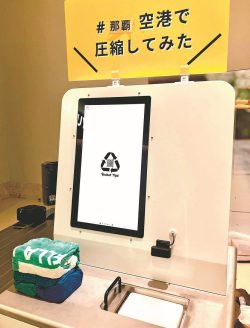
Narita Airport, Startup in Japan Demonstrate Machine to Compress Clothes for Tourists to Prevent People from Abandoning Suitcases
-
Japan, U.S. Name 3 Inaugural Investment Projects; Reached Agreement After Considerable Difficulty
-
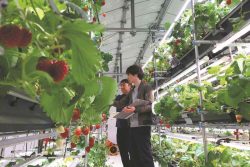
Toyota Motor Group Firm to Sell Clean Energy Greenhouses for Strawberries
-

SoftBank Launches AI Service for Call Centers That Converts Harsh Customer Voices into Softer Voices
JN ACCESS RANKING
-
Producer Behind Pop Group XG Arrested for Cocaine Possession
-
Japan PM Takaichi’s Cabinet Resigns en Masse
-
Man Infected with Measles Reportedly Dined at Restaurant in Tokyo Station
-
Israeli Ambassador to Japan Speaks about Japan’s Role in the Reconstruction of Gaza
-
Videos Plagiarized, Reposted with False Subtitles Claiming ‘Ryukyu Belongs to China’; Anti-China False Information Also Posted in Japan