
Microsoft Japan Raided by Antitrust Watchdog for Allegedly Blocking Use of Its Software on Rival Cloud Platforms

A Microsoft logo is see in Issy-les-Moulineaux near Paris in January 2025.
15:21 JST, February 26, 2026
The Japan Fair Trade Commission raided the headquarters of Microsoft Corp.’s Japanese unit Wednesday, on suspicion the company interfered with competitors’ businesses by preventing use of Microsoft software on rival cloud services.
Tokyo-based Microsoft Japan Co. is suspected of violating the Antimonopoly Law.
The JFTC will examine documents provided by Microsoft Japan and interviews conducted with company officials. The commission plans to also investigate the parent company, a U.S. tech giant, if it is found to have been involved in the alleged misconduct.
Cloud computing services allow users to store data and use software online. Since users do not have to purchase hardware, these services can help improve business efficiency and cut costs by eliminating the need to build and manage in-house systems. About 80% of Japanese companies use cloud services, according to a 2024 survey by the Internal Affairs and Communications Ministry.
Due to their convenience, cloud services have seen increasing use worldwide. The market has grown each year, sparking intense competition among major tech companies. U.S. giants Amazon.com Inc., Microsoft and Google LLC are dominant players in the field and together reportedly account for close to 70% of the global market.
Amazon, through Amazon Web Services, controls the largest share of the cloud services market globally, at about 30%. Microsoft’s cloud computing platform Azure is next, with a roughly 20% share. A similar pattern has emerged in the Japanese market, though in recent years Microsoft has reportedly been expanding its share compared to rivals.
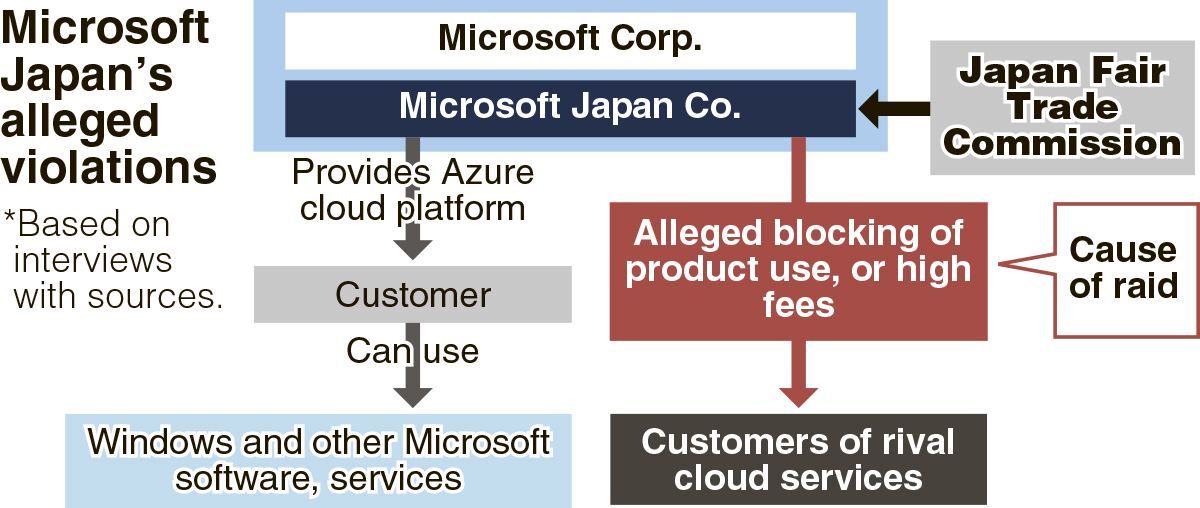
According to sources, Microsoft Japan is suspected of not allowing the use of its products on personal computers and other devices through cloud services from other companies. That would have blocked access to the Windows operating software and the Microsoft 365 service for apps such as Word and Teams. When Microsoft Japan did allow use of these products, it is suspected of charging users high fees.
It is believed that Microsoft Japan attempted to acquire new customers, encourage users to switch to Azure and enlarge its market share by not allowing use of its popular Windows software and other products on rival companies’ cloud services.
The JFTC believes these practices could constitute “Interference with competitors’ transactions” and “dealing on restrictive terms,” which are prohibited by the Antimonopoly Law. It also believes this was intended to unfairly restrict competition in the cloud market and obstruct business at Amazon, Google and other companies.
Microsoft Japan said it will “fully cooperate” with any requests from the commission.








Most Read
Popular articles in the past 24 hours
-

Milano Cortina 2026: Japanese Gold Medalist Figure Skater Miura S...
-

Yokohama to Test Out Renewable-Powered Offshore Floating Data Cen...
-

Ishinomaki Man Plush Toy Offers Hope to Children in Times of Disa...
-

Japan Authorities Begin On-site Inspection of Japanese Microsoft ...
-

Nikkei Tops 59,000 for First Time
-

Japan Eyes Introducing Prescreening System for Foreign Travelers,...
-

Dodgers' Roki Sasaki Erratic in First Spring Training Outing, Giv...
-

New U.S. Tariff Unlikely to Significantly Impact Japan, BOJ Gov. ...
Popular articles in the past week
-

Producer Behind Pop Group XG Arrested for Cocaine Possession
-

iPS Treatments Pass Key Milestone, but Broader Applications Far f...
-

Japan, U.S. Name 3 Inaugural Investment Projects; Reached Agreeme...
-

Tokyo Skytree's Elevator Stops, Trapping 20 People; All Rescued (...
-

Japan’s Major Real Estate Firms Expanding Overseas Businesses to ...
-
Milano Cortina 2026: Japanese Gold Medalist Figure Skater Miura S...
-

Baby Monkey Punch Captures Hearts at Chiba Pref. Zoo, on Social M...
-

Nepal Bus Crash Kills 19 People, Injures 25 Including One Japanes...
Popular articles in the past month
-
Producer Behind Pop Group XG Arrested for Cocaine Possession
-

Japan PM Takaichi’s Cabinet Resigns en Masse
-

Japan Institute to Use Domestic Commercial Optical Lattice Clock ...
-

Man Infected with Measles Reportedly Dined at Restaurant in Tokyo...
-

Israeli Ambassador to Japan Speaks about Japan’s Role in the Reco...
-

Videos Plagiarized, Reposted with False Subtitles Claiming ‘Ryuky...
-

Man Infected with Measles May Have Come in Contact with Many Peop...
-

Prudential Life Insurance Plans to Fully Compensate for Damages C...
Top Articles in Business
-
Prudential Life Insurance Plans to Fully Compensate for Damages Caused by Fraudulent Actions Without Waiting for Third-Party Committee Review
-
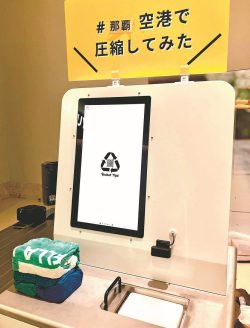
Narita Airport, Startup in Japan Demonstrate Machine to Compress Clothes for Tourists to Prevent People from Abandoning Suitcases
-
Japan, U.S. Name 3 Inaugural Investment Projects; Reached Agreement After Considerable Difficulty
-

Toyota Motor Group Firm to Sell Clean Energy Greenhouses for Strawberries
-

SoftBank Launches AI Service for Call Centers That Converts Harsh Customer Voices into Softer Voices
JN ACCESS RANKING
-
Producer Behind Pop Group XG Arrested for Cocaine Possession
-
Japan PM Takaichi’s Cabinet Resigns en Masse
-
Man Infected with Measles Reportedly Dined at Restaurant in Tokyo Station
-
Israeli Ambassador to Japan Speaks about Japan’s Role in the Reconstruction of Gaza
-
Videos Plagiarized, Reposted with False Subtitles Claiming ‘Ryukyu Belongs to China’; Anti-China False Information Also Posted in Japan