
Japan’s $1.4 Trillion FX Reserves under Scrutiny as Takaichi Hunts for Revenue Sources
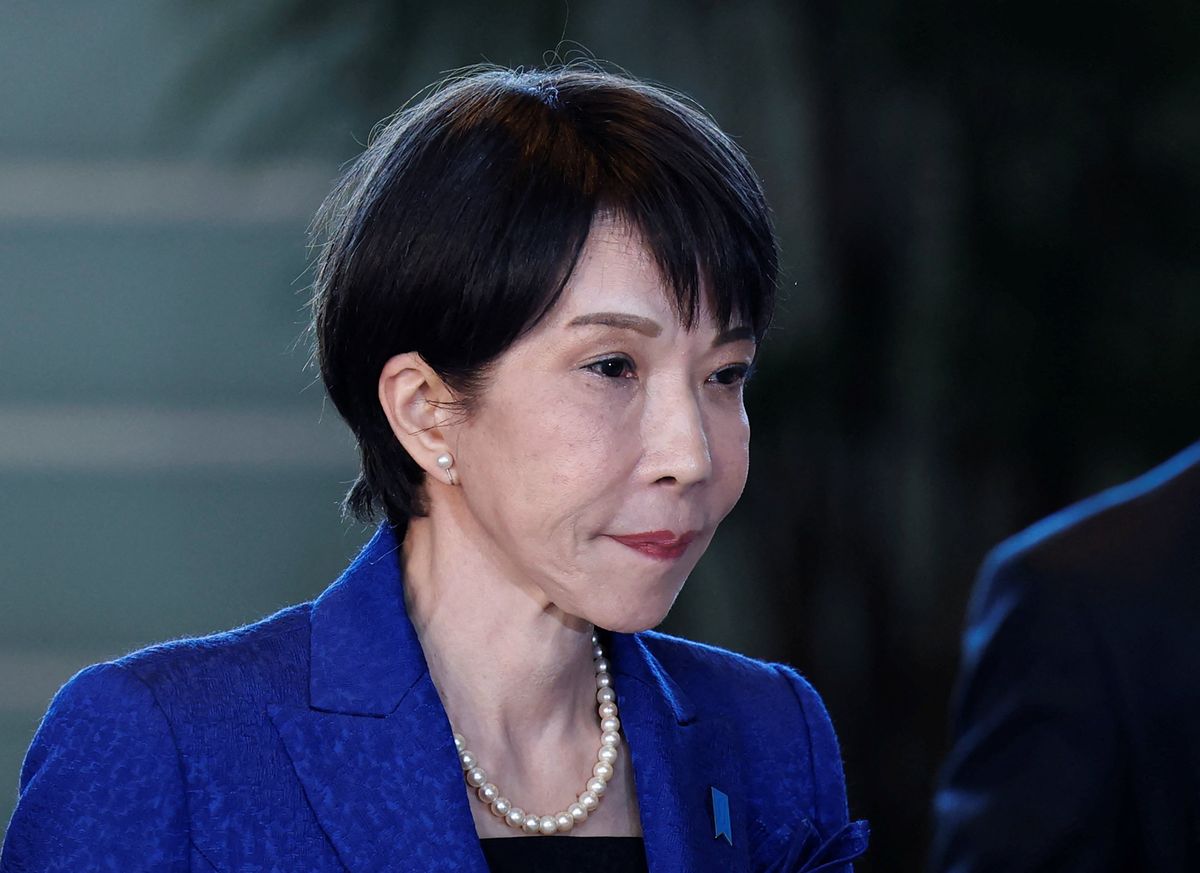
Japan’s Prime Minister Sanae Takaichi, leader of the ruling Liberal Democratic Party (LDP), arrives at the Prime Minister’s office after her party’s historic election win in Sunday’s poll in Tokyo, Japan, February 9, 2026.
16:28 JST, February 9, 2026
TOKYO, Feb 9 (Reuters) – Japan’s massive foreign currency reserves, a priority war-chest for future yen interventions, have come under renewed scrutiny as Prime Minister Sanae Takaichi scours for funding to bankroll a controversial plan to suspend a consumption tax after her landslide election win.
The focus on the $1.4 trillion stockpile, far larger than the annual state budget, underscores intense pressure on Tokyo to identify alternative funding sources for an estimated 5 trillion yen ($31.99 billion) annual revenue shortfall, a prospect that has unsettled financial markets.
Following Sunday’s decisive election victory, Takaichi pledged to speed up deliberation on suspending the 8% tax on food sales for two years without issuing new debt, saying details would need to be discussed with other parties.
Some government officials, who spoke on condition of anonymity due to the sensitivity of the matter, say Takaichi may look to tap the surplus from the reserves after she noted in her campaign speech that Japan’s foreign reserves were a major beneficiary of the weak yen and “performing very well.”
Asked about the possibility, Finance Minister Satsuki Katayama said in a television interview that it was conceivable that the large surplus could be put to use.
“However, this touches on the issue of foreign-exchange intervention. From the standpoint of national interest, it is not desirable to disclose all the details of what is available,” she added.
Takaichi’s tax-cut plans and expansionary fiscal agenda sent Japanese markets into a tailspin last month, with bond yields surging to record highs on concerns over the government’s ability to fund the extra spending in a nation with the heaviest debt burden in the developed world.
FISCAL MACHINE SHOULD NOT RELY ON FX RESERVES
In the last fiscal year, Japan posted a record surplus of 5.4 trillion yen from a special government account for currency reserves, reflecting income from U.S. Treasuries accumulated during past bouts of dollar-buying intervention.
Assets in the account, invested mainly in Treasuries, are funded through yen-denominated financing bills, with interest costs more than offset by returns thanks to the wide U.S.-Japan interest rate differential.
There are precedents for diverting surplus to fund flagship policies. While budget rules require at least 30% of annual surplus to be retained in the account as a buffer against future losses, that requirement has at times been relaxed, allowing the entire amount to be transferred to the general account.
“Currency reserves have at times been used for political purposes,” one government official said.
Saisuke Sakai, senior economist at Mizuho Research & Technologies, said: “Foreign currency reserves are, at their core, a safety mechanism to ensure currency stability.”
“Income generated from the reserves is certainly important, but it should not be relied on excessively as a permanent funding source as it fluctuates with markets and interest rates,” he said.
With any additional surplus likely to be small relative to the revenue shortfall, the largest opposition party is calling for more radical measures, proposing to fold Japan’s foreign currency reserves and the central bank’s ETF holdings into a sovereign wealth fund in search of higher returns.
“The size of the reserves may be a bit excessive in light of the purpose of ensuring currency stability,” opposition lawmaker Isamu Ueda told Reuters.
“While U.S. Treasuries are extremely stable assets and do offer a certain level of return, I believe it would be possible to pursue a somewhat more proactive investment approach – without necessarily taking on significantly higher risk,” he added.
Several government officials privately dismiss the idea as unrealistic, with one noting that large-scale sales of Treasuries could irritate Washington at a time when the U.S. bond market remains sensitive. Japan is the largest holder of U.S. debt.
“Some worry that Japan could be unable to intervene to curb yen weakness if its foreign currency reserves are insufficient,” Hiroshi Watanabe, a former vice finance minister for international affairs, said in a recent interview.
Fred Neumann, chief Asia economist at HSBC in Hong Kong, concurred, saying “it would be risky to sell reserves primarily for fiscal purposes, and not for exchange rate management, as this would lower available reserves for possible future intervention.”










Most Read
Popular articles in the past 24 hours
-

LDP Wins Historic Landslide Victory
-

LDP Wins Landslide Victory, Secures Single-party Majority; Ruling...
-
Japan’s LDP Set for Landslide Victory, Securing Sole Majority; Ex...
-

Ruling Coalition of LDP, JIP Secures Two-Thirds Majority, Enablin...
-

Diver from Taiwan Dies In Survey Work at Undersea Coal Mine Site ...
-

Milano Cortina 2026: Japan Finishes 2nd in Figure Skating Team Co...
-
LDP Secures ‘Absolute Majority,’ Enabling It to Dominate All Comm...
-

Maltese Pavilion’s Famous Ftira Bread Now Available in Osaka; Loa...
Popular articles in the past week
-

Man Infected with Measles May Have Come in Contact with Many Peop...
-

Israeli Ambassador to Japan Speaks about Japan’s Role in the Reco...
-

BTS to Hold Comeback Concert in Seoul on March 21; Popular Boy Ba...
-
LDP Wins Historic Landslide Victory
-

Sapporo Snow Festival Opens with 210 Snow and Ice Sculptures at 3...
-

Green Tea Exports Hit Record High in 2025 Amid Growing Demand, Li...
-
U.N. Plans to Set Safety Regulation Standards on Automated Drivin...
-
Tokyo Had 65,000 More People Move In Than Out In 2025; Osaka Area...
Popular articles in the past month
-

Univ. in Japan, Tokyo-Based Startup to Develop Satellite for Disa...
-

Japan Institute to Use Domestic Commercial Optical Lattice Clock ...
-

JAL, ANA Cancel Flights During 3-day Holiday Weekend due to Blizz...
-

China Eyes Rare Earth Foothold in Malaysia to Maintain Dominance,...
-
Man Infected with Measles May Have Come in Contact with Many Peop...
-

Japan, Qatar Ministers Agree on Need for Stable Energy Supplies; ...
-
Australian Woman Dies After Mishap on Ski Lift in Nagano Prefectu...
-

Japan, Italy to Boost LNG Cooperation; Aimed at Diversifying Japa...
Top Articles in News Services
-

Prudential Life Expected to Face Inspection over Fraud
-

South Korea Prosecutor Seeks Death Penalty for Ex-President Yoon over Martial Law (Update)
-

Trump Names Former Federal Reserve Governor Warsh as the Next Fed Chair, Replacing Powell
-

Suzuki Overtakes Nissan as Japan’s Third‑Largest Automaker in 2025
-

Japan’s Nikkei Stock Average Alls from Record as Tech Shares Retreat; Topix Rises (UPDATE 1)
JN ACCESS RANKING
-
Japan Institute to Use Domestic Commercial Optical Lattice Clock to Set Japan Standard Time
-
China Eyes Rare Earth Foothold in Malaysia to Maintain Dominance, Counter Japan, U.S.
-
Man Infected with Measles May Have Come in Contact with Many People in Tokyo, Went to Store, Restaurant Around When Symptoms Emerged
-
Japan, Qatar Ministers Agree on Need for Stable Energy Supplies; Motegi, Qatari Prime Minister Al-Thani Affirm Commitment to Cooperation
-
Australian Woman Dies After Mishap on Ski Lift in Nagano Prefecture