
11:00 JST, February 6, 2026
There continues to be a glut of capital around the world. The situation is not just unchanged from last year; if anything, it has become more difficult. This is because the world’s largest and second largest economies, the United States and China, are no longer “regions where one can invest with confidence” due to their escalating confrontation. As a result, there now are fewer places for funds to go.
In its pursuit of “America First,” the administration of U.S. President Donald Trump has been aggressively pushing inward investment, telling other countries to stop exporting goods to the United States and produce them there, instead. From foreign investors’ perspective, even if they are lured in a rather forcible way to invest in the United States, they can’t dispel concerns about the political outlook there. Even if some take the risk to invest there, they are likely to choose a cautious level of investment.
In addition, Trump’s push to assert U.S. sovereignty over the Danish island of Greenland is threatening to result in a breach between the United States and Europe. If this becomes a reality, it will be difficult for European funds to be invested in the United States.
China, on the other hand, has damaged its own image as a viable investment destination because it has taken a tough stance against not only Japan but other countries as well. What’s more, as China has been intensifying government interference in and regulations on corporate activities at home, the country is becoming less and less seen as a stable, attractive place to invest.
The United States and China are being shunned as investment destinations, but Europe also lacks political stability. Japan also finds itself in a situation where it is difficult to envision its future prospects.
As a result, looking around the world, it feels as if clear investment destinations for large sums of capital are disappearing. It would be nice if investment money could go to emerging and developing countries, but the reality is not that simple.
Demand for infrastructure development is still high in those countries. However, they cannot afford to finance infrastructure development through domestic tax revenue, compelling them to rely on borrowing and other forms of external financing. Yet, the predictability of repayment and redemption is declining because of growing uncertainty about the future. The consequence is that fundraising by emerging and developing countries is not progressing smoothly despite offering attractive returns through higher interest rates, among other incentives.
What is needed now is to spur medium- to long-term investment by overcoming the situation in which there are no investment opportunities in sight for surplus funds. To that end, it is indispensable not only to expand private-sector industrial infrastructure but also to increase investment in public infrastructure.
What should be particularly emphasized moving forward is not new investment, but the maintenance and renewal of existing infrastructure. In developed countries, infrastructure that was installed a long time ago is becoming increasingly dilapidated. In emerging and developing countries, too, there are many cases where the durability of infrastructure is deteriorating faster than expected, owing to hasty and poor-quality infrastructure development in the first place.
‘Danshari’ is indispensable
In Japan, infrastructure development has been carried out across the country under a policy of regionally balanced development. Even so, there must be residents who are not satisfied, saying, “Our area has not been developed enough.”
However, a level-headed assessment of Japan’s overall funding capacity shows that it will be necessary to significantly curb new infrastructure development in the future.
In recent years, Japan has frequently experienced large-scale road collapses and water surges caused by damage to aging water and sewage pipes. A survey of aqueducts crossing above rivers to transport water has found that over half require urgent repair or replacement. Many water and sewage pipes buried under roads have already exceeded their service lives. Repairing and replacing them is an urgent priority.
Aging infrastructure is not an issue limited to Japan. In the United States, the world-renowned Interstate Highway System has large depressions and bumps, interfering with travel. In Europe, there have been reports about deteriorating water supply and transportation facilities. The crucial point is that unless funds are adequately allocated to the maintenance and repairs of such facilities, we won’t be able to enjoy the same level of essential daily infrastructure as we did before.
I don’t mean to totally reject investment in new infrastructure, but Japan faces the unavoidable reality of population decline. Given this, even when establishing new infrastructure, it must be designed with the intention of having residents live in somewhat densely populated areas to reduce costs. I think there are some people who resist the term “efficient clustered housing.” It is now unavoidable to confine the areas where public services and other offerings are provided within a certain scope.
It’s quite natural for people to want to continue living in the same environment as before. Still, we need to immediately and rigorously look into whether the costs and workforce to support this can really be secured. About one-third of all Japanese people alive today will pass away before there is extreme deterioration in the state of the country’s infrastructure. However, if our society uses this as an excuse to delay the necessary measures, the relevant expenses will snowball to the extent that a smaller population will be compelled to bear a heavier burden.
As for existing facilities, it’s time to earnestly consider shutting down or demolishing those that are not used very much and merely push up utility and maintenance costs. There won’t be a happy situation in which something that has been constructed can be maintained forever. Even though it is technically possible to make facilities last through proper maintenance and repairs, it is vital to think twice whether it is worth going to all that trouble to preserve them. In other words, decluttering, or “danshari” in Japanese, is essential even in the field of infrastructure. If a wrong decision is made, repairs will just result in “delaying the end of [a facility’s] life” rather than the “beginning of revival.”
Time to review housing policy
When it comes to existing assets, new problems are also emerging in people’s household finances. For many years in Japan, mortgage tax breaks and other measures have been implemented to stimulate housing construction, thereby helping to promote homeownership. People have expected that after paying off their mortgage, their house would remain as an asset. In the past, houses, including the land they stood on, were reliable personal assets.
However, the collapse of the so-called bubble economy sent real estate prices plummeting, triggering cases of an “underwater mortgage,” in which the outstanding loan balance exceeded the market value of the house.
In recent years, house prices have been on the rise again. This means that people who consider buying residential property are facing new problems — the ratio of house prices to annual income has been rising sharply, causing loan amounts to increase significantly.
Countermeasures such as a “parent-child relay loan” with the repayment period extended to about 50 years have been introduced, but there is a risk that the property may have surpassed its useful life when the loan is fully paid off. The lifespan of a typical wooden house is said to be about 30 years, though it could last longer if adequately managed. Even so, houses will inevitably have to be renovated at some point. Individuals are also urged to be mindful of depreciation and useful life when it comes to housing.
Many vehicle owners appear to be sufficiently mindful of those factors, but people are seemingly less aware of them in the case of long-term, expensive assets like houses.
Isn’t this a good opportunity to review the existing policy of prioritizing homeownership from the perspective of ensuring the provision of living environments that suit people’s lifestyles? It is imperative to thoroughly consider what should be done to promote rental housing and foster the market for existing houses. How to raise awareness about these housing-related issues is a major challenge.
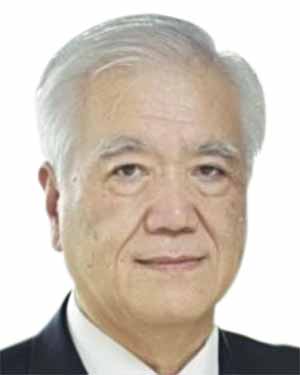
Hiroshi Watanabe
Watanabe is a visiting professor with the Faculty of Business Administration at Tokyo Seitoku University. Previously, he was vice finance minister for international affairs and a professor at Hitotsubashi University. He also served as governor and chief executive officer of the Japan Bank for International Cooperation, and president of the Tokyo-based Institute for International Monetary Affairs.
The original article in Japanese appeared in the Feb. 1 issue of The Yomiuri Shimbun.








Most Read
Popular articles in the past 24 hours
-
TEPCO to Reactivate Nuclear Reactor at Kashiwazaki-Kariwa Power P...
-

Tae Hitoto Leads Japanese Cyclists Planning Trip Around Taiwan to...
-

Travel Across PokéPark KANTO, Searching Far and Wide for Your Fav...
-
Japan’s Govt Sets Goal for World’s No. 3 in Number of Highly Cite...
-

Israeli Ambassador to Japan Speaks about Japan’s Role in the Reco...
-
Japan's Ginkakuji Temple to Increase Admission Fees for 1st Time ...
-
Australian Woman Died of Asphyxiation in Nagano Ski Lift Accident...
-
TMSC to Produce 3-Nanometer Semiconductors in Japan's Kumamoto Pr...
Popular articles in the past week
-

Man Infected with Measles May Have Come in Contact with Many Peop...
-
Australian Woman Dies After Mishap on Ski Lift in Nagano Prefectu...
-
Foreign Snowboarder in Serious Condition After Hanging in Midair ...
-
Chinese Embassy in Japan Reiterates Call for Chinese People to Re...
-
Narita Airport, Startup in Japan Demonstrate Machine to Compress ...
-

Toyota Motor Group Firm to Sell Clean Energy Greenhouses for Stra...
-

Beer Yeast Helps Save Labor, Water Use in Growing Rice; Govt Hope...
-
Japan Tourism Agency Calls for Strengthening Measures Against Ove...
Popular articles in the past month
-
Univ. in Japan, Tokyo-Based Startup to Develop Satellite for Disa...
-

JAL, ANA Cancel Flights During 3-day Holiday Weekend due to Blizz...
-

Japan Institute to Use Domestic Commercial Optical Lattice Clock ...
-
China Eyes Rare Earth Foothold in Malaysia to Maintain Dominance,...
-
China Confirmed to Be Operating Drilling Vessel Near Japan-China ...
-

Japan, Qatar Ministers Agree on Need for Stable Energy Supplies; ...
-
Man Infected with Measles May Have Come in Contact with Many Peop...
-
Australian Woman Dies After Mishap on Ski Lift in Nagano Prefectu...
Top Articles in Editorial & Columns
-

40 Million Foreign Visitors to Japan: Urgent Measures Should Be Implemented to Tackle Overtourism
-
China Criticizes Sanae Takaichi, but China Itself Is to Blame for Worsening Relations with Japan
-
Withdrawal from International Organizations: U.S. Makes High-handed Move that Undermines Multilateral Cooperation
-

University of Tokyo Professor Arrested: Serious Lack of Ethical Sense, Failure of Institutional Governance
-
Defense Spending Set to Top ¥9 Trillion: Vigilant Monitoring of Western Pacific Is Needed
JN ACCESS RANKING
-
Univ. in Japan, Tokyo-Based Startup to Develop Satellite for Disaster Prevention Measures, Bears
-
JAL, ANA Cancel Flights During 3-day Holiday Weekend due to Blizzard
-
Japan Institute to Use Domestic Commercial Optical Lattice Clock to Set Japan Standard Time
-
China Eyes Rare Earth Foothold in Malaysia to Maintain Dominance, Counter Japan, U.S.
-
Japan, Qatar Ministers Agree on Need for Stable Energy Supplies; Motegi, Qatari Prime Minister Al-Thani Affirm Commitment to Cooperation