
15:52 JST, December 7, 2025
Frozen vegetables are becoming increasingly commonplace at the dining table. While imported products have traditionally dominated the market, Japanese manufacturers are now stepping up efforts to utilize domestic produce, grabbing the attention of consumers. We took a closer look at the appeal of vegetables grown and frozen in Japan.
90% from overseas
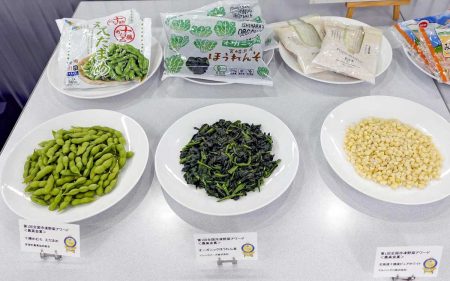
From left, frozen edamame, organic frozen spinach and frozen corn win the top gold prize at the first Frozen Vegetables Award.
In Osaka Prefecture, a 37-year-old woman always stocks domestically grown and frozen vegetables such as spinach and corn at home. Alongside raising her two daughters, ages 3 and 11 months, she works as a freelance licensed cook.
“Frozen vegetables are economical as you can store what you don’t use right away, and their prices are also stable,” the woman said. “Vegetables are essential for my children’s diet. I always use domestic products.”
The Japanese Consumers’ Co-operative Union sells domestically grown frozen vegetables in-store as well as through home delivery, the sales of which account for 70% of its total frozen vegetables sales. Recently, frozen mixed vegetable packs that include onions have become particularly popular. Edamame and corn are also in high demand.
At supermarket chain Life Corp., frozen vegetables are selling better overall, with pumpkin and cut green onion especially popular among domestic offerings. At OK Corp., 15% of its total frozen vegetables are domestically grown, with leafy greens selling well, the company says.
According to the Agriculture, Forestry and Fisheries Ministry, imported frozen vegetables account for 90% of those distributed in Japan. However, demand for those domestically grown is on the rise.
According to frozen food and lifestyle adviser Takashi Nishikawa, domestic products often feature elements, such as how they are cut or mixed, tailored specifically for certain dishes. Products designed for easy use and ones which better preserve flavor have emerged, such as spinach and corn that retain the same sweetness and texture from when freshly harvested, and grated Chinese yam that can be squeezed straight from a tube.
“For burdock root products used in soups, for example, domestic production can allow for adjusting size to ensure quick cooking, while retaining some of the peel to preserve its rich aroma and flavor,” Nishikawa said. He also noted, “It also facilitates distributing more varieties and smaller batches.”
In 2024, the Japan Vegetable Sommelier Association started organizing the Frozen Vegetables Award to promote the appeal of domestically grown frozen produce, with Nishikawa serving as chief judge.
Preserving freshness
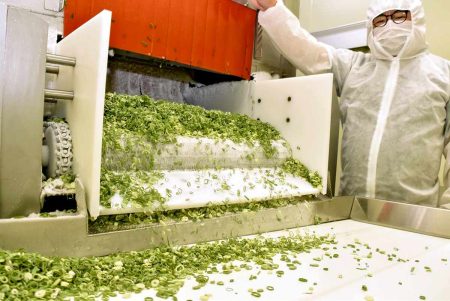
Kujo negi green onions in a freezer in Kameoka, Kyoto Prefecture
For Japanese manufacturers, the focus is on variety and freshness.
Based in Kyoto Prefecture, Koto Kyoto has grown and sold negi green onion variety Kujo negi since 2017, traditionally farmed locally. From cultivation to factory processing, the company manages everything in-house, preserving the taste and texture by flash-freezing the Kujo negi while fresh.
Originally, the company shipped fresh Kujo negi to restaurants and supermarkets. As open-field cultivation is vulnerable to wind and weather phenomena such as typhoons, the company set up a separate frozen business subsidiary that enables year-round shipments.
We deliver the unique flavors of traditional vegetables at their peak seasonal condition,” executive officer Kotaro Miyakawa, 55, said. “Kujo negi are often used in small quantities in home cooking, so they are suitable for freezing and selling in quantities based on consumer needs.”
Ishihara Foods, a company based in Miyazaki Prefecture that ships frozen vegetables to places such as consumer cooperatives and other entities, uses organically grown produce.
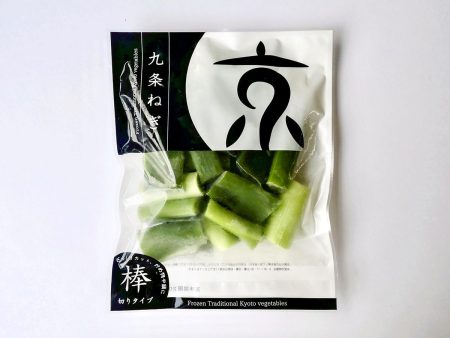
This provided photo shows frozen Kujo negi green onion sticks are convenient for use.
The company grows seven types of vegetables year-round, including sweet, thick spinach, satoimo taro root and edamame. Their fields are within 30 minutes of the freezing facility. Each vegetable is harvested during its season at peak nutritional value, briefly blanched and then flash-frozen.
“The spinach and edamame are frozen within two hours after harvest, preserving their freshness,” company president Shoko Ishihara, 38, said.
In light of challenges the agriculture industry is facing, such as a shortage of successors and climate change, Ishihara said: “By freezing domestically grown vegetables, it allows for stable prices throughout the year, and also contributes to sustainable agricultural practices.”
Yoshiko Miura, public relations manager at the Japan Frozen Food Association, said, “Unlike buying whole vegetables and preparing at home, using frozen vegetables produces no waste and reduces food loss. They are cost-effective and save time, which is ideal for single-person households or those with a need to reduce their household chores.”
She added, “With consumers becoming more health-conscious, expectations for domestically grown and frozen vegetables are high.”
Early consumption recommended
According to Toru Suzuki, representative director of the Institute for Advancement and Promotion of Food Freezing Technology, foods are frozen at minus 18 C or lower. This temperature halts the growth of microorganisms and bacteria that cause food to spoil.
However, the oxidation and protein denaturation processes still continue slowly. As home freezers are not very effective at storing frozen goods, early consumption is recommended even if the best-before date is around one year away. Caution is advised as bacterial growth resumes after thawing.
“I recommend frozen spinach and mushrooms as their textures aren’t very different from when fresh,” said Junko Watanuki, a chef who utilized frozen vegetables when serving on the 57th Japanese Antarctic Research Expedition’s culinary team from December 2015-March 2017.
Frozen produce is easy to use, especially for vegetables that require tedious prep before cooking, such as pumpkin and satoimo taro.
A quick recipe made using frozen vegetables is pumpkin chawanmushi (steamed egg custard with pumpkin). For two servings, mash two pieces of pumpkin, totaling 60 grams, and mix with one egg and 150 milliliters of dashi stock. Then, microwave the mixture for about two minutes at 500 watts.
Similarly, adding frozen fried eggplant and ground sesame seeds to miso soup is a simple way to make the dish more satiating and flavorful.






Most Read
Most read in the last 24 hours
-

Iran's Top Diplomat Briefly Returns to Pakistan but Trump Says th...
-

DC Gala Shooting Suspect Aired Grievances against Trump in Writin...
-

Tokyo Vice Governor: SusHi Tech Tokyo Garners Tangible Business O...
-

Japan to Host Leaders from Major Cities from Around the World for...
-
M6.1 Earthquake Hits Hokkaido, Japan; No Tsunami Expected
-

Japanese Police Storm Bus to Arrest Man with Knife; No Injuries R...
-

Japan's LDP Urges More Social Structures Against a ‘State of Emer...
-

Students’ ‘ITAMAE’ Project Boosts Interest in Starting Small Busi...
Most read in the last 7 days
-

China, South Korea Object to Japanese PM Takaichi's Ritual Offeri...
-

Trump Extends the Ceasefire with Iran but Keeps the Blockade
-

India's Arms Indigenization Quest for Self-Reliance / New Delhi S...
-

¥1,000 Coins to Be Issued to Mark Anniversary of Beginning of Jap...
-

Most Serious Cyberattacks against the UK Now from Russia, Iran an...
-

Trump Opposes United–American Merger, Signals Support for Spirit
-

System Malfunction in Haneda Airport Causes 83 Flight Cancelation...
-

Florida Launches Criminal Probe into OpenAI and ChatGPT over Dead...
Most read in the last 30 days
-
Earthquake Hits Japan's Tohoku Region; 3-meter Tsunami Warning Is...
-

Police Find Child's Shoe During Search for Missing Boy in Nantan,...
-

Body Found in Nantan, Kyoto Prefecture, During Search for 11-Year...
-
China, South Korea Object to Japanese PM Takaichi's Ritual Offeri...
-
Cherry Blossoms, Rapeseed Flowers Perform Colorful ‘Duet’ in Niig...
-
Trump Extends the Ceasefire with Iran but Keeps the Blockade
-

Olympic Gold Medal-Winning Figure Skaters Riku-Ryu Announce Retir...
-

Japanese Prime Minister Takaichi Speaks to Pakistani Prime Minist...
Top Articles in Features
-
Cherry Blossoms in Full Bloom Draw Crowds in Sendai, Miyagi Pref.; Aquarium Creates Underwater ‘Cherry Blossom Viewing’ Show
-
Cherry Blossom Viewing Season at Peak in Japan’s Kanazawa
-
Cherry Blossoms, Tulips, Snow-Capped Peaks Create Picturesque Scene in Toyama Pref., Japan
-
Cherry Blossoms Reach Peak in Fukushima Pref., Including Trees Planted to Commemorate Birth of Princess Aiko
-
Cherry Blossom Viewers Enjoy Picnic Under the Trees in Full Bloom in Famous Osaka Spot
JN ACCESS RANKING
-
Earthquake Hits Japan’s Tohoku Region; 3-meter Tsunami Warning Issued (Update 1)
-
Police Find Child’s Shoe During Search for Missing Boy in Nantan, Kyoto Prefecture
-
Body Found in Nantan, Kyoto Prefecture, During Search for 11-Year-Old Boy in Area (Update 1)
-
China, South Korea Object to Japanese PM Takaichi’s Ritual Offering to Yasukuni Shrine
-
Cherry Blossoms, Rapeseed Flowers Perform Colorful ‘Duet’ in Niigata
Most read in the last 24 hours
-
Iran's Top Diplomat Briefly Returns to Pakistan but Trump Says th...
-
DC Gala Shooting Suspect Aired Grievances against Trump in Writin...
-
Tokyo Vice Governor: SusHi Tech Tokyo Garners Tangible Business O...
-
Japan to Host Leaders from Major Cities from Around the World for...
-
M6.1 Earthquake Hits Hokkaido, Japan; No Tsunami Expected
Most read in the last 7 days
-
China, South Korea Object to Japanese PM Takaichi's Ritual Offeri...
-
Trump Extends the Ceasefire with Iran but Keeps the Blockade
-
India's Arms Indigenization Quest for Self-Reliance / New Delhi S...
-
¥1,000 Coins to Be Issued to Mark Anniversary of Beginning of Jap...
-
Most Serious Cyberattacks against the UK Now from Russia, Iran an...
Most read in the last 30 days
-
Earthquake Hits Japan's Tohoku Region; 3-meter Tsunami Warning Is...
-
Police Find Child's Shoe During Search for Missing Boy in Nantan,...
-
Body Found in Nantan, Kyoto Prefecture, During Search for 11-Year...
-
China, South Korea Object to Japanese PM Takaichi's Ritual Offeri...
-
Cherry Blossoms, Rapeseed Flowers Perform Colorful ‘Duet’ in Niig...