
Future of TEPCO Nuclear Plant in Niigata Hinges on Governor’s Decision, Understanding of Residents
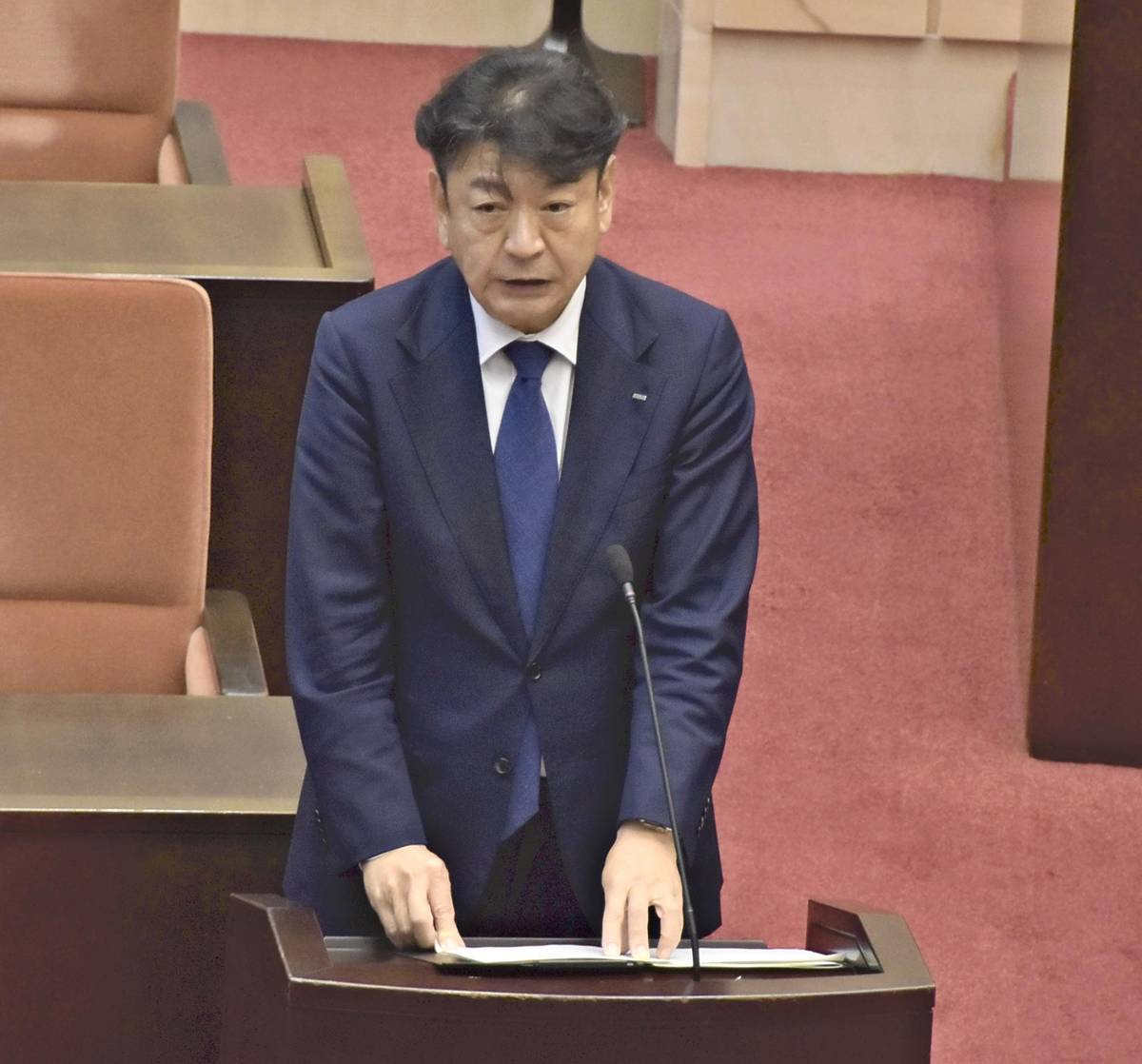
Tokyo Electric Power Company Holdings, Inc. President Tomoaki Kobayakawa speaks at the Niigata prefectural assembly on Thursday.
17:21 JST, October 17, 2025
Tokyo Electric Power Company Holdings, Inc. is seeking understanding from residents and local authorities for the restart of the Kashiwazaki-Kariwa nuclear power plant in Niigata Prefecture.
To secure consent for restarting the plant’s No. 6 reactor, TEPCO has proposed decommissioning some of the other reactors and offering about ¥100 billion in funding to the prefecture.
TEPCO’s actions are driven by its severe financial situation, largely due to decommissioning costs stemming from the accident at its Fukushima No. 1 Nuclear Power Plant. Restarting reactors is essential for TEPCO’s financial recovery, so focus is on the decision reached by Niigata Prefecture’s governor.
TEPCO President Tomoaki Kobayakawa attended the Niigata prefectural assembly on Thursday, where he appealed for support in restarting the No. 6 reactor.
“Restarting the Kashiwazaki-Kariwa nuclear power plant is essential to supporting a significant increase in electricity demand. We intend to pursue an appropriate power source mix over the medium to long term,” he said.
Following the 2011 nuclear accident, TEPCO was effectively nationalized. All its nuclear power plants, including the Kashiwazaki-Kariwa plant, are currently offline.
TEPCO’s financial situation is dire. In its consolidated financial results for the April-June 2025 quarter, the company posted a net loss of ¥857.6 billion, primarily due to mounting costs associated with decommissioning the Fukushima No.1 nuclear power plant. The deficit represents the company’s largest-ever in the April-June quarter.
TEPCO expects annual profit to improve by ¥100 billion through restarting one nuclear reactor. In its reconstruction plan and comprehensive special business plan currently under development, the company intends to restart the No. 6 reactor in spring 2026 and No. 7 within fiscal 2029.
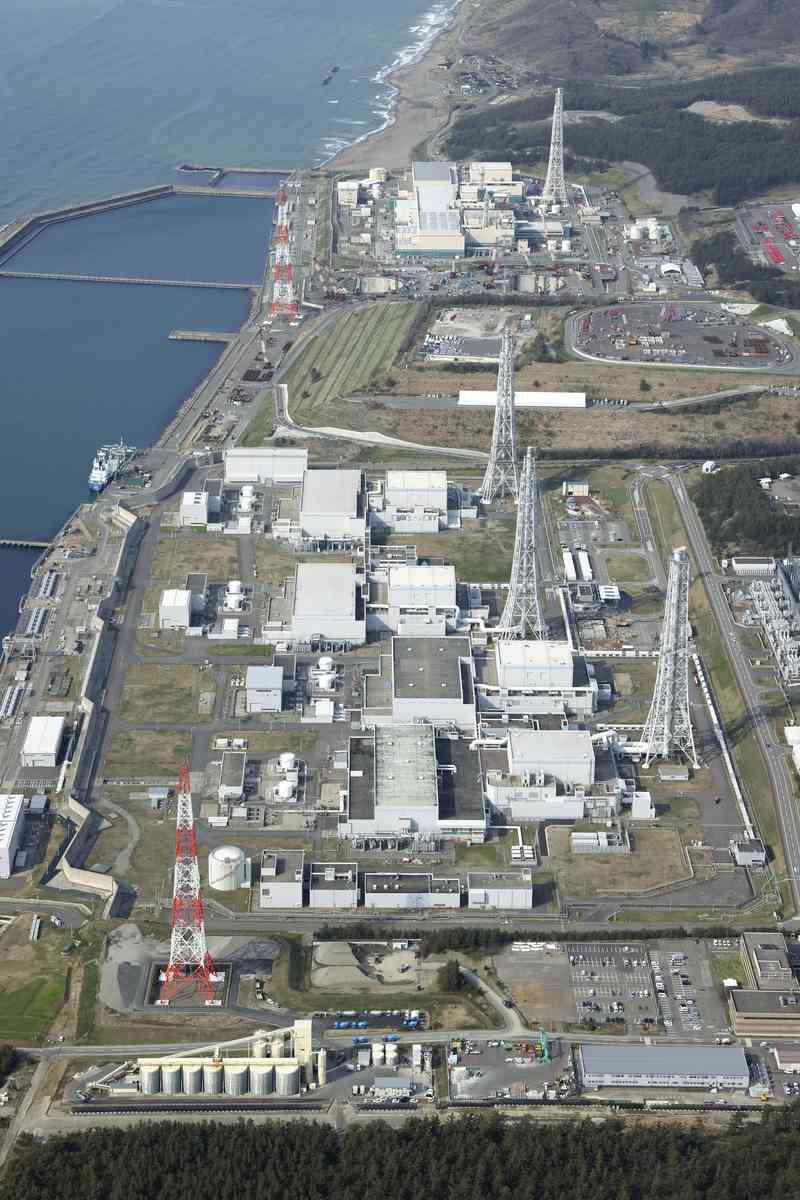
The Kashiwazaki-Kariwa nuclear power plant is seen from the air, in Kashiwazaki, Niigata Prefecture, in April.
TEPCO has indicated it will consider decommissioning the No. 1 reactor, which was commissioned 40 years ago, and the No. 2 reactor, which was commissioned 35 years ago. Although the total decommissioning cost is expected to exceed ¥150 billion, it appears that the company is prioritizing gaining consent to restart the No. 6 reactor.
Electricity demand is expected to increase going forward due to factors such as the increase of data centers, which consume vast amounts of power. The business sector has high expectations for nuclear power as a low-carbon energy source that provides a stable electricity supply.
The government’s Basic Energy Plan, approved by the Cabinet in February, aims for the share of nuclear power to increase to 20% by fiscal 2040, from just under 10% in fiscal 2023.
Yoshifumi Murase, commissioner of the Natural Resources and Energy Agency, stressed at the prefectural assembly on Thursday, “Maximizing the use of nuclear power is vital for Japan, with safety assurance being an absolute prerequisite.”
Opinions divided
Distrust toward TEPCO over its involvement in a plant that suffered a nuclear accident remains deep-rooted in the area around Kashiwazaki-Kariwa nuclear power plant.
At the plant, there have been a series of nuclear security issues since 2020, including the failure of multiple anti-terrorism systems designed to detect intruders and the unauthorized use of ID cards by plant personnel.
Kobayakawa addressed the prefectural assembly, stating, “Based on reflection on the Fukushima accident and the principle that unforeseen accidents can occur, we are implementing safety countermeasures.”
He then explained the efforts being made by TEPCO, such as earthquake and tsunami countermeasures and measures to prevent the dispersion of radioactive materials.
However, the offer of ¥100 billion in funding sparked backlash from legislators. Remarks included: “This is like slapping the local residents’ cheeks with cash,” and, “We merely want to live normally in a Niigata with rich nature.”
The interim report of the prefecture’s public opinion survey, which Niigata Gov. Hideyo Hanazumi will use as a basis for his decision on the restart of the reactor, shows an even split in opinion.
Hanazumi refrained from commenting on the explanations provided by TEPCO and the government after the assembly meeting, instead saying, “I want to see how the prefecture’s residents have taken this.”
He will decide on the matter as early as next month, based on the results of the survey and other factors.






Most Read
Popular articles in the past 24 hours
-
Support for Japan's LDP Rises to 43%, Recovering from Lows Under ...
-

Milano Cortina 2026: Japanese Figure Skater Kaori Sakamoto’...
-
What Skills Will Takaichi Need in Her ‘Era of Dominance’?
-

iPS Treatments Pass Key Milestone, but Broader Applications Far f...
-

US, European Stocks Rise, Treasury Yields Gain after Supreme Cour...
-

U.S. Supreme Court Strikes Down Trump's Global Tariffs
-
Milano Cortina 2026: Japan’s Speed Skater Takagi Sinks to 6...
-

Padres Reliever Yuki Matsui's WBC Status with Japan Is in Questio...
Popular articles in the past week
-

Japan PM Takaichi’s Cabinet Resigns en Masse
-

Man Infected with Measles Reportedly Dined at Restaurant in Tokyo...
-

Videos Plagiarized, Reposted with False Subtitles Claiming ‘Ryuky...
-

Sanae Takaichi Elected Prime Minister of Japan; Keeps All Cabinet...
-

Japan's Govt to Submit Road Map for Growth Strategy in March, PM ...
-

Bus Carrying 40 Passengers Catches Fire on Chuo Expressway; All E...
-

Milano Cortina 2026: Figure Skaters Riku Miura, Ryuichi Kihara Pa...
-
Tokyo’s New Record-Breaking Fountain Named ‘Tokyo Aqua Symphony’
Popular articles in the past month
-
Japan PM Takaichi’s Cabinet Resigns en Masse
-

Japan Institute to Use Domestic Commercial Optical Lattice Clock ...
-

Israeli Ambassador to Japan Speaks about Japan’s Role in the Reco...
-
Man Infected with Measles Reportedly Dined at Restaurant in Tokyo...
-

Man Infected with Measles May Have Come in Contact with Many Peop...
-
Videos Plagiarized, Reposted with False Subtitles Claiming ‘Ryuky...
-

Prudential Life Insurance Plans to Fully Compensate for Damages C...
-

Woman with Measles Visited Hospital in Tokyo Multiple Times Befor...
Top Articles in Business
-
Prudential Life Insurance Plans to Fully Compensate for Damages Caused by Fraudulent Actions Without Waiting for Third-Party Committee Review
-
Narita Airport, Startup in Japan Demonstrate Machine to Compress Clothes for Tourists to Prevent People from Abandoning Suitcases
-
JR Tokai, Shizuoka Pref. Agree on Water Resources for Maglev Train Construction
-

Toyota Motor Group Firm to Sell Clean Energy Greenhouses for Strawberries
-

Japan, U.S. Name 3 Inaugural Investment Projects; Reached Agreement After Considerable Difficulty
JN ACCESS RANKING
-
Japan PM Takaichi’s Cabinet Resigns en Masse
-
Japan Institute to Use Domestic Commercial Optical Lattice Clock to Set Japan Standard Time
-
Israeli Ambassador to Japan Speaks about Japan’s Role in the Reconstruction of Gaza
-
Man Infected with Measles Reportedly Dined at Restaurant in Tokyo Station
-
Man Infected with Measles May Have Come in Contact with Many People in Tokyo, Went to Store, Restaurant Around When Symptoms Emerged