
Mt. Tsukuba Cable Car Celebrates Its 100th Anniversary, Funicular Line Shuttles Visitors Up Famous Ibaraki Pref. Mountain
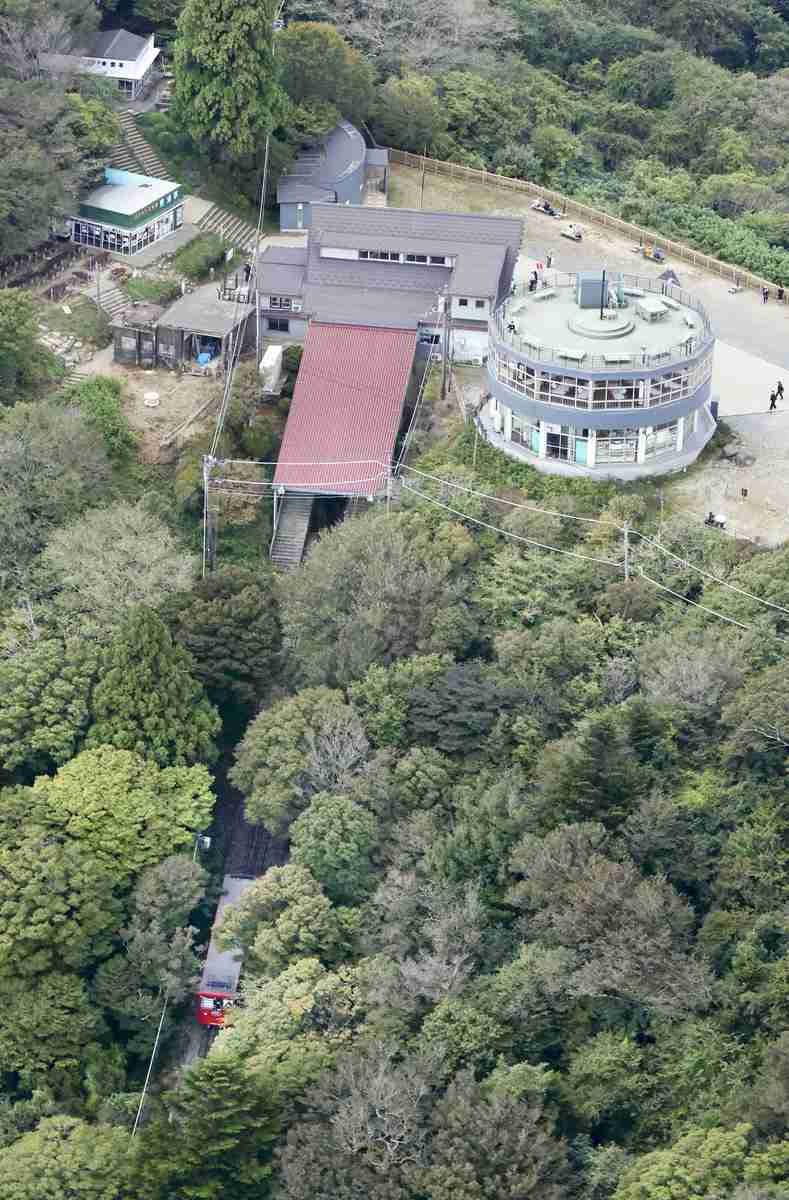
Tsukuba-sancho Station of the Mt. Tsukuba Cable Car, which is celebrating its 100th anniversary of operations, is seen in a photo taken from a helicopter on Friday.
15:47 JST, October 12, 2025
TSUKUBA, Ibaraki Pref.—A cable car connecting the middle section and top of Mt. Tsukuba in Tsukuba, Ibaraki Prefecture, celebrated 100 years of operation on Sunday.
The cable car is an indispensable means of transportation for more than 400,000 tourists visiting the mountain each year, but it was once discontinued during war because it was considered unnecessary. Tsukuba Scenic Railway Co., the operator of the cable car, says it hopes that visitors will feel the history of the long-loved cable car.
Mt. Tsukuba has two peaks, the 871-meter Mt. Nantai and the 877-meter Mt. Nyotai, and is called “Soujimiho” (double-ear peak) because it looks like a set of two ears. It is the lowest of the 100 most famous mountains in Japan. A ropeway connecting the middle of the mountain to the top of Mt Nyotai celebrated its 60th anniversary in August.
The 1,634-meter-long cable car line links Miyawaki Station at an altitude of 305 meters above the sea level and Tsukuba-sancho Station near the top of Mt. Nantai, with a one-way trip taking about eight minutes.
The current cable car is the fifth generation model introduced in February 2005 and can carry up to 107 passengers. The departures and speed of the cable car are controlled at Tsukuba-sancho Station.
According to the Japan Funicular Transport Association and others, cable cars are in operation at 22 locations in Japan. The oldest is the Ikoma Cable Car in Nara Prefecture, which opened in 1918.
The Mt. Tsukuba Cable Car is the fifth oldest in Japan and the second oldest in the Kanto region after the Hakone Tozan Cablecar in Kanagawa Prefecture.
Mt. Tsukuba used to be visited by monks because it was considered to be a sacred mountain. Hoping to attract more people to the mountain, a local businessman established a company called the Tsukubasan Kosaku Tetsudo (Mt. Tsukuba Funicular Railway) in April 1923 and built a cable car.
The cable car line was discontinued in February 1944 because it was deemed an unnecessary and nonessential line and the company provided its car and rails. However, the company continued to exist and resumed operations in 1954 as it had received many requests to revive the line as a means of transportation for tourists.
After the Tsukuba Express (TX) train line opened in 2005, the number of tourists from the Tokyo metropolitan area who wanted to enjoy azaleas and autumn leaves on the mountain increased. While the number of cable car users declined during the COVID-19 pandemic, the figure in 2024 increased by about 30,000 from the previous year to 469,147.
“I can tell that the cable car operator has tried to protect nature without cutting down trees unnecessarily. I think such an attitude has allowed the cable car to remain in operation for so long,” said a 56-year-old nursery school teacher from Chiba Prefecture.
“We would like to make the line more convenient by cooperating with the TX line and buses, and increase the number of passengers by attracting more foreign tourists to ensure our progress toward the future,” a company official said.


Related Tags




Most Read
Most read in the last 24 hours
-

India's Arms Indigenization Quest for Self-Reliance / New Delhi S...
-

Bonds between Iran, Kikaijima Shine as Concerns Rise over Iranian...
-

Most Serious Cyberattacks against the UK Now from Russia, Iran an...
-

Iran Fires on 3 Ships in the Strait of Hormuz as US Maintains Blo...
-

Trump Envoy Seeks to Replace Iran with Italy in Upcoming World Cu...
-

EU Close to Approving a $106B Loan for Ukraine after Months of De...
-

White Sox Rookie Munetaka Murakami Ties MLB Rookie Record with HR...
-

Airline Company Lufthansa Cuts 20,000 Flights as War Squeezes Fue...
Most read in the last 7 days
-
Earthquake Hits Japan's Tohoku Region; 3-meter Tsunami Warning Is...
-

Trump Extends the Ceasefire with Iran but Keeps the Blockade
-

Olympic Gold Medal-Winning Figure Skaters Riku-Ryu Announce Retir...
-

China, South Korea Object to Japanese PM Takaichi's Ritual Offeri...
-

Japan to Ban Use of Portable Chargers on Airplanes from April 24,...
-

¥1,000 Coins to Be Issued to Mark Anniversary of Beginning of Jap...
-

New Challenges Await as Miura-Kihara Retires; Blade Maker, Ex-Coa...
-

Trump Opposes United–American Merger, Signals Support for Spirit
Most read in the last 30 days
-
Earthquake Hits Japan's Tohoku Region; 3-meter Tsunami Warning Is...
-
Police Find Child's Shoe During Search for Missing Boy in Nantan,...
-
Body Found in Nantan, Kyoto Prefecture, During Search for 11-Year...
-
Cherry Blossoms, Rapeseed Flowers Perform Colorful ‘Duet’ in Niig...
-
Trump Extends the Ceasefire with Iran but Keeps the Blockade
-
Olympic Gold Medal-Winning Figure Skaters Riku-Ryu Announce Retir...
-

Nori Prices Surge in Japan Due to Poor Seaweed Production Amid Ri...
-

Japanese Prime Minister Takaichi Speaks to Pakistani Prime Minist...
Top Articles in Features
-
Cherry Blossoms in Full Bloom Draw Crowds in Sendai, Miyagi Pref.; Aquarium Creates Underwater ‘Cherry Blossom Viewing’ Show
-
Cherry Blossom Viewing Season at Peak in Japan’s Kanazawa
-
Cherry Blossoms, Tulips, Snow-Capped Peaks Create Picturesque Scene in Toyama Pref., Japan
-
Cherry Blossom Viewers Enjoy Picnic Under the Trees in Full Bloom in Famous Osaka Spot
-
Cherry Blossom View in Front of Shinkansen Bullet Trains Attracting Visitors in Nagasaki Pref.
JN ACCESS RANKING
-
Earthquake Hits Japan’s Tohoku Region; 3-meter Tsunami Warning Issued (Update 1)
-
Police Find Child’s Shoe During Search for Missing Boy in Nantan, Kyoto Prefecture
-
Body Found in Nantan, Kyoto Prefecture, During Search for 11-Year-Old Boy in Area (Update 1)
-
Cherry Blossoms, Rapeseed Flowers Perform Colorful ‘Duet’ in Niigata
-
Trump Extends the Ceasefire with Iran but Keeps the Blockade
Most read in the last 24 hours
-
India's Arms Indigenization Quest for Self-Reliance / New Delhi S...
-
Bonds between Iran, Kikaijima Shine as Concerns Rise over Iranian...
-
Most Serious Cyberattacks against the UK Now from Russia, Iran an...
-
Iran Fires on 3 Ships in the Strait of Hormuz as US Maintains Blo...
-
Trump Envoy Seeks to Replace Iran with Italy in Upcoming World Cu...
Most read in the last 7 days
-
Earthquake Hits Japan's Tohoku Region; 3-meter Tsunami Warning Is...
-
Trump Extends the Ceasefire with Iran but Keeps the Blockade
-
Olympic Gold Medal-Winning Figure Skaters Riku-Ryu Announce Retir...
-
China, South Korea Object to Japanese PM Takaichi's Ritual Offeri...
-
Japan to Ban Use of Portable Chargers on Airplanes from April 24,...
Most read in the last 30 days
-
Earthquake Hits Japan's Tohoku Region; 3-meter Tsunami Warning Is...
-
Police Find Child's Shoe During Search for Missing Boy in Nantan,...
-
Body Found in Nantan, Kyoto Prefecture, During Search for 11-Year...
-
Cherry Blossoms, Rapeseed Flowers Perform Colorful ‘Duet’ in Niig...
-
Trump Extends the Ceasefire with Iran but Keeps the Blockade