
Shizuoka School’s Book Collection Highlights History of Emigrants; Unpachi Miyagishima Bunko Was Established with Bequest from Japanese American with Local Roots

Aya Nagasawa explains how Unpachi Miyagishima Bunko was established
6:00 JST, August 30, 2025
SHIZUOKA — A book collection at Shimizu Miho Daiichi Elementary School in Shimizu Ward, Shizuoka City, is a cherished reminder of the many residents who emigrated to the United States during the Meiji (1868–1912) and Showa (1926–89) eras.
Founded with a bequest from a second-generation Japanese American named Unpachi Miyagishima, the collection represents a continuing connection between these emigrants and their old hometown.
As the school prepares to celebrate its 150th anniversary in December, it plans to spotlight the book collection once again, as a way of teaching new generations about the history of emigrants.
The Unpachi Miyagishima Bunko book collection was established in November 1991 with a donation of about $7,200 (about ¥1 million at the time) from Miyagishima’s estate to the elementary school.
According to the school, Miyagishima was born in the United States on Feb. 9, 1929, to parents who had emigrated from Miho. On Jan. 8, 1940, he and his older brother transferred from a school in Seattle to a primary school in Miho, where their grandparents lived. He studied there until Nov. 8 of that year.
Currently, little is known about Miyagishima. However, given that he enrolled in first grade at age 10, it can be inferred that he had very limited Japanese-language ability. As U.S.-Japan relations deteriorated and war became inevitable, he returned to the United States, where his parents lived. Miyagishima died on Feb. 15, 1990.
A school official speculates that Miyagishima’s bequest was a result of fond memories of attending school in his parents’ hometown. The donation was used to purchase children’s books, including novels such as “The Adventures of Tom Sawyer,” as well as books on nature and science, forming a collection which the school named in Miyagishima’s honor.
However, as time went by, the collection’s existence was forgotten. The books, which had been located in the library, were eventually moved to a hallway where they were exposed to the afternoon sun.
In February this year, Aya Nagasawa, 51, who chairs the school’s 150th anniversary executive committee and works as a school support staff member, joined colleagues in moving the 279 books to the school’s second library to protect them from sun damage.
Akio Kitamura, 74, who was the PTA vice chairman when the collection was established, recalls: “There were more than double that number originally. Many books must have been discarded.”
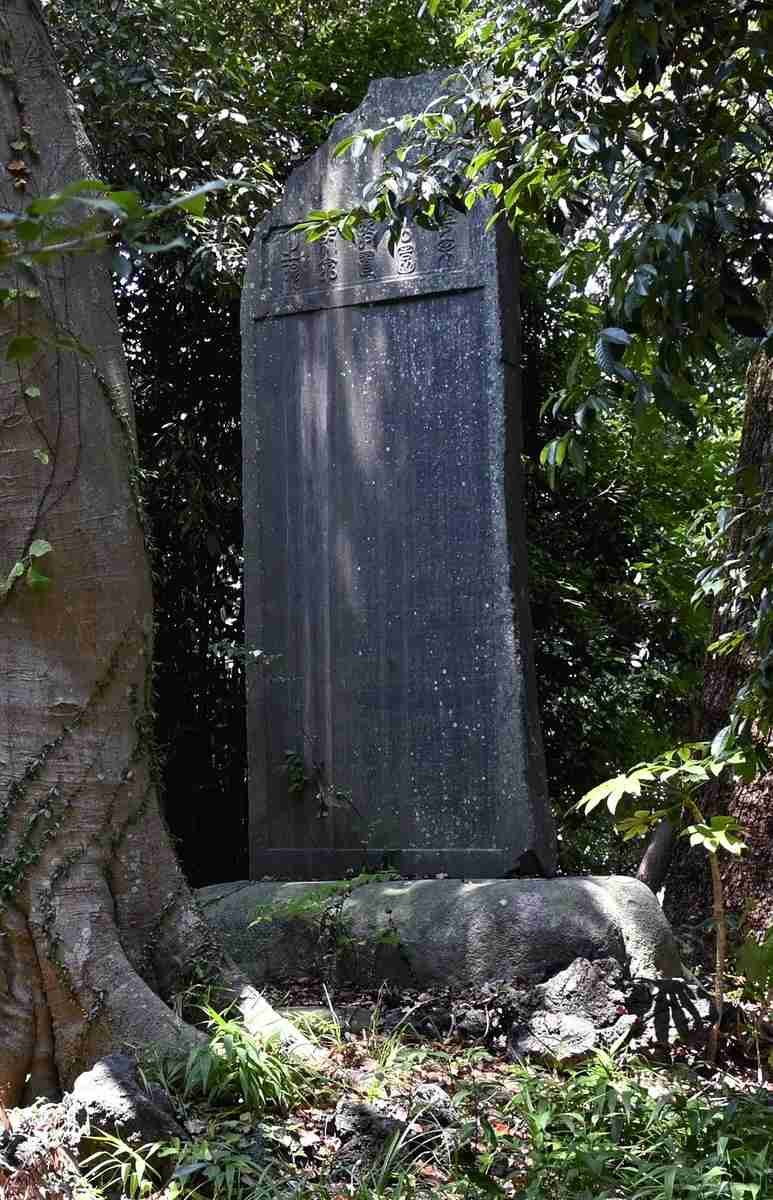
A monument that tells of the construction of the torii gate and park at Miho Shrine with donations from emigrants
A 3.1-meter-high monument stands north of Miho Shrine, near the elementary school. It was built in 1910 and commemorates the reconstruction of a torii gate and the creation of Kahyo Park, both of which were funded by donations from emigrants.
According to the history of overseas emigration from Shizuoka Prefecture, irrigation and other facilities were developed with the help of large remittances from emigrants.
The Miho district still retains some of the flavors brought back by emigrants to the United States.
Sachiko Nagasawa, 84, inherited a recipe for tomato soup from her mother, who had lived in the United States. The recipe features pork and other ingredients mixed into the stewed tomatoes. “Families with emigrants to the United States each have their version of tomato soup,” Nagasawa said.
For its 150th anniversary on Dec. 13, Shimizu Miho Daiichi Elementary School will open the Unpachi Miyagishima Bunko to parents and residents. The school also intends to share messages from alumni living in the United States.“Our town has a history that must be passed down,” Nagasawa said. “I want many people to learn about the Unpachi Miyagishima Bunko and Miho emigrants.”


Related Tags

Most Read
Popular articles in the past 24 hours
-

3,000 Accounts Posting, Spreading Content Critical of Japan on X;...
-

Milano Cortina 2026: Sakamoto Serves as Flag Bearer; Japan Earns ...
-

Milano Cortina 2026: There Were Cheers across the Country, after ...
-

A Packed Bus Plunges off a Nepal Highway, Killing 19 and Injuring...
-
Luna Sea Drummer Shinya Dies at 56; Powerful Drummer Behind ‘Desi...
-

Milano Cortina 2026: ‘Magical’ Italian Games Close wi...
-

Milano Cortina 2026: Riku-Ryu Duo Stick Together During Closing C...
-
Emperor Receives Well-Wishes from Public on His 66th Birthday
Popular articles in the past week
-

Japan PM Takaichi’s Cabinet Resigns en Masse
-

Man Infected with Measles Reportedly Dined at Restaurant in Tokyo...
-

Sanae Takaichi Elected Prime Minister of Japan; Keeps All Cabinet...
-

Japan's Govt to Submit Road Map for Growth Strategy in March, PM ...
-

Bus Carrying 40 Passengers Catches Fire on Chuo Expressway; All E...
-

U.S. Firm to Build Training Hub in Fukushima N-plant for Debris R...
-

Japan, U.S. Name 3 Inaugural Investment Projects; Reached Agreeme...
-

Riku-Ryu Pair Wins Gold Medal: Their Strong Bond Leads to Major C...
Popular articles in the past month
-
Japan PM Takaichi’s Cabinet Resigns en Masse
-

Japan Institute to Use Domestic Commercial Optical Lattice Clock ...
-

Israeli Ambassador to Japan Speaks about Japan’s Role in the Reco...
-
Man Infected with Measles Reportedly Dined at Restaurant in Tokyo...
-

Videos Plagiarized, Reposted with False Subtitles Claiming ‘Ryuky...
-

Man Infected with Measles May Have Come in Contact with Many Peop...
-

Prudential Life Insurance Plans to Fully Compensate for Damages C...
-

Woman with Measles Visited Hospital in Tokyo Multiple Times Befor...
Top Articles in Society
-

Producer Behind Girls Group XG Arrested for Cocaine Possession
-
Man Infected with Measles Reportedly Dined at Restaurant in Tokyo Station
-
Man Infected with Measles May Have Come in Contact with Many People in Tokyo, Went to Store, Restaurant Around When Symptoms Emerged
-
Woman with Measles Visited Hospital in Tokyo Multiple Times Before Being Diagnosed with Disease
-
Australian Woman Dies After Mishap on Ski Lift in Nagano Prefecture
JN ACCESS RANKING
-
Japan PM Takaichi’s Cabinet Resigns en Masse
-
Japan Institute to Use Domestic Commercial Optical Lattice Clock to Set Japan Standard Time
-
Israeli Ambassador to Japan Speaks about Japan’s Role in the Reconstruction of Gaza
-
Man Infected with Measles Reportedly Dined at Restaurant in Tokyo Station
-
Videos Plagiarized, Reposted with False Subtitles Claiming ‘Ryukyu Belongs to China’; Anti-China False Information Also Posted in Japan