
Japan Expands Roadside Stations to Serve as Disaster Response Hubs, Boosting National Resilience
15:45 JST, August 17, 2025
Interest is growing in the disaster response functions of Michi-no-Eki roadside stations, which have been developed by municipalities along Japan’s major highways.
These facilities offer large parking areas where firefighting and Self-Defense Force vehicles can gather during emergencies, making them potential bases for rescue, recovery and aid operations. To date, the Land, Infrastructure, Transport and Tourism Ministry has designated 79 locations nationwide as disaster prevention roadside stations, which proved their worth during the Noto Peninsula Earthquake in January 2024.
Roadside stations are facilities established by cities, towns and public organizations to promote regional development, provide rest and lodging, and disseminate information. Japan introduced a national registration system in 1993, and as of January this year, there are 1,230 stations across the country. To be registered, a facility must offer 24-hour restrooms and parking, as well as tourism and road information. A government subsidy program helps cover construction costs.
Serving as disaster response hub
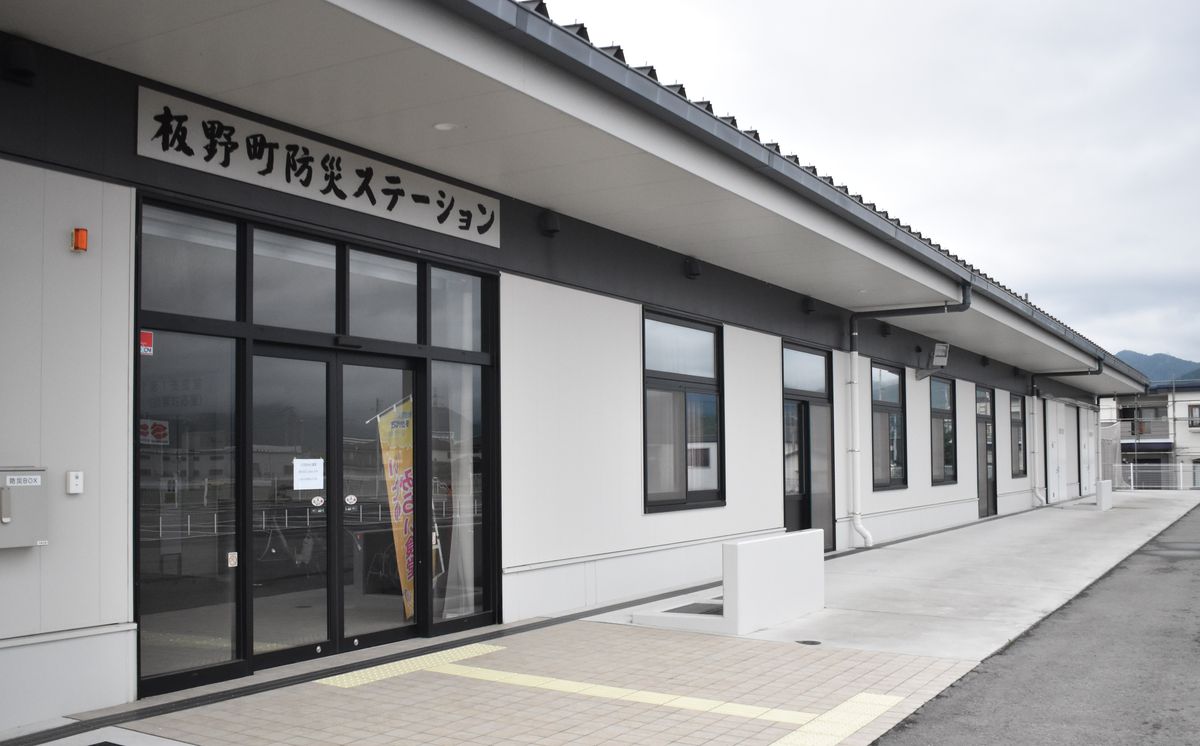
Itano disaster prevention station
One example of a disaster prevention roadside station is Itano, located in Itano, Tokushima Prefecture. It opened in April 2021 with a dual role as a disaster base. Reachable in three minutes by car from the Itano Interchange of the Takamatsu Expressway and the Aizumi Interchange of the Tokushima Expressway, Itano is also 12 kilometers inland from the Kii Channel and outside the projected tsunami inundation zone for an earthquake along the Nankai Trough.
It is equipped with facilities for disaster prevention, such as a heliport and a parking lot with a capacity for 326 cars including large sized vehicles. In the event of a Nankai Trough earthquake, it will serve as a hub for response and other disaster-related units.
A multi-purpose facility that functions as the town’s disaster response headquarters and as an evacuation center is capable of accommodating about 90 evacuees. Its storage warehouse holds 18,000 emergency meals and other supplies. Folding beds can be set up in conference spaces in the event of an evacuation. The changing rooms are equipped with washing machines and the facility is also equipped with a kitchen and a shower room.
Roadside stations first gained recognition for their disaster capabilities after the 2004 Niigata Prefecture Chuetsu Earthquake. Amid widespread power outages in Tokamachi, Niigata Prefecture, the Cross-ten roadside station kept its lights on with its own generator and served as an evacuation shelter, water-supply point and distribution hub for relief goods. During the 2011 Great East Japan Earthquake, the Tono Kazeno Oka roadside station in Tono, Iwate Prefecture, served as a base for Self-Defense Forces and firefighters.
Building on these successes, the ministry created the disaster prevention roadside station designation in 2021, which requires quake-resistant buildings, emergency power supplies and at least 2,500 square meters of parking. The ministry increased grants for stockpiles and power generation equipment as well as support for disaster drills.
Of the 39 stations selected in 2021, Noto Satoyama Airport in Wajima, Ishikawa Prefecture, and Arai roadside station in Myoko, Niigata Prefecture, served as hubs for road clearing and relief supply logistics during the Noto Peninsula Earthquake. In May, the ministry added 40 more stations — now spreading across 43 prefectures excluding Tokyo, Kanagawa, Osaka and Okinawa — to broaden coverage nationwide.
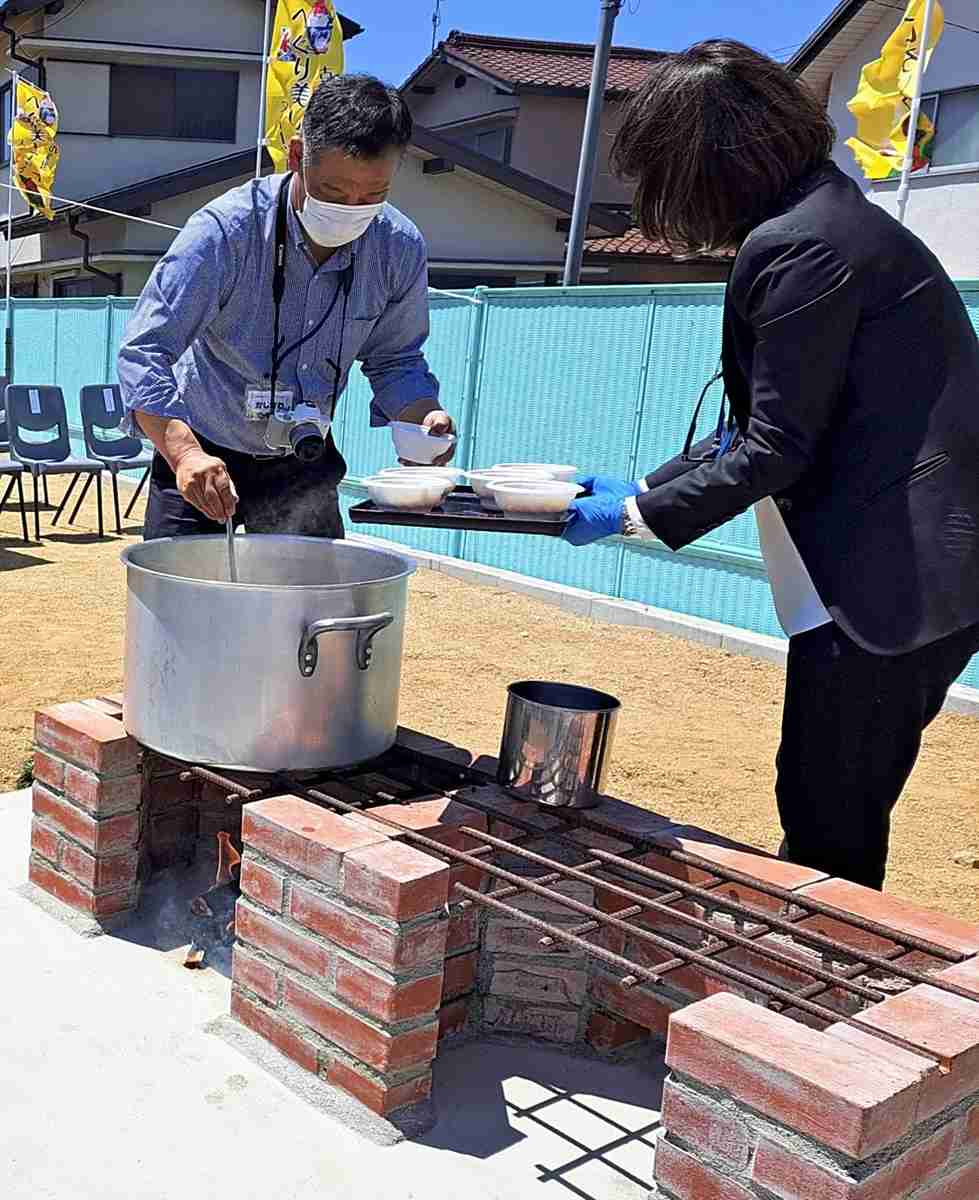
People cook on a kamado cooking bench.
According to the ministry, about 800 roadside stations, roughly two-thirds of the total, are now incorporated into municipal disaster-prevention plans as first-stage evacuation points or supply depots.
Even non-designated stations play key roles: the Yamatoji Heguri roadside station in Heguri, Nara Prefecture, though not a disaster prevention roadside station, functions as a local shelter and features a kamado cooking bench whose seats can be removed to reveal built-in stoves.
Some disaster prevention roadside stations, however, focus solely on logistics and are not intended as shelters. It is therefore important for residents to confirm in advance whether a particular station will be available to them in an emergency.


Related Tags


Most Read
Most read in the last 24 hours
-

India's Arms Indigenization Quest for Self-Reliance / Desert Dril...
-
Japan Passport Fees Going Down to ¥9,000 in July
-
26-year-old U.S. National Falls While Climbing Mt. Fuji; Accompan...
-

Japanese Side Machida Zelvia Faces Ah-Ahli in Asian Champions Lea...
-

Transfer of Defense Equipment: Increase the Number of Like-minded...
-

Charm of Meiji-Era Poet Takuboku Examined from Viewpoint of Donal...
-

Japan Eyes Trialing Dual-Use Tech Developed by Startups to Promot...
-

CARTOON OF THE DAY (April 24)
Most read in the last 7 days
-
Earthquake Hits Japan's Tohoku Region; 3-meter Tsunami Warning Is...
-

Trump Extends the Ceasefire with Iran but Keeps the Blockade
-

China, South Korea Object to Japanese PM Takaichi's Ritual Offeri...
-

India's Arms Indigenization Quest for Self-Reliance / New Delhi S...
-

Japan to Ban Use of Portable Chargers on Airplanes from April 24,...
-

¥1,000 Coins to Be Issued to Mark Anniversary of Beginning of Jap...
-

Most Serious Cyberattacks against the UK Now from Russia, Iran an...
-

New Challenges Await as Miura-Kihara Retires; Blade Maker, Ex-Coa...
Most read in the last 30 days
-
Earthquake Hits Japan's Tohoku Region; 3-meter Tsunami Warning Is...
-
Police Find Child's Shoe During Search for Missing Boy in Nantan,...
-
Body Found in Nantan, Kyoto Prefecture, During Search for 11-Year...
-
Cherry Blossoms, Rapeseed Flowers Perform Colorful ‘Duet’ in Niig...
-
Trump Extends the Ceasefire with Iran but Keeps the Blockade
-

Olympic Gold Medal-Winning Figure Skaters Riku-Ryu Announce Retir...
-

Nori Prices Surge in Japan Due to Poor Seaweed Production Amid Ri...
-
China, South Korea Object to Japanese PM Takaichi's Ritual Offeri...
Top Articles in JN Specialities
-
How to Prepare for Power Outages Caused by Natural Disasters
-
Tokyo Wards Train Volunteer Tour Guides for Locals Passionate About Their Area’s Charms
-

Tateyama Soup Curry in Chiba Challenges Its Sapporo Roots, Cafe Owner Looks to Local Area for Best Ingredients
-

Personal History Helps You Look Back, Move Forward; Editor Gives Advice to Those Writing Their Story
-
Japan May Build ‘Rescue City’ in Noto Region to Train Disaster Experts
JN ACCESS RANKING
-
Earthquake Hits Japan’s Tohoku Region; 3-meter Tsunami Warning Issued (Update 1)
-
Police Find Child’s Shoe During Search for Missing Boy in Nantan, Kyoto Prefecture
-
Body Found in Nantan, Kyoto Prefecture, During Search for 11-Year-Old Boy in Area (Update 1)
-
Cherry Blossoms, Rapeseed Flowers Perform Colorful ‘Duet’ in Niigata
-
Trump Extends the Ceasefire with Iran but Keeps the Blockade
Most read in the last 24 hours
-
India's Arms Indigenization Quest for Self-Reliance / Desert Dril...
-
Japan Passport Fees Going Down to ¥9,000 in July
-
26-year-old U.S. National Falls While Climbing Mt. Fuji; Accompan...
-
Japanese Side Machida Zelvia Faces Ah-Ahli in Asian Champions Lea...
-
Transfer of Defense Equipment: Increase the Number of Like-minded...
Most read in the last 7 days
-
Earthquake Hits Japan's Tohoku Region; 3-meter Tsunami Warning Is...
-
Trump Extends the Ceasefire with Iran but Keeps the Blockade
-
China, South Korea Object to Japanese PM Takaichi's Ritual Offeri...
-
India's Arms Indigenization Quest for Self-Reliance / New Delhi S...
-
Japan to Ban Use of Portable Chargers on Airplanes from April 24,...
Most read in the last 30 days
-
Earthquake Hits Japan's Tohoku Region; 3-meter Tsunami Warning Is...
-
Police Find Child's Shoe During Search for Missing Boy in Nantan,...
-
Body Found in Nantan, Kyoto Prefecture, During Search for 11-Year...
-
Cherry Blossoms, Rapeseed Flowers Perform Colorful ‘Duet’ in Niig...
-
Trump Extends the Ceasefire with Iran but Keeps the Blockade