
National Cybersecurity Office Chief: Suspicious Communications that Can Be Cyberattacks Now Occur ‘Once Every 13 Seconds’
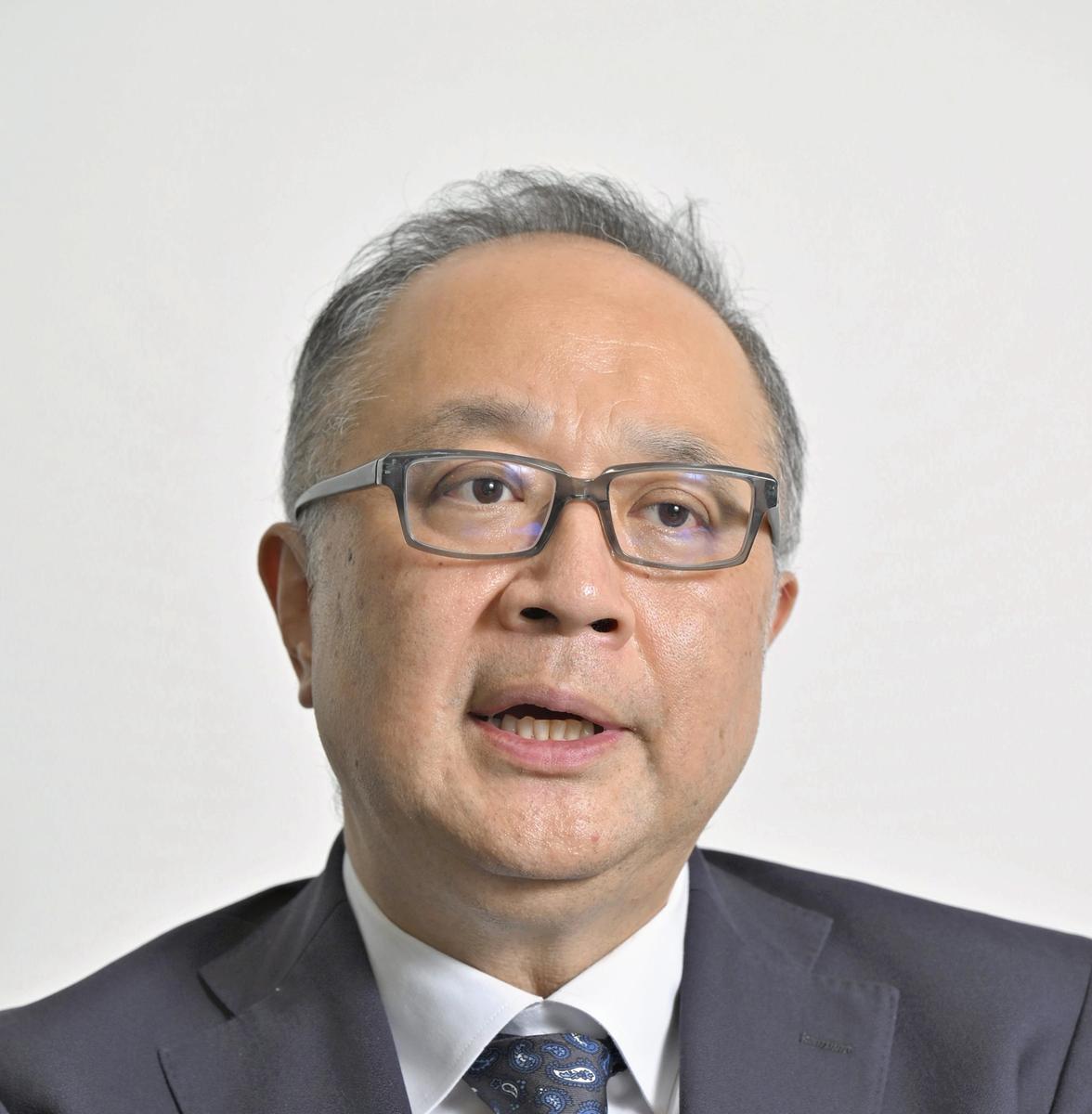
Yoichi Iida speaks in an interview in Minato Ward, Tokyo, on Monday.
1:00 JST, August 1, 2025
Suspicious communications that could be cyberattacks now occur more frequently, at a rate of “once every 13 seconds,” according to Yoichi Iida, the first head of the National Cybersecurity Office.
The cybersecurity office, which will serve as the nation’s control tower for active cyber defense, was established within the Cabinet Office on July 1.
The following is excerpted from Iida’s remarks in an interview conducted by Yomiuri Shimbun Staff Writers Masashi Yamaguchi and Kazuhiko Hori.
The Yomiuri Shimbun: The legislation related to so-called active cyber defense was enacted in May.
Yoichi Iida: Before the deliberations over the legislation, it was explained that [suspicious communications that could be cyberattacks occurred] “once every 14 seconds.” But now they take place once every 13 seconds. In cyberspace, attackers have overwhelming control and could cause [serious damage] at any time. I will fulfill my duties to ensure the safety and security of the people.
Yomiuri: To do so, strengthening public-private cooperation will be the key.
Iida: We basically share the information we have with the private sector. Government agencies can protect cyberspace only with the cooperation of the private sector. Without sharing information, cybersecurity cannot be maintained. Information designated as “secret” by foreign governments will be provided to private parties after necessary revisions. We share information in principle.
Yomiuri: Both the public and private sectors face the challenge of developing specialized human resources.
Iida: Cybersecurity measures are an investment for social credibility. It is necessary not only to provide cyber specialists with opportunities for them to play an active role, but also to appropriately compensate and promote them. We want to clarify the skills and knowledge required for each type of [public-private] cyber defense solution, while referring to the United States and other countries.
Yomiuri: How are you going to build a correspondence monitoring system to detect signs of cyberattacks?
Iida: It is necessary to process large amounts of correspondence information at a high speed. We are studying the kinds of systems that can make this possible. The location [for equipment related to a correspondence-information system] must be a place where protection is thoroughly provided.
Yomiuri: What measures are in place to hack into and neutralize servers that are the source of cyberattacks?
Iida: They are the last resort we can take to prevent cyberattacks. We will create a manual detailing the process from [when a] policy decision at the National Security Council [is made] to the implementation of measures. It is also necessary to conduct drills to check if we can proceed with the measures according to the guidelines.
Yomiuri: How are you going to respond to foreign interference in elections through social media?
Iida: This is a pressing issue facing not only Japan but also other countries as one of the threats in cyberspace. It is a challenge to democracy. Although the issue is not directly our responsibility, the government must consider how to respond.
Yoichi Iida / Head of National Cybersecurity Office
Iida, 59, graduated from the University of Tokyo’s School of Engineering and joined the International Trade and Industry Ministry — the predecessor of the Economy, Trade and Industry Ministry — in 1989. He served as a councillor at the National Security Secretariat and a deputy chief executive of the National Center of Incident Readiness and Strategy for Cybersecurity.






Most Read
Popular articles in the past 24 hours
-
Japanese High School Student Aims to Share Kaiten History Through...
-

Milano Cortina 2026: Japan Sees Leap in Olympic Performance Throu...
-
PM Takaichi Spells out Plans to Advance Bold Policy Shifts in Spe...
-
Chronic Issues Erode Thailand’s Economy as Political Confusion Pe...
-

Milano Cortina 2026: Japan's Satoshi Furuno Places 4th in Men's S...
-
Tottori: 95-Year-Old Japanese Descendent from Philippines Visits ...
-

Milano Cortina 2026: Speed Skater Takagi Finishes 6th in the 1,50...
-
Osaka: 40 Ninjas Display Shuriken Throwing Skills at Japan Champi...
Popular articles in the past week
-

Japan PM Takaichi’s Cabinet Resigns en Masse
-

Man Infected with Measles Reportedly Dined at Restaurant in Tokyo...
-

Sanae Takaichi Elected Prime Minister of Japan; Keeps All Cabinet...
-
Japan's Govt to Submit Road Map for Growth Strategy in March, PM ...
-

Bus Carrying 40 Passengers Catches Fire on Chuo Expressway; All E...
-

Milano Cortina 2026: Figure Skaters Riku Miura, Ryuichi Kihara Pa...
-

Japan, U.S. Name 3 Inaugural Investment Projects; Reached Agreeme...
-

U.S. Firm to Build Training Hub in Fukushima N-plant for Debris R...
Popular articles in the past month
-
Japan PM Takaichi’s Cabinet Resigns en Masse
-

Japan Institute to Use Domestic Commercial Optical Lattice Clock ...
-

Israeli Ambassador to Japan Speaks about Japan’s Role in the Reco...
-
Man Infected with Measles Reportedly Dined at Restaurant in Tokyo...
-

Videos Plagiarized, Reposted with False Subtitles Claiming ‘Ryuky...
-

Man Infected with Measles May Have Come in Contact with Many Peop...
-

Prudential Life Insurance Plans to Fully Compensate for Damages C...
-
Woman with Measles Visited Hospital in Tokyo Multiple Times Befor...
Top Articles in Politics
-
Japan PM Takaichi’s Cabinet Resigns en Masse
-
Sanae Takaichi Elected Prime Minister of Japan; Keeps All Cabinet Appointees from Previous Term
-
Japan’s Govt to Submit Road Map for Growth Strategy in March, PM Takaichi to Announce in Upcoming Policy Speech
-

LDP Wins Historic Landslide Victory
-

LDP Wins Landslide Victory, Secures Single-party Majority; Ruling Coalition with JIP Poised to Secure Over 300 seats (UPDATE 1)
JN ACCESS RANKING
-
Japan PM Takaichi’s Cabinet Resigns en Masse
-
Japan Institute to Use Domestic Commercial Optical Lattice Clock to Set Japan Standard Time
-
Israeli Ambassador to Japan Speaks about Japan’s Role in the Reconstruction of Gaza
-
Man Infected with Measles Reportedly Dined at Restaurant in Tokyo Station
-
Videos Plagiarized, Reposted with False Subtitles Claiming ‘Ryukyu Belongs to China’; Anti-China False Information Also Posted in Japan