
Glass Eel Populations Rising in Hokkaido Rivers, Researchers Say; Shifting Ocean Currents Thought to be Major Cause
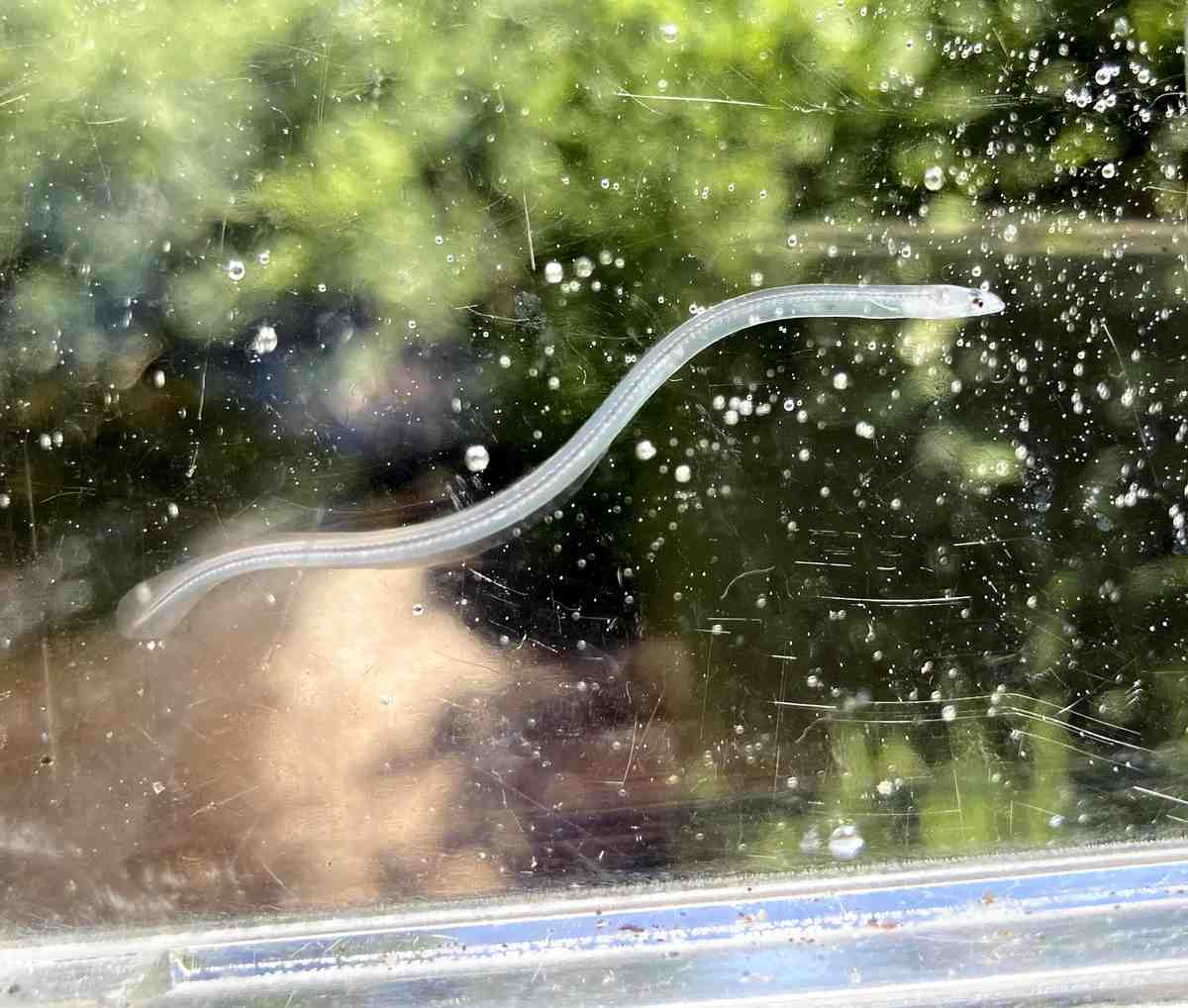
A glass eel captured in Hokkaido
14:22 JST, February 12, 2025
The number of glass eels, or juvenile Japanese eels, in rivers in Hokkaido appears to have increased in recent years, according to a team of researchers at the Japan Agency for Marine-Earth Science and Technology (JAMSTEC), the University of Tokyo and other institutions.
The team said in its announcement that the increase seems to be due to factors including a northward shift in the Kuroshio Current. Experts point to the need to continuously conduct surveys in Hokkaido and other areas to manage the eels as a natural resource.
Japanese eels are known to spawn and hatch near the Mariana Trench in the Pacific Ocean before riding the Kuroshio Current and other ocean currents to the Japanese coastline, where they migrate upstream into rivers in which they grow to maturity.
Aomori Prefecture was once considered the northernmost area whose rivers glass eels would migrate into. However, the team confirmed they have entered rivers in the Iburi region of south-central Hokkaido.
JAMSTEC has been building a model of ocean currents around Japan based on observation data, such as sea water temperatures and salinity. While the Kuroshio Current has started reaching farther north in recent years, the cold Oyashio Current is weakening.
Using this ocean current model, the team analyzed the areas glass eels have reached. The comparison between the situation in 1994-2003 and that in 2014-2023 showed that the probability of glass eels making it to Hokkaido’s coastal areas has increased about 20-fold. The team also found that the strengthened Tsugaru Warm Current has made it more difficult for glass eels to reach the coastal areas around the Tsugaru Straits that separate Hokkaido and Honshu.
“Glass eels are an important fishery resource,” said Kentaro Morita, a professor of fish ecology at the University of Tokyo. “The fact that they are becoming more likely to reach Hokkaido might impact management of this resource in the future, such as where and in what quantities they should be caught.”
“It is interesting that glass eels were actually caught [in Hokkaido] and the phenomenon is supported by the ocean current model,” said Kazuki Yokouchi, head of the fisheries ecosystem group at the Japan Fisheries Research and Education Agency. “To manage these fisheries resources, it will be necessary to continue research on whether eels that have arrived [in Hokkaido] will grow properly.”




Most Read
Popular articles in the past 24 hours
-

U.N. Plans to Set Safety Regulation Standards on Automated Drivin...
-

Yamagami Appeals Against Life Sentence for Murdering Abe; Defense...
-
Heavy Snow Forecast to Hit Northern Japan; Pacific Side May See S...
-

Japanese, Chinese Automakers Roll Out Electric Kei Car Models as ...
-

Poképark KANTO Opens, Welcomes Fans from Home and Abroad
-

Masataka Yoshida Named Final Samurai Japan Selection for March Wo...
-

U.S., Japan, Europe to Develop Critical Minerals Supply Action Pl...
-

Japan’s Nikkei Stock Average Falls as Tech Shares Drag; Astellas ...
Popular articles in the past week
-
Australian Woman Dies After Mishap on Ski Lift in Nagano Prefectu...
-

Man Infected with Measles May Have Come in Contact with Many Peop...
-
Foreign Snowboarder in Serious Condition After Hanging in Midair ...
-
Chinese Embassy in Japan Reiterates Call for Chinese People to Re...
-
Narita Airport, Startup in Japan Demonstrate Machine to Compress ...
-
Toyota Motor Group Firm to Sell Clean Energy Greenhouses for Stra...
-
Beer Yeast Helps Save Labor, Water Use in Growing Rice; Govt Hope...
-
Japan Tourism Agency Calls for Strengthening Measures Against Ove...
Popular articles in the past month
-
Univ. in Japan, Tokyo-Based Startup to Develop Satellite for Disa...
-
JAL, ANA Cancel Flights During 3-day Holiday Weekend due to Blizz...
-

Japan Institute to Use Domestic Commercial Optical Lattice Clock ...
-
China Confirmed to Be Operating Drilling Vessel Near Japan-China ...
-

China Eyes Rare Earth Foothold in Malaysia to Maintain Dominance,...
-
M6.2 Earthquake Hits Japan's Tottori, Shimane Prefectures; No Tsu...
-
Japan, Qatar Ministers Agree on Need for Stable Energy Supplies; ...
-
Australian Woman Dies After Mishap on Ski Lift in Nagano Prefectu...
Top Articles in Science & Nature
-
Univ. in Japan, Tokyo-Based Startup to Develop Satellite for Disaster Prevention Measures, Bears
-
Japan Institute to Use Domestic Commercial Optical Lattice Clock to Set Japan Standard Time
-
Space Mission Demonstrates Importance of International Cooperation, Astronaut Kimiya Yui Says
-
Japan to Face Shortfall of 3.39 Million Workers in AI, Robotics in 2040; Clerical Workers Seen to Be in Surplus
-
Japanese Astronaut Suwa to Stay Aboard ISS Until Around 2027; Japan’s 8th Astronaut to Have Long-Term Stay Aboard ISS
JN ACCESS RANKING
-
Univ. in Japan, Tokyo-Based Startup to Develop Satellite for Disaster Prevention Measures, Bears
-
JAL, ANA Cancel Flights During 3-day Holiday Weekend due to Blizzard
-
Japan Institute to Use Domestic Commercial Optical Lattice Clock to Set Japan Standard Time
-
China Eyes Rare Earth Foothold in Malaysia to Maintain Dominance, Counter Japan, U.S.
-
Japan, Qatar Ministers Agree on Need for Stable Energy Supplies; Motegi, Qatari Prime Minister Al-Thani Affirm Commitment to Cooperation