
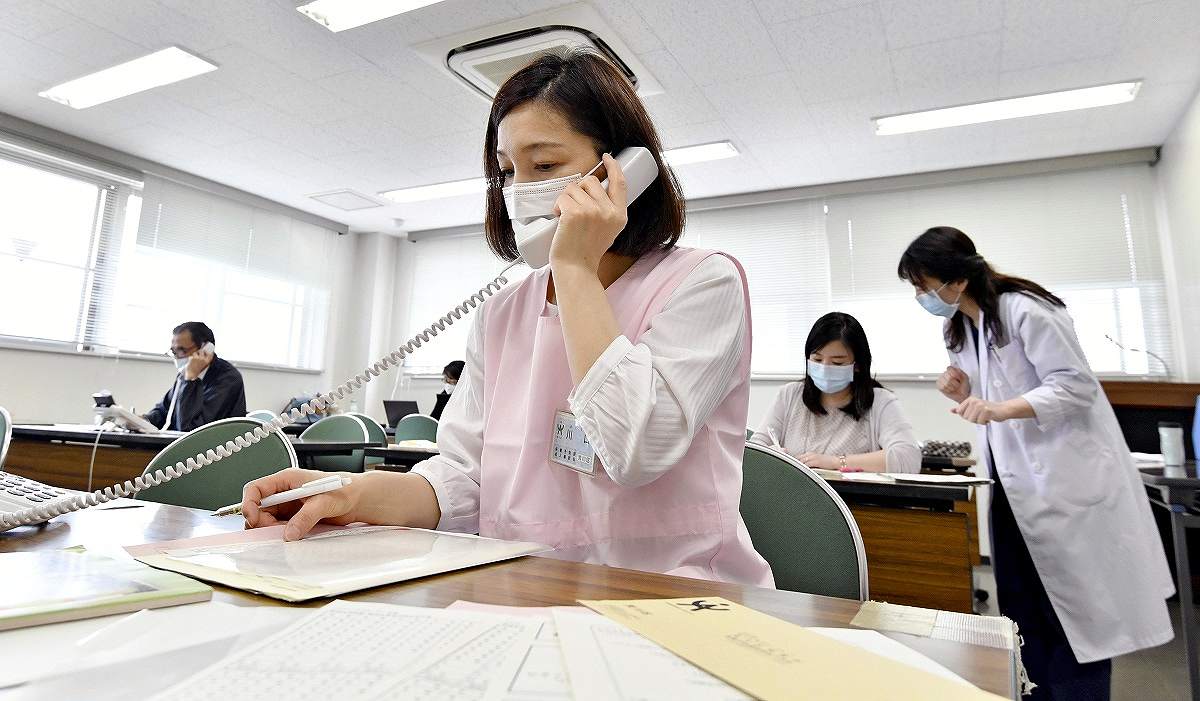
A public health nurse and others work at the office of the Arakawa ward government in Tokyo in May.
16:54 JST, December 9, 2020
The government plans to register 3,000 potential nurses who are qualified but not working for reasons such as pregnancy or childcare leave with its human resource bank by the end of March next year amid the spread of the coronavirus.
There are plans to send them to areas facing a potential shortage of health care workers due to more people becoming infected with the virus.
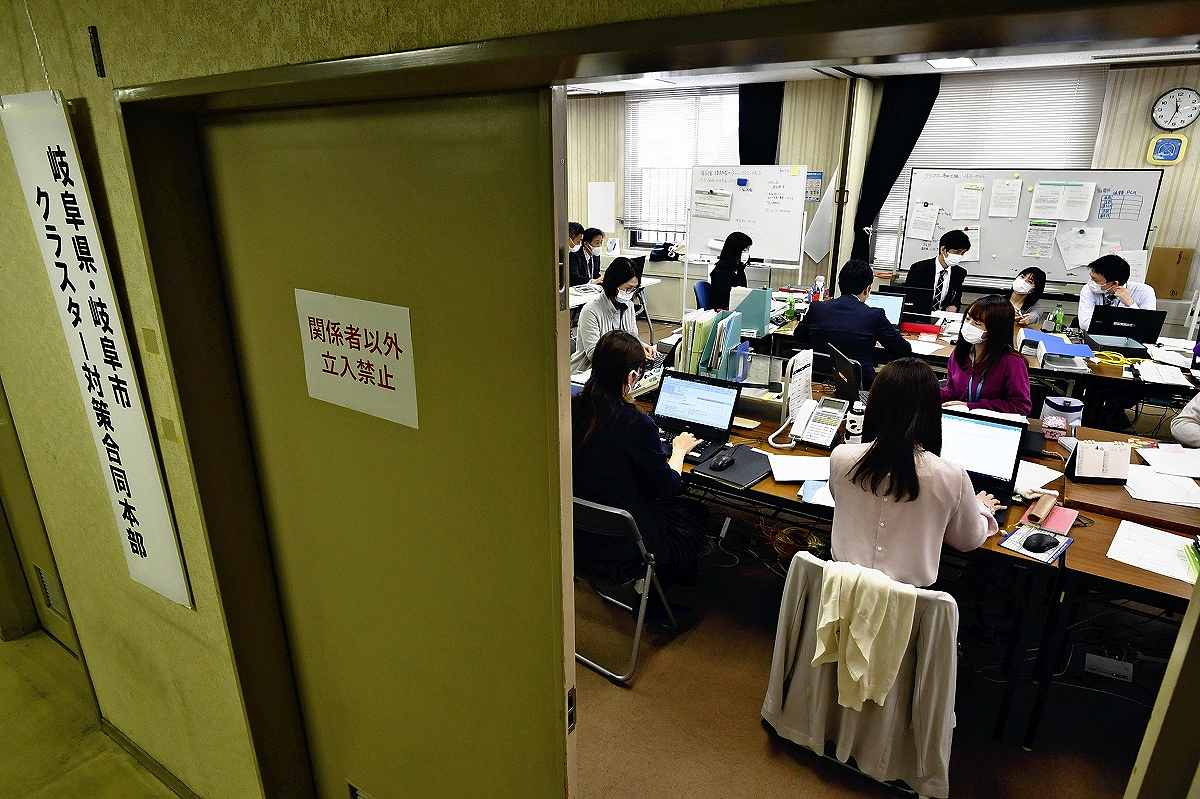
A public health nurse and others work at the Gifu city public health center in Gifu in April.
This summer, the government established the human resource bank in response to a shortage of workers at public health centers due to the spread of infections in spring. Currently, about 1,200 people that include public health center officials, nurses and doctors are registered.
The government aims to speed up the registration with the help of medical organizations and academic societies as there is no sign of the pandemic subsiding.
Under the human resource bank scheme, the government asks prefectures, government-designated and other municipalities in need of manpower if they need health care workers sent from the bank. The government will then do so based on information such as the workers’ qualifications and experience, as well as their availability in terms of location.
Prefectural and other municipal governments will directly communicate with the workers and decide on the period of the contract. Expenses such as daily pay and transportation fees will be covered mostly by the pandemic-related emergency comprehensive support grant allocated by the national government.
Eight people have already been sent to Hokkaido, where infections are rising again, and three to Nagoya as of mid-November, according to the Health, Labor and Welfare Ministry. The ministry plans to dispatch more in the future.
In regions with limited medical resources, a labor shortage may lead to an explosive spread of the virus as the medical care system can instantly become strained following the frequent occurrence of clusters, for example.
“The government must join regional efforts to help alleviate the situation and actively manage human resources,” said a senior government official.




Most Read
Most read in the last 24 hours
-

India's Arms Indigenization Quest for Self-Reliance / Desert Dril...
-
Japan Passport Fees Going Down to ¥9,000 in July
-

26-year-old U.S. National Falls While Climbing Mt. Fuji; Accompan...
-

Japanese Side Machida Zelvia Faces Ah-Ahli in Asian Champions Lea...
-

Transfer of Defense Equipment: Increase the Number of Like-minded...
-

Charm of Meiji-Era Poet Takuboku Examined from Viewpoint of Donal...
-
Japan Eyes Trialing Dual-Use Tech Developed by Startups to Promot...
-

CARTOON OF THE DAY (April 24)
Most read in the last 7 days
-
Earthquake Hits Japan's Tohoku Region; 3-meter Tsunami Warning Is...
-

Trump Extends the Ceasefire with Iran but Keeps the Blockade
-
China, South Korea Object to Japanese PM Takaichi's Ritual Offeri...
-

India's Arms Indigenization Quest for Self-Reliance / New Delhi S...
-
Japan to Ban Use of Portable Chargers on Airplanes from April 24,...
-

¥1,000 Coins to Be Issued to Mark Anniversary of Beginning of Jap...
-

Most Serious Cyberattacks against the UK Now from Russia, Iran an...
-

New Challenges Await as Miura-Kihara Retires; Blade Maker, Ex-Coa...
Most read in the last 30 days
-
Earthquake Hits Japan's Tohoku Region; 3-meter Tsunami Warning Is...
-
Police Find Child's Shoe During Search for Missing Boy in Nantan,...
-
Body Found in Nantan, Kyoto Prefecture, During Search for 11-Year...
-
Cherry Blossoms, Rapeseed Flowers Perform Colorful ‘Duet’ in Niig...
-
Trump Extends the Ceasefire with Iran but Keeps the Blockade
-

Olympic Gold Medal-Winning Figure Skaters Riku-Ryu Announce Retir...
-

Nori Prices Surge in Japan Due to Poor Seaweed Production Amid Ri...
-
China, South Korea Object to Japanese PM Takaichi's Ritual Offeri...
Top Articles in Politics
-
India’s Arms Indigenization Quest for Self-Reliance / New Delhi Sticks to Its ‘All-Alignment’ Guns Even after Iran Warship Attack
-
Japan Aims to Enhance Deterrence, Defense Industry by Allowing Exports of Weapons
-
Former Japan PM Murayama’s Farewell Ceremony Held; Former Deputy PM Kono Vows to ‘Carry on Path Toward Peace’
-

Ritsumeikan Asia Pacific University Stripped of Certification for Simplified Visa Procedures Due to Document Failure
-

Japan’s PM Takaichi Seeks to Advance Policies Bearing Her Own ‘Color,’ Eyes Amending Constitution, Building Strong Economy
JN ACCESS RANKING
-
Earthquake Hits Japan’s Tohoku Region; 3-meter Tsunami Warning Issued (Update 1)
-
Police Find Child’s Shoe During Search for Missing Boy in Nantan, Kyoto Prefecture
-
Body Found in Nantan, Kyoto Prefecture, During Search for 11-Year-Old Boy in Area (Update 1)
-
Cherry Blossoms, Rapeseed Flowers Perform Colorful ‘Duet’ in Niigata
-
Trump Extends the Ceasefire with Iran but Keeps the Blockade
Most read in the last 24 hours
-
India's Arms Indigenization Quest for Self-Reliance / Desert Dril...
-
Japan Passport Fees Going Down to ¥9,000 in July
-
26-year-old U.S. National Falls While Climbing Mt. Fuji; Accompan...
-
Japanese Side Machida Zelvia Faces Ah-Ahli in Asian Champions Lea...
-
Transfer of Defense Equipment: Increase the Number of Like-minded...
Most read in the last 7 days
-
Earthquake Hits Japan's Tohoku Region; 3-meter Tsunami Warning Is...
-
Trump Extends the Ceasefire with Iran but Keeps the Blockade
-
China, South Korea Object to Japanese PM Takaichi's Ritual Offeri...
-
India's Arms Indigenization Quest for Self-Reliance / New Delhi S...
-
Japan to Ban Use of Portable Chargers on Airplanes from April 24,...
Most read in the last 30 days
-
Earthquake Hits Japan's Tohoku Region; 3-meter Tsunami Warning Is...
-
Police Find Child's Shoe During Search for Missing Boy in Nantan,...
-
Body Found in Nantan, Kyoto Prefecture, During Search for 11-Year...
-
Cherry Blossoms, Rapeseed Flowers Perform Colorful ‘Duet’ in Niig...
-
Trump Extends the Ceasefire with Iran but Keeps the Blockade