
Okinawa 50 years since return: National political affairs / Hatoyama’s failure to fulfill campaign pledge dealt heavy blow
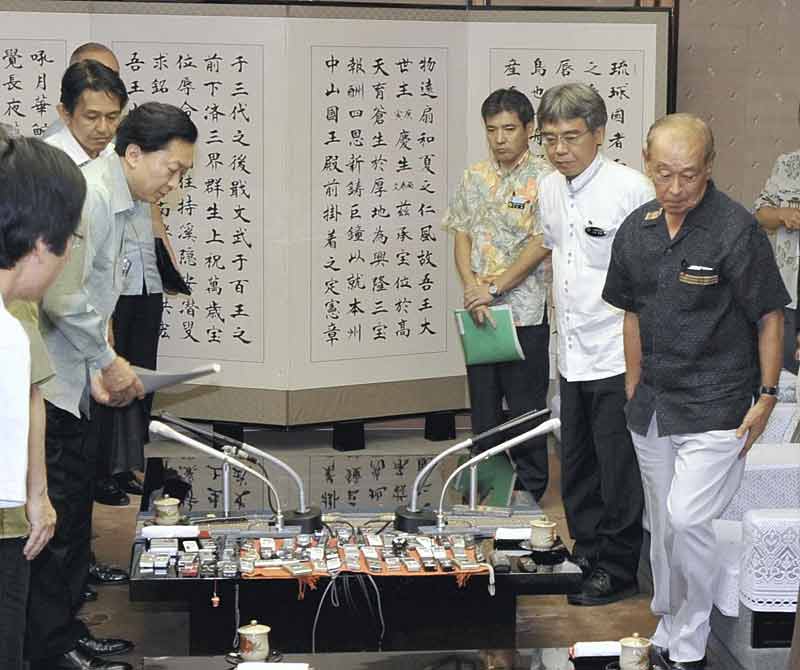
Then Okinawa Gov. Hirokazu Nakaima, right, leaves after Prime Minister Yukio Hatoyama told him of the government’s return to the Henoko agreement on May 23, 2010, at the Okinawa prefectural government office in Naha.
13:28 JST, March 26, 2022
This year marks the 50th anniversary of Okinawa’s return to Japan. This is the fifth installment of a series that looks at the politics surrounding Okinawa’s subsequent development and issues relating to the presence of U.S. bases.
At the Prime Minister’s Office on May 20, 2010, a discussion on relocating a U.S. base in Okinawa became heated.
“What are you going to do if you don’t make a decision today?” Toshimi Kitazawa, the defense minister at the time, recalled shouting at Prime Minister Yukio Hatoyama and other members of the Cabinet. “The Japan-U.S. relationship is spinning out of control.”
The U.S. base in question was the U.S. Marine Corps’ Air Station Futenma in Ginowan.
Kitazawa was irritated by the indecisive attitude of Hatoyama and the rest of the Democratic Party of Japan-led administration.
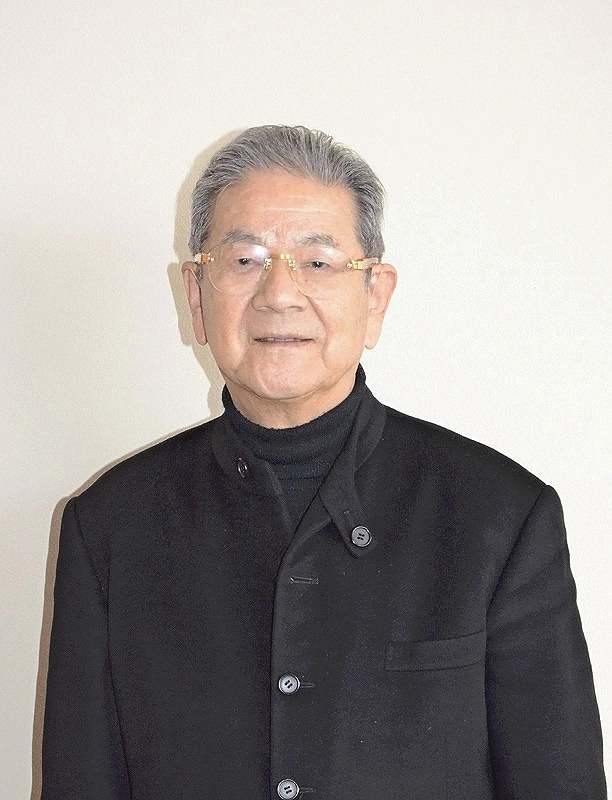
Toshimi Kitazawa
In his diary entry from that day, he wrote: “At this stage, they are still unmotivated to reach an agreement with the United States. At the end of May, what will they do?”
The end of May was Hatoyama’s self-imposed deadline to settle the Futenma relocation issue.
This deadline has its roots in Hatoyama’s remarks as party leader at a rally in Okinawa in July 2009, before the general election the DPJ won in a landslide to unseat the Liberal Democratic Party. He said then that if he became prime minister, he would relocate the Futenma facility “at least outside the prefecture.”
That meant the 2006 plan agreed upon by Japan and the United States to relocate the base to the Henoko district of Nago would then need to be reviewed.
Seiji Maehara, in charge of the government’s pledges in the field of security policy as a member of the DPJ leadership, was troubled: “After our leader pledges that, we take over the government. But this issue is likely to be prolonged.”
Maehara’s concerns were right on target. Hatoyama became prime minister and hurried to select a relocation site for the Futenma base, but it proved difficult to find a place because most of the candidate sites had already been considered and rejected.
When U.S. President Barack Obama visited Japan in November 2009, Hatoyama said, “Trust me,” though he had no firm prospects on the relocation issue.
Kitazawa thought that the Hatoyama Cabinet should return to the already agreed upon Henoko plan as soon as possible, considering that a promise between nations is significant and that trust will be damaged if it is broken.
At the end of 2009, however, Hatoyama, mistrustful of the foreign and defense ministries as they placed great importance on the Japan-U.S. agreement, entrusted Chief Cabinet Secretary Hirofumi Hirano with the task of dealing with the issue.
Hirano drew up blueprints of potential sites for airfields in the chief cabinet secretary’s office at the Prime Minister’s Office. Hirano took into account about 40 candidate sites, including Tokunoshima island in Kagoshima Prefecture. At the end, none of the candidate sites were selected.
On May 23, 2010, Hatoyama flew to Okinawa to inform Gov. Hirokazu Nakaima of the “heartbreaking decision” to return to the Henoko plan.
Recalling that moment, Nakaima, who had hopes for the Futenma base’ relocation out of the prefecture, said, “All the people of Okinawa felt anger, including those of us who felt we had almost no choice but to accept the Henoko plan.”
It was more than eight months since the Hatoyama administration was launched. Hatoyama’s pledge to the people of Okinawa to move the U.S. base “at least outside the prefecture” ended up being empty words.
The cost of not fulfilling the pledge was heavy. The Hatoyama Cabinet ended and the distrust of the central government among the people of Okinawa grew after they had been struck this blow by the Hatoyama administration’s policy change. That sparked a movement against the Henoko relocation, which further deepened divisions within the prefecture.







Most Read
Popular articles in the past 24 hours
-

Milano Cortina 2026: Kaori Sakamoto Wins Silver, Ami Nakai Takes ...
-

Anonymous Individual Donates Gold Bars Worth ¥566 Mil. to Osaka M...
-
Approval of Takaichi Cabinet Stands at 73%; Yomiuri Survey Finds ...
-

New Japanese Animated Film ‘A New Dawn’ Applauded at Berlin Inter...
-

Ex-ROK President Yoon Gets Life Sentence: Declaration of Martial ...
-
Early-Blooming Cherry Blossoms Adorn Former Samurai Residences in...
-

CARTOON OF THE DAY (February 20)
-

Milano Cortina 2026: Sakamoto’s Final Olympic Skate Ends in...
Popular articles in the past week
-

Japan PM Takaichi’s Cabinet Resigns en Masse
-

Man Infected with Measles Reportedly Dined at Restaurant in Tokyo...
-

Videos Plagiarized, Reposted with False Subtitles Claiming ‘Ryuky...
-

Sanae Takaichi Elected 105th Prime Minister of Japan; Keeps All C...
-

Japan's Govt to Submit Road Map for Growth Strategy in March, PM ...
-

Milano Cortina 2026: Figure Skaters Riku Miura, Ryuichi Kihara Pa...
-

Bus Carrying 40 Passengers Catches Fire on Chuo Expressway; All E...
-

Tokyo’s New Record-Breaking Fountain Named ‘Tokyo Aqua Symphony’
Popular articles in the past month
-
Japan PM Takaichi’s Cabinet Resigns en Masse
-

Japan Institute to Use Domestic Commercial Optical Lattice Clock ...
-

Israeli Ambassador to Japan Speaks about Japan’s Role in the Reco...
-
Man Infected with Measles Reportedly Dined at Restaurant in Tokyo...
-

Man Infected with Measles May Have Come in Contact with Many Peop...
-
Videos Plagiarized, Reposted with False Subtitles Claiming ‘Ryuky...
-

Prudential Life Insurance Plans to Fully Compensate for Damages C...
-

Woman with Measles Visited Hospital in Tokyo Multiple Times Befor...
Top Articles in Society
-
Man Infected with Measles Reportedly Dined at Restaurant in Tokyo Station
-
Man Infected with Measles May Have Come in Contact with Many People in Tokyo, Went to Store, Restaurant Around When Symptoms Emerged
-
Woman with Measles Visited Hospital in Tokyo Multiple Times Before Being Diagnosed with Disease
-
Australian Woman Dies After Mishap on Ski Lift in Nagano Prefecture
-
Foreign Snowboarder in Serious Condition After Hanging in Midair from Chairlift in Nagano Prefecture
JN ACCESS RANKING
-
Japan PM Takaichi’s Cabinet Resigns en Masse
-
Japan Institute to Use Domestic Commercial Optical Lattice Clock to Set Japan Standard Time
-
Israeli Ambassador to Japan Speaks about Japan’s Role in the Reconstruction of Gaza
-
Man Infected with Measles Reportedly Dined at Restaurant in Tokyo Station
-
Man Infected with Measles May Have Come in Contact with Many People in Tokyo, Went to Store, Restaurant Around When Symptoms Emerged