
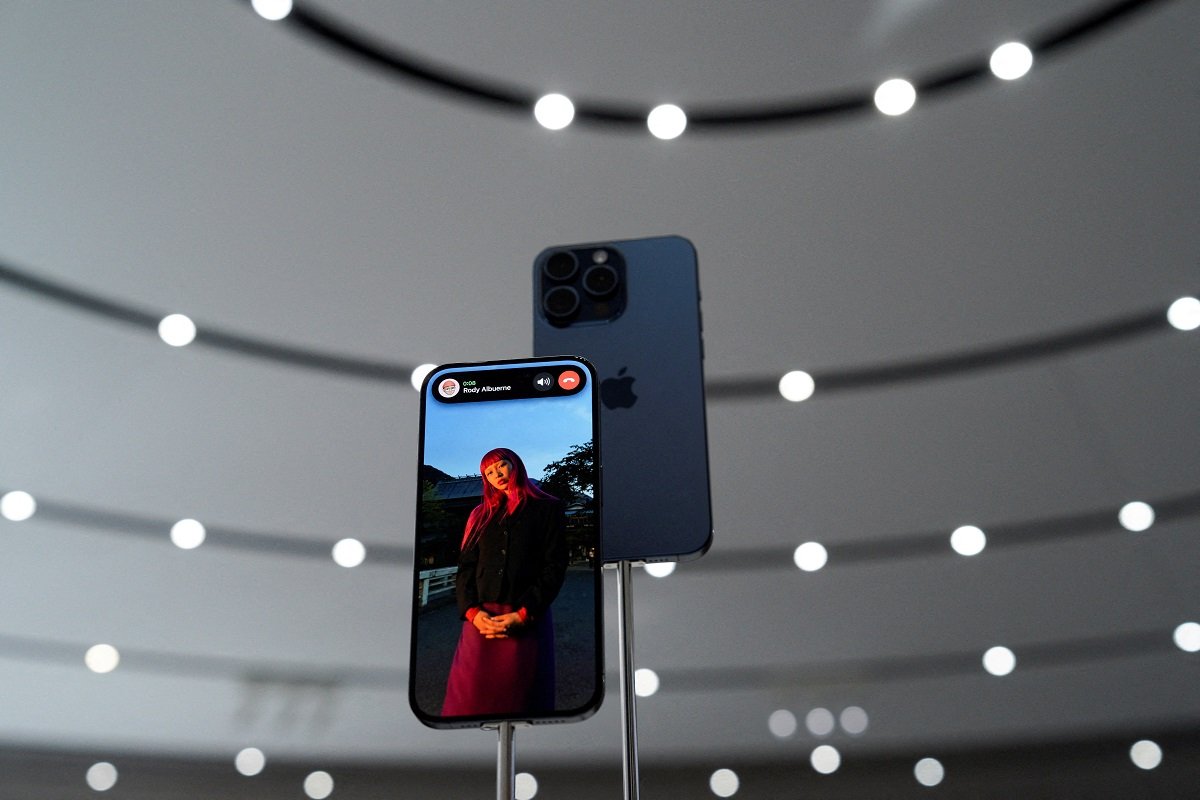
The iPhone 15 Pro is presented during the ‘Wonderlust’ event at the company’s headquarters in Cupertino, California, U.S. September 12, 2023.
11:48 JST, September 13, 2023
Unlike other companies that are attempting significant transformations with artificial intelligence, Apple AAPL.O is using the emerging technology to improve basic functions in its new gadgets.
Without using the words “artificial intelligence” to describe the emerging technology, Apple showcased a new line of iPhones and a new watch that included improved semiconductor designs that power the new AI features. The features largely improve basic functions like taking a call or snapping better images.
Artificial intelligence didn’t come up at its June developer conference either but has for months been quietly reshaping Apple’s core software products behind the scenes.
In contrast, Microsoft MSFT.O and Alphabet’s GOOGL.O Google set ambitious goals for the level of transformation with their AI efforts. Industry leaders have warned about the potential harms of the unchecked development of new tools such as generative AI.
Apple built the Series 9 Watch with a new chip that includes improved data crunching capabilities, notably adding a four-core “Neural Engine” that can process machine learning tasks up to twice as quickly. The Neural Engine is what Apple calls the building blocks for its chips that accelerate AI functions.
The AI components of the watch chip make Siri, Apple’s voice assistant, 25% more accurate.
But including the machine learning chip components also enabled Apple to launch a new way to interact with the device: people can “double tap” by finger-pinching with their watch hand to do things like answer or end phone calls, pause music, or launch other information like the weather.
The idea is to give people a way to control the Apple Watch when their non-watch hand is busy holding a cup of coffee or walking a dog. The feature works by using the new chip and machine learning to detect subtle movements and changes in blood flow when users tap their fingers together.
The iPhone maker also showed off improved image capture for its lineup of phones. The company has long offered a “portrait mode” that can blur the backgrounds using computing power to simulate a large camera lens. But users had to remember to turn the feature on. Now, the camera automatically recognizes when a person is in the frame and gathers the data needed to blur the background later.
Apple is far from the only smartphone maker to add AI to its hardware. Google’s Pixel phones, for example, allow users to erase unwanted people or objects from images.








Most Read
Popular articles in the past 24 hours
-
BOJ Keeping Eye on Economy and Takaichi's ‘Proactive Fiscal Polic...
-

Tokyo Measles Patient Traveled to Fukuoka Aboard JAL Planes; Susp...
-

Govt to Set Working-Level Meeting Group for Refundable Tax Credit...
-

University of Tsukuba Hospital to Introduce Working Dog Next Year...
-

Party Representatives’ Questions in Diet: Takaichi Says Consumpti...
-

Pokémon Celebrates 30 Years with Japanese Pro Baseball Collab
-

Milano Cortina 2026: News in Pictures / Feats of Japanese Athlete...
-

Nikkei Crosses 59,000 for First Time on Software Rally; Gains Shr...
Popular articles in the past week
-

Producer Behind Pop Group XG Arrested for Cocaine Possession
-

iPS Treatments Pass Key Milestone, but Broader Applications Far f...
-

Tokyo Skytree's Elevator Stops, Trapping 20 People; All Rescued (...
-
Milano Cortina 2026: Japanese Gold Medalist Figure Skater Miura S...
-

Nepal Bus Crash Kills 19 People, Injures 25 Including One Japanes...
-

Japan’s Major Real Estate Firms Expanding Overseas Businesses to ...
-

Baby Monkey Punch Captures Hearts at Chiba Pref. Zoo, on Social M...
-

Milano Cortina 2026: Japanese Figure Skater Kaori Sakamoto’...
Popular articles in the past month
-
Producer Behind Pop Group XG Arrested for Cocaine Possession
-

Japan PM Takaichi’s Cabinet Resigns en Masse
-

Japan Institute to Use Domestic Commercial Optical Lattice Clock ...
-

Man Infected with Measles Reportedly Dined at Restaurant in Tokyo...
-

Israeli Ambassador to Japan Speaks about Japan’s Role in the Reco...
-

Videos Plagiarized, Reposted with False Subtitles Claiming ‘Ryuky...
-

Man Infected with Measles May Have Come in Contact with Many Peop...
-

Prudential Life Insurance Plans to Fully Compensate for Damages C...
Top Articles in News Services
-

Survey Shows False Election Info Perceived as True
-

Hong Kong Ex-Publisher Jimmy Lai’s Sentence Raises International Outcry as China Defends It
-
Japan’s Nikkei Stock Average Touches 58,000 as Yen, Jgbs Rally on Election Fallout (UPDATE 1)
-
Japan’s Nikkei Stock Average Falls as US-Iran Tensions Unsettle Investors (UPDATE 1)
-

Trump Names Former Federal Reserve Governor Warsh as the Next Fed Chair, Replacing Powell
JN ACCESS RANKING
-
Producer Behind Pop Group XG Arrested for Cocaine Possession
-
Japan PM Takaichi’s Cabinet Resigns en Masse
-
Man Infected with Measles Reportedly Dined at Restaurant in Tokyo Station
-
Israeli Ambassador to Japan Speaks about Japan’s Role in the Reconstruction of Gaza
-
Videos Plagiarized, Reposted with False Subtitles Claiming ‘Ryukyu Belongs to China’; Anti-China False Information Also Posted in Japan