
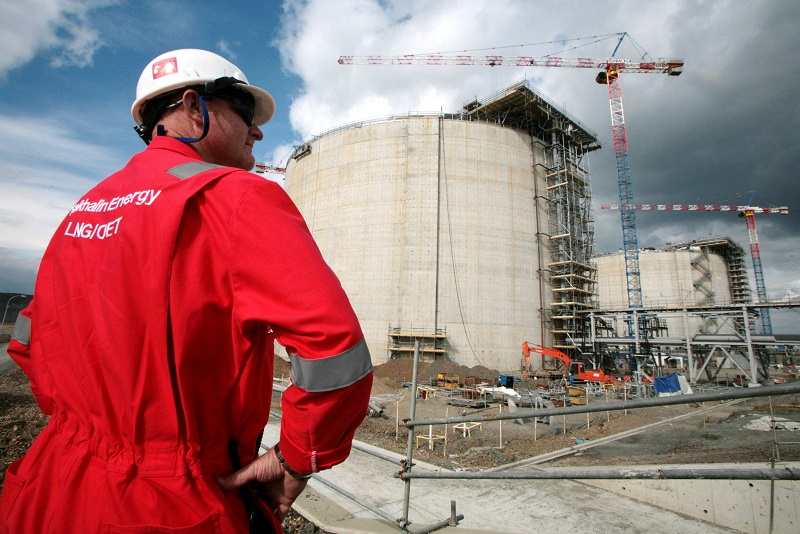
A worker is seen at the Sakhalin-2 project’s liquefaction gas plant in Prigorodnoye, Russia, in October 2006.
16:24 JST, July 6, 2022
Russia’s establishment of a law requiring oil and natural gas development projects to be conducted by Russian companies indicates the government of President Vladimir Putin is strengthening its stance on shutting out foreign firms.
On June 30, Russia issued a presidential decree that paved the way for the de facto seizure of the Sakhalin-2 oil and natural gas project in the Russian Far East, in which companies from Japan and other countries are involved.
The decree is seen as retaliation against Japan and other countries that imposed sanctions on Russia over its invasion of Ukraine.
On June 28, Russia enforced revised legislation on underground resources that was signed into law by Putin. The law requires foreign companies that hold licenses necessary for resource development in Russia to initiate procedures within a certain period for transferring licenses to Russian firms or having licenses reissued.
The law also states that licenses will be revoked if the procedures are not completed.
Duma Chairman Vyacheslav Volodin stated at the time the bill was passed by the lower house that a ban on the exploitation of underground resources by foreign companies protects Russia’s economic interests.
In March, Exxon Mobil Corp. withdrew from the Sakhalin-1 oil and gas project, in which Japan and India are involved. It is believed the revised law might also affect the Sakhalin-1 project.
Japan wants explanation
The Japanese government has requested through diplomatic channels that Russia explain the details of the presidential decree, including deadlines for various procedures and the conditions for investment, Economy, Trade, and Industry Minister Koichi Hagiuda said Tuesday.
The decree requires shareholders other than Russia’s state-run Gazprom — such as Mitsui & Co. and Mitsubishi Corp. — to answer within one month whether they agree to the acquisition of the shares by a new Russian company that will take over the project.
“I want to thoroughly scrutinize the details to figure out at what point the deadline start,” Hagiuda said.
Of the liquefied natural gas that Japan procures, about 10% comes from Sakhalin-2.
“The project is important from the viewpoint of electricity and gas supply stability. The government will work closely with the private sector to ensure the stability of supply,” Hagiuda said.







Most Read
Popular articles in the past 24 hours
-
Hawaii Museum on Tsunami Including Japan's 2011 Disaster at Risk ...
-

Japan Train Company to Increase Fares, Including in Tokyo Metropo...
-

Tail of ANA Plane Struck Runway During Landing in Houston; No Inj...
-
Japan Govt to Tighten Requirements to Receive Permanent Residency...
-

Samurai Japan Holds First Practice in Miami; Team Will Play again...
-

Iran Targets Busiest International Airport as Top UN Body Demands...
-

Japan to Face Venezuela in World Baseball Classic Quarterfinals
-

North Korean Leader Kim and His Daughter Try out New Pistols at S...
Popular articles in the past week
-

Japan Figure Skating Legend Yuzuru Hanyu Is Proud Disaster Surviv...
-

Nippon Life Insurance's U.S. Arm Sues OpenAI Over Legal Assistanc...
-

Ibaraki Pref.'s 1st Foreign Bus Driver Hired in Tsukuba
-
Govt to Utilize ODA for Ensuring Economic Security; Securing Ener...
-
Massive Sewer Pipe Found Jutting Out of Highway in Osaka
-
Amid Strait of Hormuz Blockade, Shipping Companies Scramble to Ge...
-

Beckoning Cats Get Makeover to Fit Modern Lifestyles with Sleek D...
-
Japan Govt Survey Finds Just 10% of Workers Want Working Hours to...
Popular articles in the past month
-

Producer Behind Pop Group XG Arrested for Cocaine Possession
-

Japan PM Takaichi’s Cabinet Resigns en Masse
-

Man Infected with Measles Reportedly Dined at Restaurant in Tokyo...
-

Videos Plagiarized, Reposted with False Subtitles Claiming ‘Ryuky...
-

iPS Treatments Pass Key Milestone, but Broader Applications Far f...
-

Sanae Takaichi Elected Prime Minister of Japan; Keeps All Cabinet...
-
Japan Figure Skating Legend Yuzuru Hanyu Is Proud Disaster Surviv...
-

Nepal Bus Crash Kills 19 People, Injures 25 Including One Japanes...
Top Articles in World
-
Videos Plagiarized, Reposted with False Subtitles Claiming ‘Ryukyu Belongs to China’; Anti-China False Information Also Posted in Japan
-
Nepal Bus Crash Kills 19 People, Injures 25 Including One Japanese National
-
South Korea Tightens Rules on Foreigners Buying Homes in Seoul Metro Area
-
Govt to Utilize ODA for Ensuring Economic Security; Securing Energy, Critical Minerals Sought
-

Ukrainian Ambassador Closely Watching Japan’s Revision of Defense Export Rules, Hopes for Future Arms Support
JN ACCESS RANKING
-
Producer Behind Pop Group XG Arrested for Cocaine Possession
-
Japan PM Takaichi’s Cabinet Resigns en Masse
-
Man Infected with Measles Reportedly Dined at Restaurant in Tokyo Station
-
Videos Plagiarized, Reposted with False Subtitles Claiming ‘Ryukyu Belongs to China’; Anti-China False Information Also Posted in Japan
-
iPS Treatments Pass Key Milestone, but Broader Applications Far from Guaranteed