
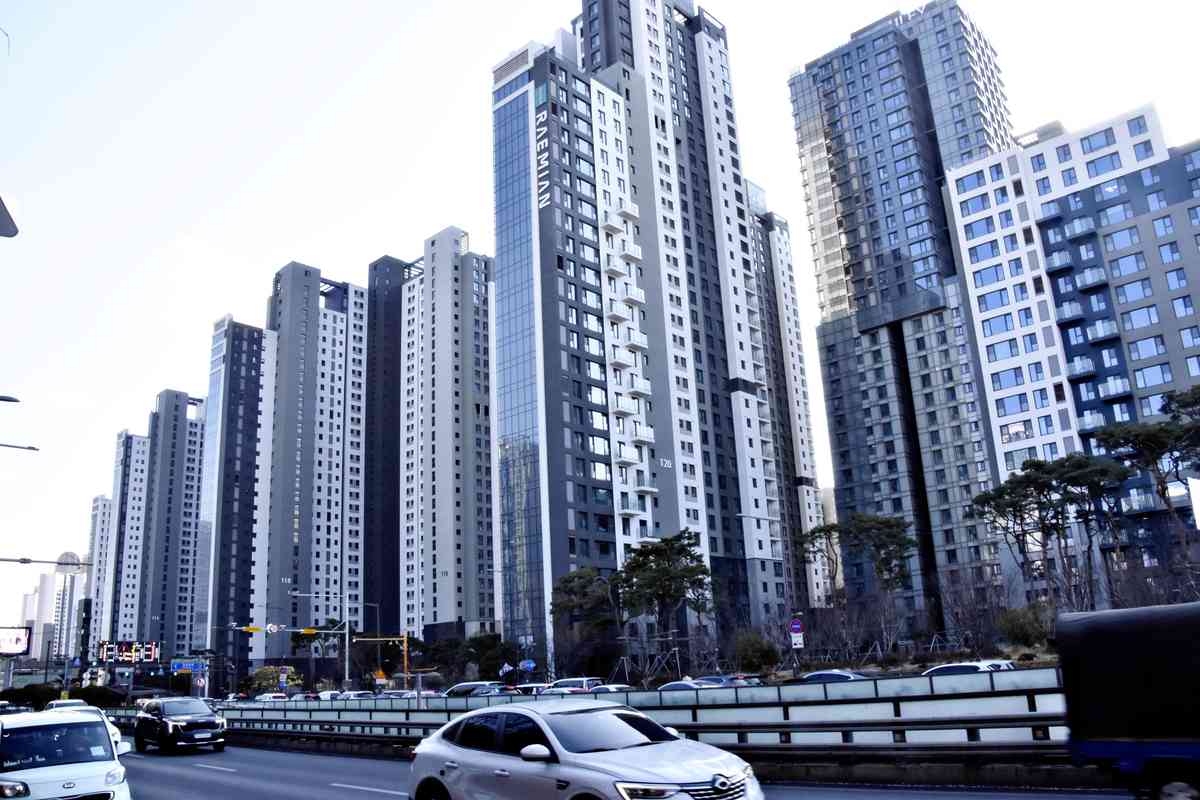
High-rise apartment complexes along the Han River in Seoul on Friday. Prices for the apartments have continued to climb.
15:30 JST, March 1, 2026
SEOUL — With housing prices continuing to rise in South Korea, President Lee Jae Myung’s administration is tightening regulations on real estate transactions by foreigners, aiming to prevent speculative trades.
According to the South Korean land ministry, restrictions have been imposed on Seoul and major surrounding areas, including parts of Gyeonggi Province, where foreigners must obtain permission from local governments before purchasing apartments or houses and must reside in the property after purchase. Buyers must also move in within four months of receiving permission and reside there for at least two years.
The restrictions were introduced in August last year. According to the ministry, foreigners in the Seoul metropolitan area were involved in 1,481 housing transactions from September to December, down more than 30% from the same period in 2024, when transactions numbered 2,279. Large-value transactions of over 1.2 billion won (about ¥130 million) fell by almost half. Transactions by Chinese nationals, the largest group, dropped from 1,554 to 1,053, while transactions by Americans also fell, from 377 to 208.
The ministry said that if a buyer is found to have violated the residency requirement as well as a residency order by a local government, they may be fined and their trading licenses may be revoked. The ministry plans to inspect the current residency situation.
“We will establish a trade system centered on actual demand,” a senior ministry official said.
On Feb. 10, the ministry made it mandatory for foreign nationals to disclose their visa status and residential address when purchasing a property, as it looks to prevent unlawful activities such as unlicensed rental businesses by foreigners. And to prevent the inflow of illicit capital from overseas, buyers must now disclose the source of funds for their purchase, whether this be loans from an overseas financial institution or the sale of cryptocurrency.
The tighter regulations have come on the back of rising home prices in South Korea.
Lee has argued that soaring costs in this area are causing young people to give up on marriage and having children.
The government is also working on a plan to divert unused school land and other assets to supply 1.35 million homes in the metropolitan area by 2030.
The average price of an apartment in Seoul has continued to rise since Lee took office in June. According to a survey by KB Kookmin Bank, the average apartment cost about 1.06 billion won (roughly ¥116 million) at the beginning of 2021, rising to about 1.52 billion won (roughly ¥166 million) at the beginning of 2026. It is unclear whether the administration’s policies will help ease real estate prices.



Most Read
Popular articles in the past 24 hours
-

Improvement of Japanese Language Schools Lags Rise in Foreigners
-
Japan's Test-Takers in Sapporo Offered Special Accommodation Arra...
-
Rental Lab Space in Tokyo Area More Than Doubles Since 2010, Offe...
-
South Korea's Lee to Take Steps for Better Ties with Japan
-
Architourism: Rediscover the Value, Appeal of Famous Structures
-

At Least 6 Killed as Shiites Storm U.S. Consulate in Pakistan ove...
-
Bank of Japan Deputy Governor Says Rate Hikes Likely to Continue
-
Japanese Government Bonds Rally, Yields Tumble as Iran Strikes Sp...
Popular articles in the past week
-

Nepal Bus Crash Kills 19 People, Injures 25 Including One Japanes...
-
Milano Cortina 2026: Japanese Gold Medalist Figure Skater Miura S...
-
Tokyo Spends Big on Children, Wins Over Parents
-

McDonald's Japan Raises Prices; Big Mac to Cost ¥500, Double Chee...
-

‘Dry Bonsai’ Gives New Life to Withered Trees, Allows Free Artist...
-
Japan’s Miura, Kihara Announce Withdrawal from Figure Skating Wor...
-

Exhibition Featuring Yoshiharu Tsuge’s Manga World Underway in Ch...
-

Yokohama to Test Out Renewable-Powered Offshore Floating Data Cen...
Popular articles in the past month
-

Producer Behind Pop Group XG Arrested for Cocaine Possession
-

Japan PM Takaichi’s Cabinet Resigns en Masse
-

Man Infected with Measles Reportedly Dined at Restaurant in Tokyo...
-

Israeli Ambassador to Japan Speaks about Japan’s Role in the Reco...
-

Videos Plagiarized, Reposted with False Subtitles Claiming ‘Ryuky...
-

Man Infected with Measles May Have Come in Contact with Many Peop...
-

Prudential Life Insurance Plans to Fully Compensate for Damages C...
-

Woman with Measles Visited Hospital in Tokyo Multiple Times Befor...
Top Articles in World
-
Israeli Ambassador to Japan Speaks about Japan’s Role in the Reconstruction of Gaza
-
Videos Plagiarized, Reposted with False Subtitles Claiming ‘Ryukyu Belongs to China’; Anti-China False Information Also Posted in Japan
-
Nepal Bus Crash Kills 19 People, Injures 25 Including One Japanese National
-
Russia: Visa Required for Visiting Graves in Northern Territories, Lifting of Sanctions Also Necessary
-
China, India Tapping into Promising African Market; Beijing Announces Tariff Cuts, Both Countries Aim to Expand Exports
JN ACCESS RANKING
-
Producer Behind Pop Group XG Arrested for Cocaine Possession
-
Japan PM Takaichi’s Cabinet Resigns en Masse
-
Man Infected with Measles Reportedly Dined at Restaurant in Tokyo Station
-
Israeli Ambassador to Japan Speaks about Japan’s Role in the Reconstruction of Gaza
-
Videos Plagiarized, Reposted with False Subtitles Claiming ‘Ryukyu Belongs to China’; Anti-China False Information Also Posted in Japan