
14:47 JST, June 15, 2023
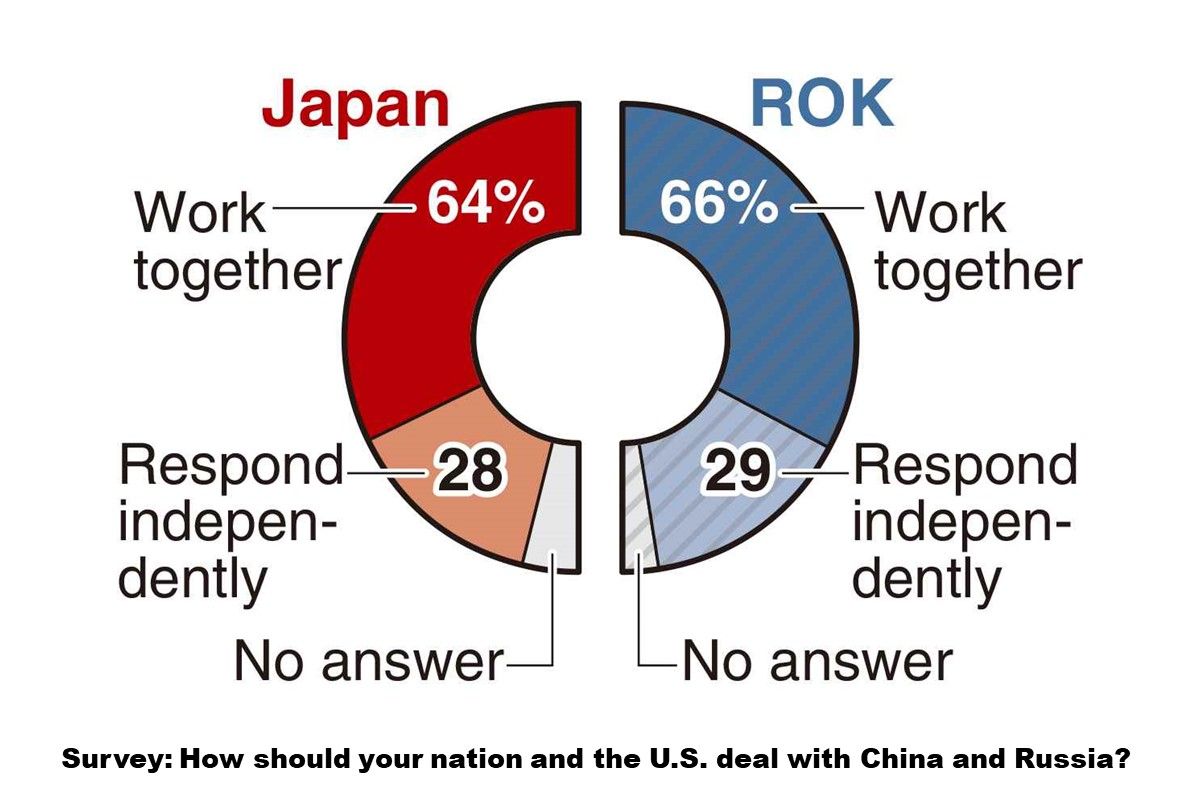
The joint survey found that a clear majority of respondents in both Japan and South Korea thought their nation should cooperate with the United States when it came to standing up to the military threats presented by China and Russia, a repeat result from the previous survey conducted in 2022.
The security environment surrounding Japan and South Korea remains severe, and the United States is calling on its allies and partner countries to work together to counter these military threats.
Sixty-four percent of Japanese respondents thought their nation should cooperate with the United States, rather than respond independently, to deal with these issues, down slightly from the 67% in the previous survey. In South Korea, 66% of respondents supported cooperation with Washington on this issue, down from 77%.
When asked whether Japan, South Korea and the United States should work together in a trilateral response if China launched a military invasion of Taiwan, 66% of Japanese respondents and 56% of South Korean respondents – a majority for both – said “yes.”
More than half of respondents who identified as conservatives or moderates said they thought Tokyo, Seoul and Washington should work together in the event of such an invasion. However, 49% of liberals did not support such cooperation, edging out the 46% who did.
At the end of 2022, the Japanese government revised three key security documents, including the National Security Strategy, and decided to bolster the nation’s defense capabilities to reflect changes in the international situation. These documents also specified that Japan could possess counterstrike capabilities to destroy enemy missile launch sites and other military targets for self-defense.
According to the survey, 60% of Japanese respondents supported the nation’s possession of counterstrike capabilities, whereas 32% opposed it. However, this change in Japan’s capabilities was not warmly received in South Korea, where 65% of respondents opposed it and just 26% supported it. A majority of ruling and opposition party supporters in Japan backed the possession of counterstrike capabilities, but in South Korea, opposition to this change was the dominant view regardless of respondents’ political orientation.
When asked whether the United States or China would become more important for their nation in the future, a majority of Japanese and South Korean respondents selected the United States. In Japan, 65% chose the United States (down from 69% in a 2019 survey) and 24% plumped for China (up from 18%). In South Korea, 63% selected the United States (down from 66%) and 29% went for China (up from 27%).


Most Read
Popular articles in the past 24 hours
-
Japan Govt to Tighten Requirements to Receive Permanent Residency...
-
Tail of ANA Plane Struck Runway During Landing in Houston; No Inj...
-

Medical Care at Home and Disasters: Ensure Systems to Provide Con...
-

Samurai Japan Holds First Practice in Miami; Team Will Play again...
-

CARTOON OF THE DAY (March 12)
-
White House Takes First Step toward Permanent Fix for Illegal Tar...
-

Iran Targets Busiest International Airport as Top UN Body Demands...
-

Japan to Face Venezuela in World Baseball Classic Quarterfinals
Popular articles in the past week
-
Japan Figure Skating Legend Yuzuru Hanyu Is Proud Disaster Surviv...
-

Nippon Life Insurance's U.S. Arm Sues OpenAI Over Legal Assistanc...
-
Govt to Utilize ODA for Ensuring Economic Security; Securing Ener...
-
Massive Sewer Pipe Found Jutting Out of Highway in Osaka
-

Beckoning Cats Get Makeover to Fit Modern Lifestyles with Sleek D...
-
Japan Govt Survey Finds Just 10% of Workers Want Working Hours to...
-
Japan's 2nd Round of U.S. Investments May Be Worth Over $100 Bill...
-

Imperial Family Watches World Baseball Classic Game Against Austr...
Popular articles in the past month
-

Producer Behind Pop Group XG Arrested for Cocaine Possession
-

Japan PM Takaichi’s Cabinet Resigns en Masse
-

Man Infected with Measles Reportedly Dined at Restaurant in Tokyo...
-

Videos Plagiarized, Reposted with False Subtitles Claiming ‘Ryuky...
-
Japan Figure Skating Legend Yuzuru Hanyu Is Proud Disaster Surviv...
-

iPS Treatments Pass Key Milestone, but Broader Applications Far f...
-

Sanae Takaichi Elected Prime Minister of Japan; Keeps All Cabinet...
-

Nepal Bus Crash Kills 19 People, Injures 25 Including One Japanes...
Top Articles in World
-
Videos Plagiarized, Reposted with False Subtitles Claiming ‘Ryukyu Belongs to China’; Anti-China False Information Also Posted in Japan
-
Nepal Bus Crash Kills 19 People, Injures 25 Including One Japanese National
-

South Korea Tightens Rules on Foreigners Buying Homes in Seoul Metro Area
-
Govt to Utilize ODA for Ensuring Economic Security; Securing Energy, Critical Minerals Sought
-

Ukrainian Ambassador Closely Watching Japan’s Revision of Defense Export Rules, Hopes for Future Arms Support
JN ACCESS RANKING
-
Producer Behind Pop Group XG Arrested for Cocaine Possession
-
Japan PM Takaichi’s Cabinet Resigns en Masse
-
Man Infected with Measles Reportedly Dined at Restaurant in Tokyo Station
-
Videos Plagiarized, Reposted with False Subtitles Claiming ‘Ryukyu Belongs to China’; Anti-China False Information Also Posted in Japan
-
Japan Figure Skating Legend Yuzuru Hanyu Is Proud Disaster Survivor and Gold Medalist, Vows to Continue Support Efforts