
Ishiba, Modi Issue ‘Joint Vision’ Setting New Target of ¥10 Trillion for Japan’s Investment in India
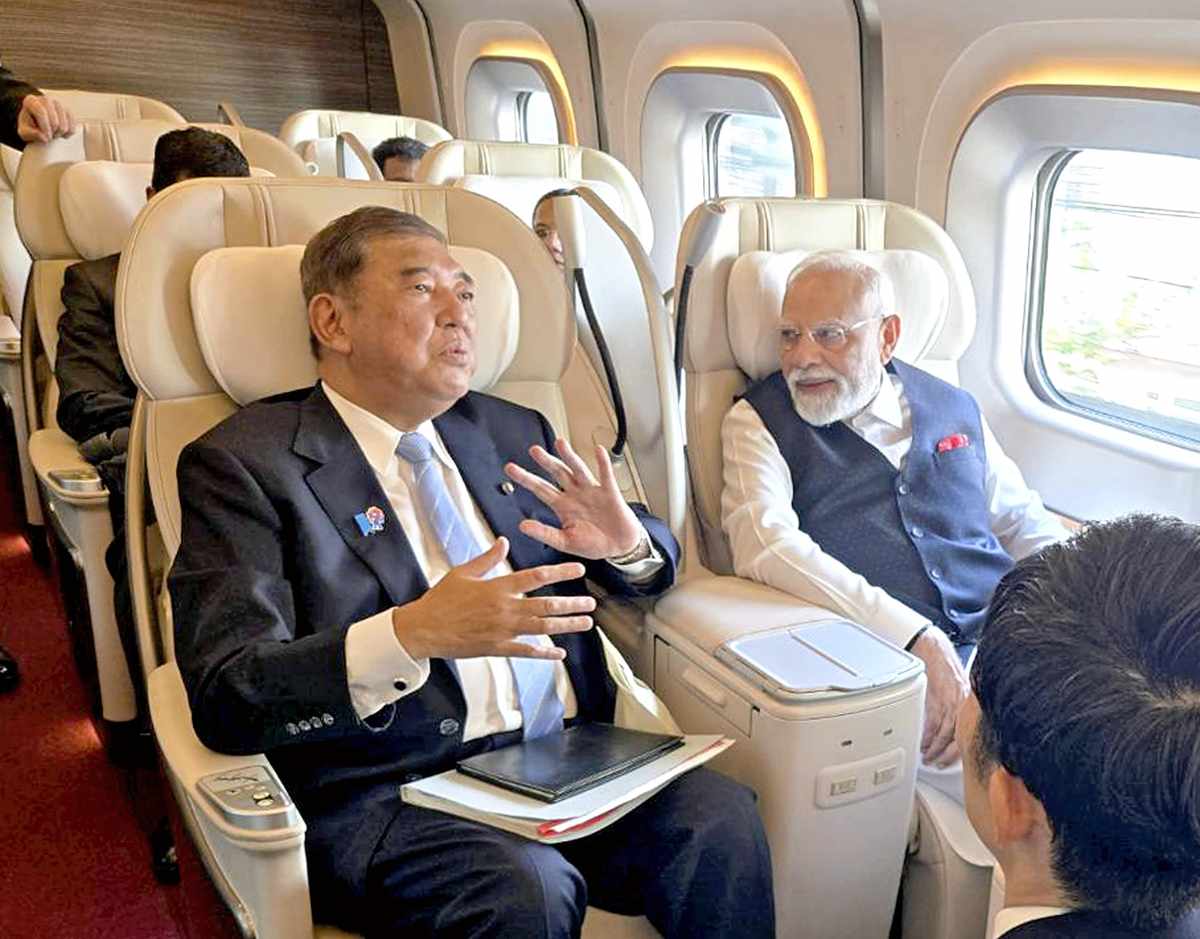
This image taken from a social media account of Prime Minister Shigeru Ishiba shows him, left, and Indian Prime Minister Narendra Modi aboard a Tohoku Shinkansen train on Saturday.
15:39 JST, August 30, 2025
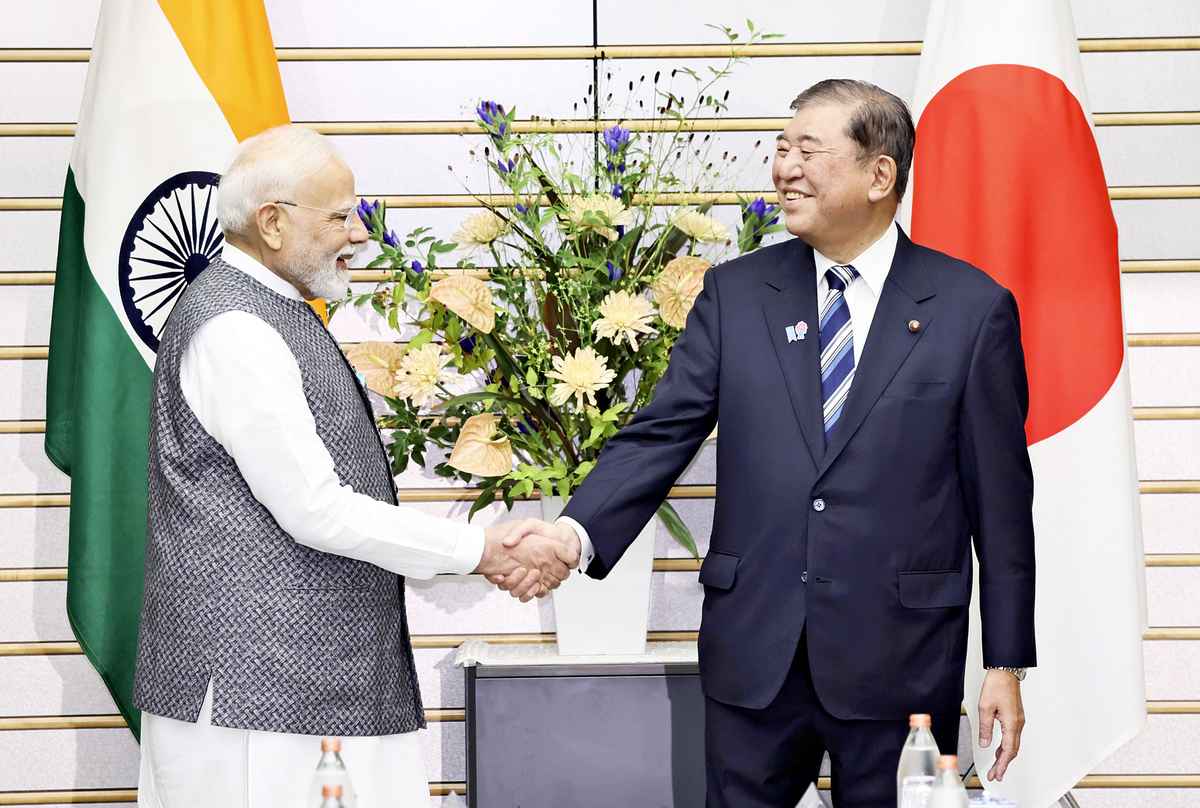
Prime Minister Shigeru Ishiba and his Indian counterpart Narendra Modi on Friday issued a “joint vision” that sets a ¥10 trillion goal for Japanese private investment in India as well as aiming for a mutual exchange of 500,000 people over the next five years.
After meeting for about 90 minutes at the Prime Minister’s Office, the two leaders also issued a joint statement that affirms their countries’ commitment to creating frameworks to cooperate in economic security and artificial intelligence.
“The relationship between Japan and India has made tremendous progress over the past decade,” Ishiba said during the meeting. “We want to use this opportunity to communicate the direction of cooperation in order to take the relationship to new heights.”
In response, Modi stressed the importance of cooperation between the two countries given the current global situation.
The joint vision outlines concrete cooperation measures for Japan and India over the next decade by specifying eight pillars such as the economy, economic security, mobility, technological innovation and exchanges of people.
The joint statement describes defense and security cooperation as a priority area, with the two leaders expressing “serious concern” over the situation in the East and South China Seas where China has pushed forward an aggressive expansion.
Japan and India also revised the Joint Declaration on Security Cooperation, which they originally signed in 2008. The revised declaration calls for cooperation between the Self-Defense Forces and the Indian military in such areas as joint exercises and intelligence sharing.
Referring to the Quad framework involving Japan, India, the United States and Australia, Ishiba and Modi affirmed in the joint statement their “commitment to advancing cooperation among like-minded countries through multilateral frameworks … to promote peace, stability and prosperity in the region.”
The two sides also agreed to work together to introduce the latest Shinkansen bullet train technology to India. They confirmed the intention to introduce new Shinkansen models in India in the early 2030s.
Under the newly launched Economic Security Initiative, Japan and India place priority on key sectors such as information and communication technology, pharmaceuticals, critical minerals, semiconductors and clean energy. The two countries will aim to deepen cooperation in building resilient supply chains, among other matters. To protect critical technologies, they will also advance intergovernmental cooperation while supporting collaboration across their industries and academic communities.
Amid intensifying global competition in AI development among countries and regions such as the United States and China, Ishiba and Modi agreed to launch the “Japan-India AI Cooperation Initiative” to advance bilateral cooperation in this field. Under the initiative, the two countries will work together to develop large language models, a type of technology based on generative AI that learns vast amounts of text data to predict the next word in a given context.
PMs make Shinkansen trip
On Saturday morning, Ishiba and Modi left JR Tokyo Station for Sendai aboard a Hayabusa bullet train on the Tohoku Shinkansen Line. This trip is aimed to showcase the technology and safety of the Japanese bullet trains.
Ishiba posted a photo on his account on X showing him seated next to Modi on the Shinkansen train with text that reads: “Heading to Sendai with Prime Minister Modi. Following on from last night, I continue to accompany him on the train.”
During his visit to Japan in 2016, Modi also made a train trip on the Tokaido Shinkansen Line with then Prime Minister Shinzo Abe.





Most Read
Popular articles in the past 24 hours
-

TEPCO's Rebuilding Still Far from Complete; Effects of 2011 Fukus...
-
G7 Agrees to Support Global Energy Supply Amid Soaring Oil Prices...
-
78% Interested in Reconstruction from 2011 Disaster; Concern High...
-
Toyota Advancing Plant-Based Biofuel Development in Fukushima Tow...
-
2nd Japanese Govt-Chartered Flight Brings 281 Back from Middle Ea...
-
Nissan to Work with Uber on Autonomous Driving, Aims to Provide U...
-
Japan's Takaichi Considers Using Reserve Funds to Counter Rising ...
-

Fears of a Long Mideast War Drive Crude Oil Prices Skyward
Popular articles in the past week
-

Ibaraki Pref.'s 1st Foreign Bus Driver Hired in Tsukuba
-
Govt to Utilize ODA for Ensuring Economic Security; Securing Ener...
-

Amid Strait of Hormuz Blockade, Shipping Companies Scramble to Ge...
-

Nippon Life Insurance's U.S. Arm Sues OpenAI Over Legal Assistanc...
-
Japan Govt Survey Finds Just 10% of Workers Want Working Hours to...
-
Japan's 2nd Round of U.S. Investments May Be Worth Over $100 Bill...
-

Imperial Family Watches World Baseball Classic Game Against Austr...
-

Beckoning Cats Get Makeover to Fit Modern Lifestyles with Sleek D...
Popular articles in the past month
-

Producer Behind Pop Group XG Arrested for Cocaine Possession
-

Japan PM Takaichi’s Cabinet Resigns en Masse
-

Man Infected with Measles Reportedly Dined at Restaurant in Tokyo...
-

Videos Plagiarized, Reposted with False Subtitles Claiming ‘Ryuky...
-

iPS Treatments Pass Key Milestone, but Broader Applications Far f...
-

Sanae Takaichi Elected Prime Minister of Japan; Keeps All Cabinet...
-

Nepal Bus Crash Kills 19 People, Injures 25 Including One Japanes...
-

South Korea Tightens Rules on Foreigners Buying Homes in Seoul Me...
Top Articles in World
-
Videos Plagiarized, Reposted with False Subtitles Claiming ‘Ryukyu Belongs to China’; Anti-China False Information Also Posted in Japan
-
Nepal Bus Crash Kills 19 People, Injures 25 Including One Japanese National
-
South Korea Tightens Rules on Foreigners Buying Homes in Seoul Metro Area
-
Govt to Utilize ODA for Ensuring Economic Security; Securing Energy, Critical Minerals Sought
-

Ukrainian Ambassador Closely Watching Japan’s Revision of Defense Export Rules, Hopes for Future Arms Support
JN ACCESS RANKING
-
Producer Behind Pop Group XG Arrested for Cocaine Possession
-
Japan PM Takaichi’s Cabinet Resigns en Masse
-
Man Infected with Measles Reportedly Dined at Restaurant in Tokyo Station
-
Videos Plagiarized, Reposted with False Subtitles Claiming ‘Ryukyu Belongs to China’; Anti-China False Information Also Posted in Japan
-
iPS Treatments Pass Key Milestone, but Broader Applications Far from Guaranteed