
In search of lost time 20 years after Pyongyang summit / Relatives of Japanese possibly abducted by North Korea continue fight for missing relatives
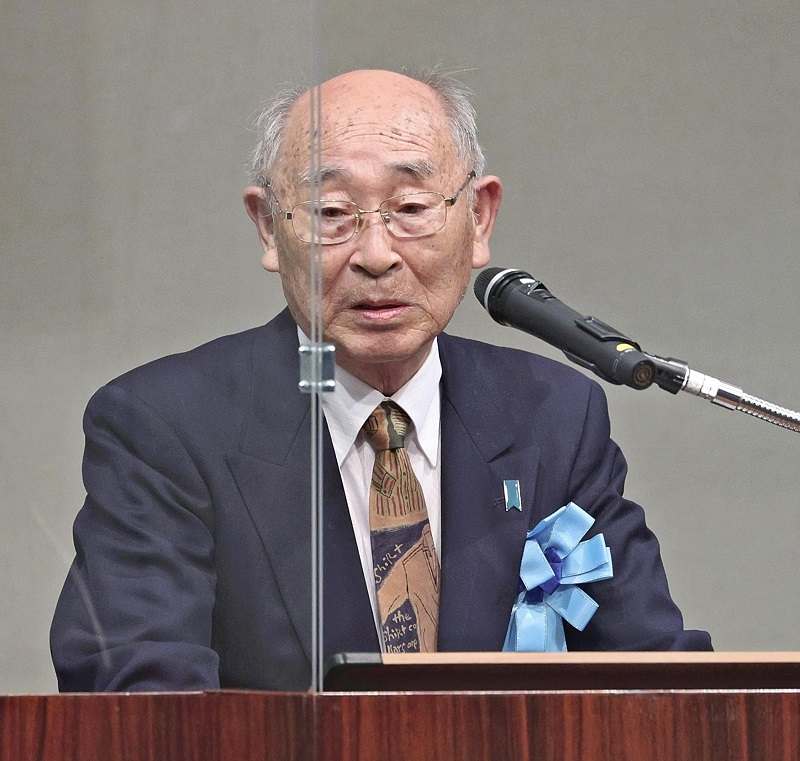
Hideki Imai, the older brother of a man who may have been abducted by North Korea, speaks at a rally on May 29 in Chiyoda Ward, Tokyo.
1:00 JST, September 26, 2022
This is the fifth and final installment of a series reflecting on the experiences of Japanese nationals abducted by North Korea, some of whom have returned to Japan, and their families over the past 20 years since the 2002 Japan-North Korea summit.
***
In addition to the 17 people officially recognized by the Japanese government as having been abducted by North Korea, there are about 470 missing persons for whom the possibility cannot be ruled out.
In the summit meeting between Japan and North Korea in September 2002, the existence of abductees not recognized by the Japanese government was revealed. The relatives of the missing persons hoped all the abduction cases would be fully investigated, but ultimately the situation remained unchanged.
Yutaka Imai of Hirosaki, Aomori Prefecture, disappeared on March 2, 1969, after he left home to go shopping. He was 18 years old, and just two days away from his high school graduation ceremony. He was to start working for a railway operator in Tokyo, and a train ticket to Tokyo and cash he had earned from part-time jobs were left in his room.
There were rumors in the town that Yutaka probably ran away from home because he did not want to work. His family filed a missing person’s report with the local police, but there were no clues as to his whereabouts.
Yutaka’s older brother Hideki, now 79, was a bank employee at the time. He visited police stations in various parts of the Tohoku region, to where he’d been transferred, seeking information about his younger brother.
The September 2002 summit meeting was held 33 years after Yutaka’s disappearance. At that meeting, Hitomi Soga, a woman whom the government had not recognized as an abductee, was revealed to be alive.
Hideki, who retired in the same year, returned to his parents’ house. His mother, Hatsuyo, who died in 2019 at the age of 99, told Hideki that she had received a suspicious silent call after Yutaka disappeared.
Thinking that his abducted brother might have tried to tell the family he was alive, Hideki sought advice from the Tokyo-based Investigation Commission on Missing Japanese Probably Related to North Korea (COMJAN), which had just been founded in January 2003.
The COMJAN is a private organization that investigates cases of people who were possibly abducted to North Korea. It compiles and issues a list of missing persons for whom the possibility of abduction by North Korea cannot be ruled out.
However, public interest in the abduction issue was not high at that time. While Hideki visited the Cabinet Office, which is charge of the abduction issue, he was told by the staff that they could not give him an answer because it would affect diplomatic negotiations.
In May 2014, North Korea agreed to reinvestigate the whereabouts of missing Japanese citizens possibly abducted to the country, including those on COMJAN’s list. However, it unilaterally declared the reinvestigation was being terminated in February 2016.
Believing it was ineffective to work separately, the families of missing persons on the list formed a group of volunteers in May 2017 and met with the minister in charge of the abduction issue in July of the same year, asking the government not to leave the missing persons behind.
Hideki has served as the group’s leader since October 2019, working with a group of families of Japanese nationals abducted by North Korea and delivering speeches at large rallies.
“The attitudes of the public and the government have been changing little by little. I hope people understand that our feelings for our parents and siblings are the same as those of the families of the officially recognized abductees.”
COMJAN has a list of about 470 persons as possible abductees. Most of them are included among the 871 cases of missing persons whom the National Police Agency believes might have been abducted as of May 12.
Kyoko Matsumoto, who was abducted to North Korea at age 29 and recognized by the government as an abductee in November 2006, was on COMJAN’s list.
“I almost gave up many times,” said Tamaji Takeshita, 78, the secretary general of the volunteer group, describing the feelings of the families of the missing persons, who have continued their solitary struggle for many years.
Takeshita’s younger sister, Noriko Furukawa, disappeared in Ichihara, Chiba Prefecture, at the age of 18 on July 7, 1973. Takeshita learned from a former North Korean agent that the agent had seen Noriko in Pyongyang.
In 2004, she filed a complaint with the Chiba prefectural police and filed a lawsuit against the government in 2005, demanding that Noriko be officially recognized as an abductee.
Two years later, the central government said it would continue to investigate the issue from the position that there were people who could not be ruled out as having been abducted by North Korea. Following that, Takeshita withdraw her suit.
“Rather than demanding recognition as an abductee, I wanted the government to actually take action to save my sister and others,” Takeshita said. However, 20 years have passed since the Japan-North Korea summit talks without significant progress.
Takeshita talks to her little sister in her mind, telling her, “I’ll save you without fail, so be strong and patient,”





Most Read
Popular articles in the past 24 hours
-

3,000 Accounts Posting, Spreading Content Critical of Japan on X;...
-

Milano Cortina 2026: Sakamoto Serves as Flag Bearer; Japan Earns ...
-

My Spendthrift Mother Constantly Asks Me for Money
-

A Packed Bus Plunges off a Nepal Highway, Killing 19 and Injuring...
-
Emperor Receives Well-Wishes from Public on His 66th Birthday
-

Dozens of Jewelry, Other Items Stolen After Glass Door, Showcases...
-

1.2 Mil. Rapeseed Flowers Attract Cute Birds, People in Aichi Pre...
-

Mexican Army Kills Leader of Powerful Jalisco New Generation Cart...
Popular articles in the past week
-

Japan PM Takaichi’s Cabinet Resigns en Masse
-

Man Infected with Measles Reportedly Dined at Restaurant in Tokyo...
-

Sanae Takaichi Elected Prime Minister of Japan; Keeps All Cabinet...
-

Japan's Govt to Submit Road Map for Growth Strategy in March, PM ...
-

Bus Carrying 40 Passengers Catches Fire on Chuo Expressway; All E...
-

U.S. Firm to Build Training Hub in Fukushima N-plant for Debris R...
-

Japan, U.S. Name 3 Inaugural Investment Projects; Reached Agreeme...
-

Riku-Ryu Pair Wins Gold Medal: Their Strong Bond Leads to Major C...
Popular articles in the past month
-
Japan PM Takaichi’s Cabinet Resigns en Masse
-

Japan Institute to Use Domestic Commercial Optical Lattice Clock ...
-

Israeli Ambassador to Japan Speaks about Japan’s Role in the Reco...
-
Man Infected with Measles Reportedly Dined at Restaurant in Tokyo...
-

Videos Plagiarized, Reposted with False Subtitles Claiming ‘Ryuky...
-

Man Infected with Measles May Have Come in Contact with Many Peop...
-

Prudential Life Insurance Plans to Fully Compensate for Damages C...
-

Woman with Measles Visited Hospital in Tokyo Multiple Times Befor...
Top Articles in Society
-

Producer Behind Pop Group XG Arrested for Cocaine Possession
-
Man Infected with Measles Reportedly Dined at Restaurant in Tokyo Station
-
Man Infected with Measles May Have Come in Contact with Many People in Tokyo, Went to Store, Restaurant Around When Symptoms Emerged
-
Woman with Measles Visited Hospital in Tokyo Multiple Times Before Being Diagnosed with Disease
-
Australian Woman Dies After Mishap on Ski Lift in Nagano Prefecture
JN ACCESS RANKING
-
Japan PM Takaichi’s Cabinet Resigns en Masse
-
Japan Institute to Use Domestic Commercial Optical Lattice Clock to Set Japan Standard Time
-
Israeli Ambassador to Japan Speaks about Japan’s Role in the Reconstruction of Gaza
-
Man Infected with Measles Reportedly Dined at Restaurant in Tokyo Station
-
Videos Plagiarized, Reposted with False Subtitles Claiming ‘Ryukyu Belongs to China’; Anti-China False Information Also Posted in Japan