
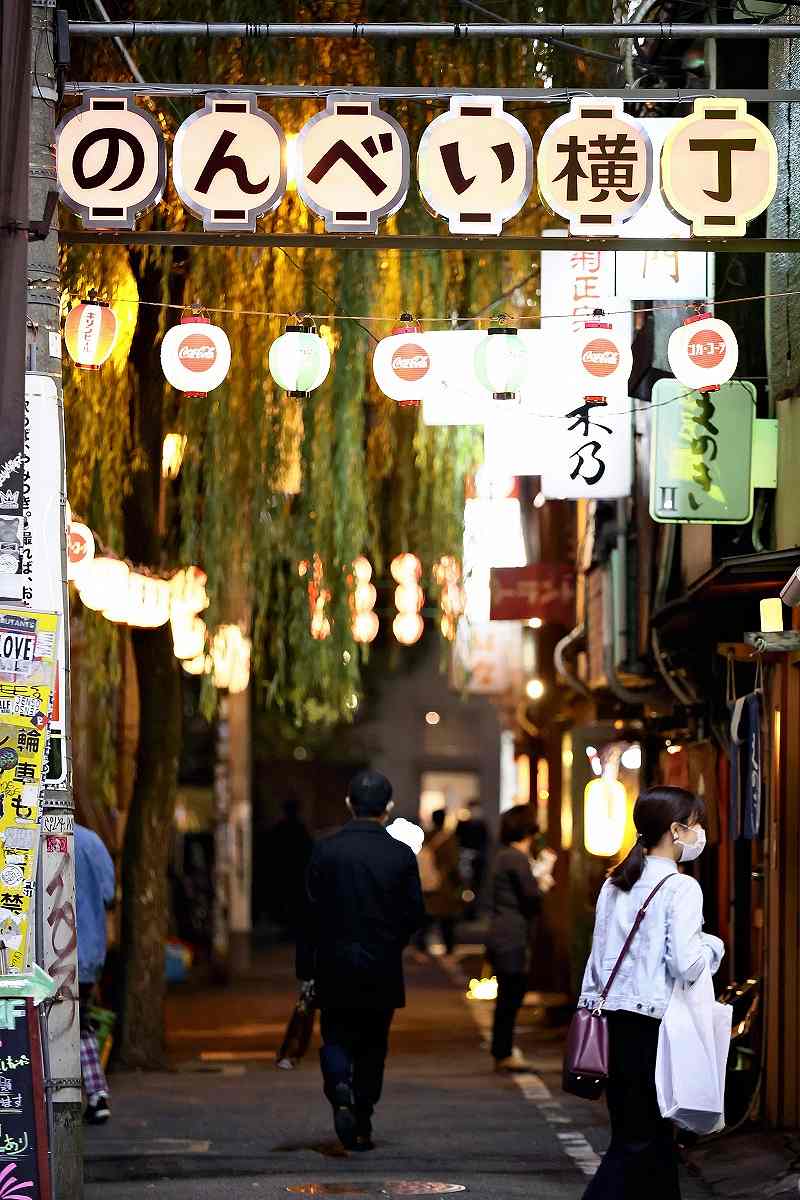
This normally lively alley in Shibuya Ward, Tokyo, was nearly devoid of people on Nov. 10.
11:42 JST, December 11, 2020
This is the second installment of a series looking at how people are responding to the ongoing changes to cities brought about by the novel coronavirus.
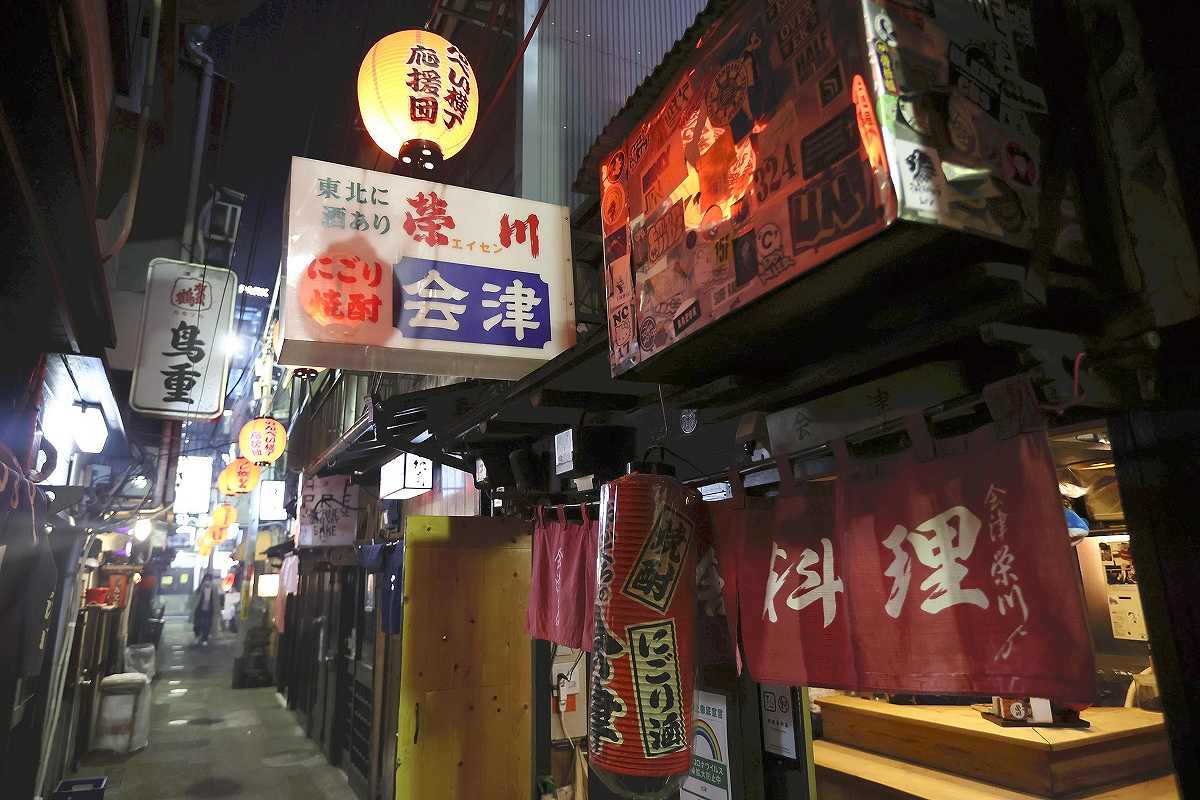
Koichiro Mikuriya looked out over the small handful of customers in Aizu, the izakaya pub he runs in Nonbei Yokocho in the Shibuya district of Tokyo.
“The charm of this area is the small shops where you can drink with all kinds of people,” he said. “But now things like this because of the novel coronavirus.”
Nonbei Yokocho, also known as “Drinkers Alley,” is a narrow lane about 30 meters long with 40 or so establishments, many taking up less than 10 square meters of space.
Its retro vibe attracts tens of thousands of people per year and adds to the charm of Tokyo. However, the pandemic has hit the alley hard.
The district began as a black market that sprung up after World War II. Around 1950, shopkeepers and others from the black markets near Shibuya Station got together to create a bar district, in response to the Tokyo metropolitan government’s requests and other factors. They established a cooperative association that persists to this day.
While the alley survived changes such as the collapse of the bubble economy and waves of redevelopment, it had continuously struggled with a diminishing number of customers and other such issues.
That was until about 10 years ago.
After the alley was featured on television and in magazines as a place where the atmosphere of the Showa era (1926-1989) remained, new customers started showing up, including women and tourists from abroad. Mikuriya and the other proprietors offered diverse settings and a human touch that revitalized the area.
Students, regulars and others began posting about the alley on social media. Actor Leonardo DiCaprio and rock band U2 even dropped in, and expectations were high for the crowds coming to see the Tokyo Olympics and Paralympics.
The coronavirus dashed all these hopes.
All the shops im the area were closed during the state of emergency in April and May.
Money raised online through crowdfunding was distributed among the establishments and they somehow got by through holding online drinking parties.
Customer numbers have since returned to about 60% of normal, but with case numbers increasing again, the future is uncertain.
“It’s become normal to avoid crowded spaces,” Mikuriya said. “It will take a while for the bustle to return. We have no choice but to try out different things.”
■ Unexpected encounters
The about 130 secondhand bookstores in the Kanda-Jimbocho district of Chiyoda Ward, Tokyo, have decided to cancel a secondhand book festival held every autumn due to the pandemic, so they are trying out new initiatives.
The festival began in 1960 in an attempt to combat a loss of interest in reading due to the dissemination of television. Every year, shopkeepers came up with ideas such as holding readings and discussions with authors. Eventually hundreds of thousands of people were coming to the events.
The neighborhood is lined with shops selling a variety of specialized books. Researchers sometimes visit to search for rare books and journals.
Once the pandemic hit, customers stayed away and more shops began offering online sales.
“Going around the shops looking for books and encountering unexpected things is the fun of this neighborhood,” said Hajime Takayama, an adviser to the federation of Kanda bookstores. “I’m concerned about the loss of that appeal, but we have no choice but to make use of the internet.”
■ ‘Value of experiences’
Places like Nonbei Yokocho and the secondhand book district in Jimbocho draw people and make the city more attractive, which makes developers pay attention.
Toranomon Yokocho opened in June in the Toranomon Hills commercial complex in Minato Ward, Tokyo. To encourage people to go from one shop to another, the developer, Mori Building Co., put counter seating in all 26 establishments and installed a seating area where people could bring in food and drinks.
There is currently a limit, however, on how many people are allowed in the area.
“We’ve had a good response, with people even bringing their families,” a person in charge of the area at Mori Building said. “Even with the coronavirus situation, it’s still important to feel enjoyment.”
“There’s no doubt of the need to rethink strategies,” said Japan Women’s University Associate Prof. Daisuke Tanaka, a sociologist who studies the future of urban development. “But even with more online shopping, it’s still fun to visit large stores. The pandemic could actually increase the value of experiences. Now is the time to explore and nurture new ways of responding to infectious diseases.”






Most Read
Popular articles in the past 24 hours
-
Japan Figure Skating Legend Yuzuru Hanyu Is Proud Disaster Surviv...
-
Hawaii Museum on Tsunami Including Japan's 2011 Disaster at Risk ...
-

Japan Train Company to Increase Fares, Including in Tokyo Metropo...
-

Japan’s Mitsui O.S.K. Lines Container Ship Anchored in Persian Gu...
-

Struggling Onosato Pulls out of Spring Tourney
-

Japan’s Mitsui O.S.K. Lines Container Ship Anchored in Persian Gu...
-

Tail of ANA Plane Struck Runway During Landing in Houston; No Inj...
-

Iran Targets Busiest International Airport as Top UN Body Demands...
Popular articles in the past week
-
Japan Figure Skating Legend Yuzuru Hanyu Is Proud Disaster Surviv...
-

Nippon Life Insurance's U.S. Arm Sues OpenAI Over Legal Assistanc...
-

Ibaraki Pref.'s 1st Foreign Bus Driver Hired in Tsukuba
-
Govt to Utilize ODA for Ensuring Economic Security; Securing Ener...
-
Massive Sewer Pipe Found Jutting Out of Highway in Osaka
-

Amid Strait of Hormuz Blockade, Shipping Companies Scramble to Ge...
-
Beckoning Cats Get Makeover to Fit Modern Lifestyles with Sleek D...
-
Japan Govt Survey Finds Just 10% of Workers Want Working Hours to...
Popular articles in the past month
-

Producer Behind Pop Group XG Arrested for Cocaine Possession
-

Japan PM Takaichi’s Cabinet Resigns en Masse
-

Man Infected with Measles Reportedly Dined at Restaurant in Tokyo...
-

Videos Plagiarized, Reposted with False Subtitles Claiming ‘Ryuky...
-

iPS Treatments Pass Key Milestone, but Broader Applications Far f...
-

Sanae Takaichi Elected Prime Minister of Japan; Keeps All Cabinet...
-

Nepal Bus Crash Kills 19 People, Injures 25 Including One Japanes...
-
South Korea Tightens Rules on Foreigners Buying Homes in Seoul Me...
Top Articles in Society
-
Producer Behind Pop Group XG Arrested for Cocaine Possession
-
Man Infected with Measles Reportedly Dined at Restaurant in Tokyo Station
-

Bus Carrying 40 Passengers Catches Fire on Chuo Expressway; All Evacuate Safely
-
Ibaraki Pref.’s 1st Foreign Bus Driver Hired in Tsukuba
-
Tokyo Skytree’s Elevator Stops, Trapping 20 People; All Rescued (Update 1)
JN ACCESS RANKING
-
Producer Behind Pop Group XG Arrested for Cocaine Possession
-
Japan PM Takaichi’s Cabinet Resigns en Masse
-
Man Infected with Measles Reportedly Dined at Restaurant in Tokyo Station
-
Videos Plagiarized, Reposted with False Subtitles Claiming ‘Ryukyu Belongs to China’; Anti-China False Information Also Posted in Japan
-
iPS Treatments Pass Key Milestone, but Broader Applications Far from Guaranteed