
On Japan’s Coming of Age Day, New Adults in Disaster-Hit Areas Renew Vow to Revitalize Hometowns
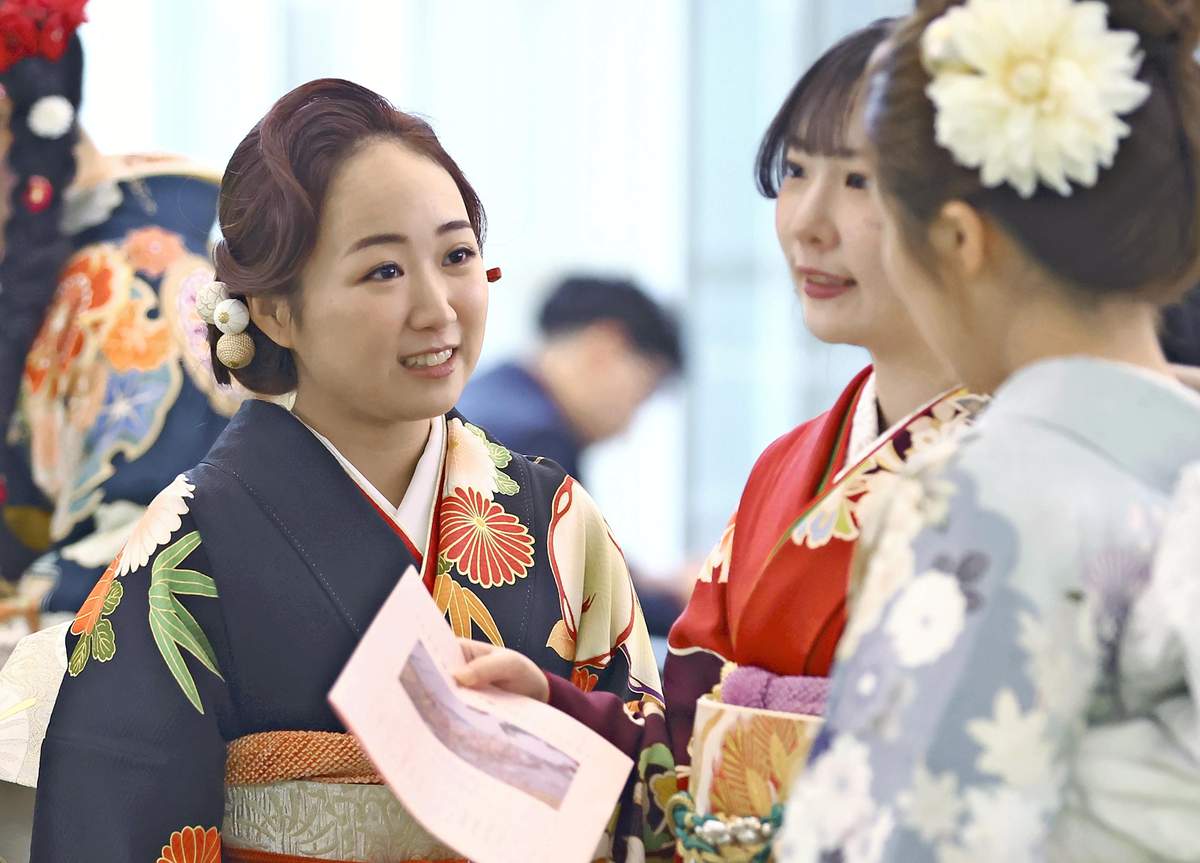
Ayame Noka speaks to her friends at a ceremony celebrating Coming-of-Age Day in Suzu, Ishikawa Prefecture, on Sunday.
16:06 JST, January 12, 2026
Ceremonies celebrating the start of adulthood for the newest crop of 20-year-olds were held across the country on Sunday, the day before Coming-of-Age Day.
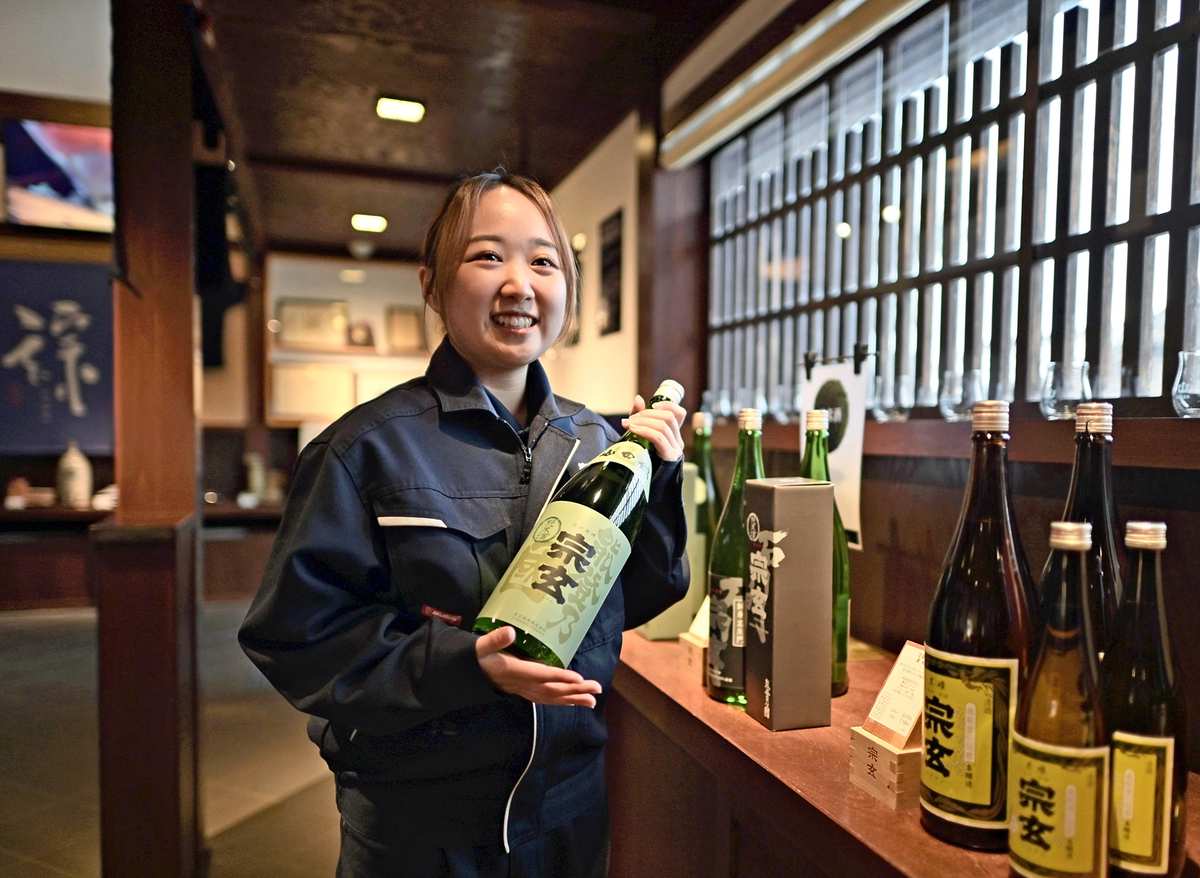
Ayame Noka holds a bottle of sake at Sogen Sake Brewery in Suzu, Ishikawa Prefecture, on Thursday.
In areas affected by the Noto Peninsula Earthquake in January 2024 and the Great East Japan Earthquake in March 2011, young people dressed in vibrant furisode kimono and suits renewed their vows to help revitalize their hometowns.
Most of this year’s participants were born in 2005 and turned 20 last year. According to the Internal Affairs and Communications Ministry, the Japanese population born in 2005 was approximately 1.06 million as of Jan. 1, 2024, comprising about 550,000 males and 520,000 females. While the population of 20-year-olds had been hovering between 1.2 million and 1.3 million for a while after 2010, it appears to have been declining in recent years.
Ayame Noka, 19, who works at Sogen Sake Brewery, a long-established company which was damaged in the Noto Peninsula Earthquake, attended a ceremony in Suzu, Ishikawa Prefecture, on Sunday. She will turn 20 later this month.
“I want to drink Sogen sake with a fresh feeling in a revitalized Suzu,” she said, envisioning her future.
Noka was born and educated through high school in Suzu. The earthquake struck when she was a third-year high school student, and the ensuing tsunami flooded the first floor of her home. Sogen Sake Brewery, also located in the city, was affected as well, including suffering damage to its storage tanks.
Yet to Noka, Suzu remains “a place rich in nature where I can be myself,” she said. She maintained an unwavering desire to work in her beloved hometown, and she ultimately joined the company after graduating.
Her duties at Sogen have included customer service, sales and clerical work, all of which she had little experience with before working there.
“Unlike at school, I had to think and act for myself,” which caused her to feel troubled at first, she recalled, but with support from those around her, her fear gradually went away.
She lost three cousins and an aunt, their mother, in the earthquake. Even two years after the disaster, she still finds herself wanting to see them sometimes.
She wore a black furisode kimono adorned with floral patterns to the Sunday ceremony, where she served as emcee and reunited with friends she had become separated from after the earthquake.
“I want to express gratitude to my family, friends and those who helped me at the evacuation center,” she said.


Related Tags






Most Read
Popular articles in the past 24 hours
-

3,000 Accounts Posting, Spreading Content Critical of Japan on X;...
-

Milano Cortina 2026: Sakamoto Serves as Flag Bearer; Japan Earns ...
-

Milano Cortina 2026: There Were Cheers across the Country, after ...
-

A Packed Bus Plunges off a Nepal Highway, Killing 19 and Injuring...
-
Luna Sea Drummer Shinya Dies at 56; Powerful Drummer Behind ‘Desi...
-

Milano Cortina 2026: ‘Magical’ Italian Games Close wi...
-

Milano Cortina 2026: Riku-Ryu Duo Stick Together During Closing C...
-

Emperor Receives Well-Wishes from Public on His 66th Birthday
Popular articles in the past week
-

Japan PM Takaichi’s Cabinet Resigns en Masse
-

Man Infected with Measles Reportedly Dined at Restaurant in Tokyo...
-

Sanae Takaichi Elected Prime Minister of Japan; Keeps All Cabinet...
-

Japan's Govt to Submit Road Map for Growth Strategy in March, PM ...
-

Bus Carrying 40 Passengers Catches Fire on Chuo Expressway; All E...
-

U.S. Firm to Build Training Hub in Fukushima N-plant for Debris R...
-

Japan, U.S. Name 3 Inaugural Investment Projects; Reached Agreeme...
-

Riku-Ryu Pair Wins Gold Medal: Their Strong Bond Leads to Major C...
Popular articles in the past month
-
Japan PM Takaichi’s Cabinet Resigns en Masse
-

Japan Institute to Use Domestic Commercial Optical Lattice Clock ...
-

Israeli Ambassador to Japan Speaks about Japan’s Role in the Reco...
-
Man Infected with Measles Reportedly Dined at Restaurant in Tokyo...
-

Videos Plagiarized, Reposted with False Subtitles Claiming ‘Ryuky...
-

Man Infected with Measles May Have Come in Contact with Many Peop...
-

Prudential Life Insurance Plans to Fully Compensate for Damages C...
-

Woman with Measles Visited Hospital in Tokyo Multiple Times Befor...
Top Articles in Society
-

Producer Behind Girls Group XG Arrested for Cocaine Possession
-
Man Infected with Measles Reportedly Dined at Restaurant in Tokyo Station
-
Man Infected with Measles May Have Come in Contact with Many People in Tokyo, Went to Store, Restaurant Around When Symptoms Emerged
-
Woman with Measles Visited Hospital in Tokyo Multiple Times Before Being Diagnosed with Disease
-
Australian Woman Dies After Mishap on Ski Lift in Nagano Prefecture
JN ACCESS RANKING
-
Japan PM Takaichi’s Cabinet Resigns en Masse
-
Japan Institute to Use Domestic Commercial Optical Lattice Clock to Set Japan Standard Time
-
Israeli Ambassador to Japan Speaks about Japan’s Role in the Reconstruction of Gaza
-
Man Infected with Measles Reportedly Dined at Restaurant in Tokyo Station
-
Videos Plagiarized, Reposted with False Subtitles Claiming ‘Ryukyu Belongs to China’; Anti-China False Information Also Posted in Japan